
Dengfeng, Zhengzhou
Shaolin Temple and Mount Song
- From Zhengzhou
- About 1.5 hours by road
- Allow
- A full day
- Best season
- April–June, September–November
From the official website
In the scenic area's own words
Transcribed from the operator's official site, with the date we read it. Independent of the guide above, which is our own writing.
Shaolin Temple stands on the southern slope of Taishi Mountain northwest of Dengfeng, facing Shaoshi Mountain and backed by Wuru Peak; it takes its name from the dense forest on Shaoshi's shaded side. It was founded in 496 (the twentieth year of Taihe, Northern Wei) by the Indian monk Buddhabhadra, and in 527 the South Indian monk Bodhidharma arrived and began teaching Chan to a growing body of followers. The temple rose and fell repeatedly, prospered from the early Tang, peaked in the Ming and declined after the Qing. It comprises the Kernel Compound, the Pagoda Forest, Chuzu Temple, Erzu Temple, Bodhidharma Cave, the Sweet Dew Terrace and scattered tomb pagodas and carvings — the cradle of Chinese Chan Buddhism and of Shaolin martial arts.
- Location
- Northwest of Dengfeng, Henan; southern slope of Taishi Mountain, shaded side of Shaoshi Mountain
- Founded
- 496 CE (twentieth year of Taihe, Northern Wei)
- Chan Buddhism
- 527 CE: Bodhidharma arrived and taught Chan
- Main complex
- The Kernel Compound runs south to north: gate, Tianwang Hall, Mahavira Hall, Dharma Hall, abbot's quarters, Lixue Pavilion, Thousand Buddha Hall, with bell and drum towers, meditation halls and the Sixth Patriarch Hall to either side
- Holdings
- 245 steles from Northern Qi to the Republic; Ming-dynasty polychrome murals of the five hundred arhats; over a hundred plaques, couplets and metal objects from Jin to Qing
- Heritage status
- Seventh batch of Major Historical and Cultural Sites Protected at the National Level; World Heritage, as part of the Historic Monuments of Dengfeng
What to see
The Kernel Compound
The temple's main body and the place where its monks have always conducted services, on a seven-courtyard axis.
The Pagoda Forest
The tomb pagodas of successive generations of senior monks, west of the temple.
Chuzu Temple
Built in memory of Bodhidharma, the first Chan patriarch, northwest of the temple.
Bodhidharma Cave and Sweet Dew Terrace
Chan sites in the temple's surroundings.
The temple's holdings
The polychrome arhat murals and the steles dating back to the Northern Qi are the direct evidence of the temple's historical and artistic standing.
Photographs
These photographs are openly licensed for commercial use (from Wikimedia Commons: CC0, CC BY, CC BY-SA or public domain) and are not the attraction's own gallery. Each photo is credited below with its author and licence, linked to the original file.
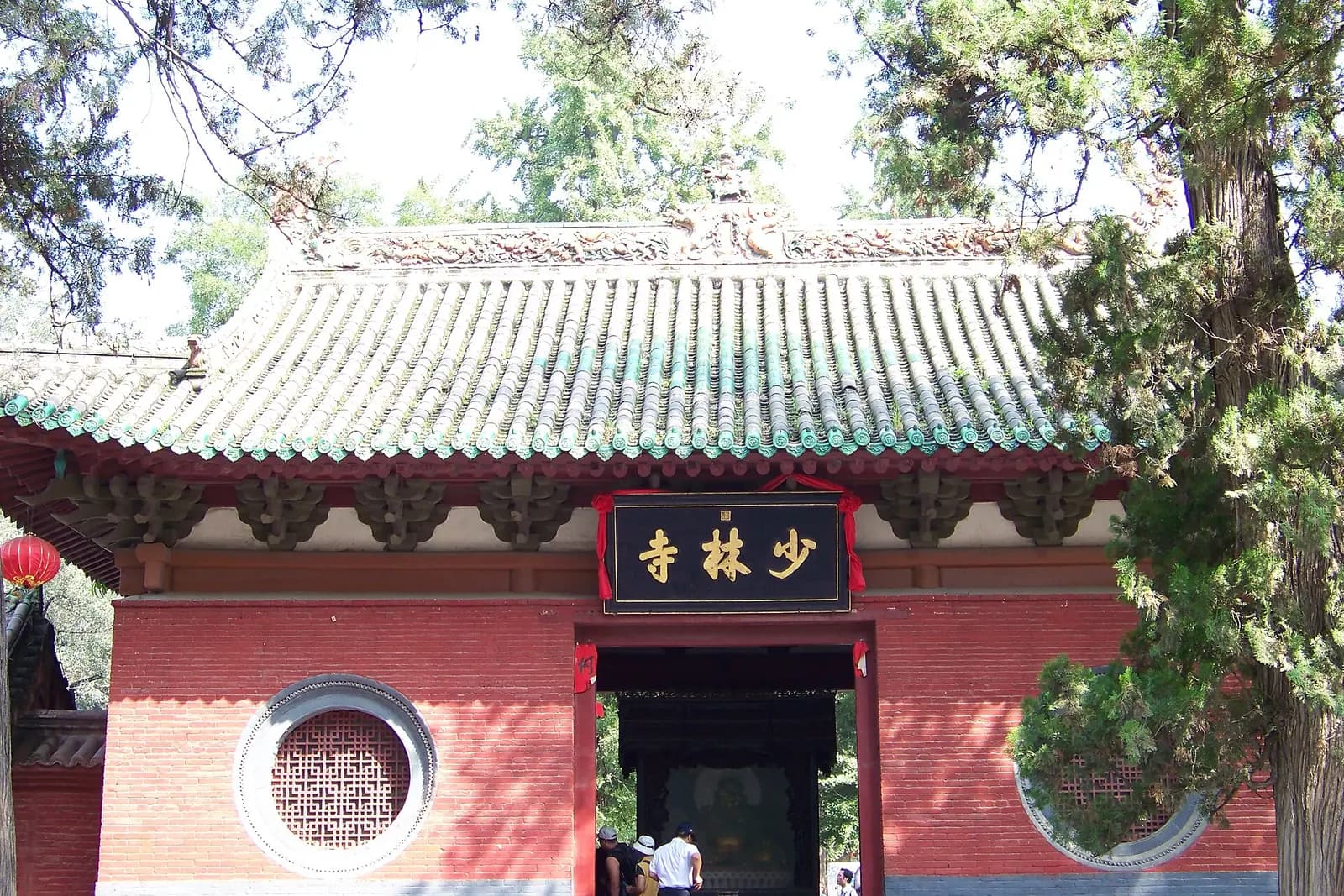
The main gate of Shaolin Temple
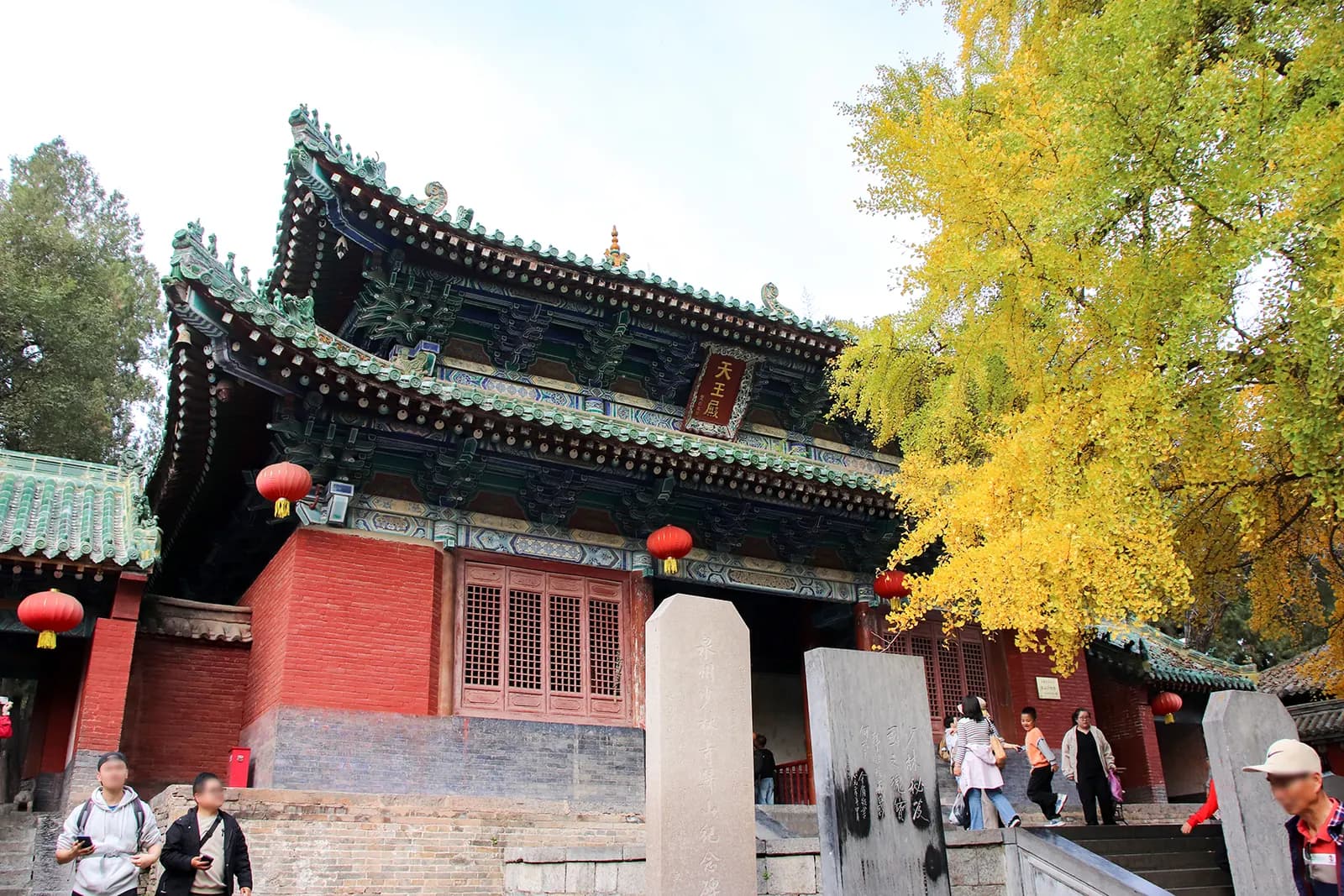
The Hall of Heavenly Kings
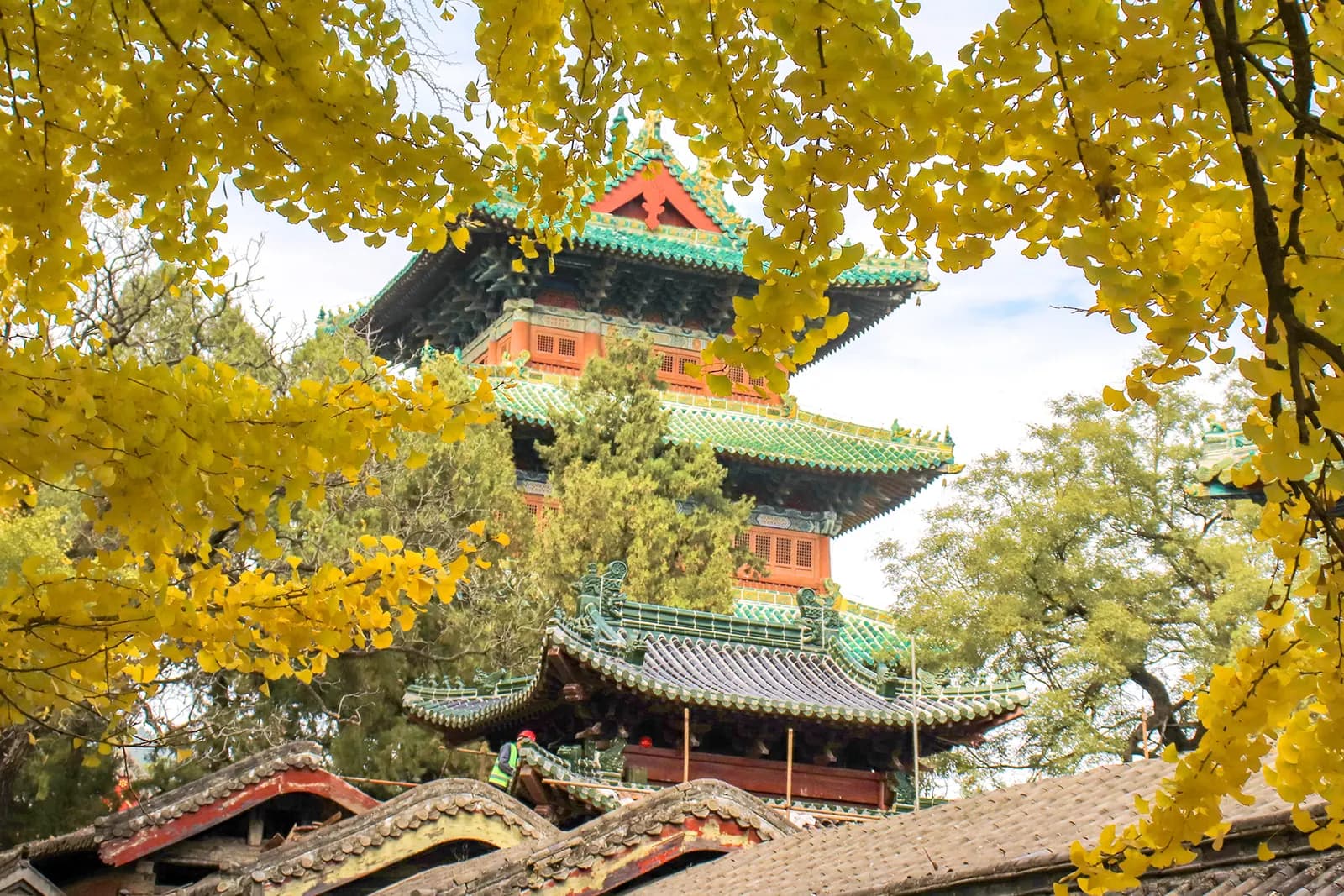
The bell tower behind a ginkgo
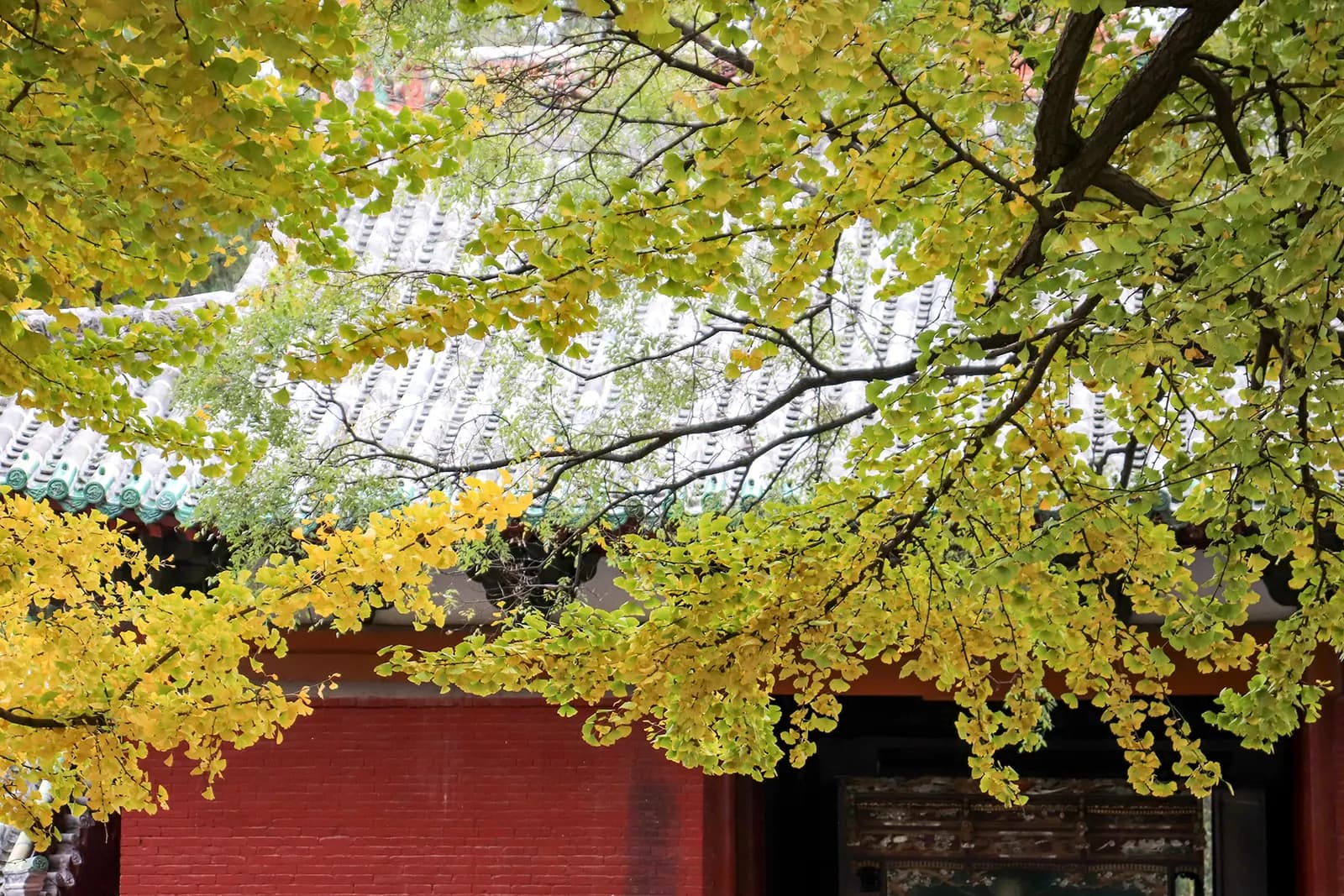
A courtyard of autumn ginkgo
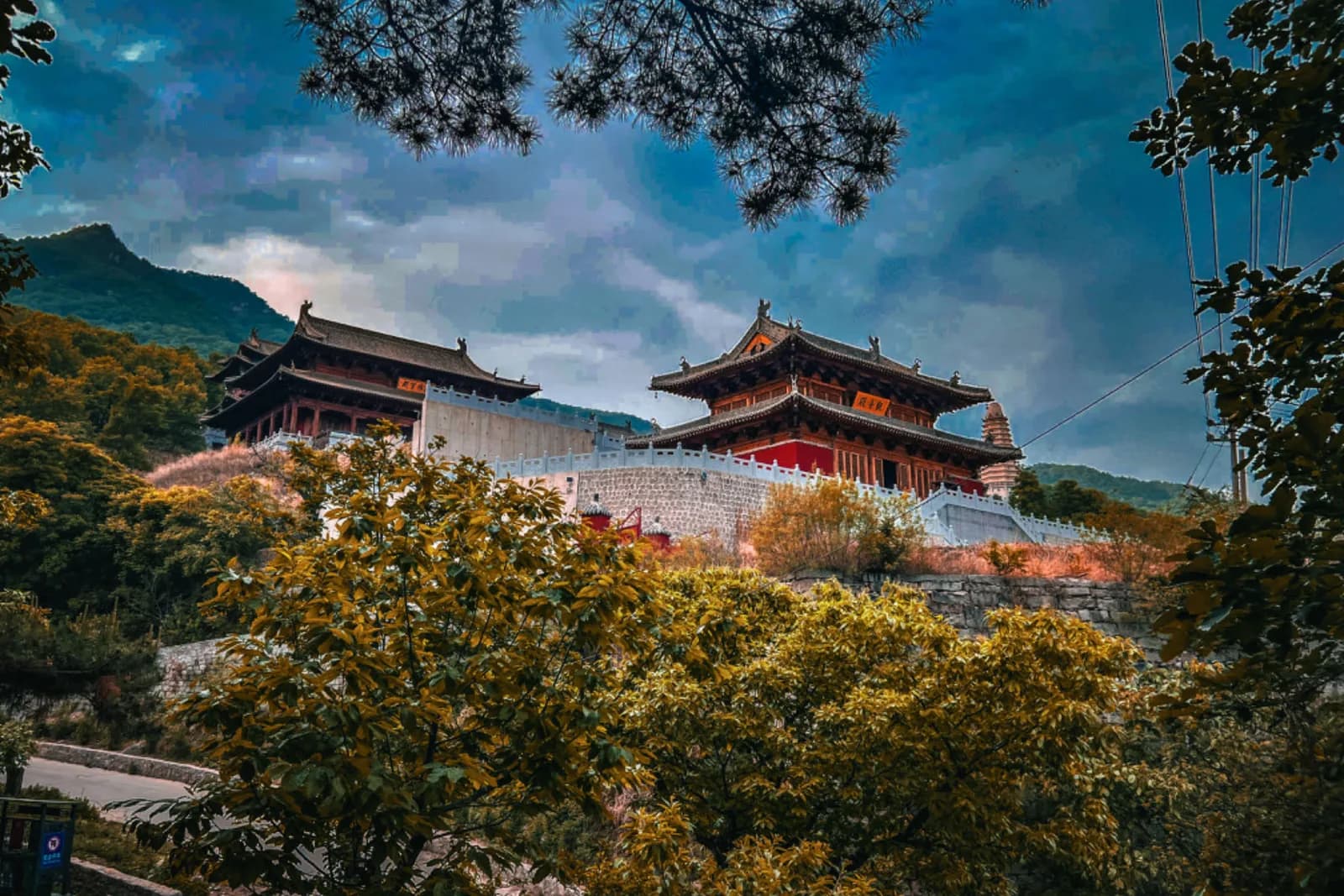
Temple halls framed by trees
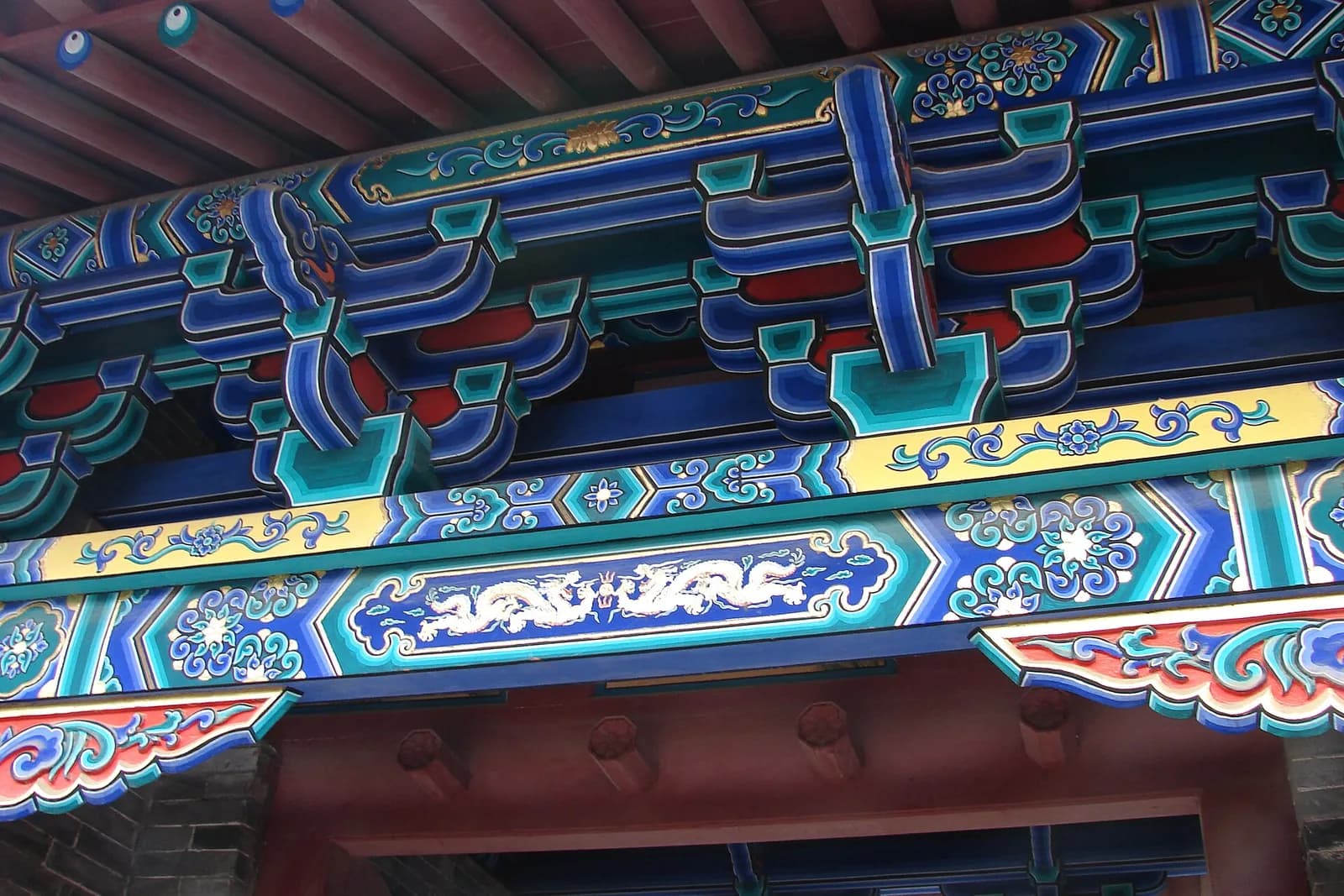
Painted eaves of a temple hall
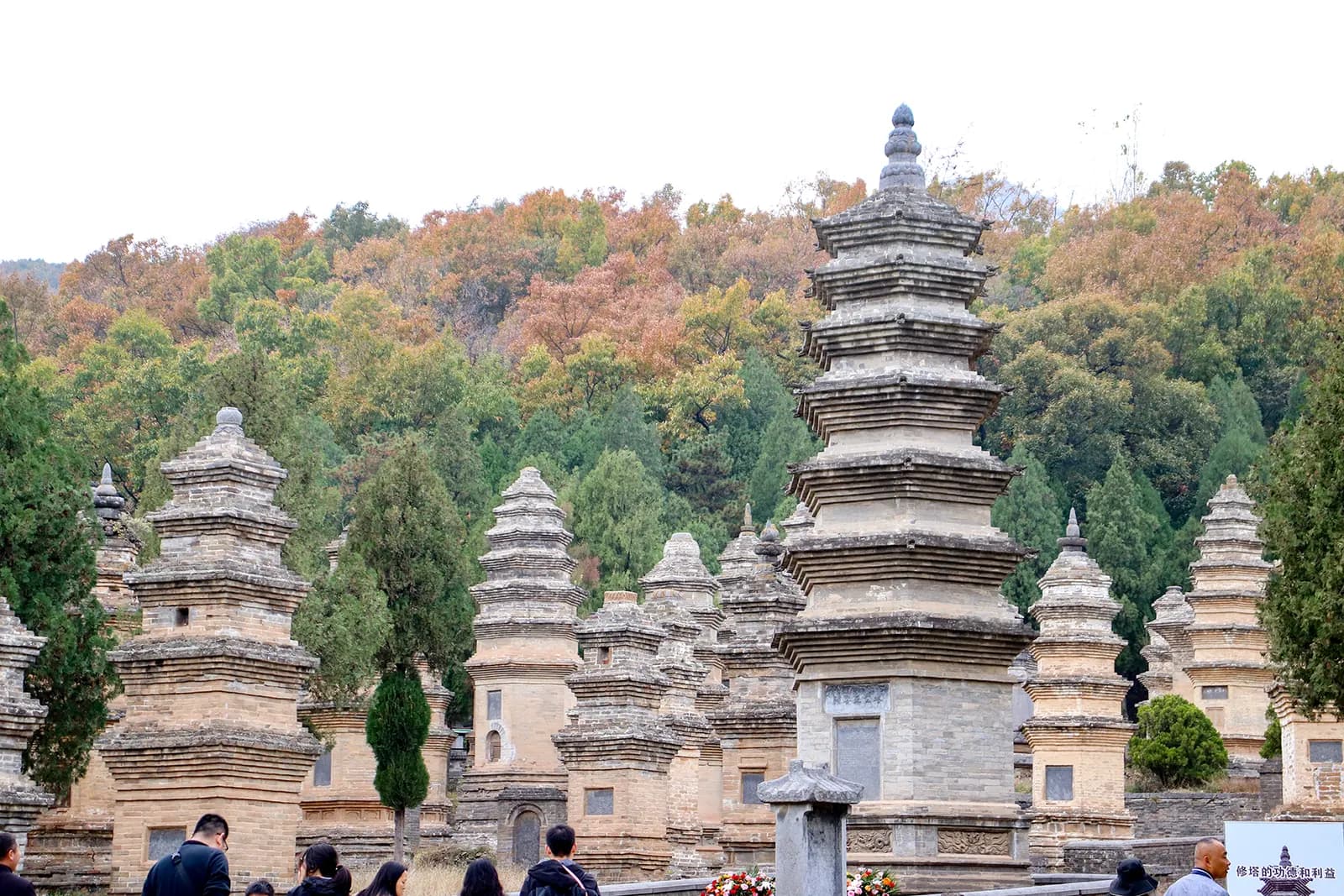
The Pagoda Forest
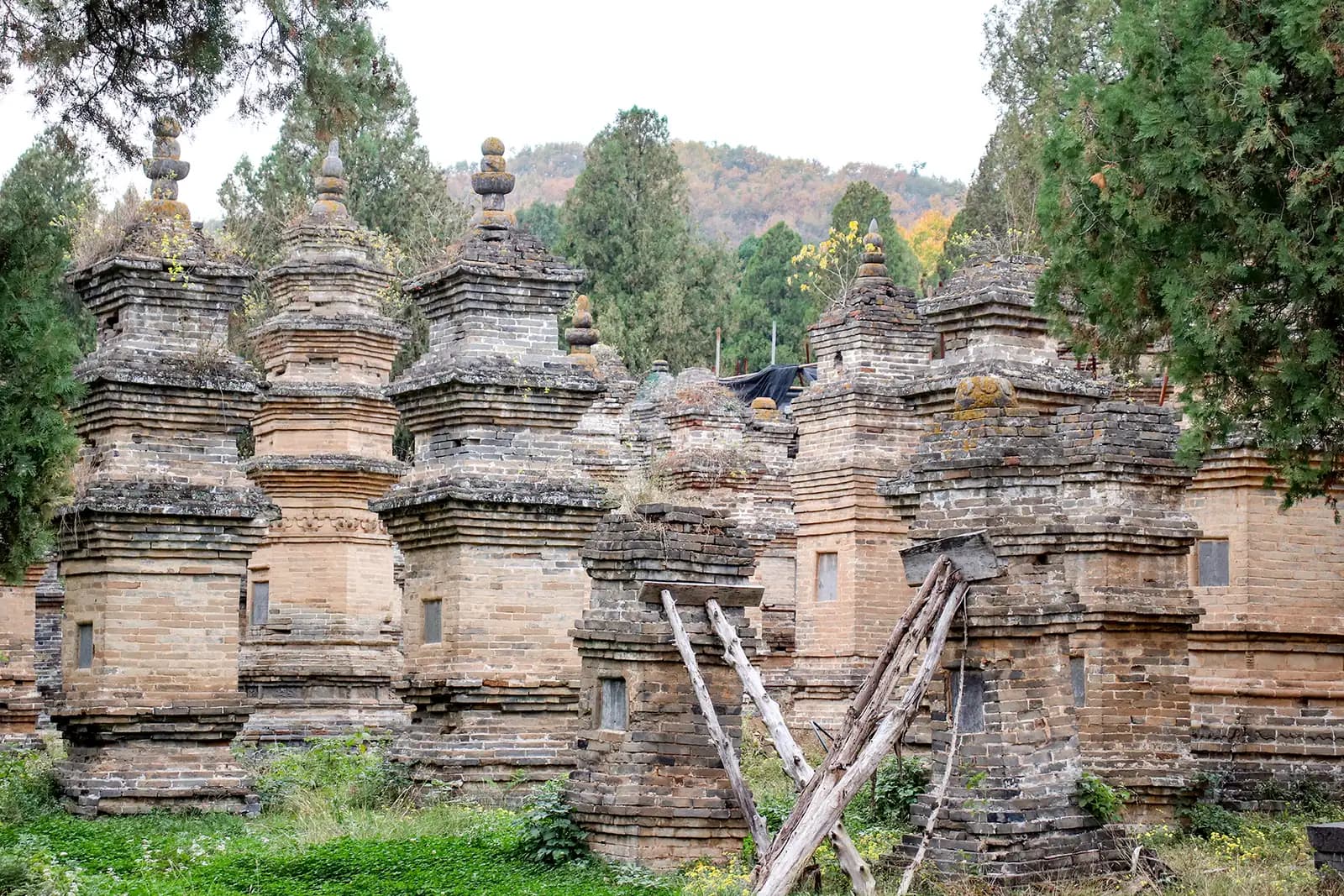
Brick pagodas in the Pagoda Forest
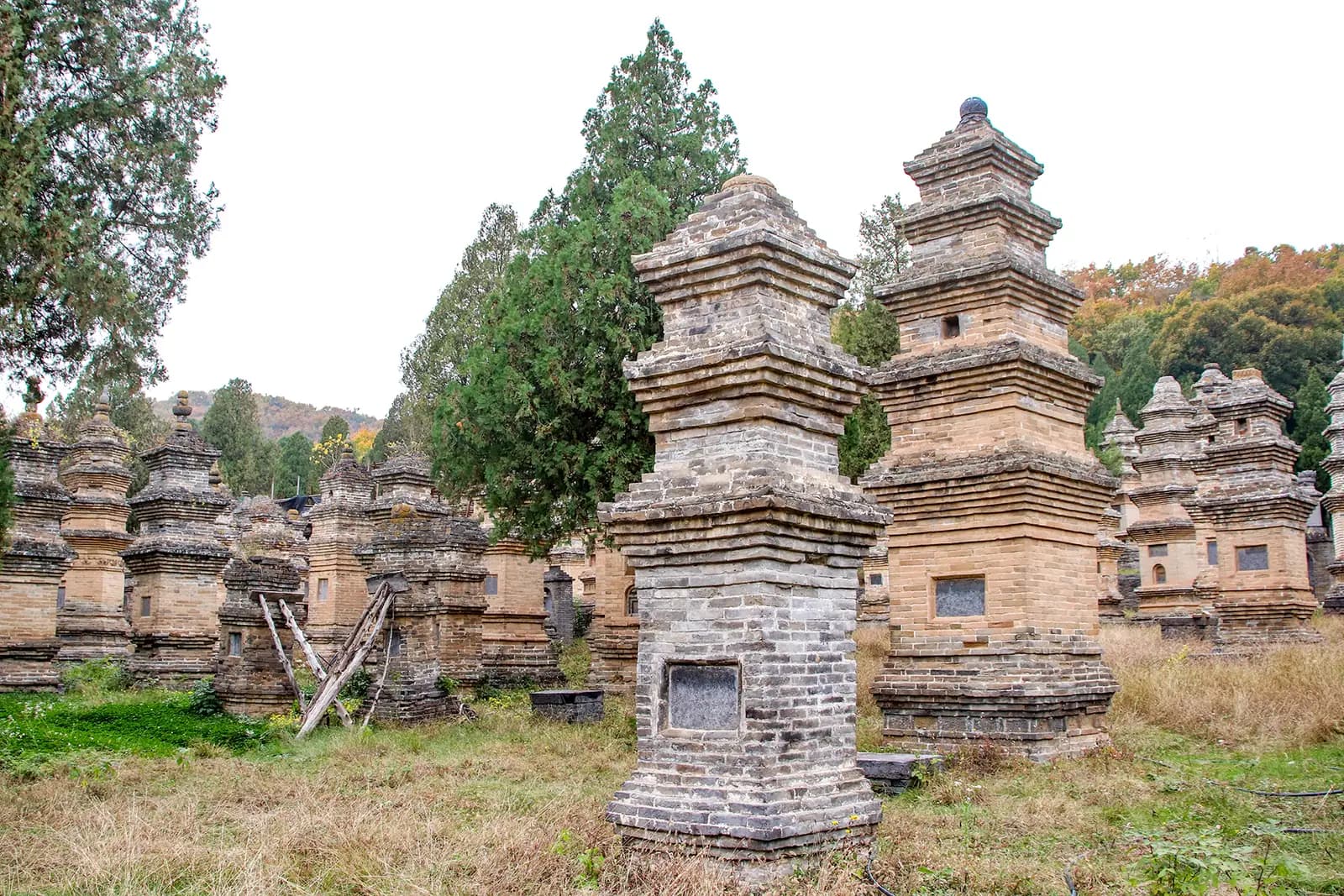
Old pagodas in the Pagoda Forest
Founded in 495 CE under the Northern Wei dynasty, Shaolin is the ancestral monastery of Chan Buddhism and the birthplace of Shaolin kung fu. It sits below the Wuru Peak of Mount Song, and the temple, pagoda forest, First Patriarch Hermitage and Bodhidharma Cave together form a single monastic landscape. In 2010 the surrounding "Centre of Heaven and Earth" monuments were inscribed on the UNESCO World Heritage List.
What to see
- The main temple: gate, Hall of Heavenly Kings, Mahavira Hall, Scripture Library and Thousand Buddha Hall on one axis. The Ming-dynasty mural in the Thousand Buddha Hall is the monastery's most prized painting.
- The Pagoda Forest: more than 240 brick and stone tomb pagodas from the Tang to the Qing, the largest such complex in China.
- Shaolin kung fu: daily demonstrations, and introductory sessions can be arranged at nearby schools with advance notice.
- Sanhuangzhai: a cliff-side walk on the western flank of Mount Song. Fit visitors should give it its own day rather than combining it with the temple.
Practical notes
This is an active religious site: long trousers, no revealing clothing, no photography inside the halls. Weekends and public holidays are busy — arrive before 08:00. The cable car saves some walking, but the temple and pagoda forest are covered on foot, roughly three to four hours in total.