
Luoyang
White Horse Temple
- From Zhengzhou
- About 40 minutes by high-speed rail
- Allow
- Half a day
- Best season
- Year-round
From the official website
In the scenic area's own words
Transcribed from the operator's official site, with the date we read it. Independent of the guide above, which is our own writing.
The White Horse Temple stands twelve kilometres east of Luoyang, backed by Mount Mang and facing the Luo river. Founded in 68 CE (the eleventh year of Yongping, Eastern Han), it was the first monastery built in China after Buddhism arrived, and it holds a particular place in Chinese Buddhist history as the tradition's 'source' and 'ancestral courtyard'.
- Location
- Twelve kilometres east of Luoyang, backed by Mount Mang and facing the Luo
- Founded
- 68 CE, Eastern Han
- Standing
- The first monastery built in China by official order after Buddhism arrived
- Heritage status
- Among the first batch of Major Historical and Cultural Sites Protected at the National Level, 1961
- Layout today
- Restored in 1556 (thirty-fifth year of Jiajing, Ming); a rectangular, south-facing compound of about 40,000 m², with the Tianwang, Great Buddha, Mahavira, Jieyin and Vairocana halls and the Qiyun pagoda
- Qiyun Pagoda
- A square, multi-eaved brick pagoda, 13 storeys and 35 m tall; the present structure was rebuilt in 1175 and is Luoyang's oldest surviving building
- Mahavira Hall figures
- The eighteen arhats are Yuan-dynasty dry-lacquer figures — a technique largely lost after the Song and rarely surviving
What to see
Qiyun Pagoda
East of the gate: a distinctive square brick pagoda of thirteen eaves and 35 metres, the oldest surviving building in Luoyang.
Qingliang Terrace and Vairocana Hall
A brick terrace known as the 'courtyard in the air' — 43 by 33 metres and six metres high — carrying the double-eaved Vairocana Hall in its own enclosure.
Mahavira Hall
Housing the Buddhas of the three times, with the eighteen Yuan dry-lacquer arhats along the sides.
The two monks' tombs
Two mounds among the cypresses inside the gate, marking the monks Kasyapa-matanga and Dharmaratna, who brought the scriptures to China.
The temple bell
A Ming cast-iron bell of 2,500 kg; 'the bell of the White Horse Temple' is one of the eight sights of Luoyang.
Photographs
These photographs are openly licensed for commercial use (from Wikimedia Commons: CC0, CC BY, CC BY-SA or public domain) and are not the attraction's own gallery. Each photo is credited below with its author and licence, linked to the original file.
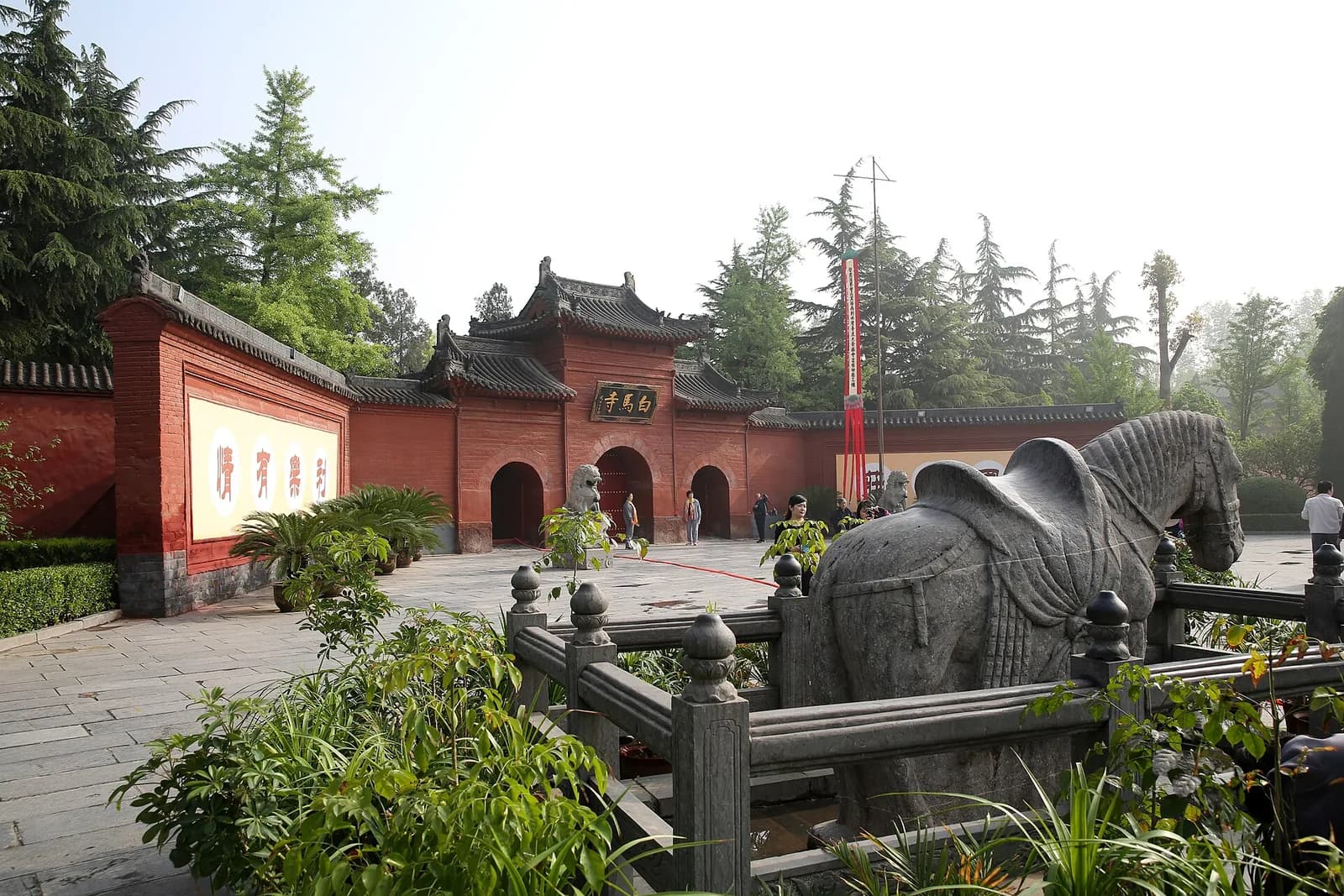
The main gate (shanmen)
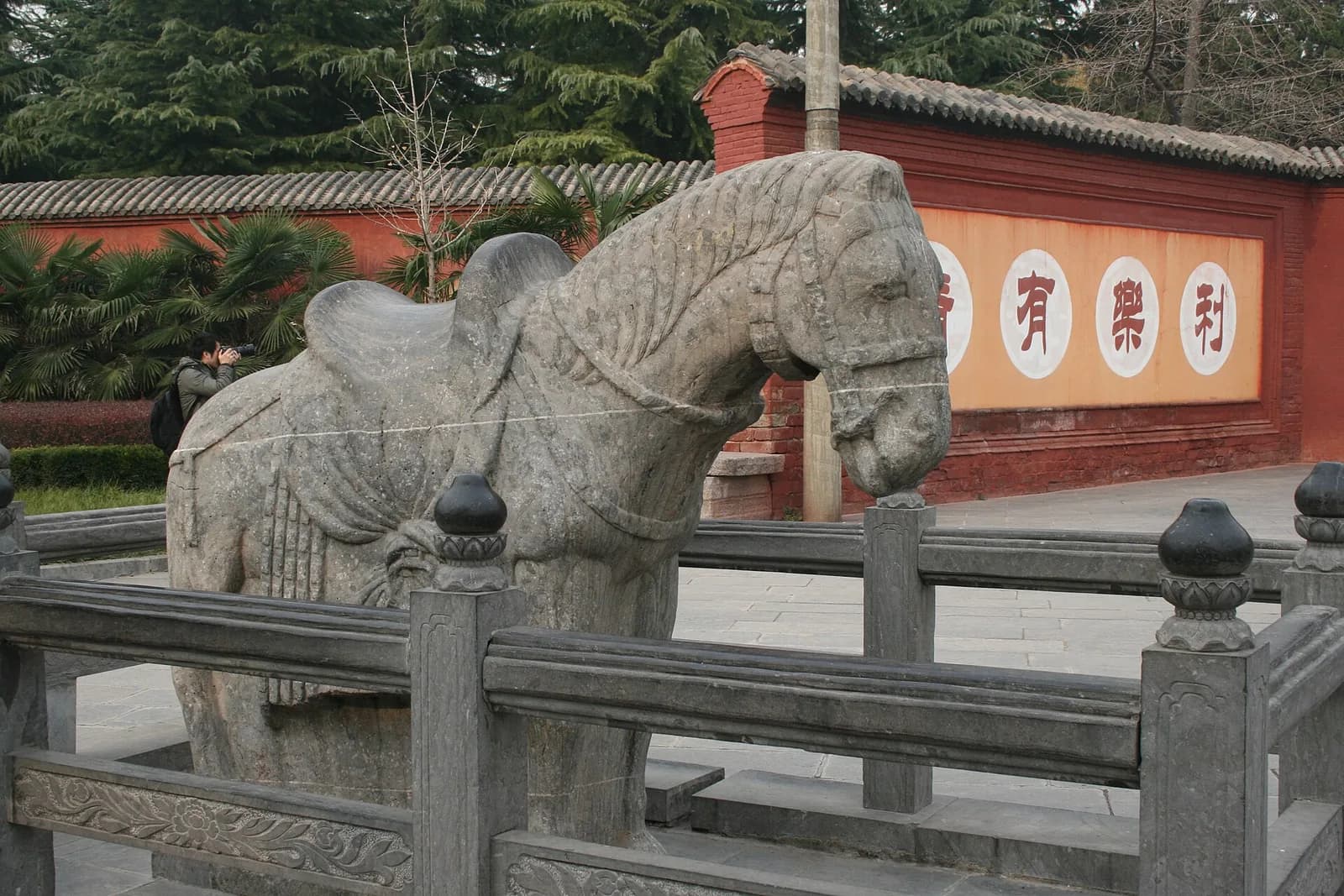
The stone horse before the gate
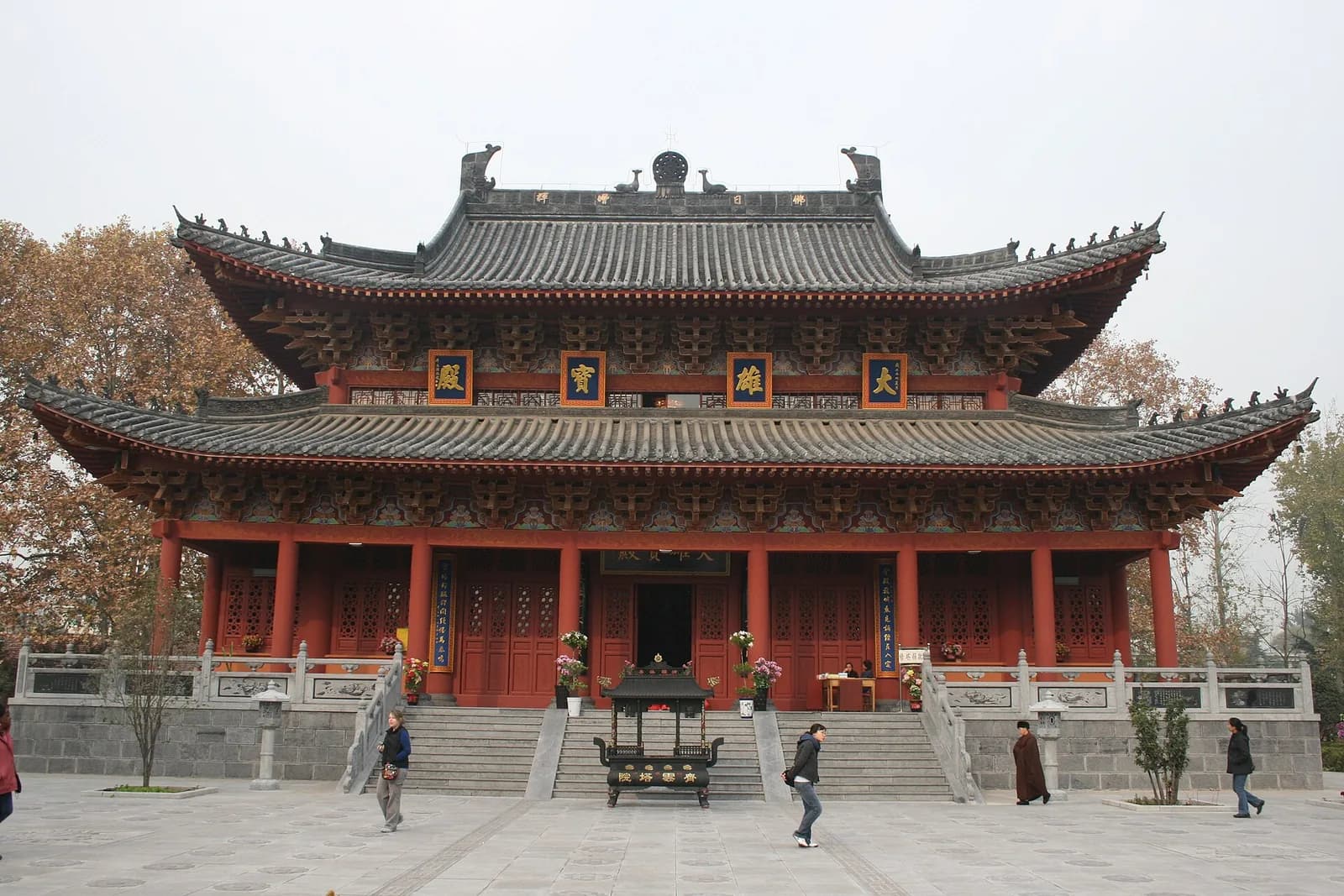
A main hall of the temple
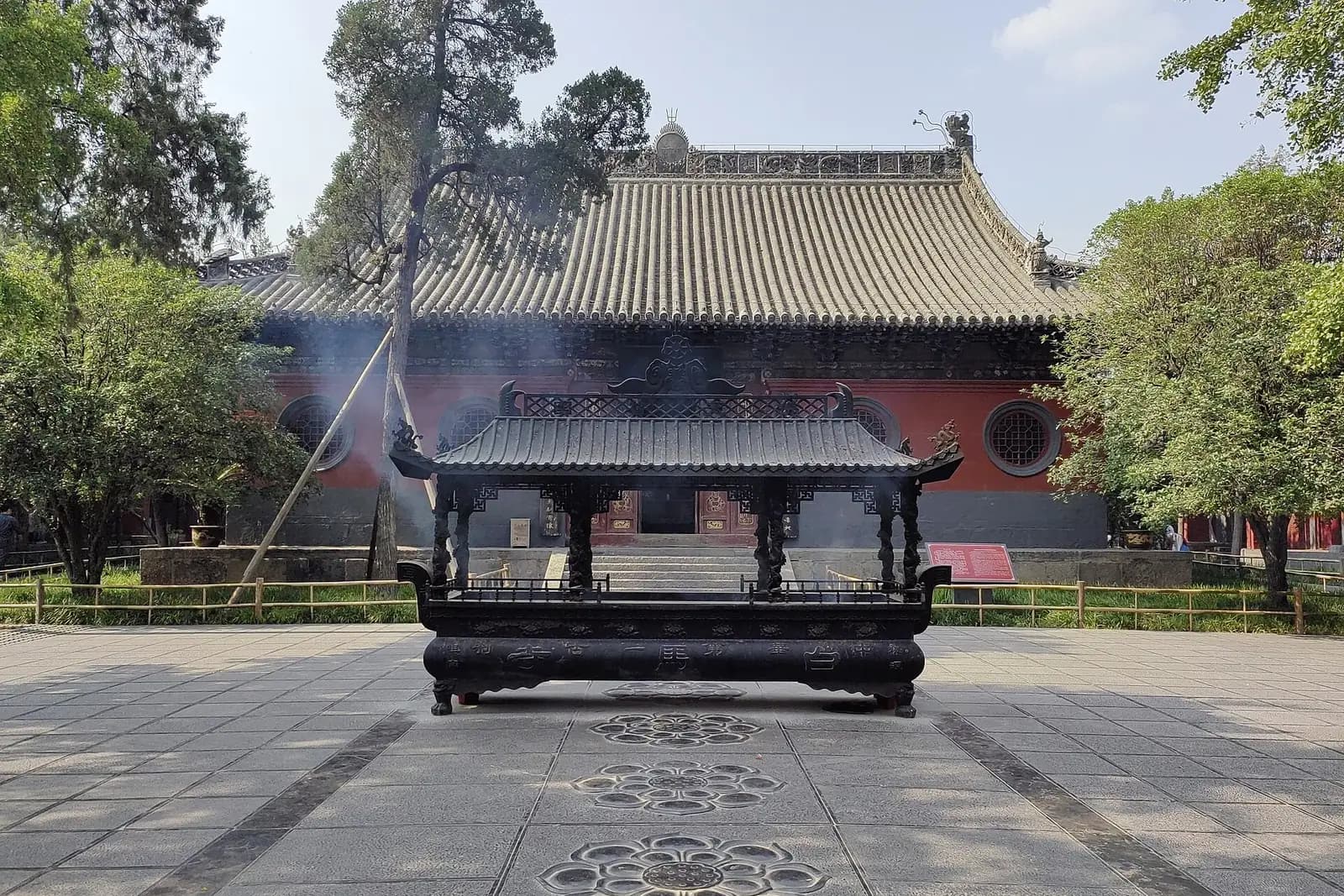
A courtyard with its incense burner
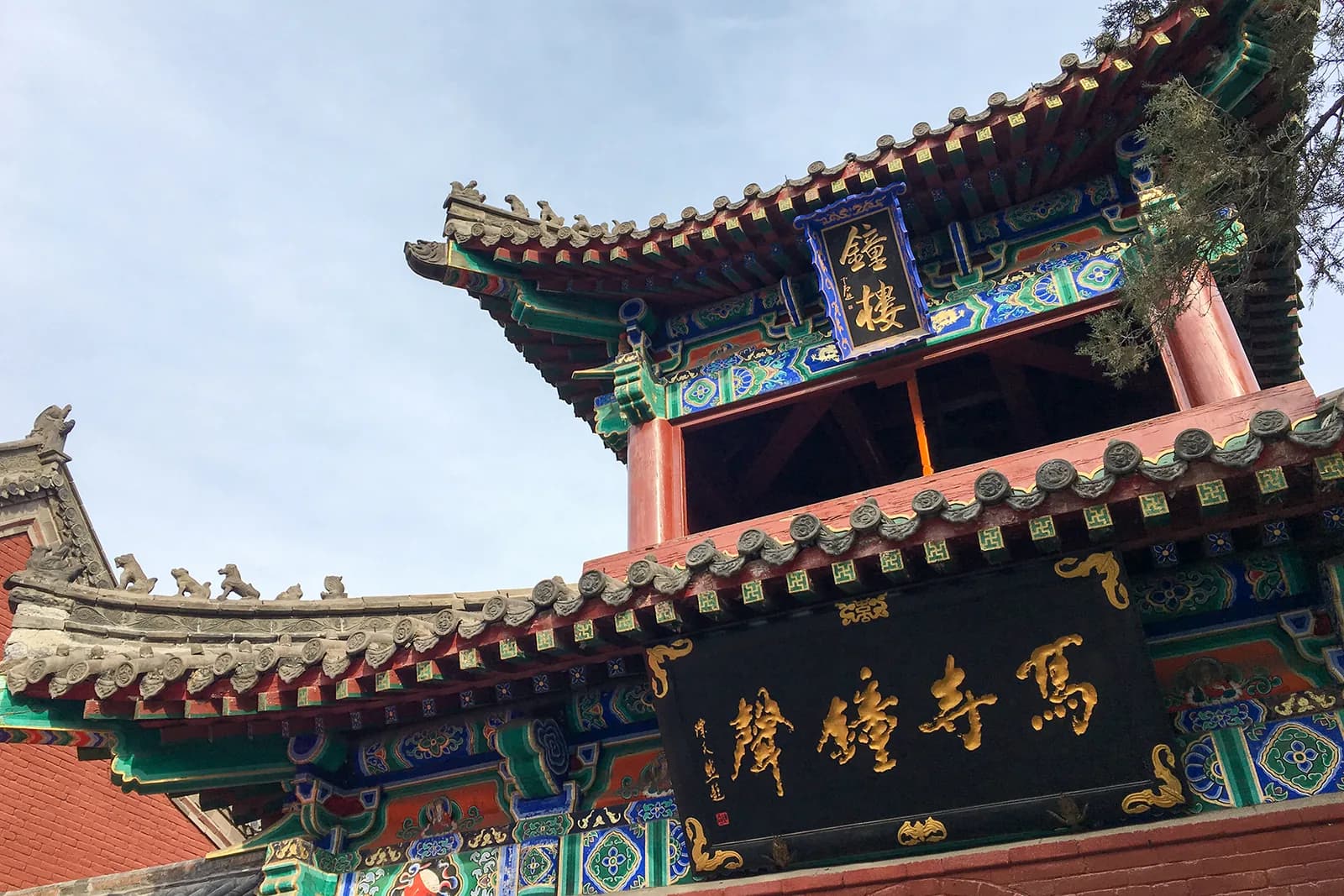
The bell tower
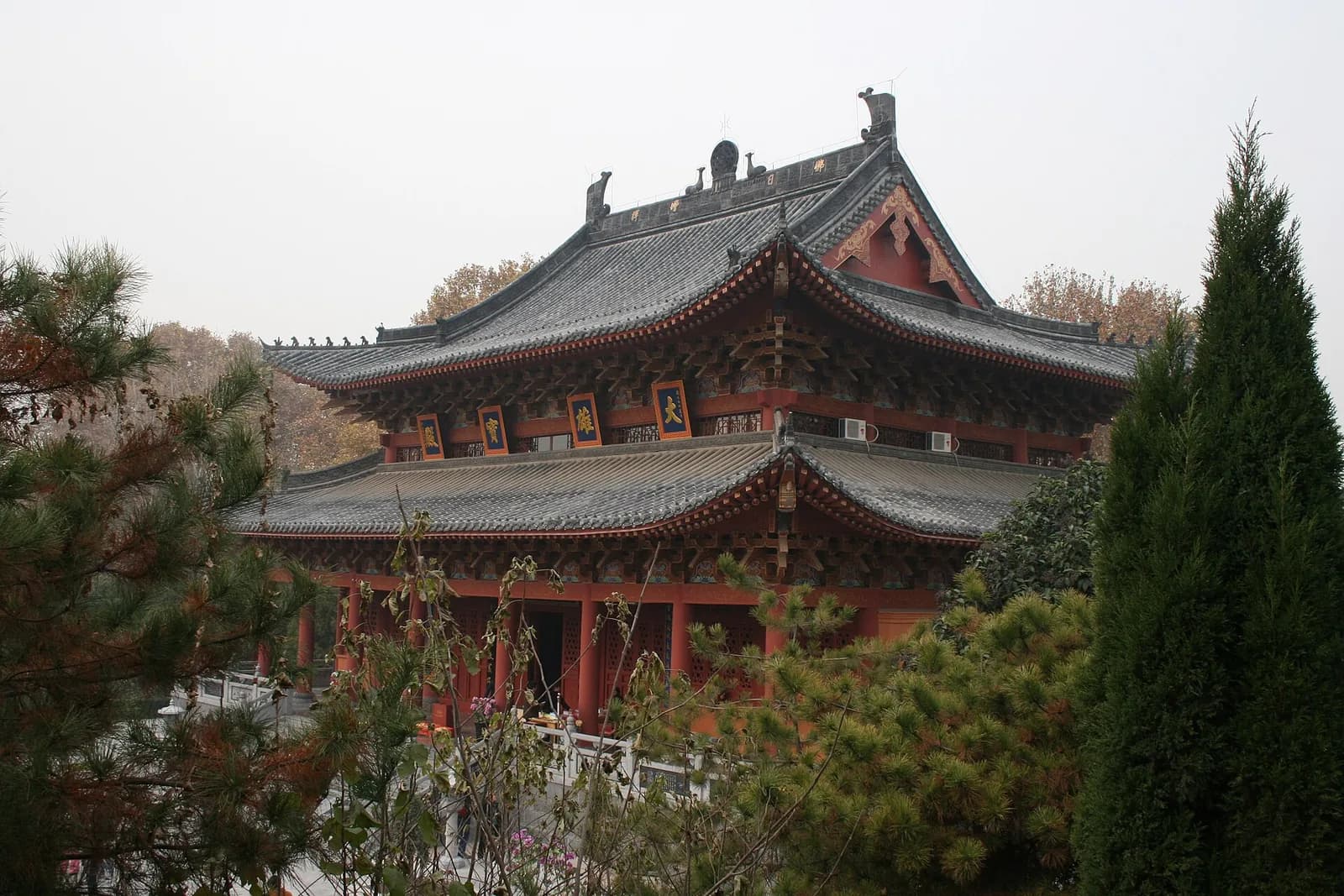
Temple halls among the trees
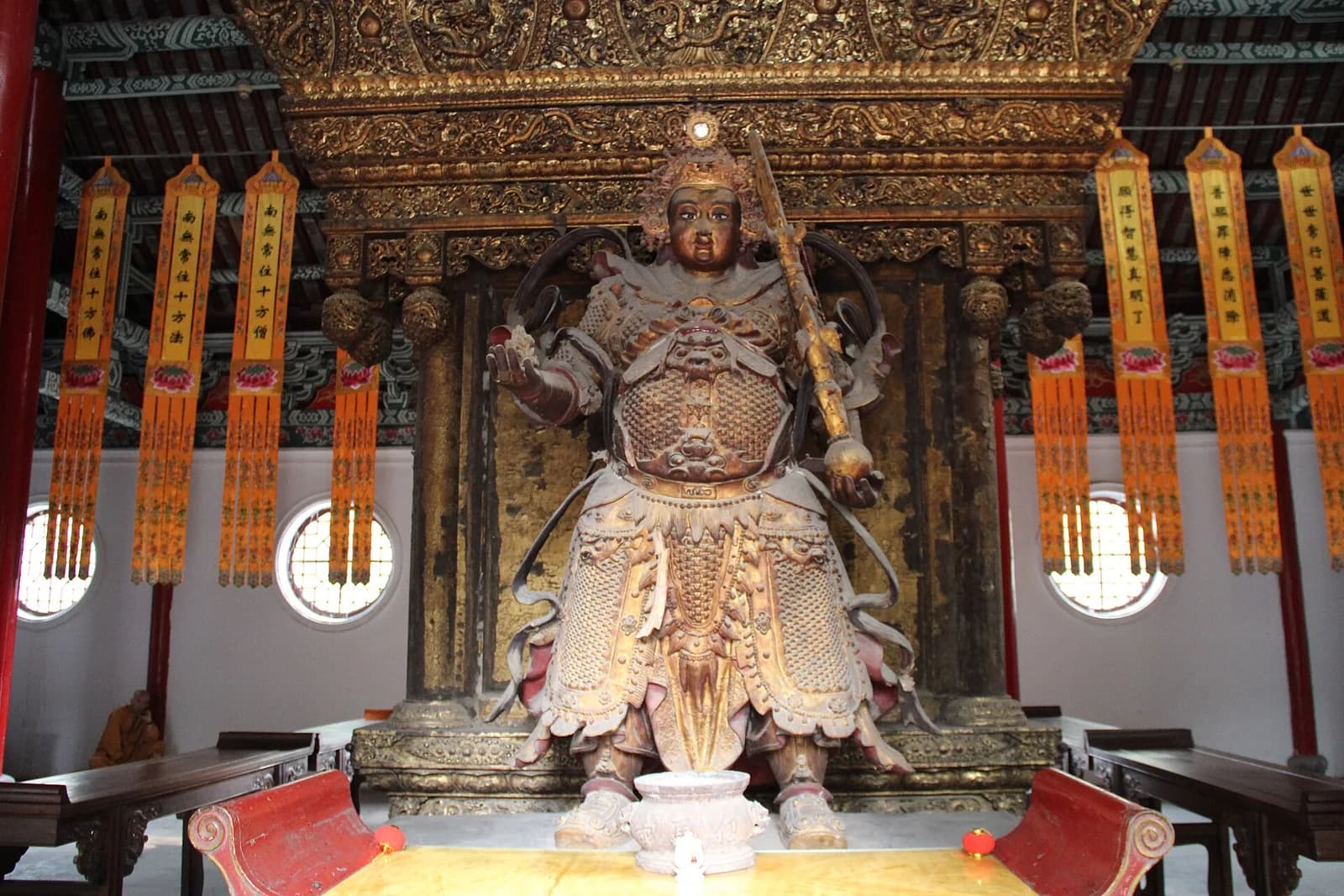
A guardian figure inside a hall
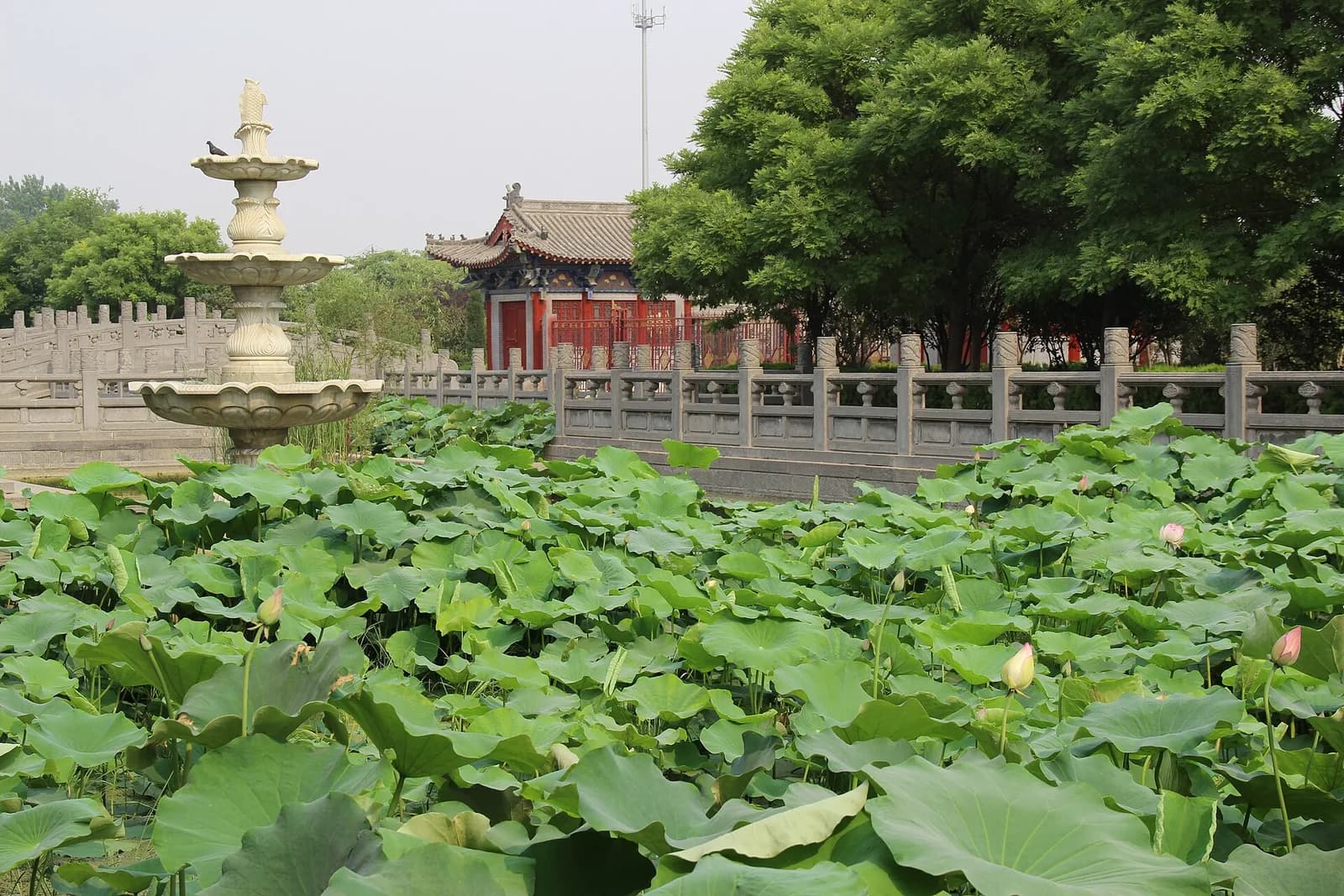
The lotus pond
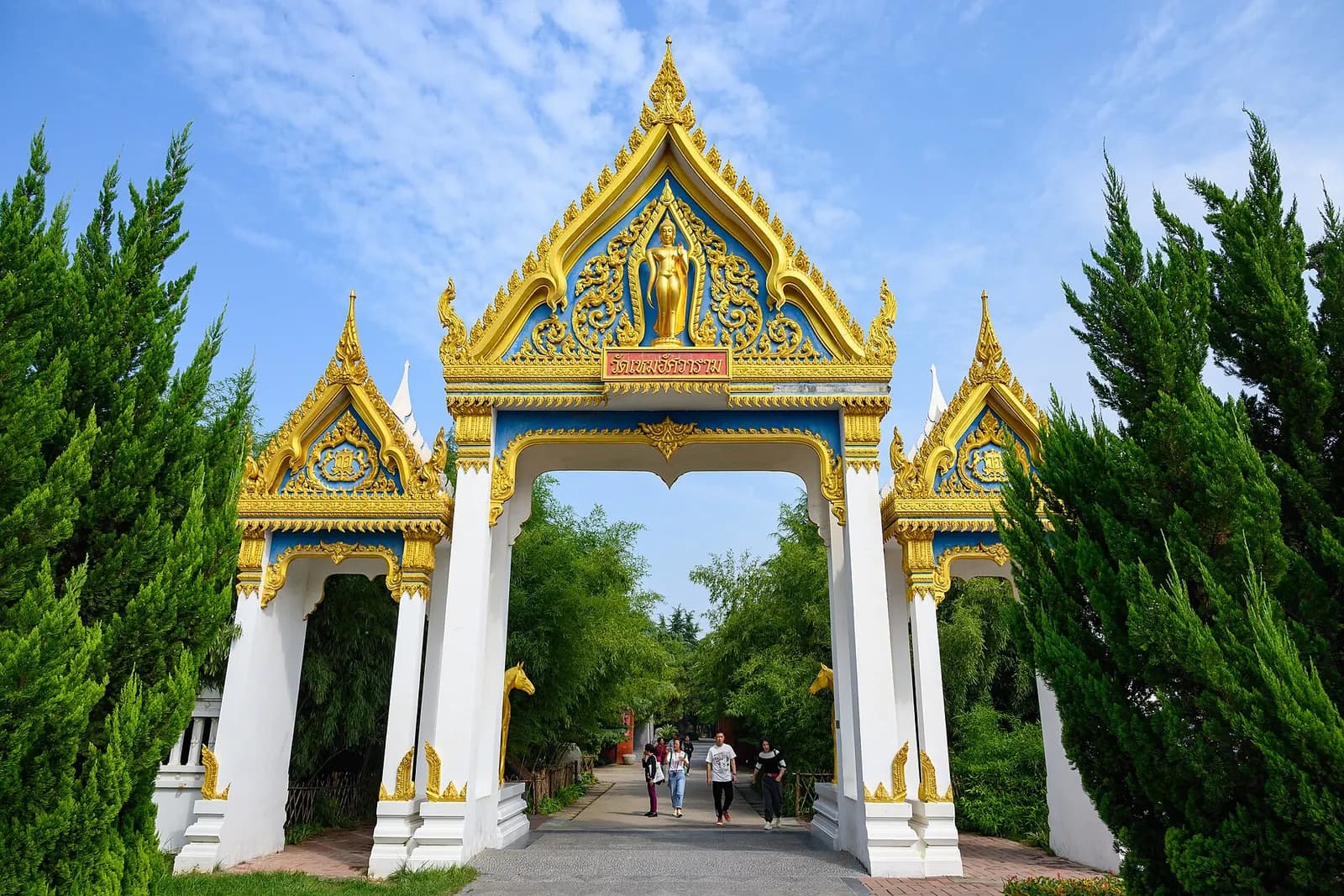
The Thai Buddhist hall
East of Luoyang, this is the first Buddhist temple established under imperial patronage after Buddhism reached China, and is honoured as the country's earliest monastery. The central axis follows the traditional Chinese layout, while Indian, Burmese and Thai halls donated by those governments stand to either side — an unusual four-country juxtaposition that makes this the clearest place to understand how Buddhism entered China.
What to see
- The central axis: Hall of Heavenly Kings, Great Buddha Hall, Mahavira Hall, Reception Hall and Vairocana Pavilion in sequence, with Yuan-dynasty dry-lacquer figures among the important survivals.
- The international halls donated by the Indian, Burmese and Thai governments — the stylistic differences need no explanation.
- The Qiyun Pagoda, a thirteen-storey Jin-dynasty brick pagoda east of the gate, routinely skipped and worth a separate walk.
- The tomb of Di Renjie, a Tang statesman, a short distance away.
Practical notes
The temple and the Longmen Grottoes are both in Luoyang but on opposite sides of the city; combining them in one day is rushed. Give the temple its own half day. This is an active religious site: long trousers, covered shoulders, no photography inside the halls.