
Luoyang
Longmen Grottoes
- From Zhengzhou
- About 40 minutes by high-speed rail
- Allow
- Half to a full day
- Best season
- April–May (peony season), September–October
From the official website
In the scenic area's own words
Transcribed from the operator's official site, with the date we read it. Independent of the guide above, which is our own writing.
The Longmen Grottoes stand five kilometres south of Luoyang, where Mount Xiang and Mount Longmen face each other with the Yi river running between them — a natural gateway that gave the site its old name, Yique. Carving began around the time the Northern Wei moved their capital to Luoyang and continued through the Northern Wei, Eastern and Western Wei, Northern Qi, Sui, Tang, Five Dynasties and Song. The span is what makes the site a record of Buddhism's absorption into China. Designated a Major Historical and Cultural Site Protected at the National Level in 1961 and inscribed on the UNESCO World Heritage List in 2000.
- Niches and caves
- 2,345
- Figures
- over 100,000
- Inscriptions
- over 2,800
- Vairocana Buddha height
- 17.14 m
- Smallest figure
- 2 cm, south wall of Lotus Cave
What to see
Guyang Cave
In the southern section of the west bank, cut into a natural karst cavity: 11.2 m high, 7.27 m wide and 11.83 m deep. It is the earliest, most richly carved and most heavily inscribed of the large caves — over 1,500 niches and more than 800 inscriptions. Nineteen of the twenty celebrated Longmen inscriptions are here. The 6.1 m Shakyamuni shows the Northern Wei "refined bones and clear features" manner.
Middle Binyang Cave
Commissioned by Emperor Xuanwu of the Northern Wei for his parents, Emperor Xiaowen and Empress Wenzhao — one of the most representative imperial caves of the Northern Wei period. Cut between 500 and 523 CE, about 24 years of work recorded as 802,366 labour units. The ceiling carries a canopy, the floor a lotus pond.
Prescription Cave
Holds the earliest stone-carved medical prescriptions found in China, dated to the Tang. The contents were incorporated into the Japanese Ishinpō — physical evidence of Chinese medicine travelling outward.
Fengxian Temple
The Vairocana Buddha, 17.14 m tall — the site's defining image.
Photographs
These photographs are openly licensed for commercial use (from Wikimedia Commons: CC0, CC BY, CC BY-SA or public domain) and are not the attraction's own gallery. Each photo is credited below with its author and licence, linked to the original file.
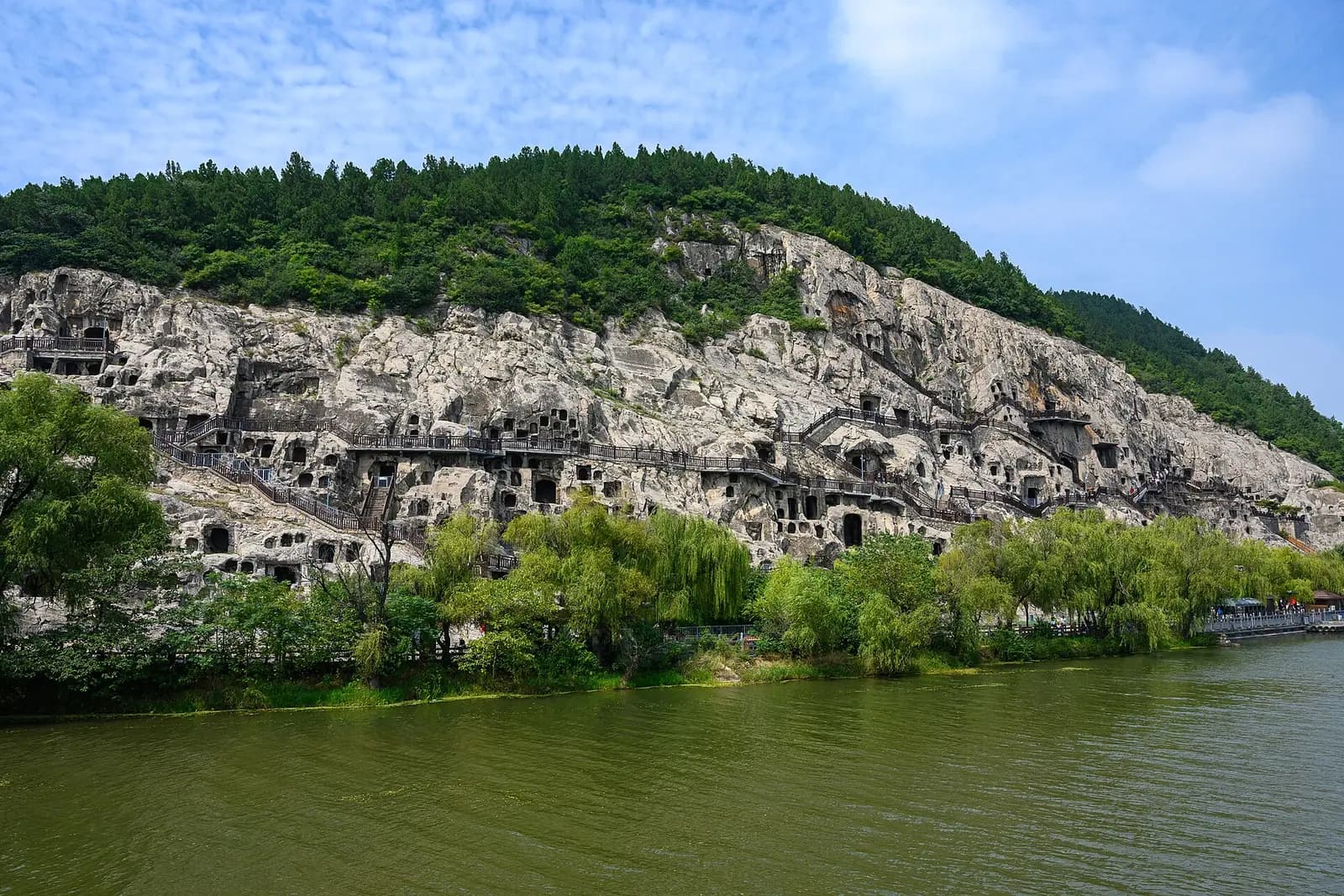
The Yi river and the west-bank cliffs
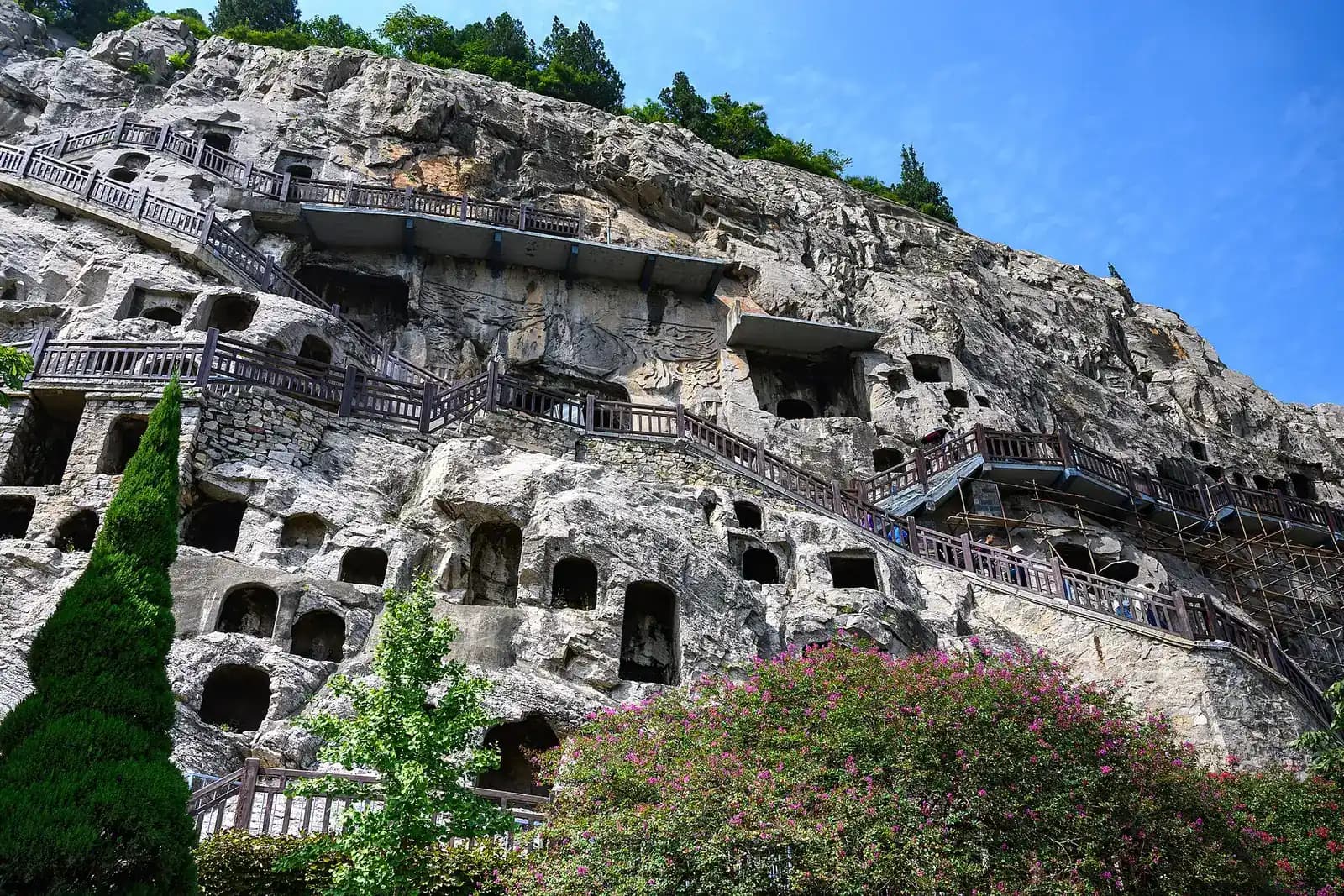
Niches crowding the cliff face
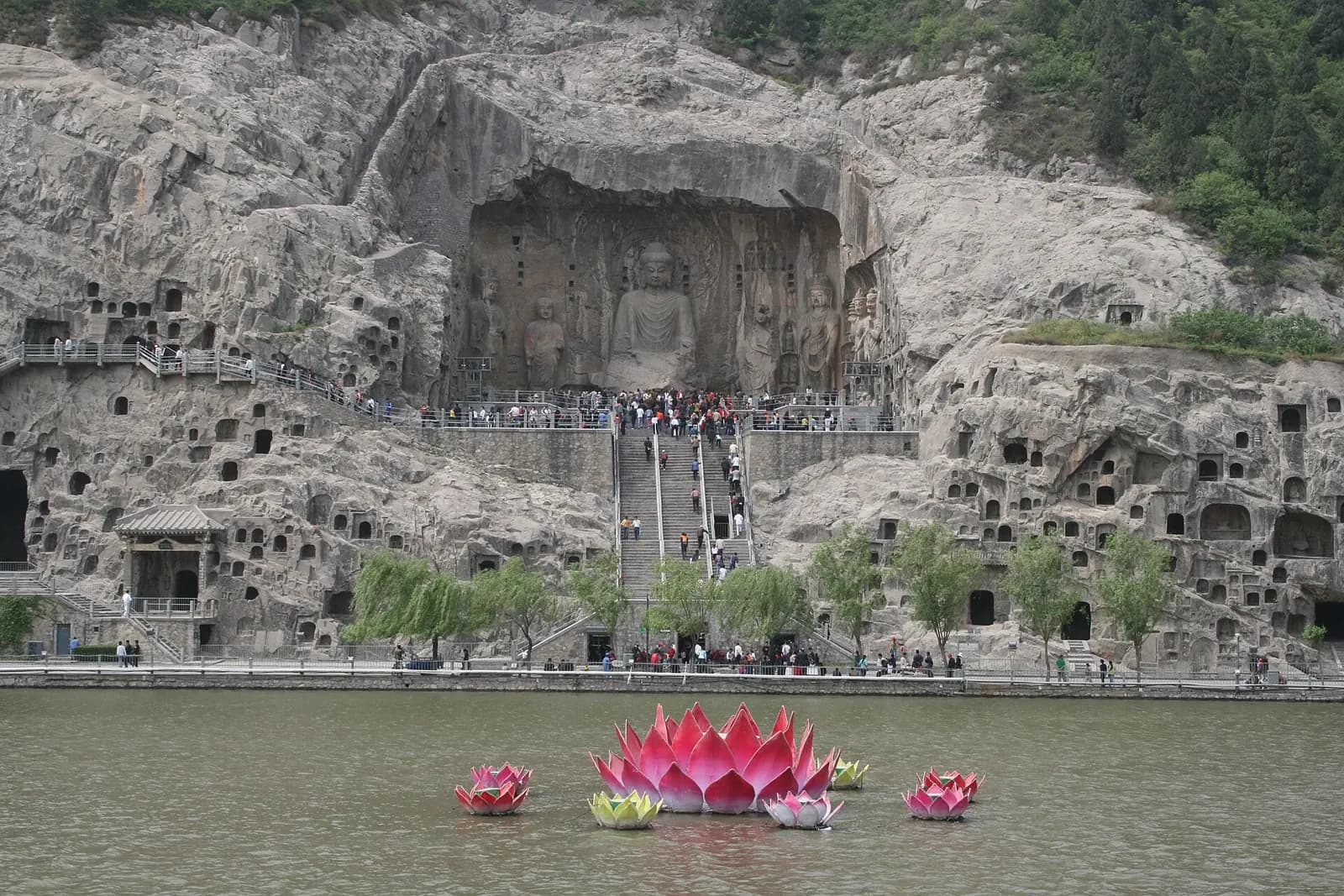
The great niche of Fengxian Temple
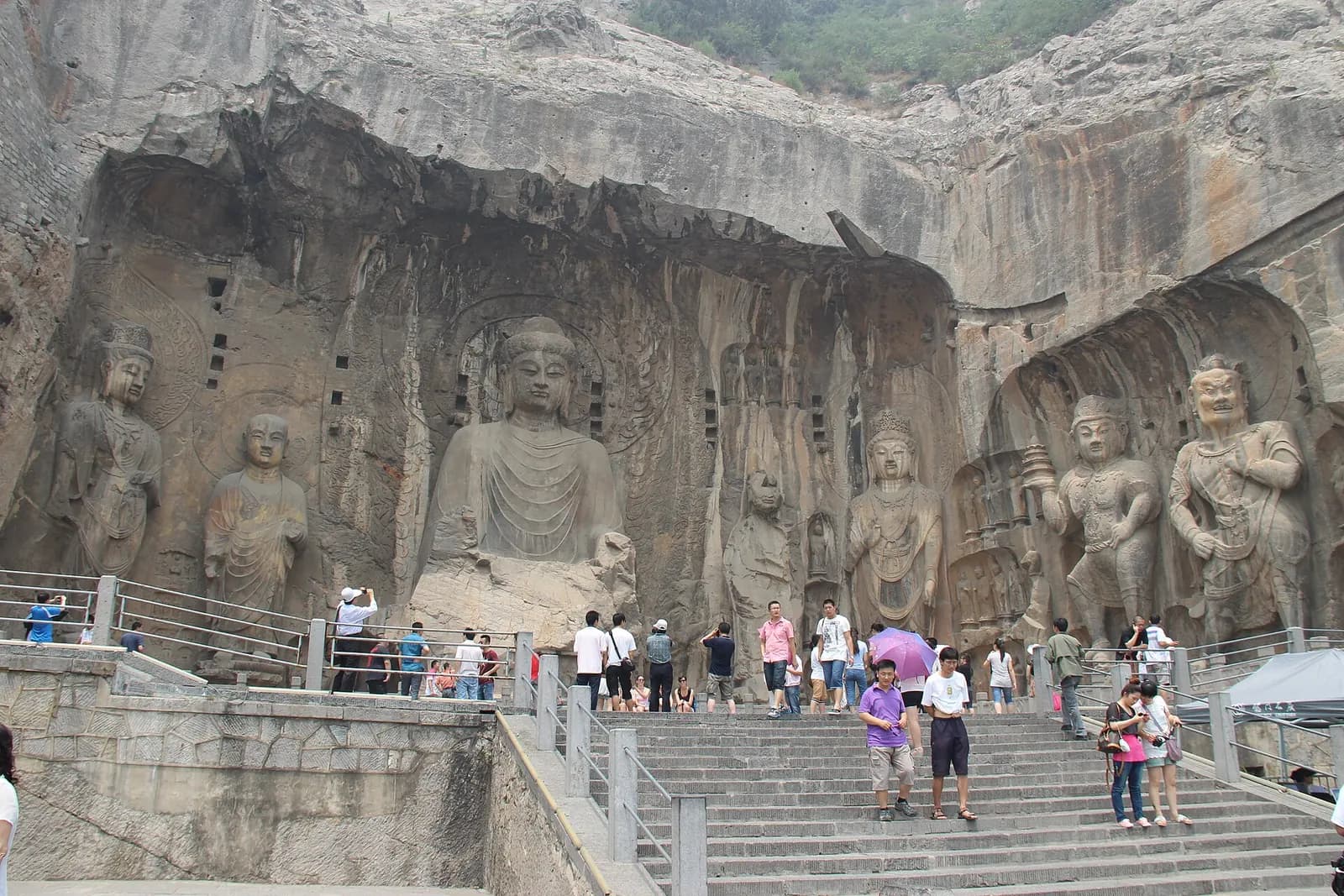
Vairocana Buddha and attendants, Fengxian Temple
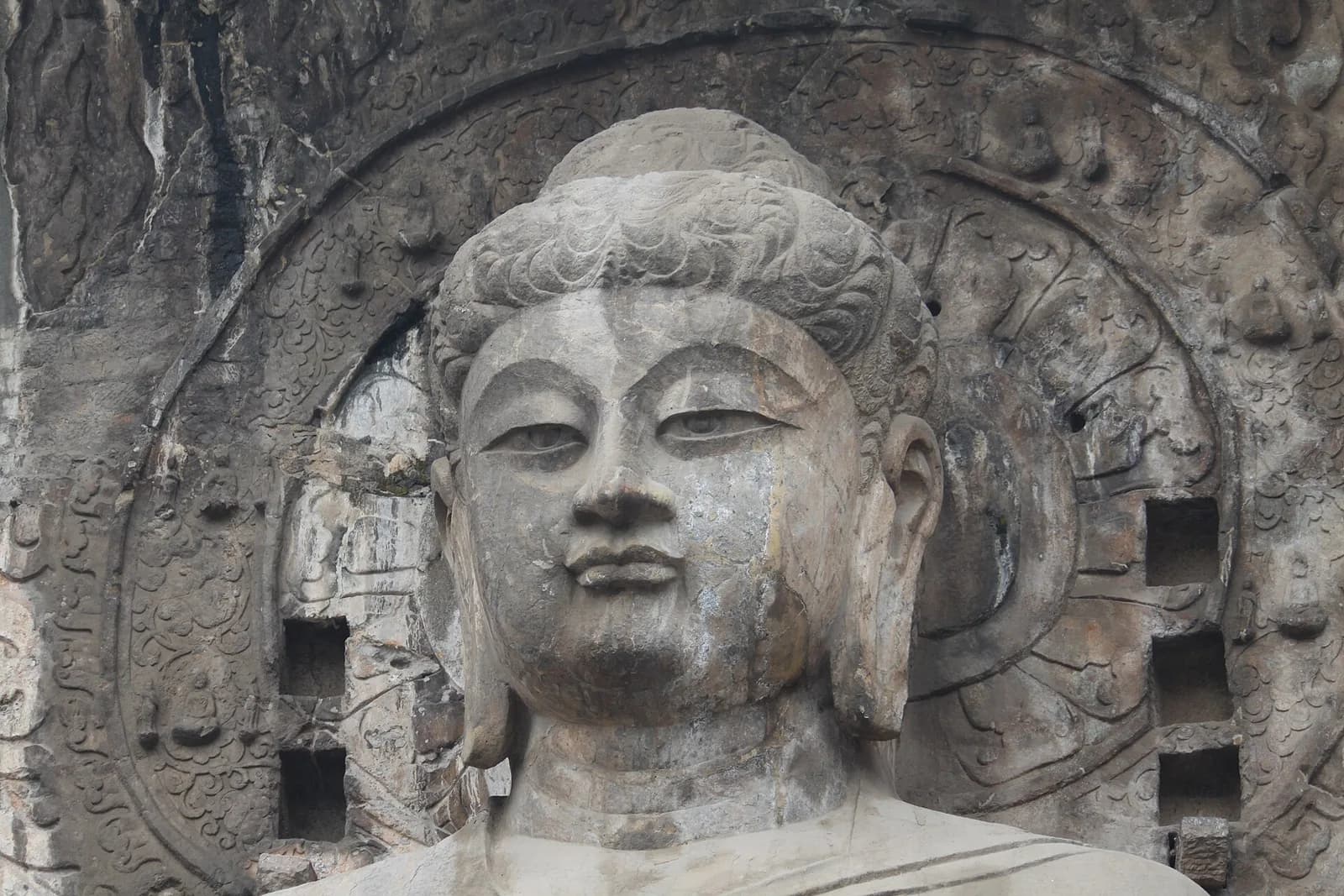
The Vairocana Buddha
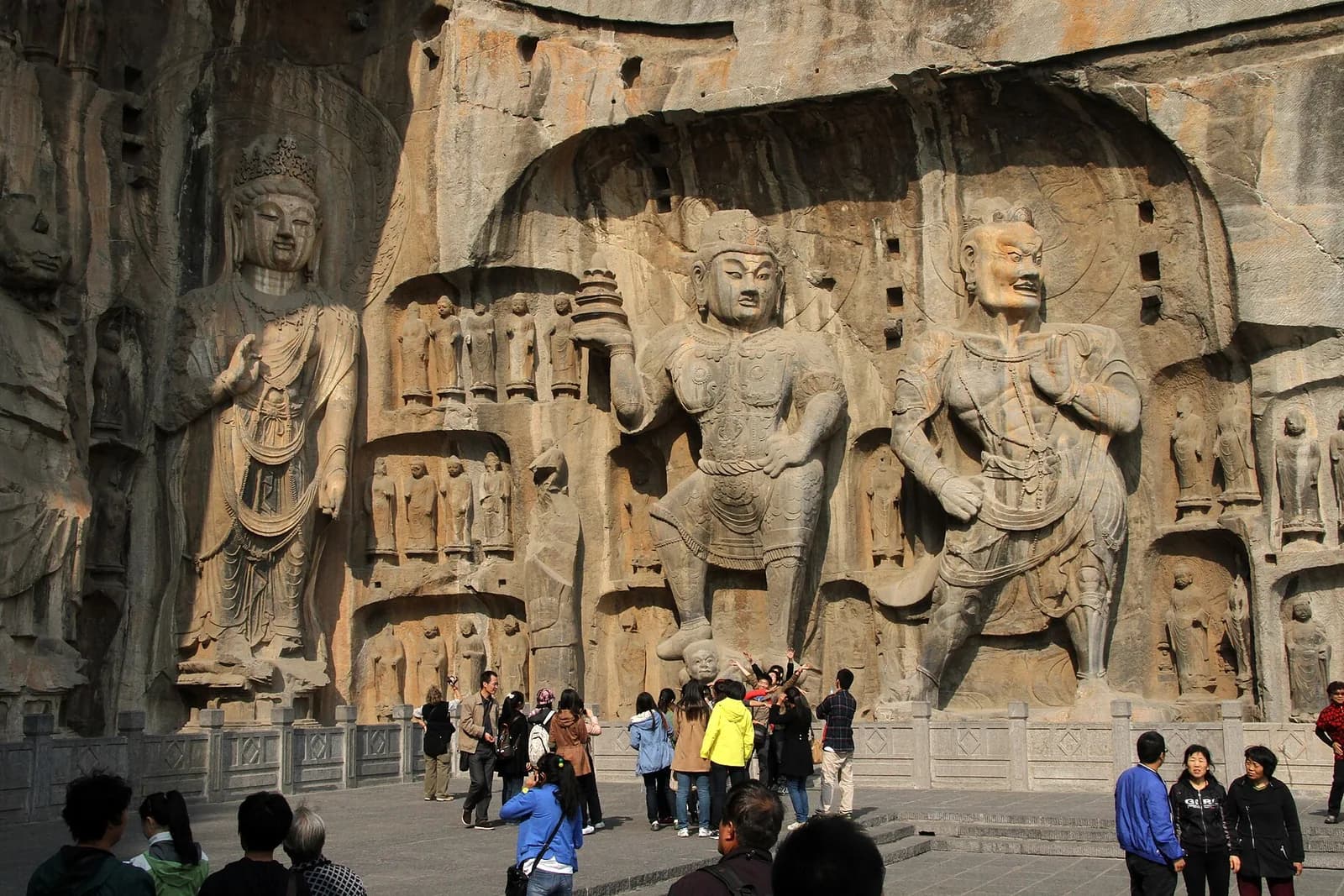
The Fengxian Temple figures
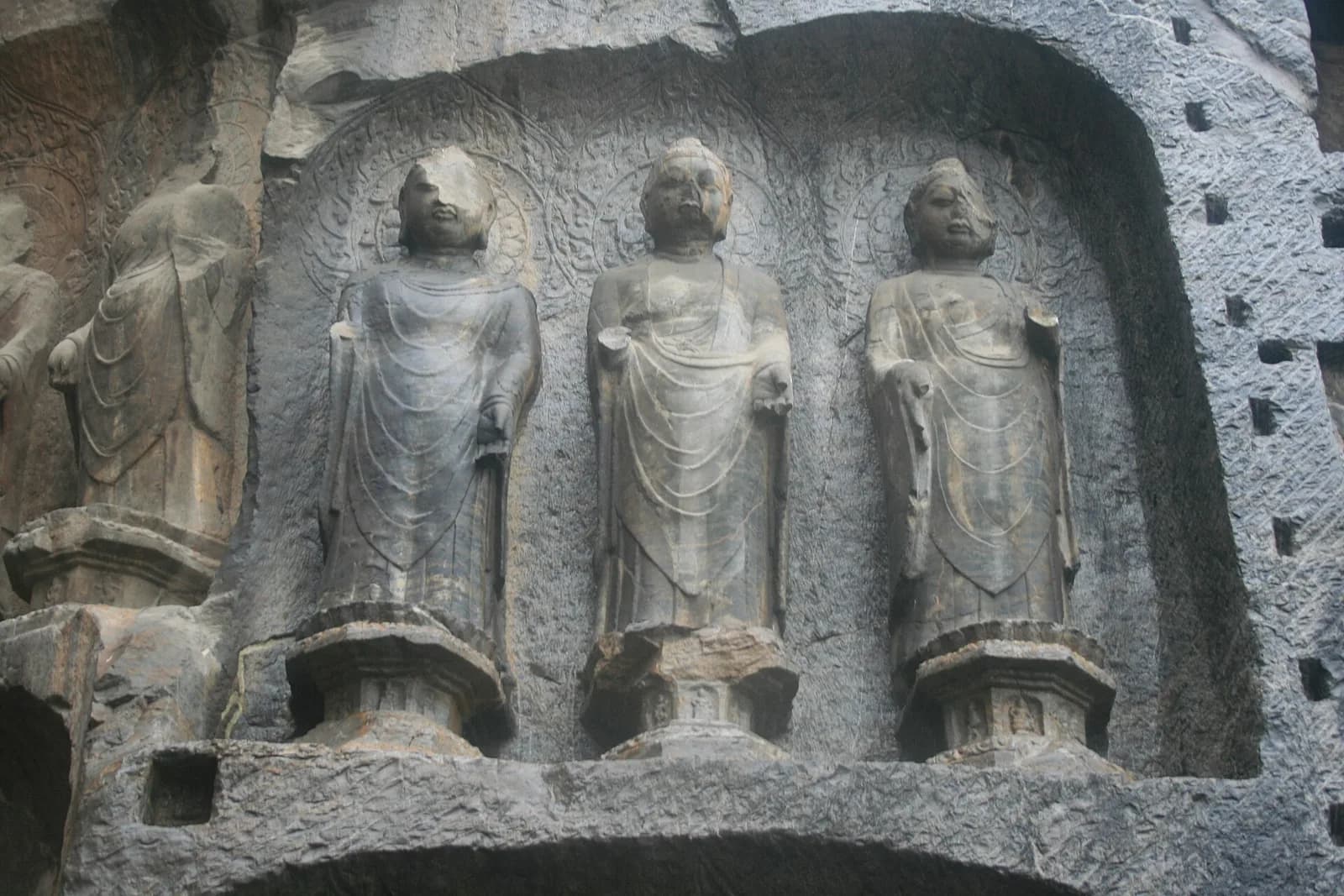
Attendant bodhisattvas, Fengxian Temple
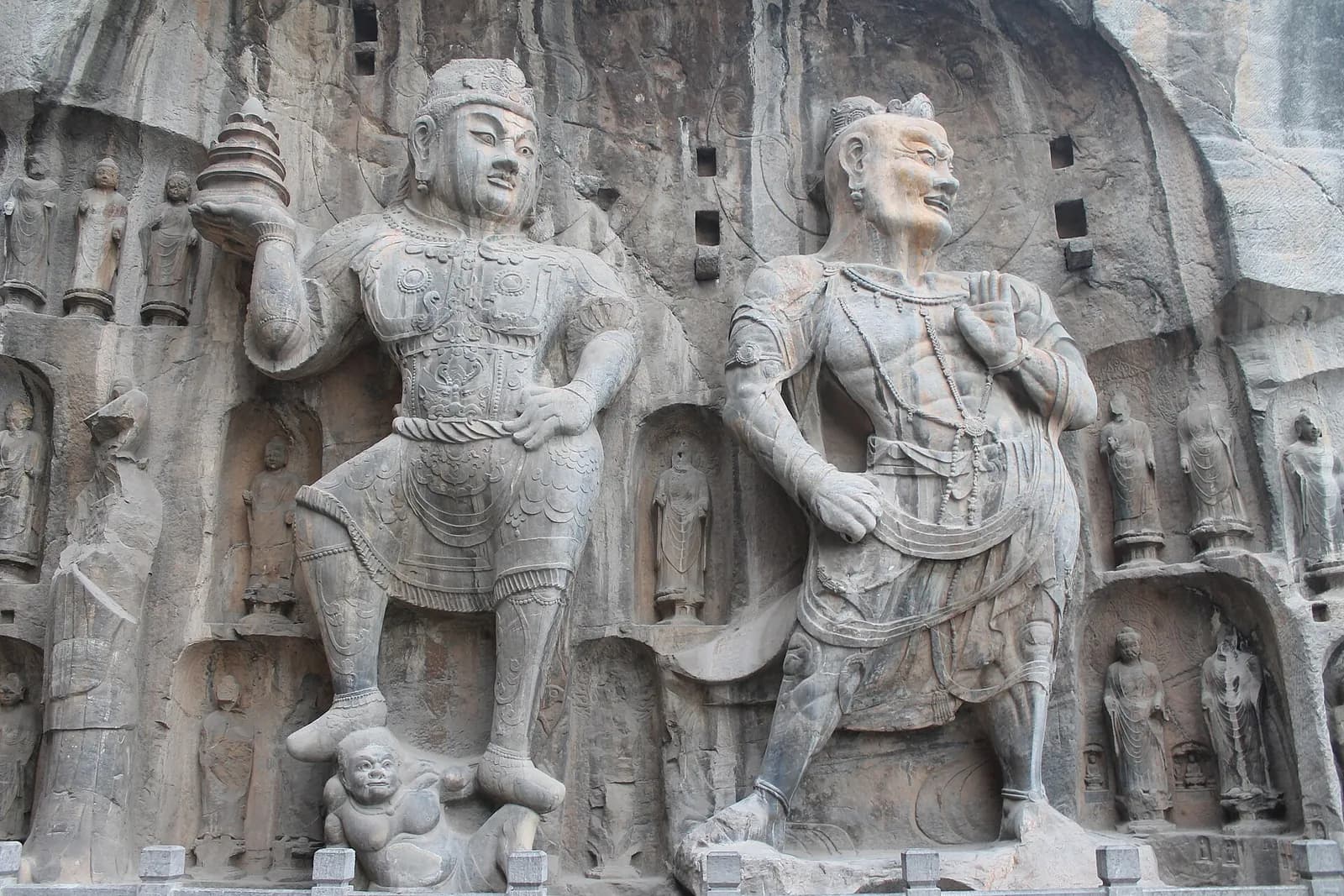
Standing bodhisattvas
Dominik Tefert · Public domain
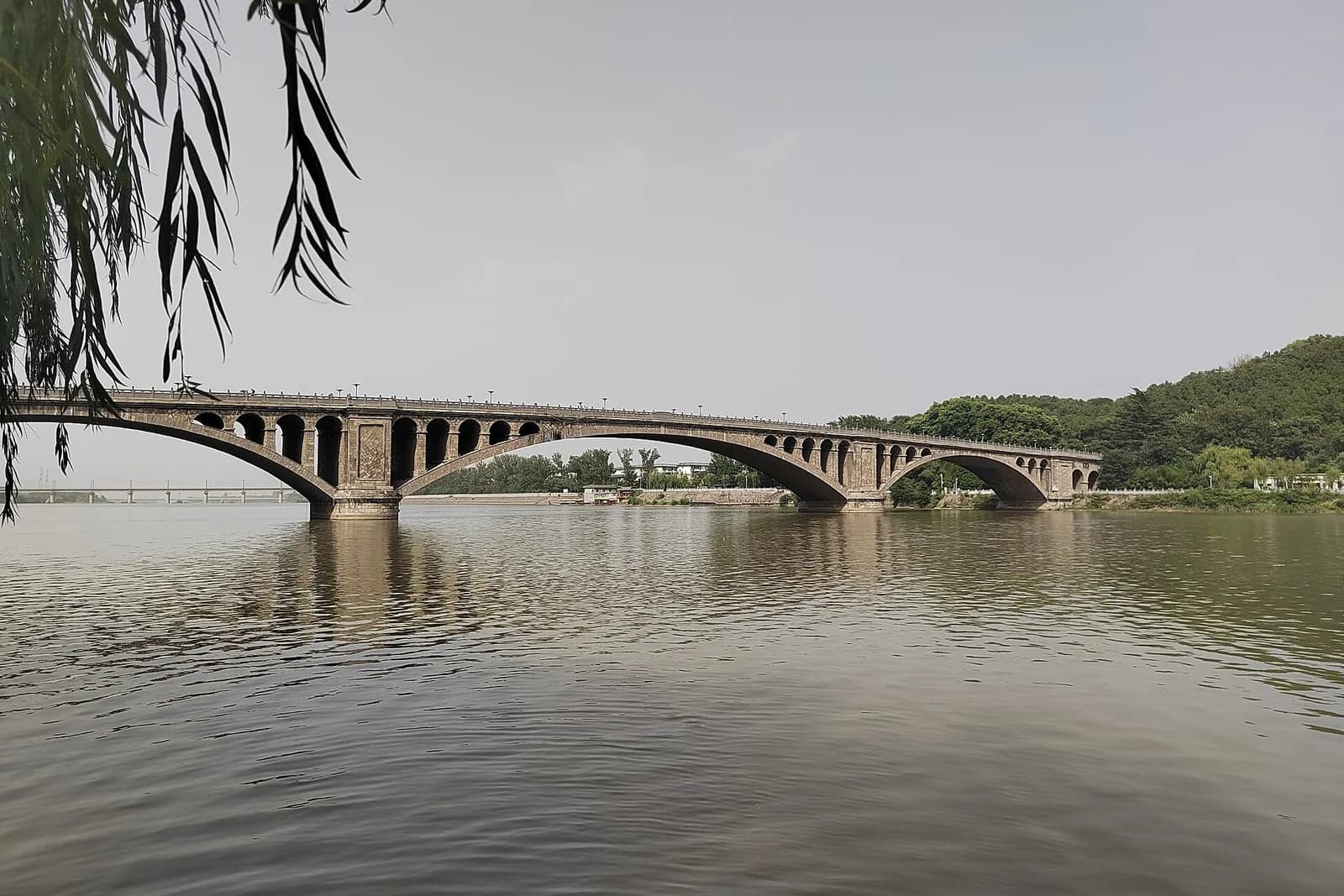
The Longmen bridge over the Yi river
Source
Carving began around 493 CE, when the Northern Wei moved their capital to Luoyang, and continued through the Eastern and Western Wei, Northern Qi, Sui, Tang and Song — over four centuries of continuous work. More than 2,300 niches and caves, some 100,000 figures and 2,800 inscriptions survive. Inscribed on the UNESCO World Heritage List in 2000.
What to see
- The Vairocana Buddha at Fengxian Temple: 17.14 m tall, the masterpiece of Tang imperial cave carving and the site's defining image.
- The Three Binyang Caves: Northern Wei imperial caves. The reliefs of imperial processions were removed to collections abroad, but the caves remain the benchmark for Northern Wei art.
- Wanfo (Ten Thousand Buddha) Cave: 15,000 small figures carved densely across both side walls.
- Xiangshan Temple and Bai Garden on the east bank, where the Tang poet Bai Juyi is buried — usually visited on the same day.
Practical notes
The site has a west and an east bank; the west holds the finest carving, so do it first. Expect four to five kilometres on foot — wear proper shoes. From April to October the grottoes open in the evening, and the lit figures look nothing like the daytime view; worth a separate visit. Book online in advance in high season.