
Luanchuan, Luoyang
Laojun Mountain
- From Zhengzhou
- About 3 hours by road from Zhengzhou
- Allow
- One to two days
- Best season
- May–October; winter for rime ice on the summit
From the official website
In the scenic area's own words
Transcribed from the operator's official site, with the date we read it. Independent of the guide above, which is our own writing.
Laojun Mountain scenic area lies east of Luanchuan county town in Henan, covering 2,666 hectares. It is a Funiu Mountain UNESCO Global Geopark, a national 5A scenic area, a national nature reserve and a provincial cultural relic protection unit. Formerly called Jingshi Mountain, it takes its present name from Laozi, the founder of Daoism, who is said to have retired here to cultivate. It is the main peak of the 800-li Funiu range at 2,217 m, formed by continental orogeny 1.9 billion years ago — the operator's slogan is "green heart of China, world geological wonder". Temples have stood here since the Northern Wei, and in the nineteenth year of the Wanli reign the Ming court granted it a Daoist canon and the title "famous mountain under heaven". Eight scenic zones and 138 sites are open.
- Location
- East of Luanchuan, Luoyang
- Area
- 2,666 hectares
- Elevation
- 2,217 m — highest point of the Funiu range
- Designations
- Funiu UNESCO Global Geopark · national 5A · national nature reserve
- Developed
- Eight zones, 138 sites
- Enquiries
- 0379-66838888
What to see
Golden summit temple group
The temple group includes the Lingguan, Linchu and Jiuku halls, the Laojun temple and the Daode hall, built along the ridge; when cloud fills the valleys the buildings appear to float. The operator notes that the temples have been a centre of pilgrimage on the central plain since the Northern Wei.
Cloud sea and geology
The mountain took shape in continental orogeny 1.9 billion years ago, producing the dense peak scenery the site is known for. The cloud sea is most likely on clear mornings after rain, which means staying at the base and starting early.
Daoist heritage
The mountain is named for Laozi, said to have retired here to cultivate; in the nineteenth year of the Wanli reign the Ming court granted it a Daoist canon and the title "famous mountain under heaven".
Photographs
These photographs are openly licensed for commercial use (from Wikimedia Commons: CC0, CC BY, CC BY-SA or public domain) and are not the attraction's own gallery. Each photo is credited below with its author and licence, linked to the original file. Photo-contest entries from the scenic area's site, whose file names carry a photographer's name and mobile number, remain unused without each author's permission.
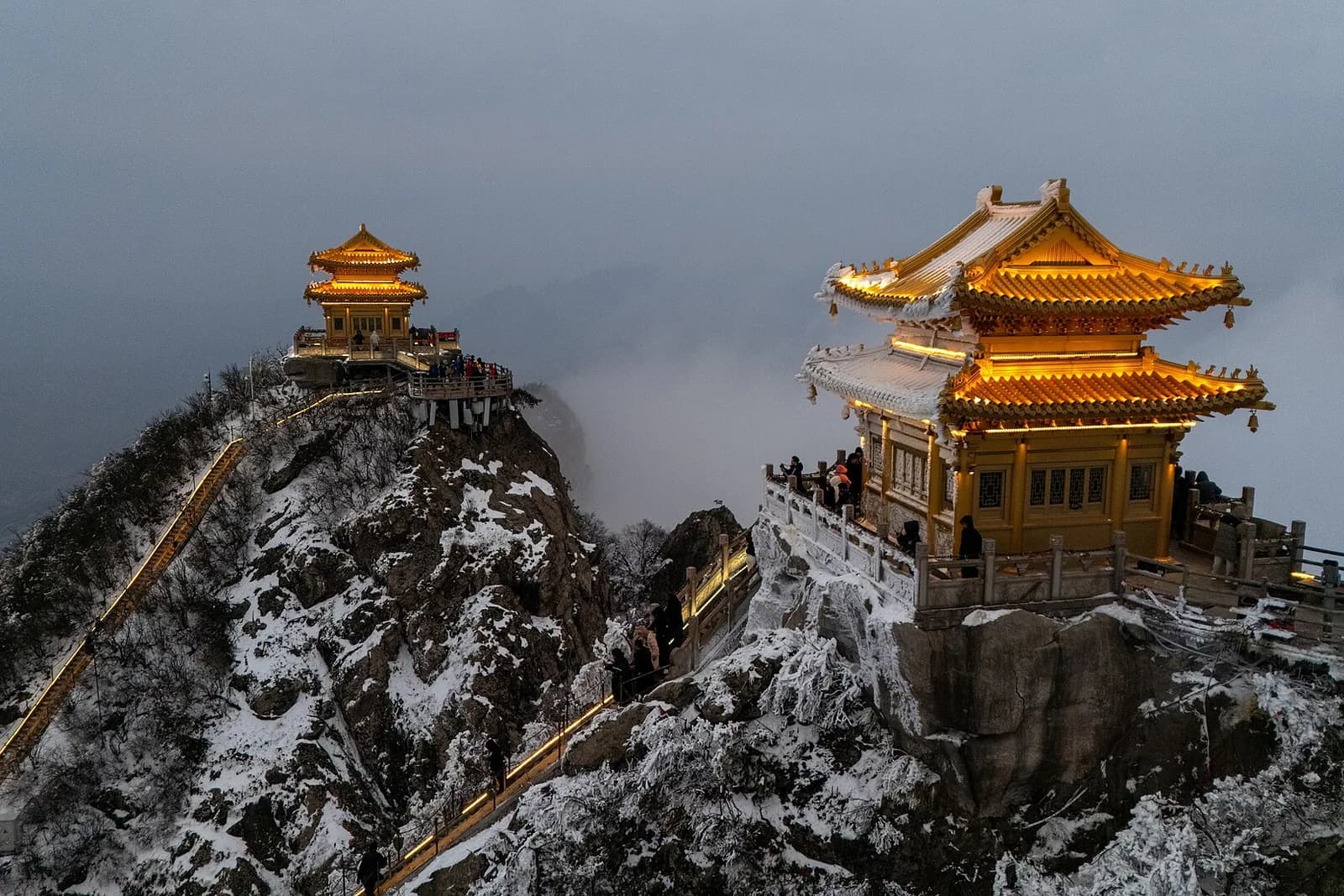
The golden summit after snow
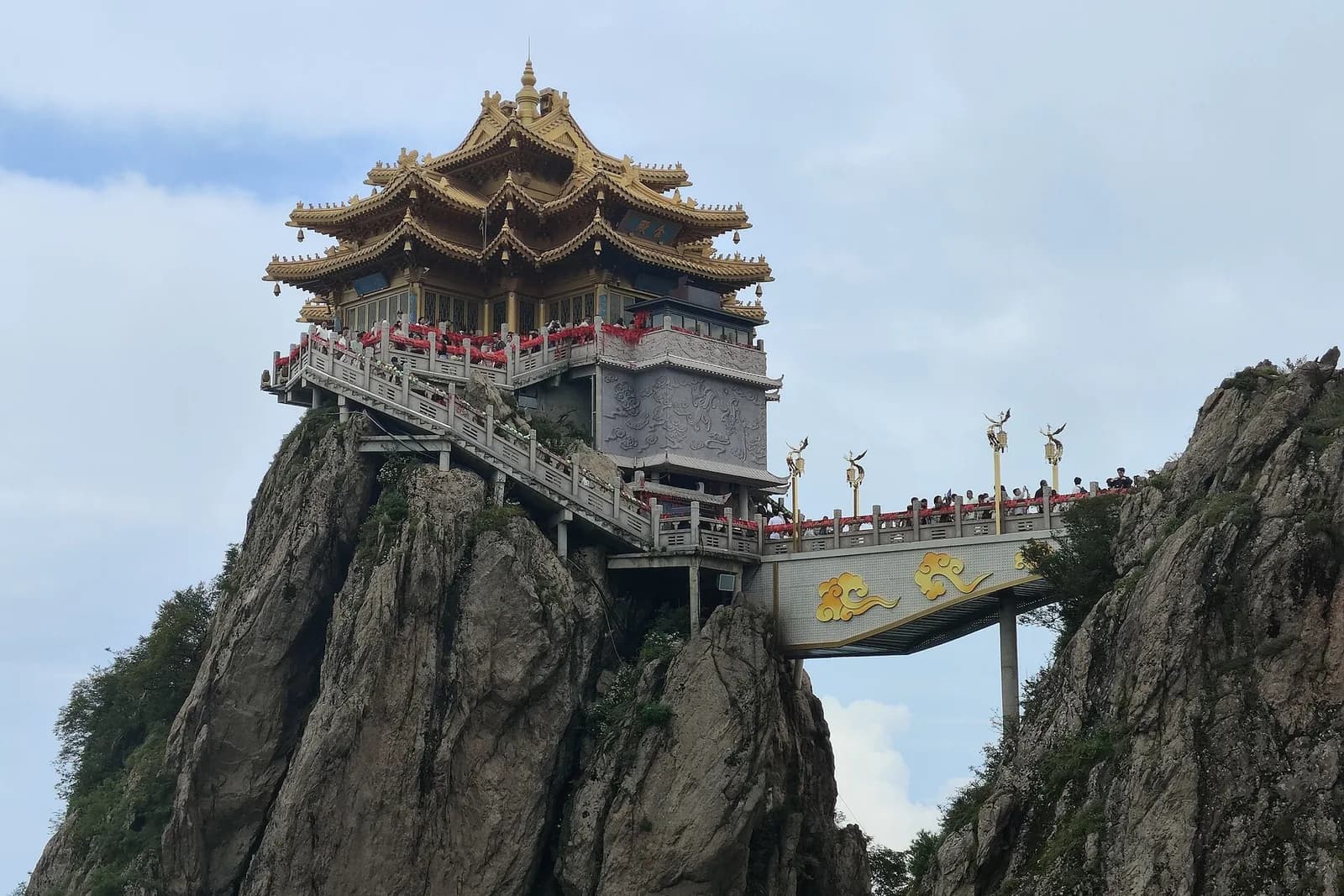
Golden summit temples and the Huixian Bridge
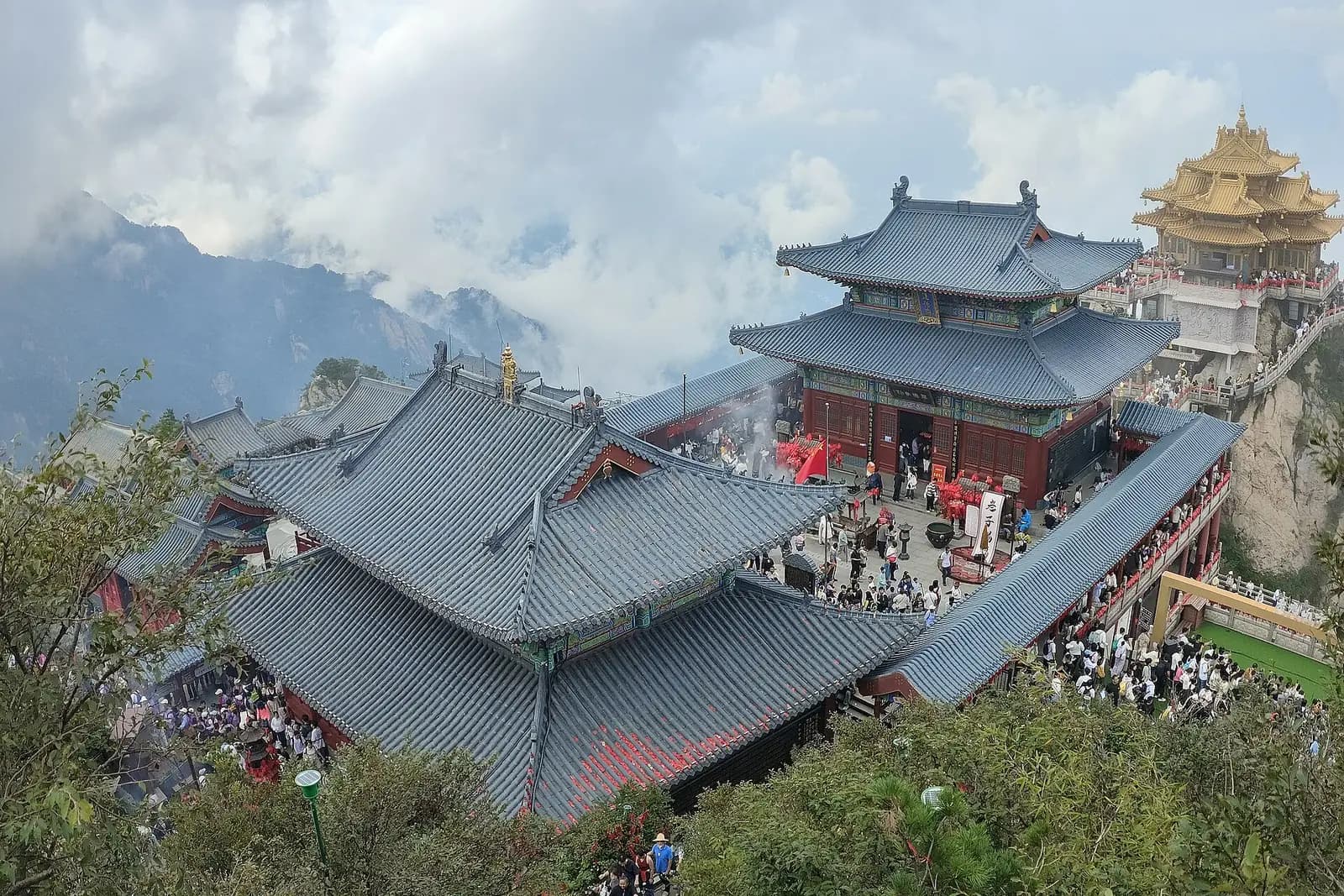
The golden summit Taoist temple complex
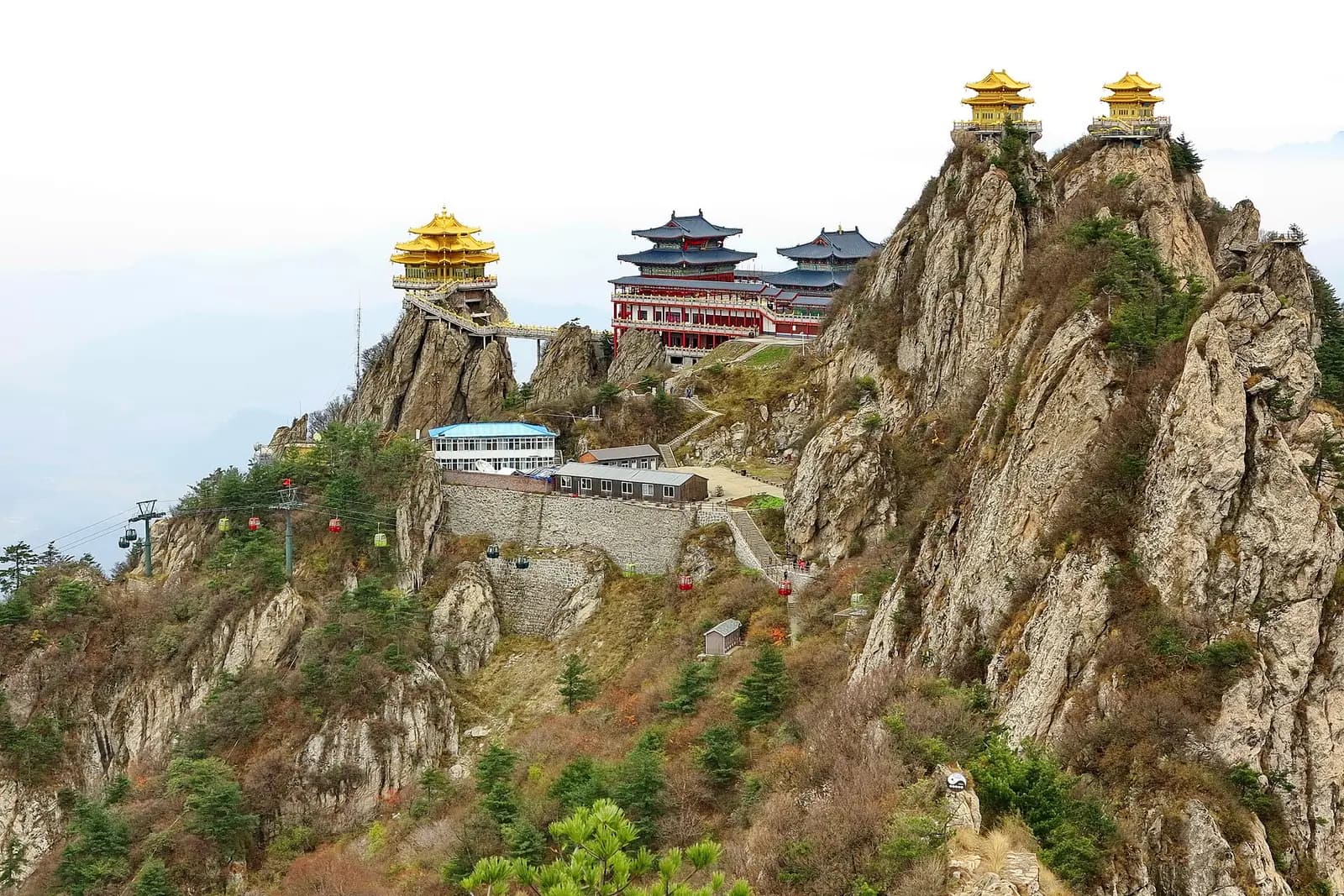
The Golden Hall of the Laojun Temple
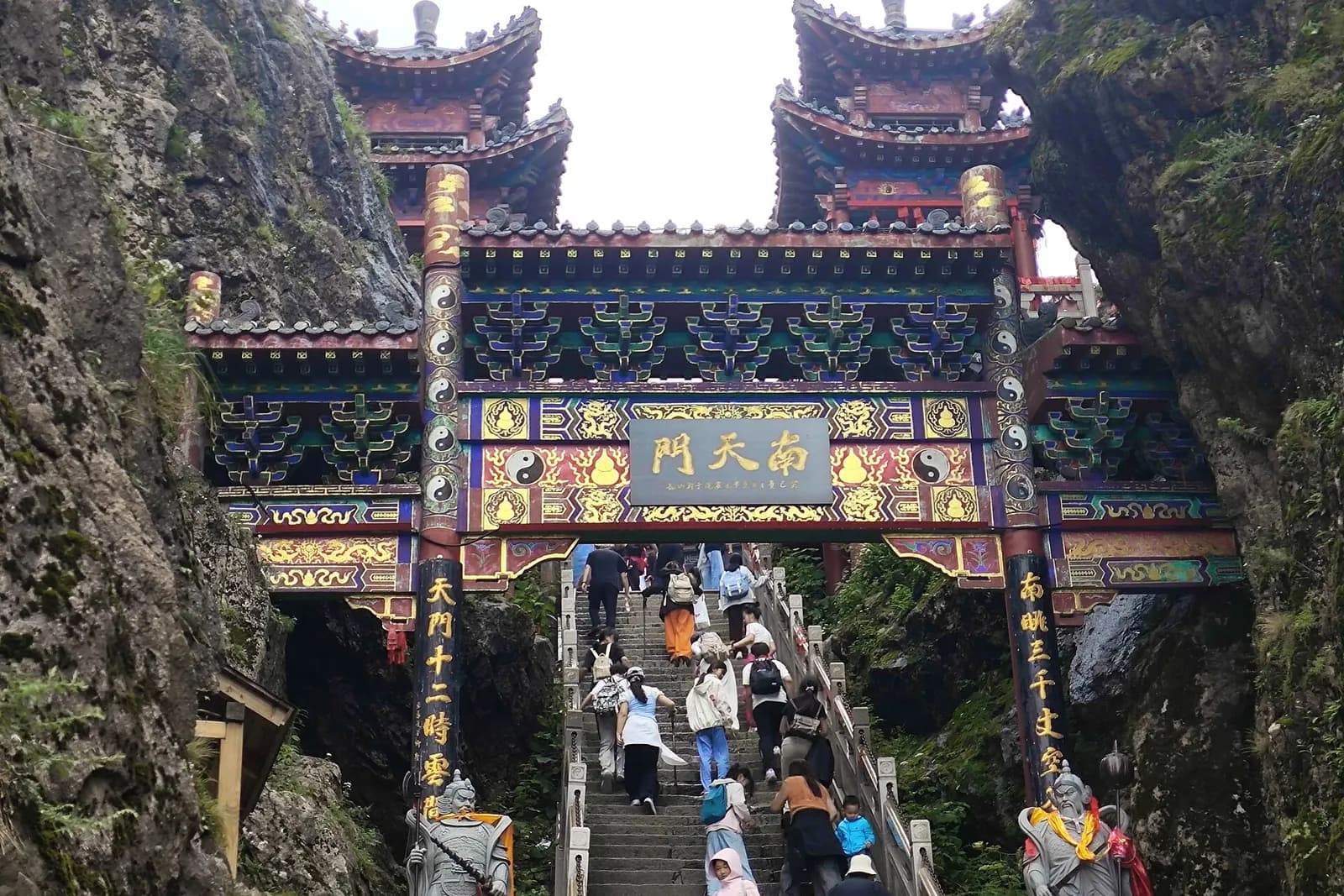
The South Heavenly Gate
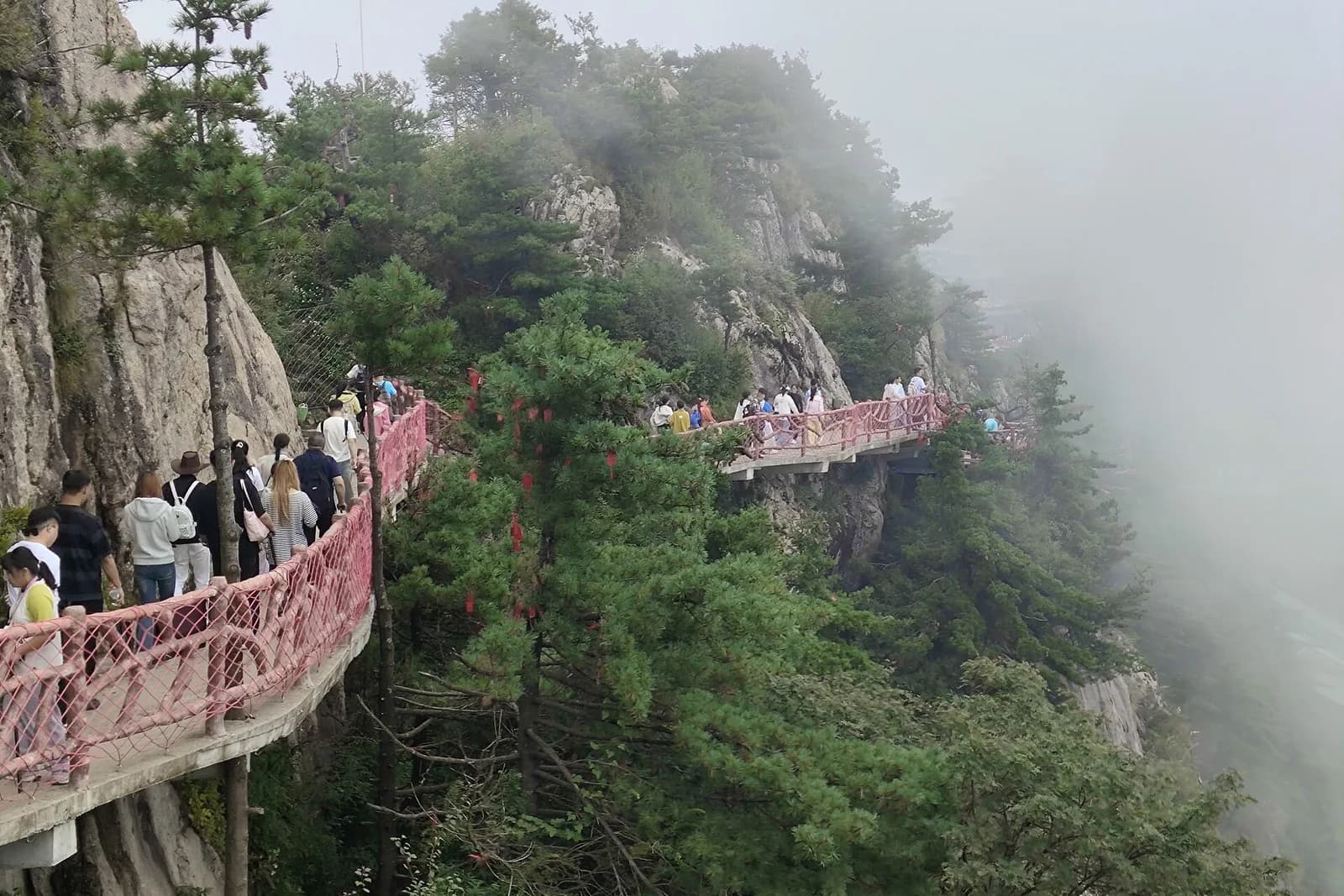
The cliff-side plank road
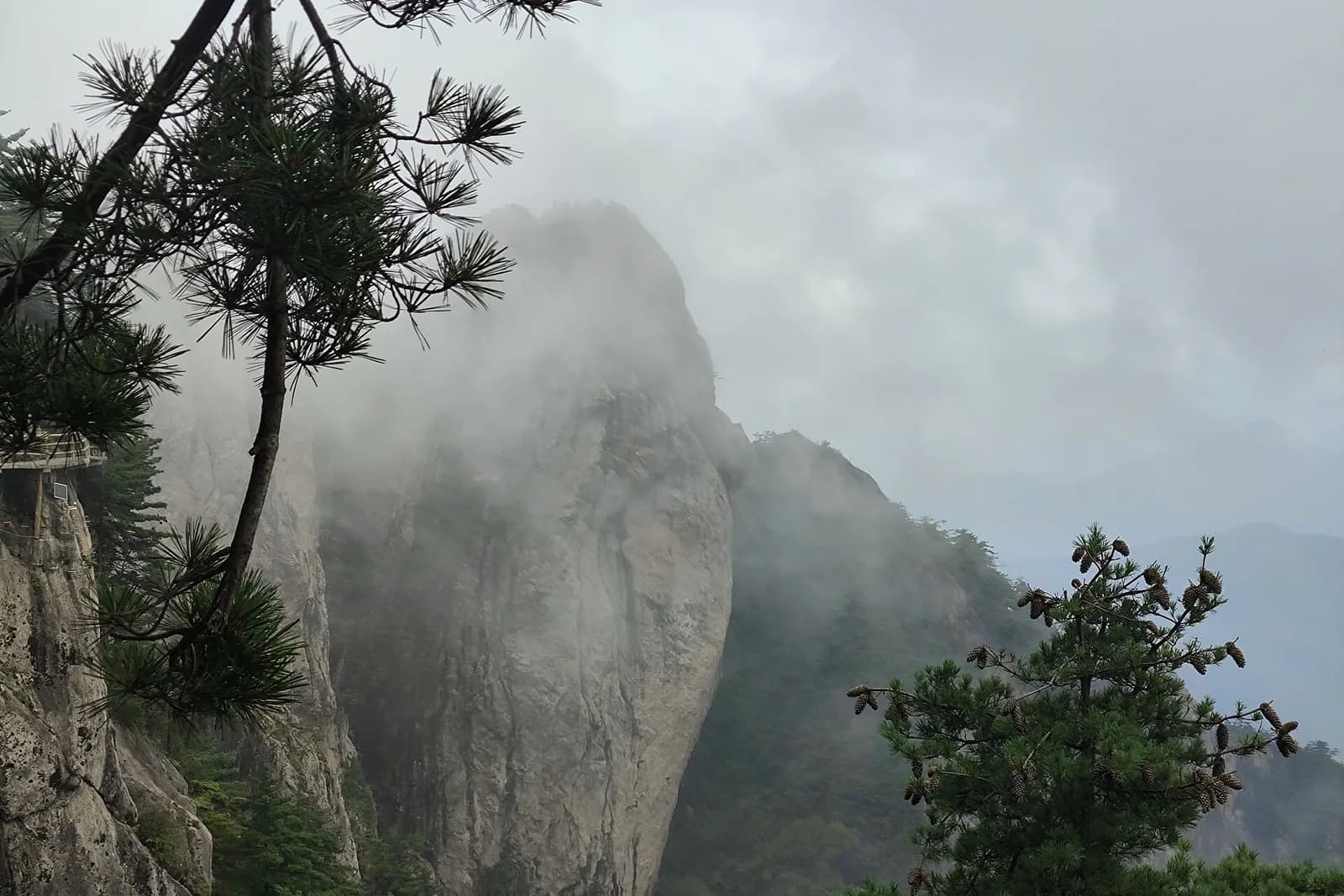
Peaks in the mist
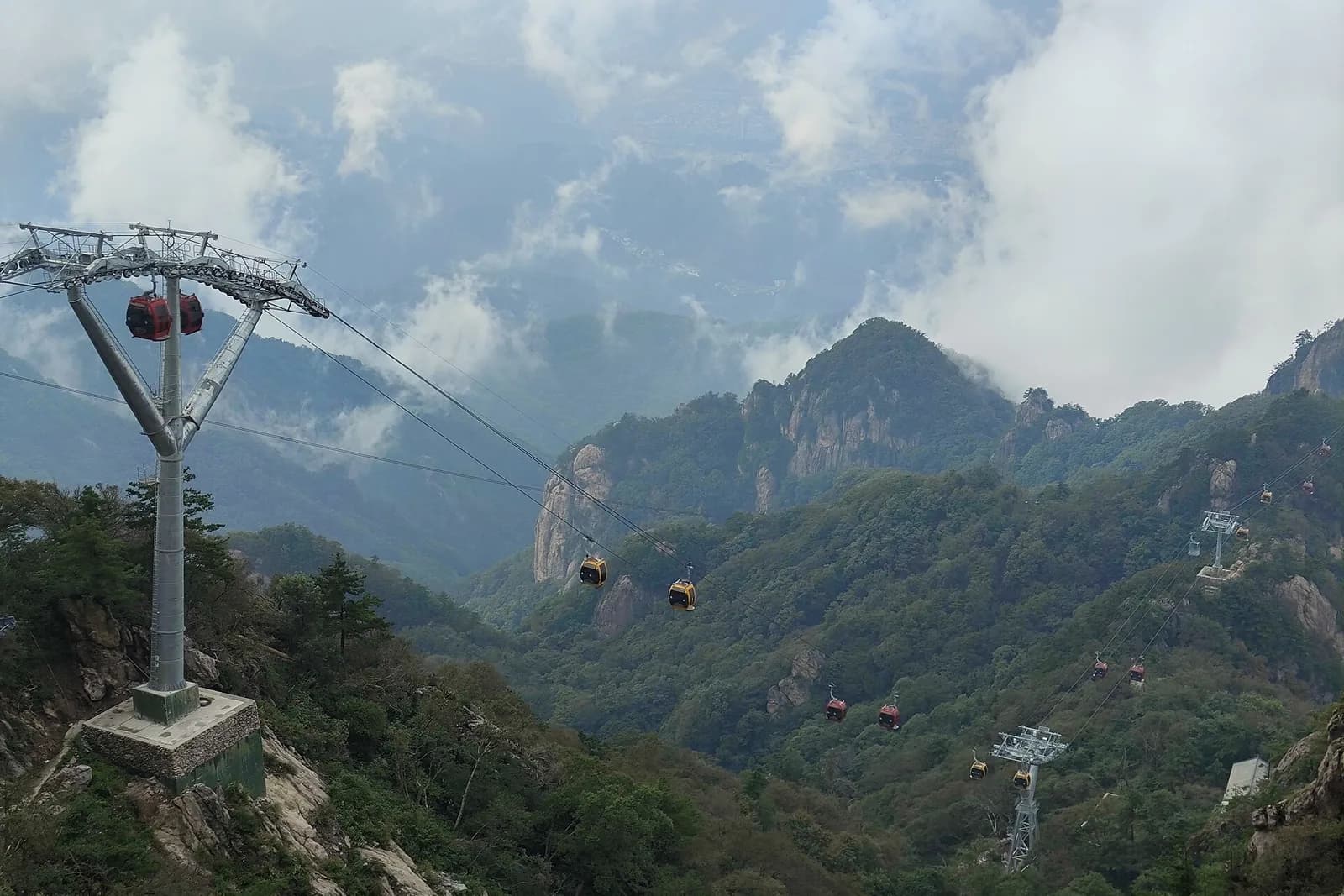
Cable car and the surrounding peaks
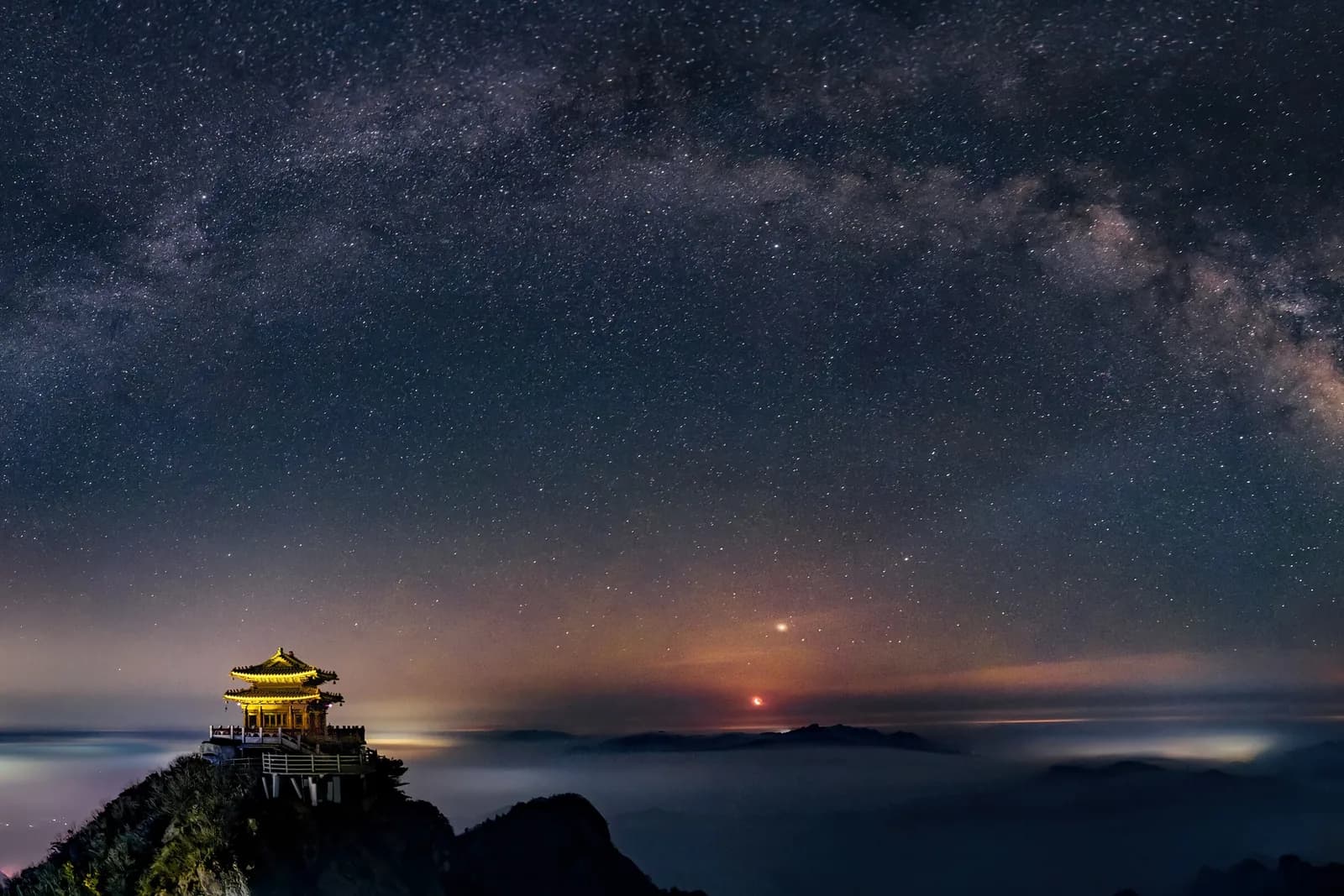
The Milky Way and the Moon above the Golden Hall
Laojun Mountain sits on the main ridge of the Funiu range. It takes its name from Laozi, the founder of Daoism, who is said to have retired here to cultivate; temples have stood on the mountain since the Northern Wei. The golden summit temples, above the cloud line, have become one of central China's most visited viewpoints.
What to see
- The golden summit temple group, built along the ridge — when cloud fills the valleys the buildings appear to float.
- Shili Huaping: a cliff-path through dense granite peak forest.
- Cloud sea and sunrise: most likely on clear mornings after rain, which means staying at the base and starting early.
- Zhuimeng Valley: a stream-and-waterfall route, considerably easier than the summit.
Practical notes
The summit is much colder than the base — bring a jacket even in summer. The cable car runs in two stages, after which about an hour of stone steps remains; assess that honestly if you have knee problems. In winter the paths ice over and crampons are needed. A cloud sea is weather, not a scheduled event — please do not plan around seeing one.