
Anyang
Yin Xu (Yin Ruins)
- From Zhengzhou
- About 1.5 hours by high-speed rail
- Allow
- Half to a full day
- Best season
- Year-round; spring and autumn are most comfortable
From the official website
In the scenic area's own words
Transcribed from the operator's official site, with the date we read it. Independent of the guide above, which is our own writing.
Yin Xu is the site of the late Shang capital. In 1300 BCE King Pan Geng moved the court to what is now the area around Xiaotun village northwest of Anyang; the city was known as Yin and served eight generations and twelve kings over 255 years. It holds China's first Shang capital attested both in documents and by oracle-bone and archaeological evidence, its earliest systematic script, its earliest chariot-and-horse pits, the tomb of Fu Hao — its earliest woman general — and the Simuwu ding, the largest bronze vessel yet excavated anywhere in the world. City, script and bronze are its three defining elements.
- What it is
- The site of the late Shang capital
- Capital
- Pan Geng moved the capital here in 1300 BCE; eight generations, twelve kings, 255 years
- Oracle bones
- China's earliest systematic script; the YH127 pit alone yielded over ten thousand pieces in 1936
- Simuwu ding
- 133 cm high, 110 cm across the mouth, 875 kg — the largest bronze vessel yet excavated
- Tomb of Fu Hao
- Excavated in 1976; 1,928 grave goods, including over 460 bronzes, over 750 jades and some 6,800 shell coins
- Royal cemetery
- 2.14 hectares; twelve royal tombs and more than 2,000 sacrificial pits and attendant burials
- Yachang ox zun
- 40 cm long, 22.5 cm high with its lid, 7.1 kg — the site's only ox-shaped bronze zun
What to see
Palace and ancestral temple site
A century of excavation has yielded quantities of oracle bones, bronzes, jades and hardstone objects.
Royal cemetery
The burial and sacrificial ground of the late Shang kings — the earliest complete royal cemetery known in China.
Oracle-bone pit
Pit YH127, where more than ten thousand pieces were found together, is called China's earliest oracle-bone archive.
Chariot-and-horse pits
The earliest physical evidence of animal-drawn vehicles found in China; six chariots with road traces are displayed, largely intact.
Tomb of Fu Hao
The only royal tomb at the site found unlooted, and the only one whose occupant and date can be fixed against the oracle bones.
Photographs
These photographs are openly licensed for commercial use (from Wikimedia Commons: CC0, CC BY, CC BY-SA or public domain) and are not the attraction's own gallery. Each photo is credited below with its author and licence, linked to the original file.
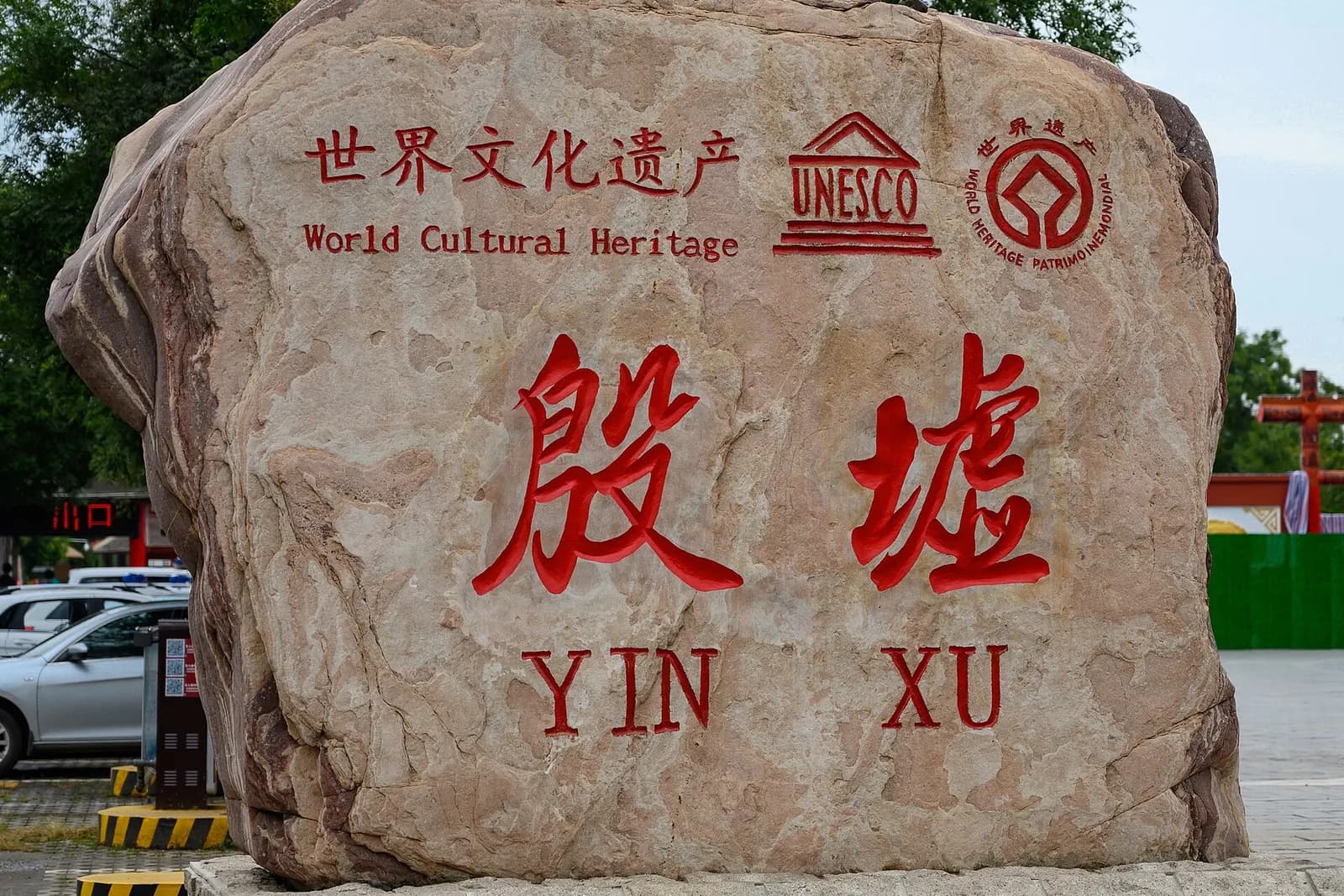
The Yinxu marker stone
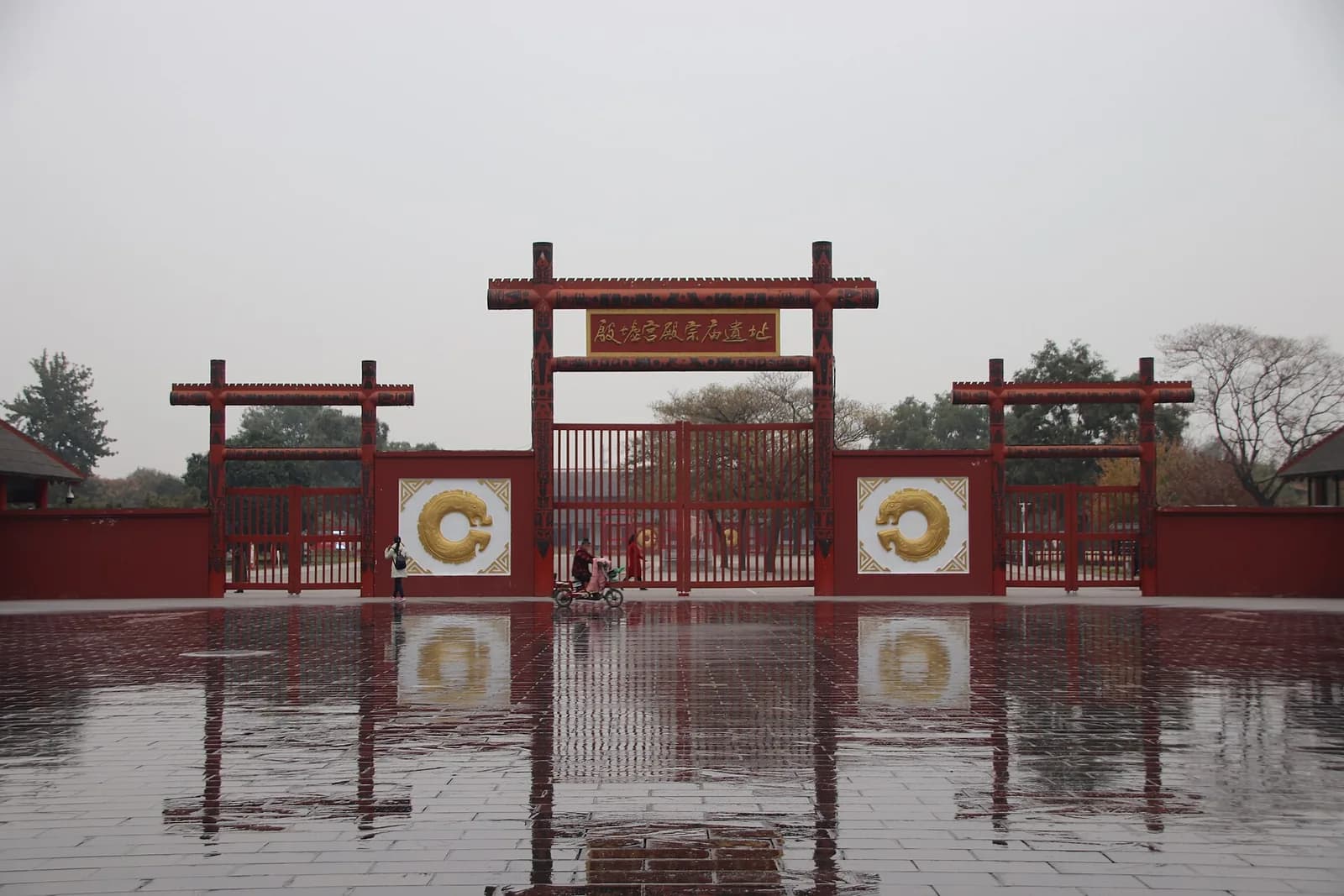
Entrance to the palace and temple site
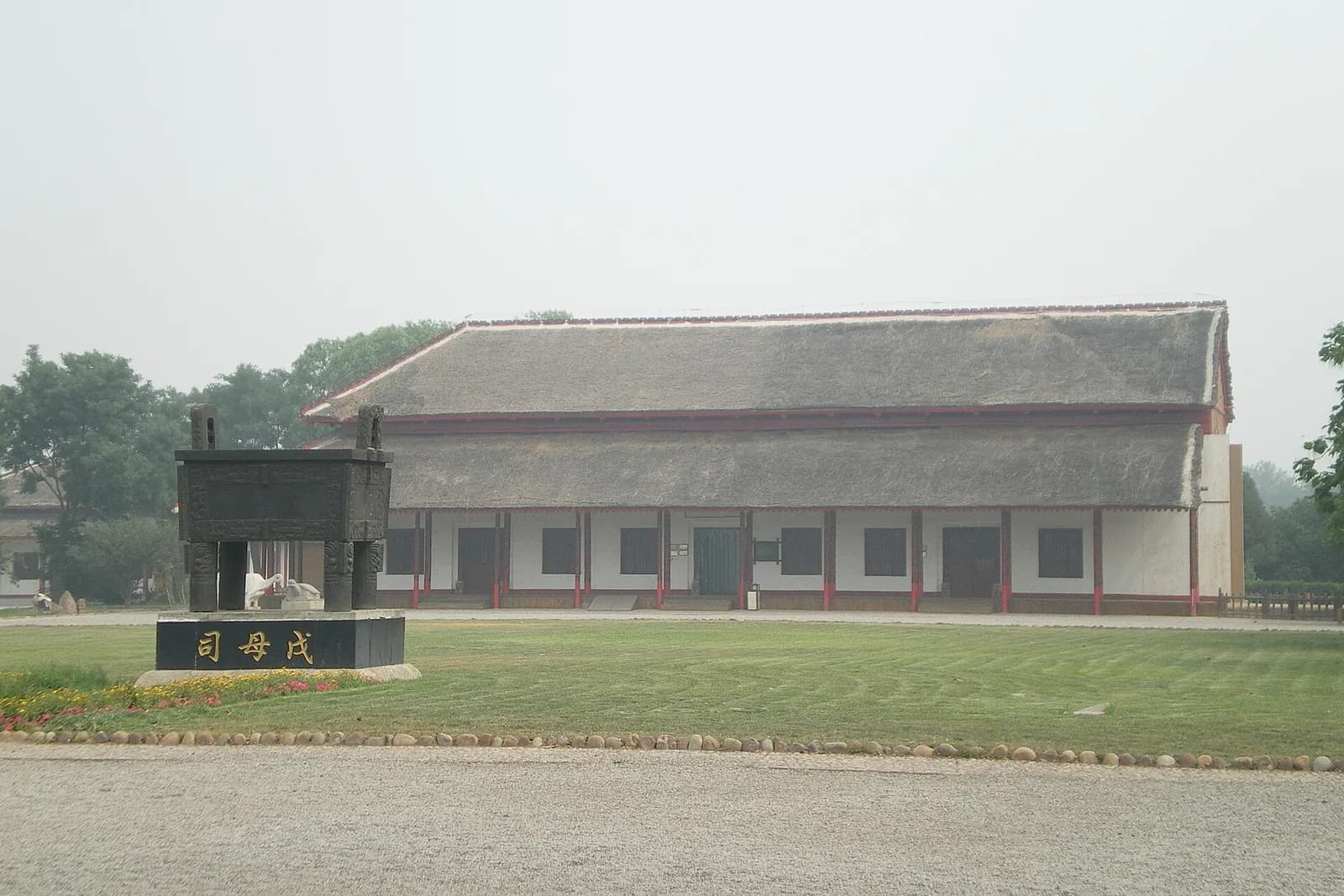
A reconstructed hall on the site
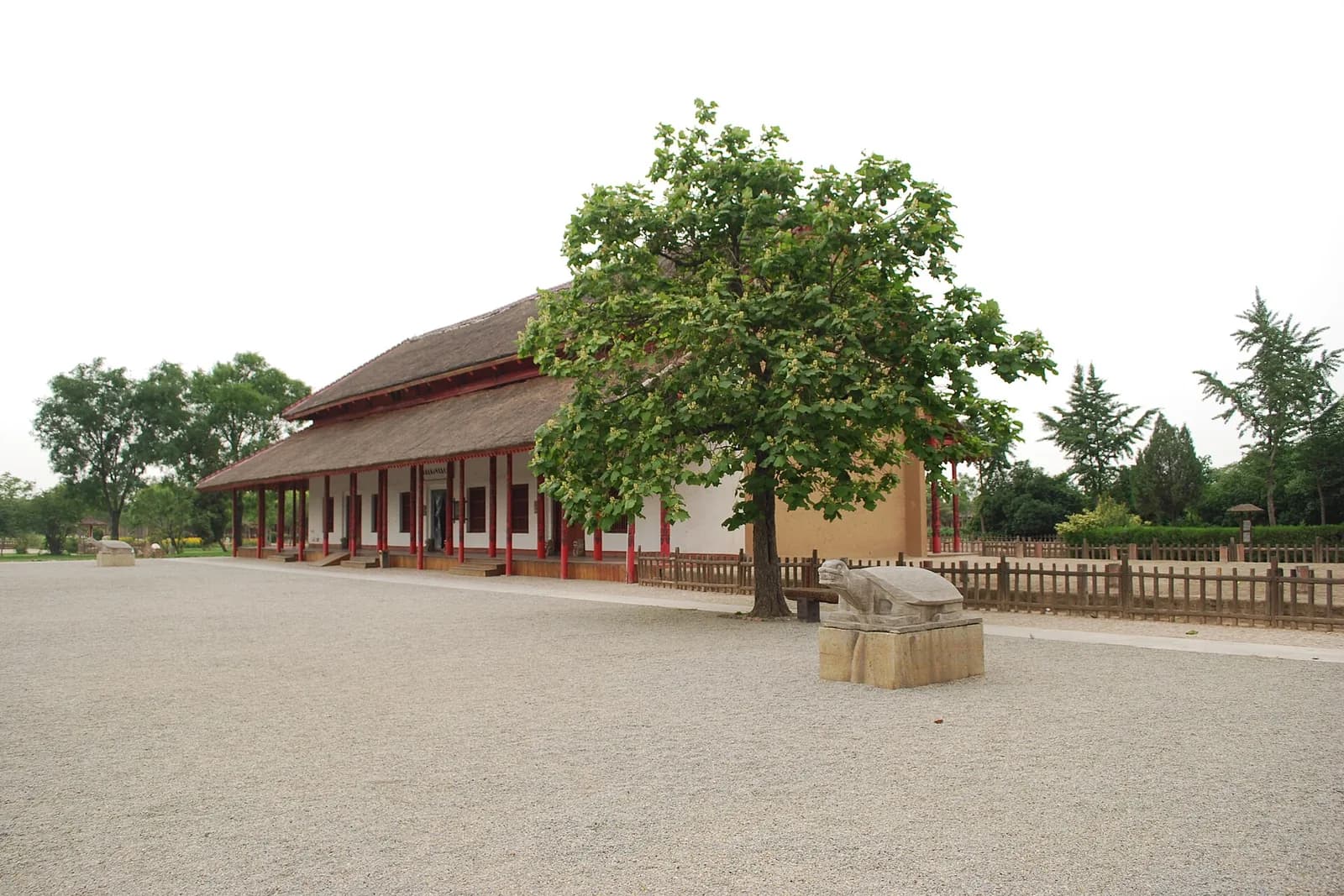
The reconstructed Yi-20 Shang hall
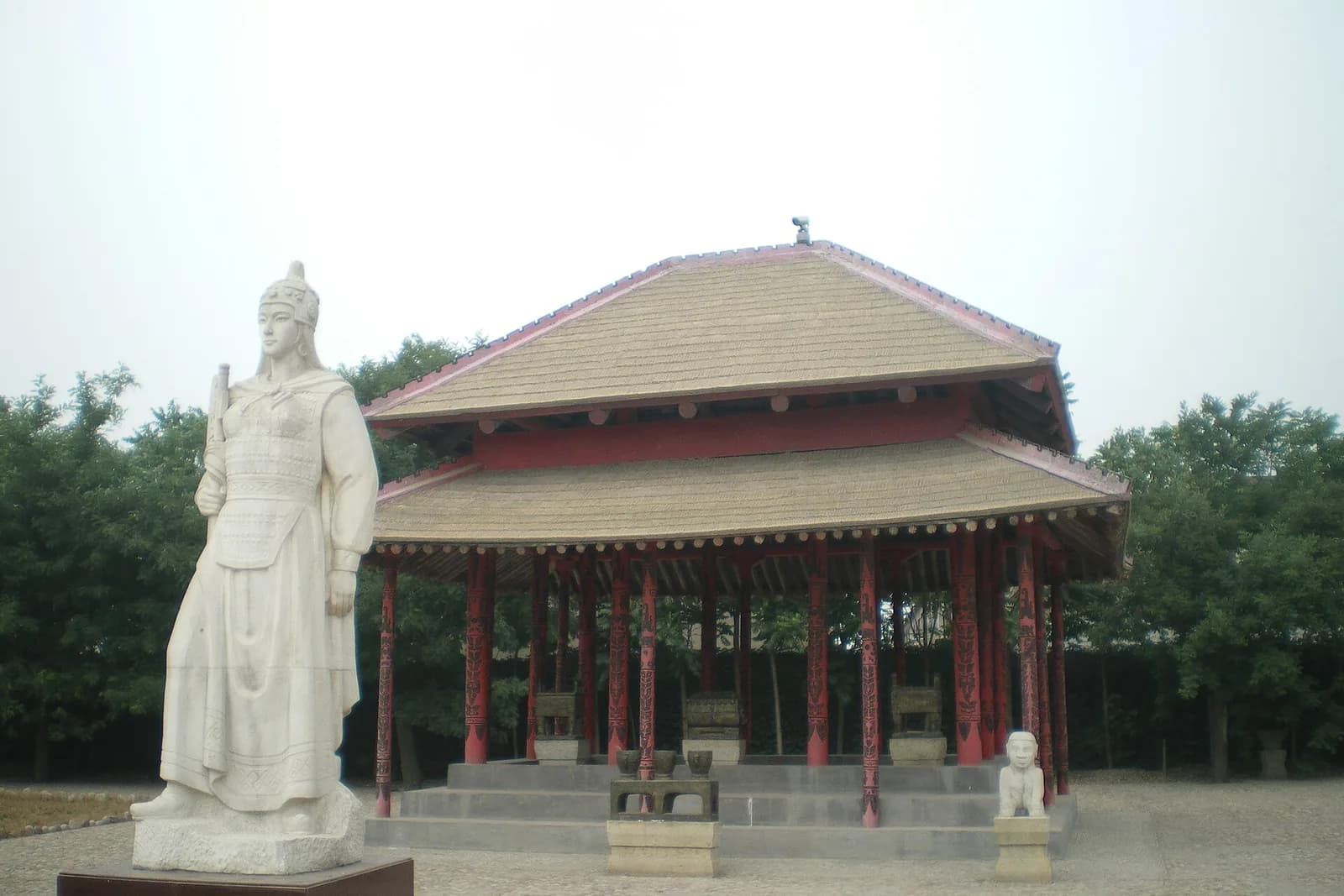
The statue of Fu Hao before a hall
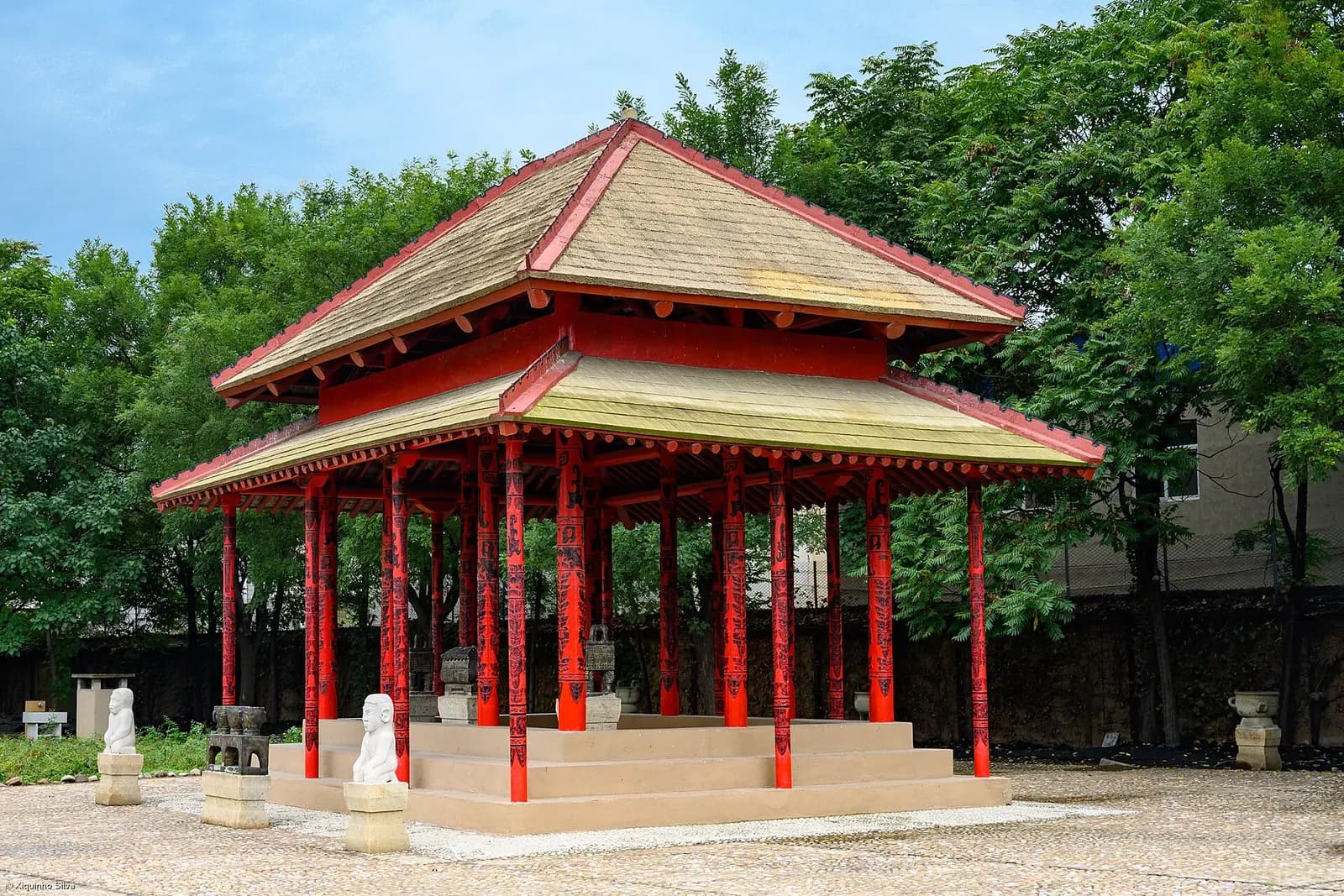
A reconstructed pavilion at the royal tombs
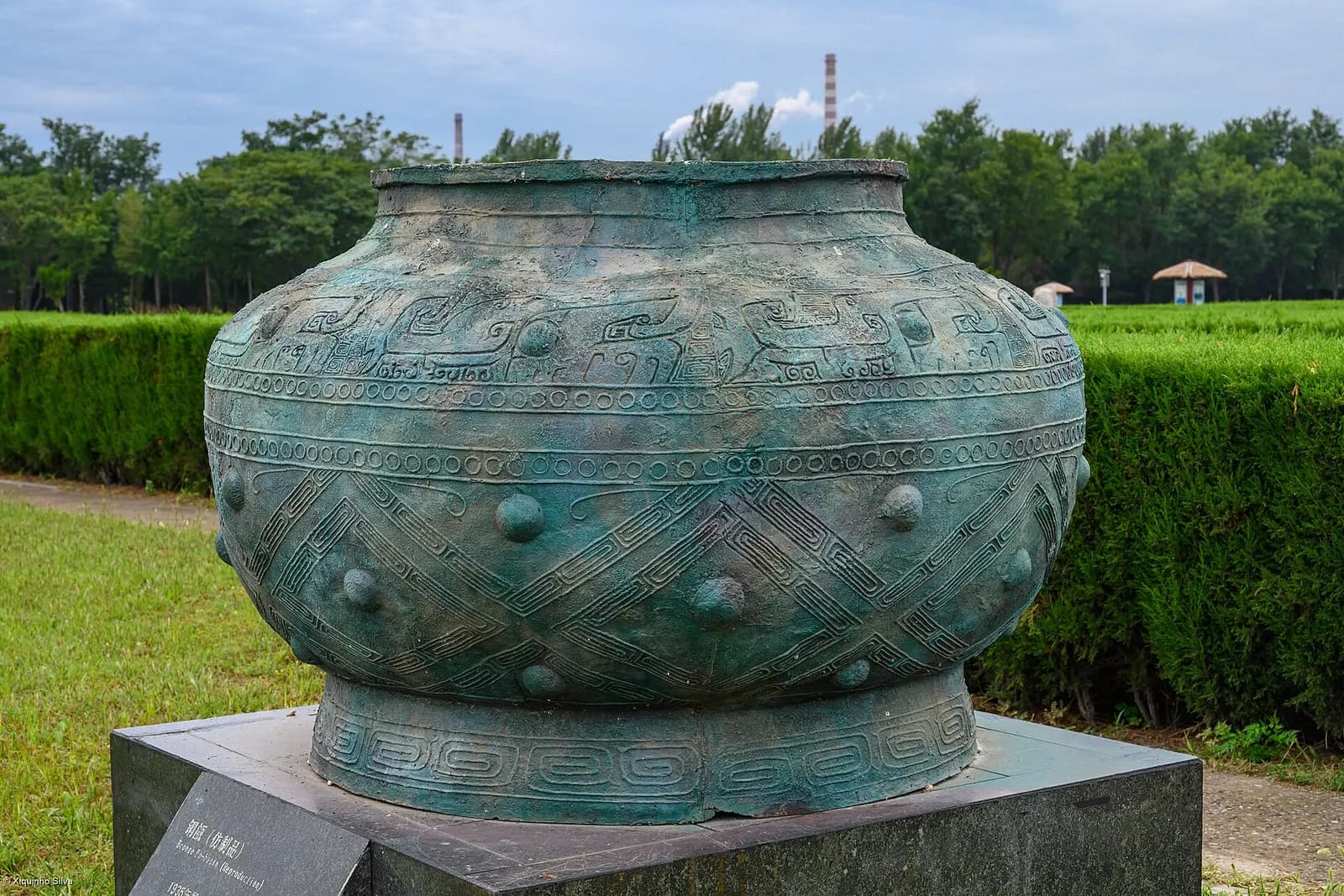
A bronze replica at the royal tombs
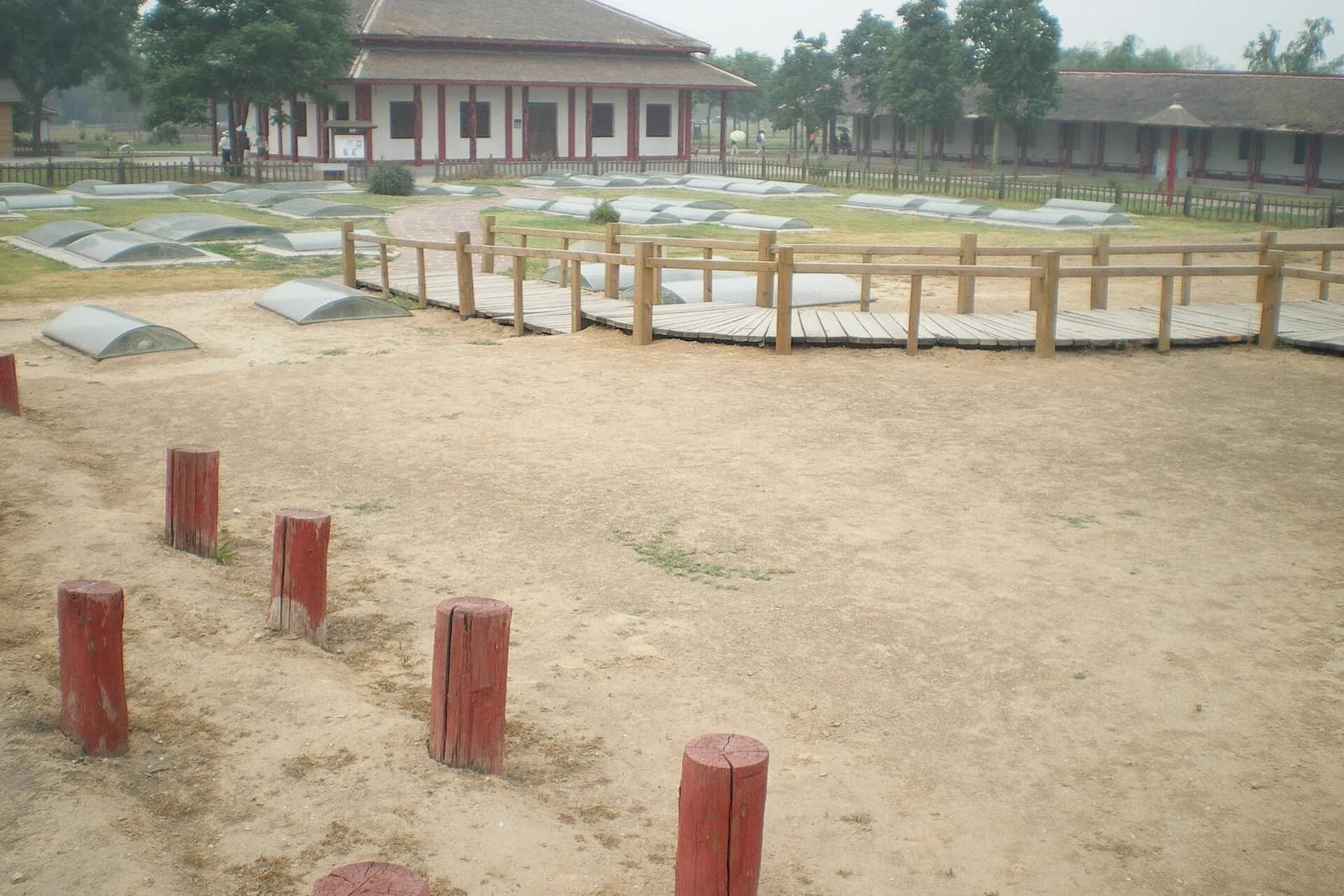
Palace foundations
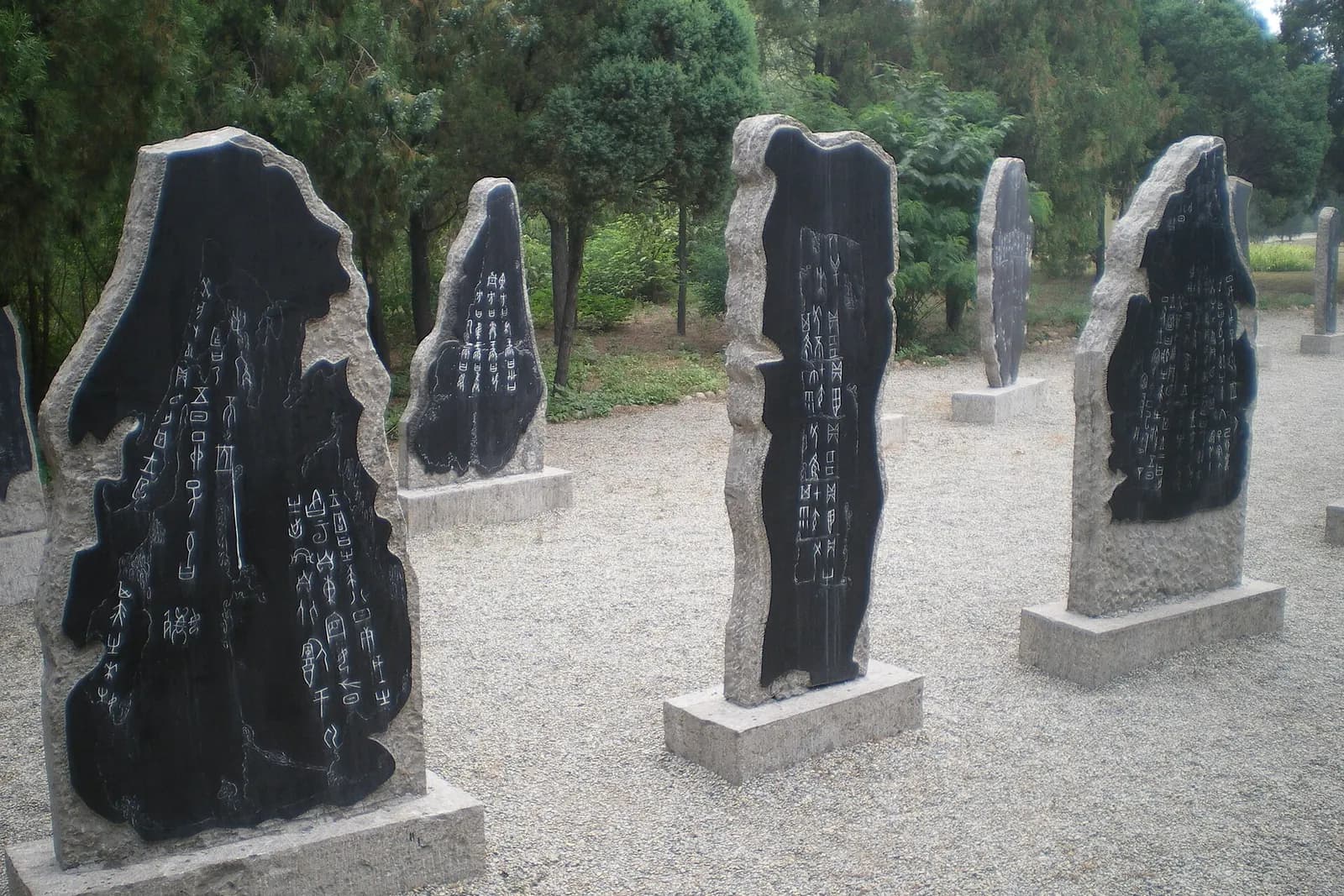
Inscribed steles
Source
The late Shang dynasty capital. From around 1300 BCE, when Pan Geng moved the court to Yin, until the fall of the dynasty, eight generations and twelve kings ruled from here across 254 years. Oracle bone script was discovered at this site, and so was Chinese modern archaeology. Inscribed on the UNESCO World Heritage List in 2006.
What to see
- The palace and ancestral temple zone, with dozens of excavated rammed-earth building platforms.
- The tomb of Fu Hao, excavated in 1976 — the only unlooted royal Shang tomb at the site, yielding over 1,900 grave goods.
- The oracle bone pit YH127, which produced more than 17,000 fragments in a single excavation.
- The new Yin Xu Museum, opened in 2024 — visit it first, then the ruins.
Practical notes
The archaeological area is large and consists mostly of rammed-earth platforms with ground-level markers. Going to the museum first makes the site far more legible. There is little shade in summer. High-speed trains between Anyang and Zhengzhou are frequent, so it works as a day trip.