
ลั่วหยาง
วัดม้าขาว
- จากเจิ้งโจว
- รถไฟความเร็วสูงประมาณ 40 นาที
- เวลาที่ควรเผื่อ
- ครึ่งวัน
- ฤดูที่เหมาะ
- ได้ตลอดปี
จากเว็บไซต์ทางการ
สถานที่แนะนำตัวเองผ่านเว็บไซต์ทางการ
ถอดความจากเว็บไซต์ทางการของผู้ดำเนินการ พร้อมวันที่เราเข้าดู และเป็นอิสระจากคำบรรยายของเราเองด้านบน
The White Horse Temple stands twelve kilometres east of Luoyang, backed by Mount Mang and facing the Luo river. Founded in 68 CE (the eleventh year of Yongping, Eastern Han), it was the first monastery built in China after Buddhism arrived, and it holds a particular place in Chinese Buddhist history as the tradition's 'source' and 'ancestral courtyard'.
- Location
- Twelve kilometres east of Luoyang, backed by Mount Mang and facing the Luo
- Founded
- 68 CE, Eastern Han
- Standing
- The first monastery built in China by official order after Buddhism arrived
- Heritage status
- Among the first batch of Major Historical and Cultural Sites Protected at the National Level, 1961
- Layout today
- Restored in 1556 (thirty-fifth year of Jiajing, Ming); a rectangular, south-facing compound of about 40,000 m², with the Tianwang, Great Buddha, Mahavira, Jieyin and Vairocana halls and the Qiyun pagoda
- Qiyun Pagoda
- A square, multi-eaved brick pagoda, 13 storeys and 35 m tall; the present structure was rebuilt in 1175 and is Luoyang's oldest surviving building
- Mahavira Hall figures
- The eighteen arhats are Yuan-dynasty dry-lacquer figures — a technique largely lost after the Song and rarely surviving
จุดชมหลัก
Qiyun Pagoda
East of the gate: a distinctive square brick pagoda of thirteen eaves and 35 metres, the oldest surviving building in Luoyang.
Qingliang Terrace and Vairocana Hall
A brick terrace known as the 'courtyard in the air' — 43 by 33 metres and six metres high — carrying the double-eaved Vairocana Hall in its own enclosure.
Mahavira Hall
Housing the Buddhas of the three times, with the eighteen Yuan dry-lacquer arhats along the sides.
The two monks' tombs
Two mounds among the cypresses inside the gate, marking the monks Kasyapa-matanga and Dharmaratna, who brought the scriptures to China.
The temple bell
A Ming cast-iron bell of 2,500 kg; 'the bell of the White Horse Temple' is one of the eight sights of Luoyang.
ภาพสถานที่
These photographs are openly licensed for commercial use (from Wikimedia Commons: CC0, CC BY, CC BY-SA or public domain) and are not the attraction's own gallery. Each photo is credited below with its author and licence, linked to the original file.
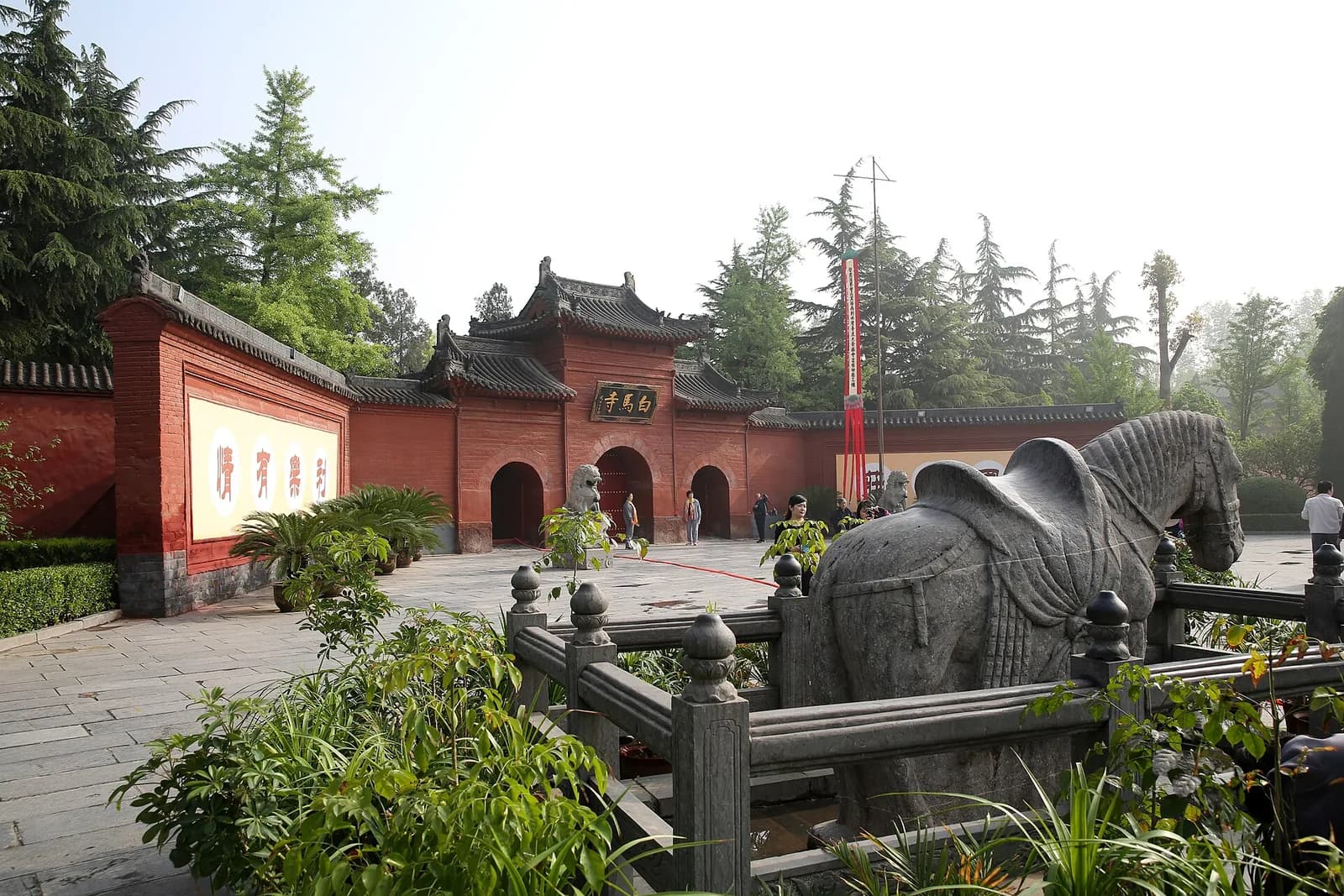
The main gate (shanmen)
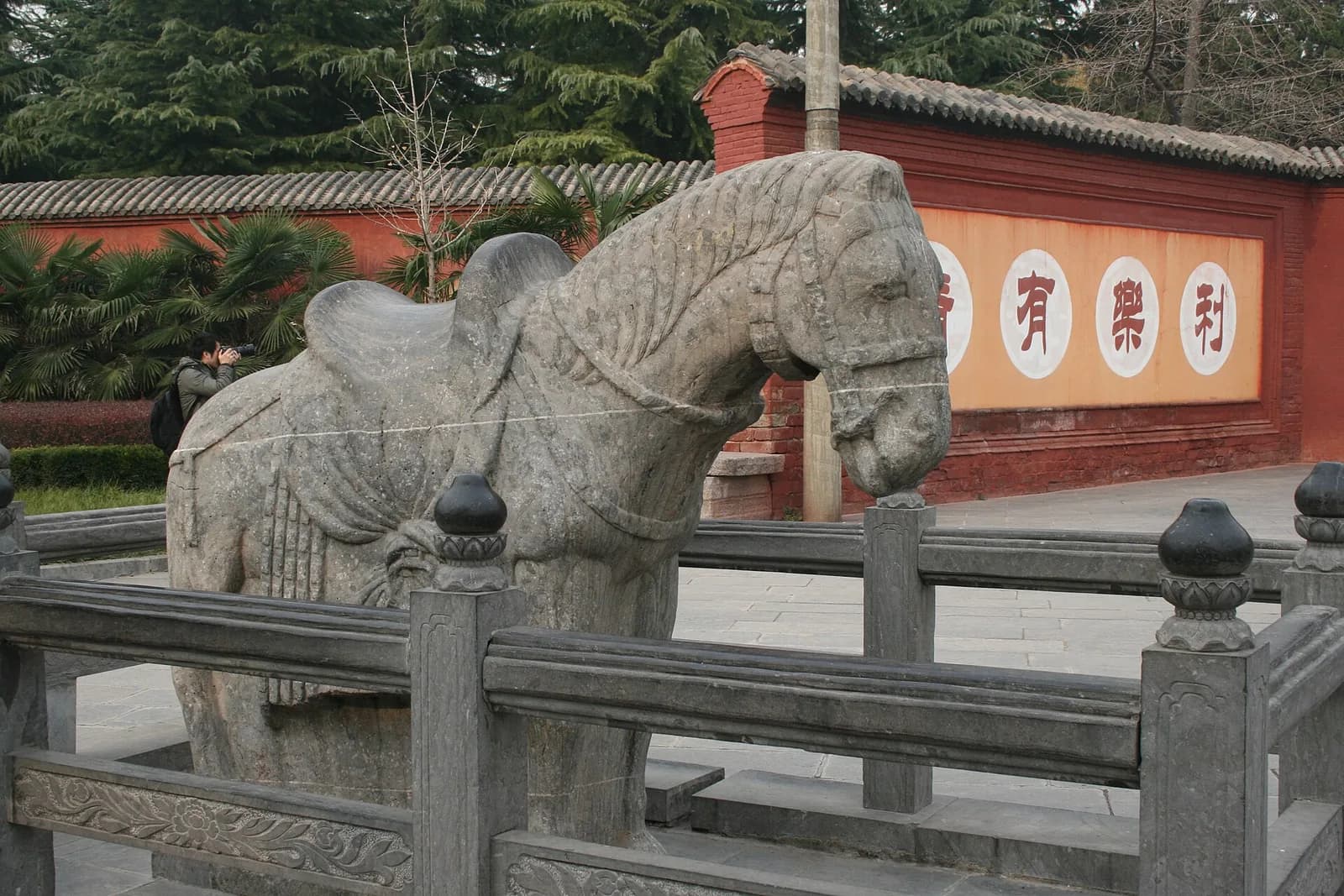
The stone horse before the gate
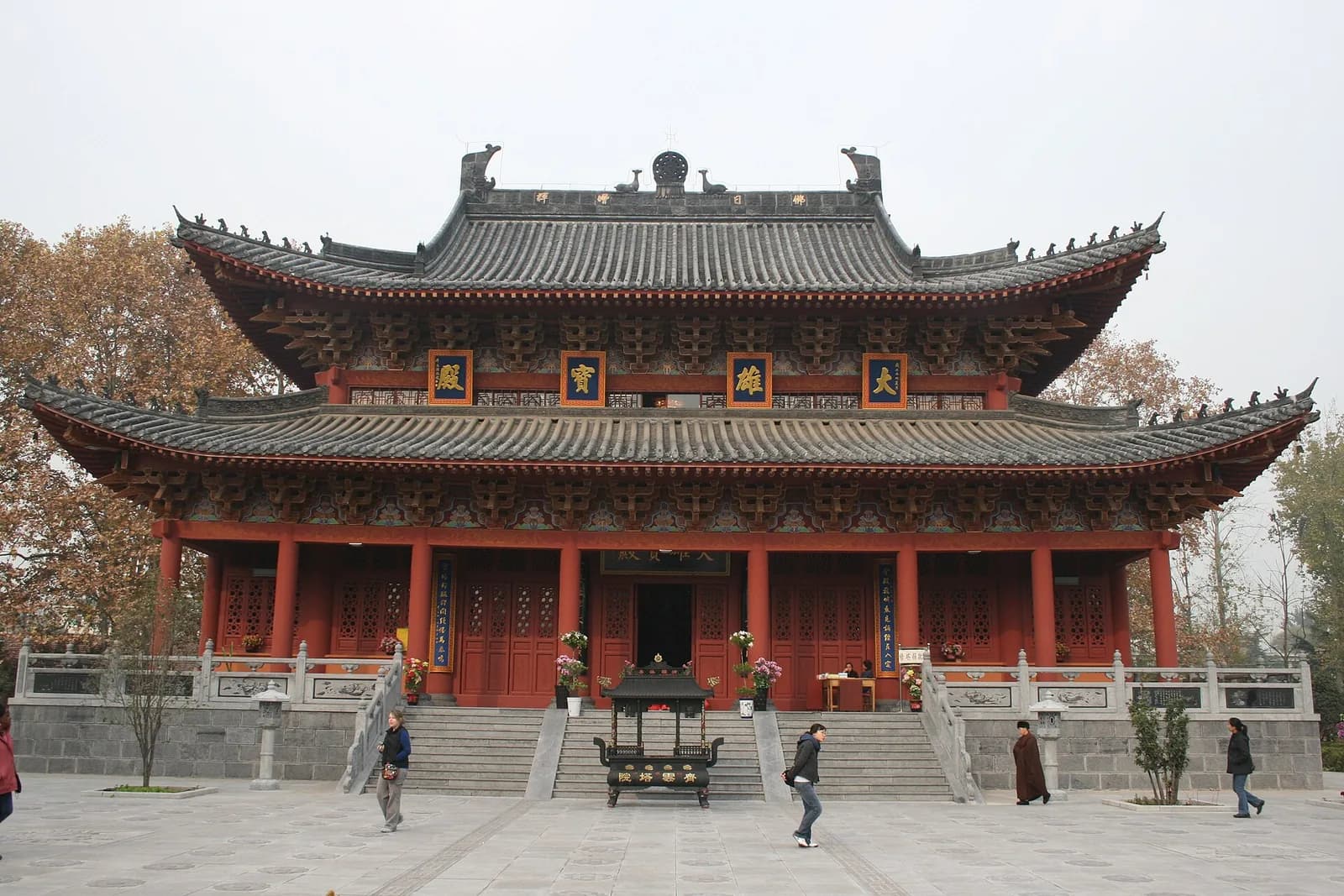
A main hall of the temple
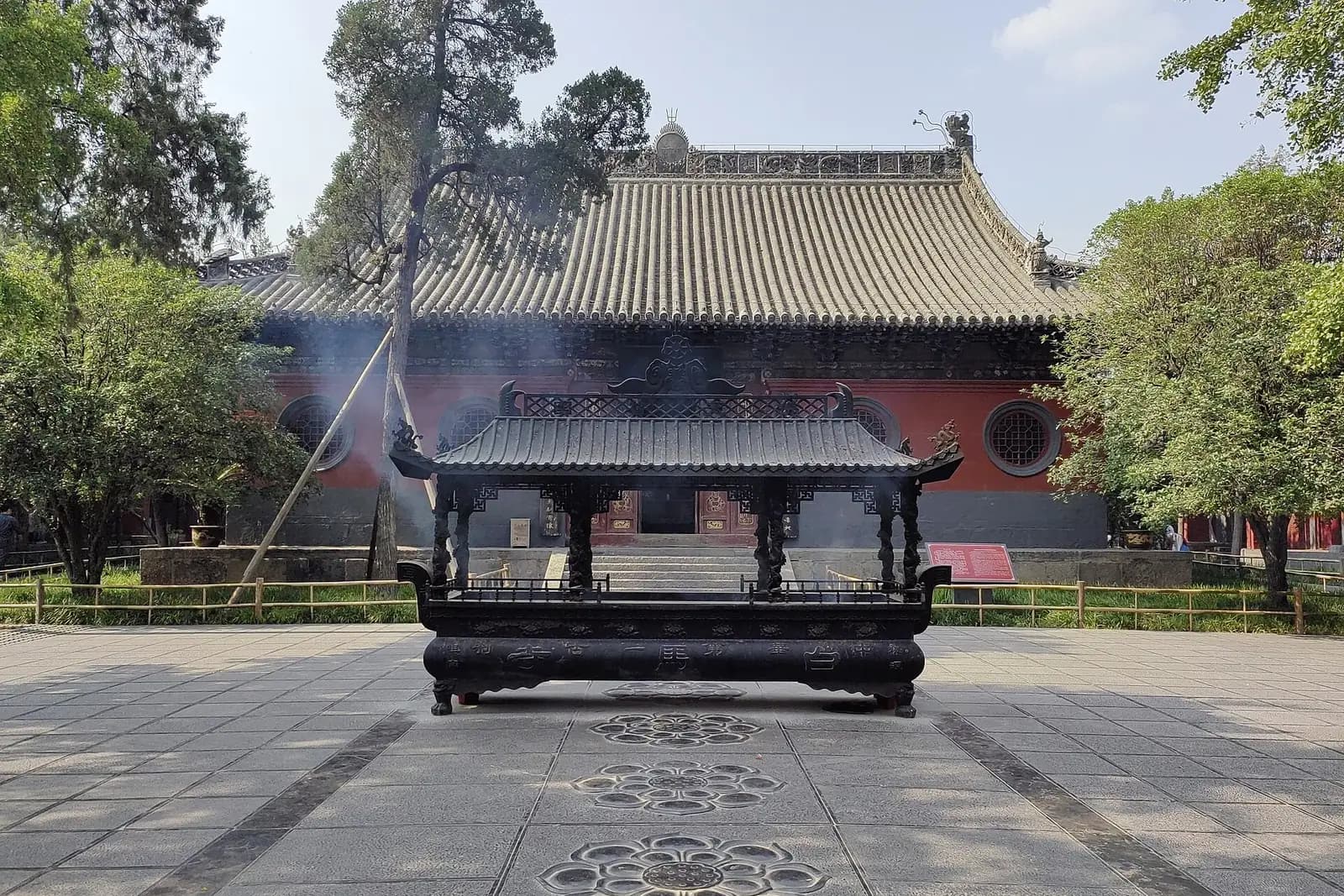
A courtyard with its incense burner
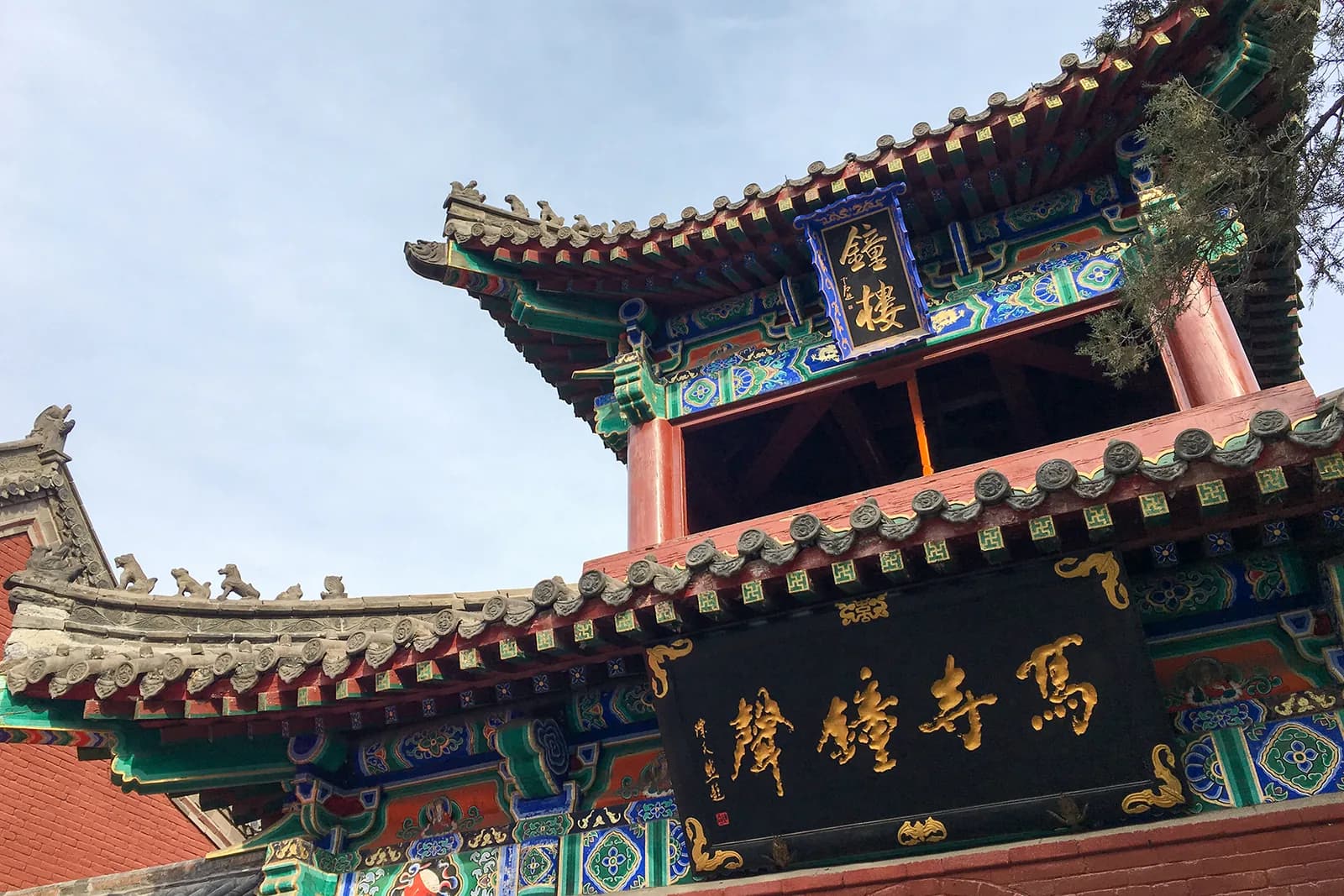
The bell tower
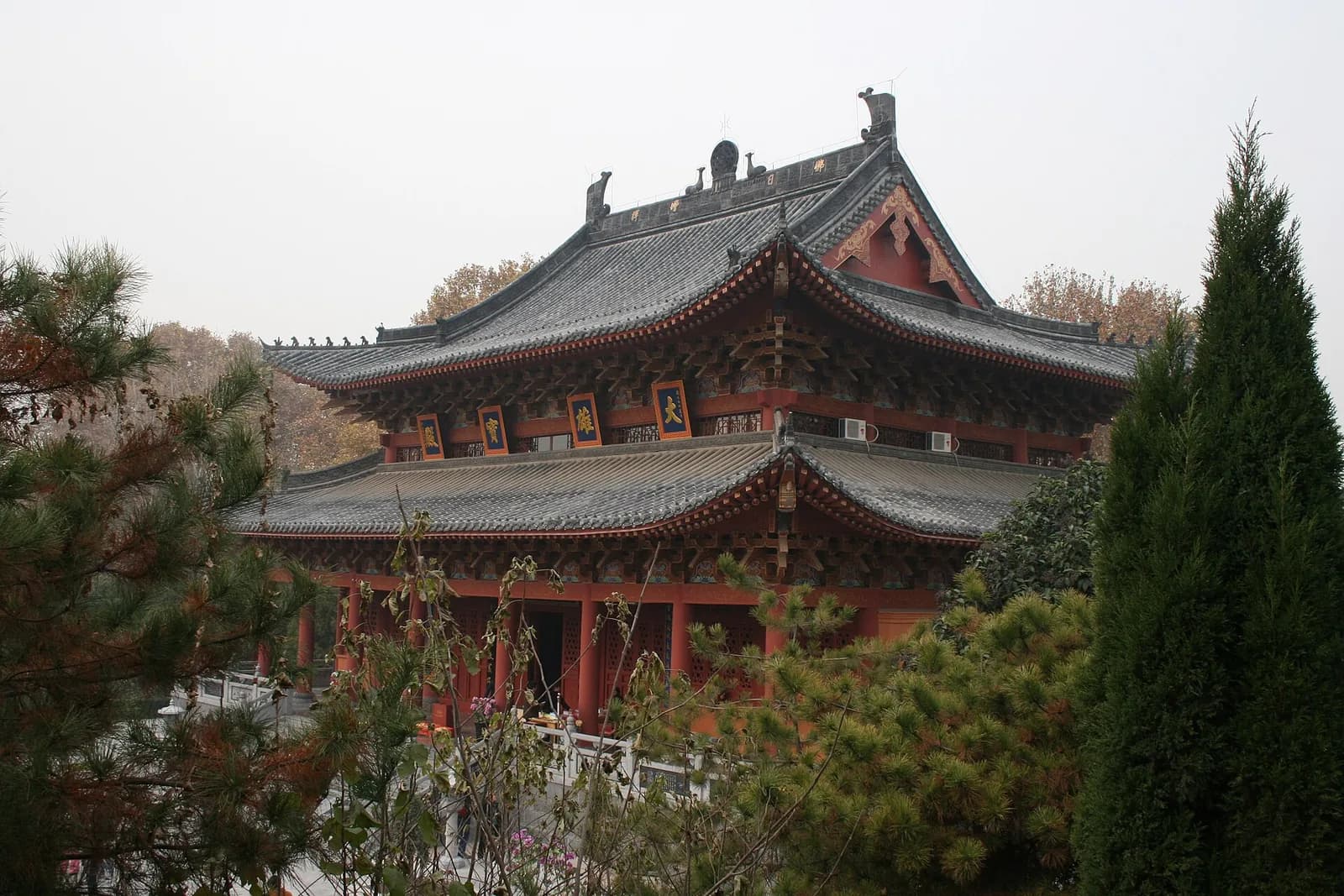
Temple halls among the trees
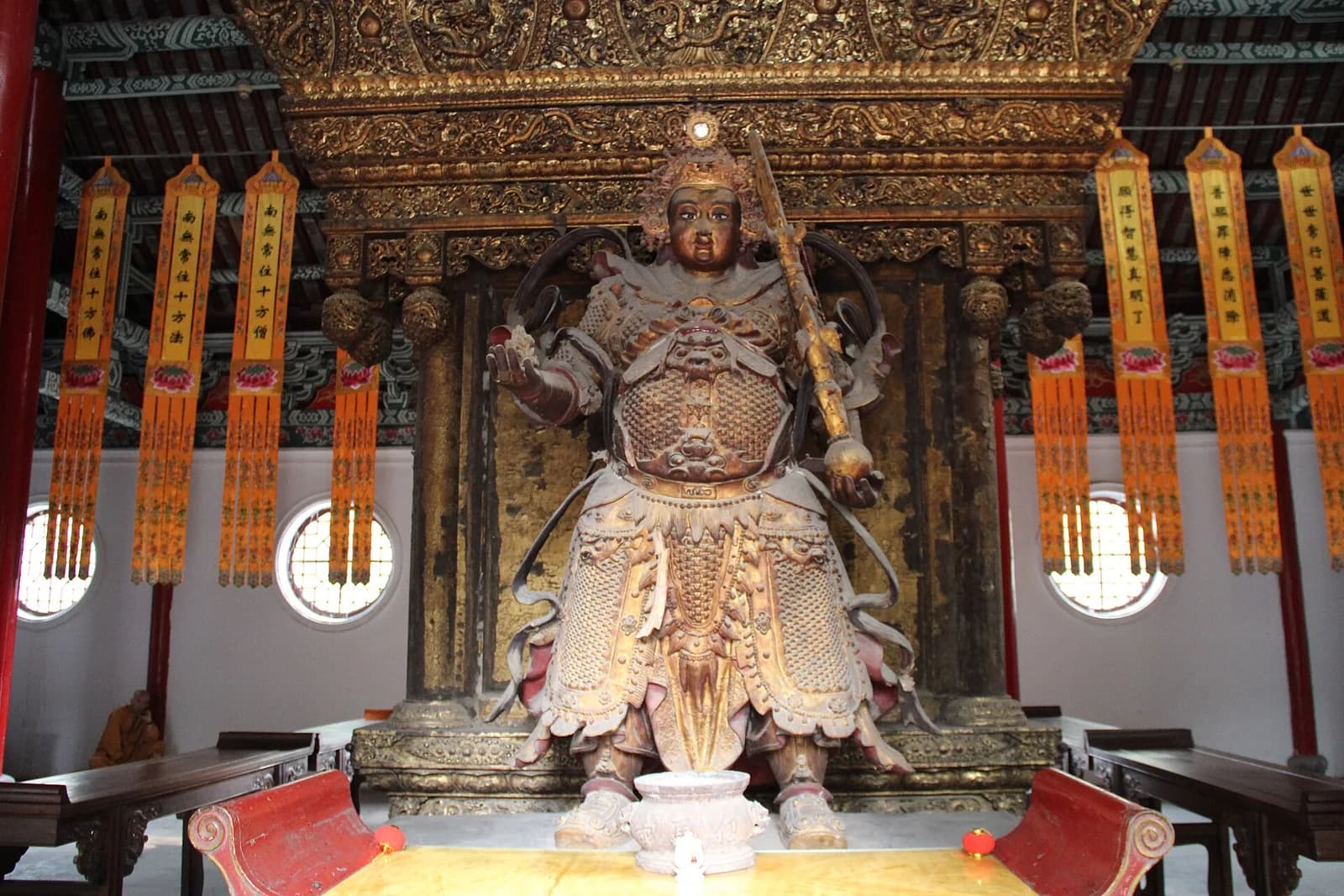
A guardian figure inside a hall
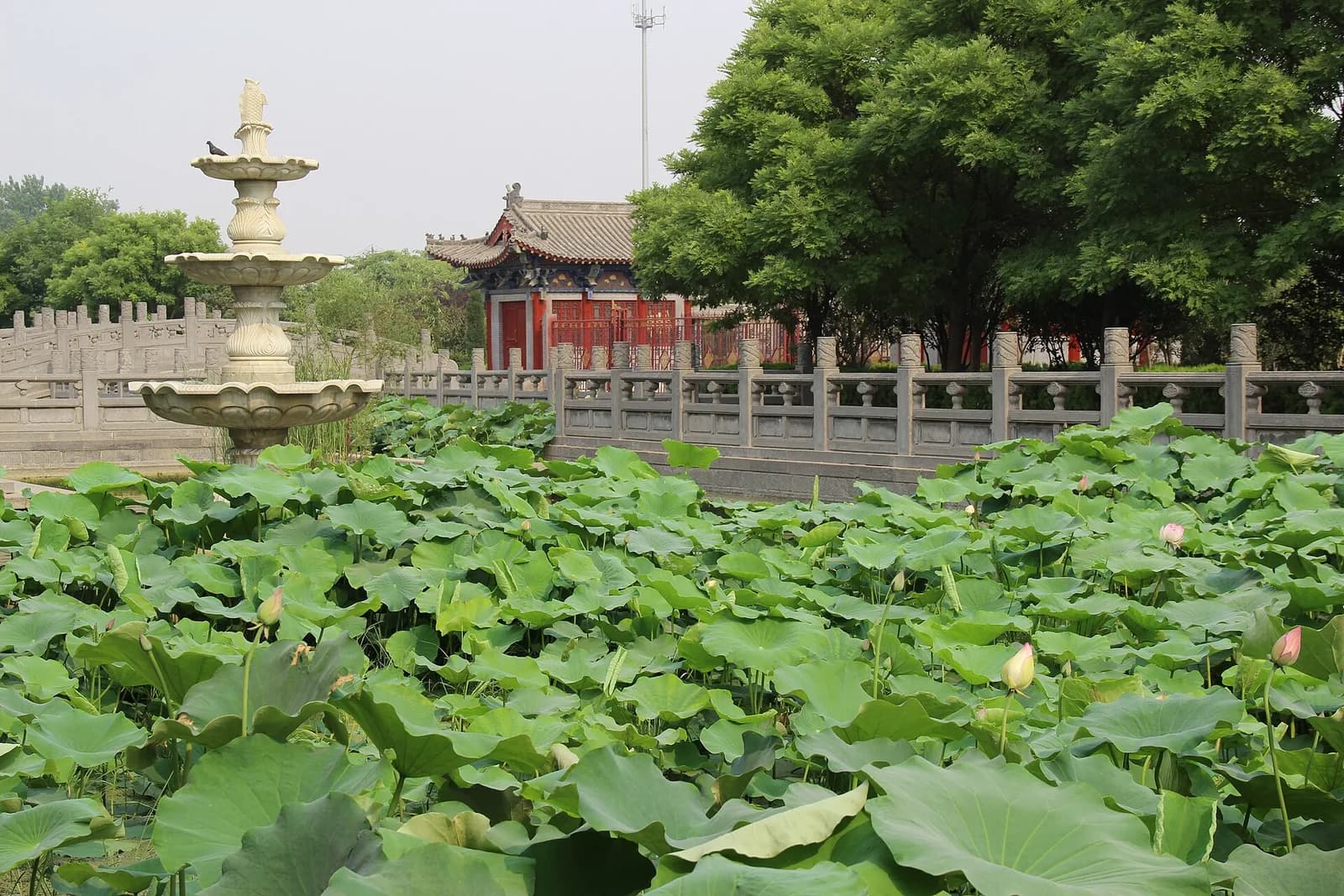
The lotus pond
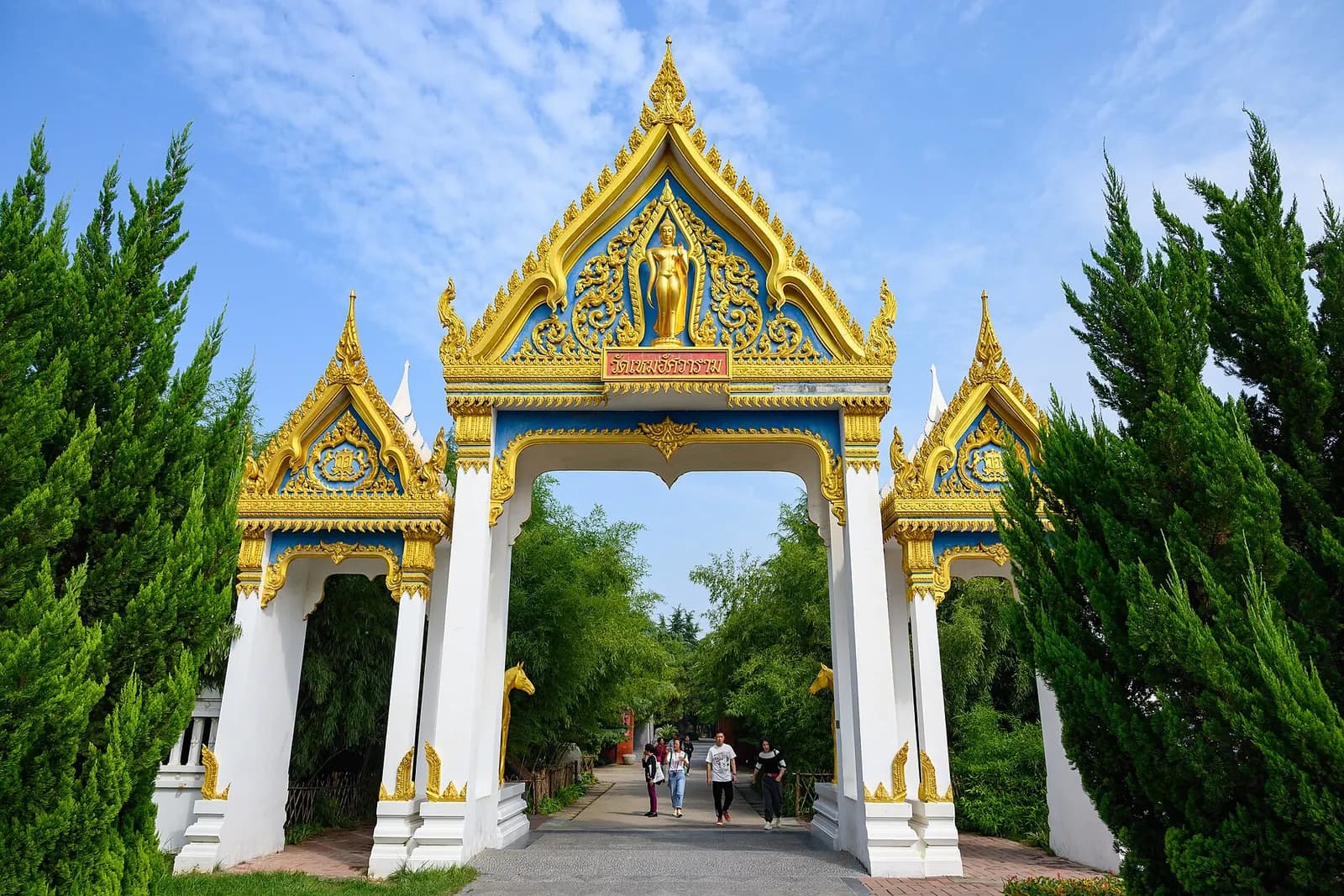
The Thai Buddhist hall
ทางตะวันออกของลั่วหยางเป็นวัดพุทธแห่งแรกที่สร้างขึ้นภายใต้การอุปถัมภ์ของจักรพรรดิหลังพุทธศาสนาเข้าสู่จีน และได้รับการยกย่องว่าเป็นวัดที่เก่าแก่ที่สุดของประเทศ แกนกลางใช้ผังแบบจีนดั้งเดิม ขณะที่สองข้างมีวิหารที่รัฐบาลอินเดีย เมียนมา และไทยถวาย ทำให้เกิดการวางเคียงกันของสี่ชาติซึ่งหาได้ยาก และเป็นจุดที่อธิบายได้ชัดที่สุดว่าพุทธศาสนาเข้าสู่จีนได้อย่างไร
จุดน่าสนใจ
- แนวแกนกลาง: วิหารท้าวจตุโลกบาล วิหารพระใหญ่ วิหารมหาวิระ วิหารรับเสด็จ และ pavilion ไพโรจนะ เรียงตามลำดับ โดยรูปปั้นเคลือบแล็กเกอร์สมัยหยวนเป็นของสำคัญที่หลงเหลือ
- วิหารนานาชาติที่รัฐบาลอินเดีย เมียนมา และไทยถวาย ความต่างของรูปแบบอธิบายได้ด้วยตัวมันเอง
- เจดีย์ฉีอวิ๋น เจดีย์อิฐสิบสามชั้นสมัยจิ้นทางตะวันออกของประตูวัด มักถูกข้ามไปแต่ควรไปดูแยก
- สุสานตี๋เหรินเจี๋ย ขุนนางสมัยถัง อยู่ไม่ไกล
ข้อควรรู้
วัดและถ้ำหลงเหมินอยู่ในลั่วหยางทั้งคู่ แต่คนละฝั่งของเมือง การรวมในวันเดียวจะเร่งรีบ ควรให้วัดครึ่งวันแยกต่างหาก นี่เป็นศาสนสถานที่ยังใช้งานจริง ควรใส่กางเกงขายาว ปกปิดไหล่ และห้ามถ่ายภาพภายในวิหาร