
ลั่วหยาง
ถ้ำหลงเหมิน
- จากเจิ้งโจว
- รถไฟความเร็วสูงประมาณ 40 นาที
- เวลาที่ควรเผื่อ
- ครึ่งวันถึงหนึ่งวัน
- ฤดูที่เหมาะ
- เมษายน–พฤษภาคม (ฤดูดอกโบตั๋น) กันยายน–ตุลาคม
จากเว็บไซต์ทางการ
สถานที่แนะนำตัวเองผ่านเว็บไซต์ทางการ
ถอดความจากเว็บไซต์ทางการของผู้ดำเนินการ พร้อมวันที่เราเข้าดู และเป็นอิสระจากคำบรรยายของเราเองด้านบน
The Longmen Grottoes stand five kilometres south of Luoyang, where Mount Xiang and Mount Longmen face each other with the Yi river running between them — a natural gateway that gave the site its old name, Yique. Carving began around the time the Northern Wei moved their capital to Luoyang and continued through the Northern Wei, Eastern and Western Wei, Northern Qi, Sui, Tang, Five Dynasties and Song. The span is what makes the site a record of Buddhism's absorption into China. Designated a Major Historical and Cultural Site Protected at the National Level in 1961 and inscribed on the UNESCO World Heritage List in 2000.
- Niches and caves
- 2,345
- Figures
- over 100,000
- Inscriptions
- over 2,800
- Vairocana Buddha height
- 17.14 m
- Smallest figure
- 2 cm, south wall of Lotus Cave
จุดชมหลัก
Guyang Cave
In the southern section of the west bank, cut into a natural karst cavity: 11.2 m high, 7.27 m wide and 11.83 m deep. It is the earliest, most richly carved and most heavily inscribed of the large caves — over 1,500 niches and more than 800 inscriptions. Nineteen of the twenty celebrated Longmen inscriptions are here. The 6.1 m Shakyamuni shows the Northern Wei "refined bones and clear features" manner.
Middle Binyang Cave
Commissioned by Emperor Xuanwu of the Northern Wei for his parents, Emperor Xiaowen and Empress Wenzhao — one of the most representative imperial caves of the Northern Wei period. Cut between 500 and 523 CE, about 24 years of work recorded as 802,366 labour units. The ceiling carries a canopy, the floor a lotus pond.
Prescription Cave
Holds the earliest stone-carved medical prescriptions found in China, dated to the Tang. The contents were incorporated into the Japanese Ishinpō — physical evidence of Chinese medicine travelling outward.
Fengxian Temple
The Vairocana Buddha, 17.14 m tall — the site's defining image.
ภาพสถานที่
These photographs are openly licensed for commercial use (from Wikimedia Commons: CC0, CC BY, CC BY-SA or public domain) and are not the attraction's own gallery. Each photo is credited below with its author and licence, linked to the original file.
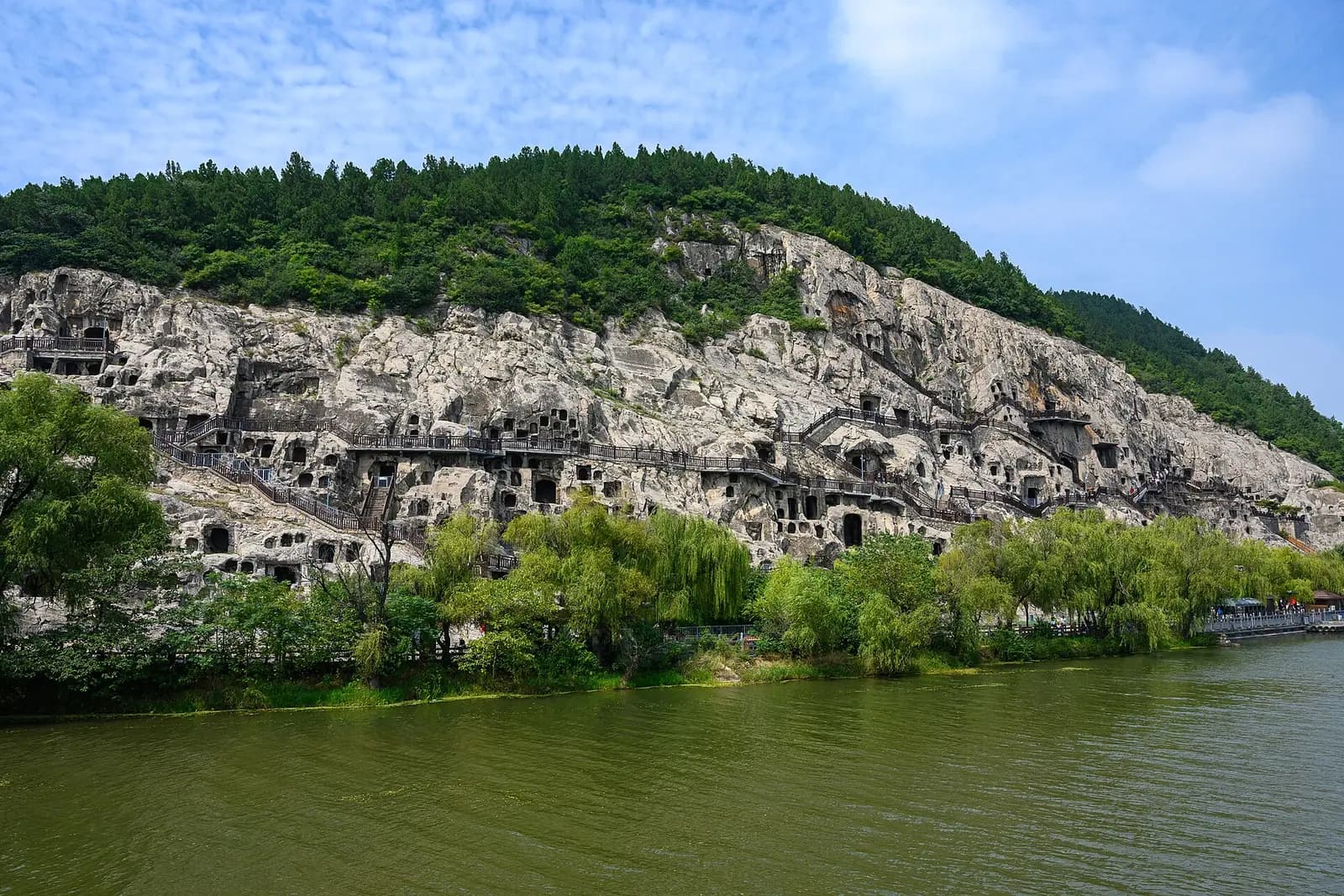
The Yi river and the west-bank cliffs
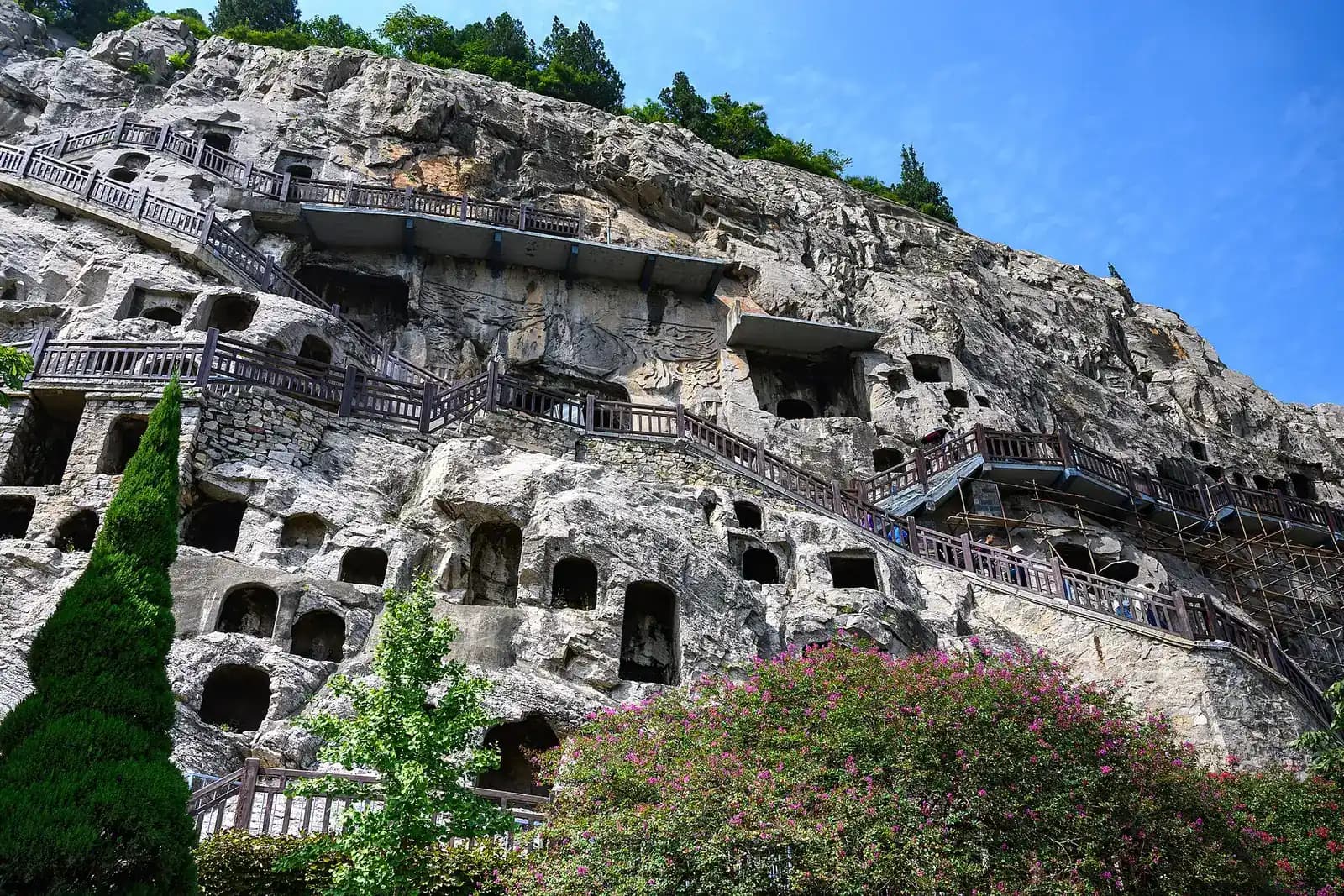
Niches crowding the cliff face
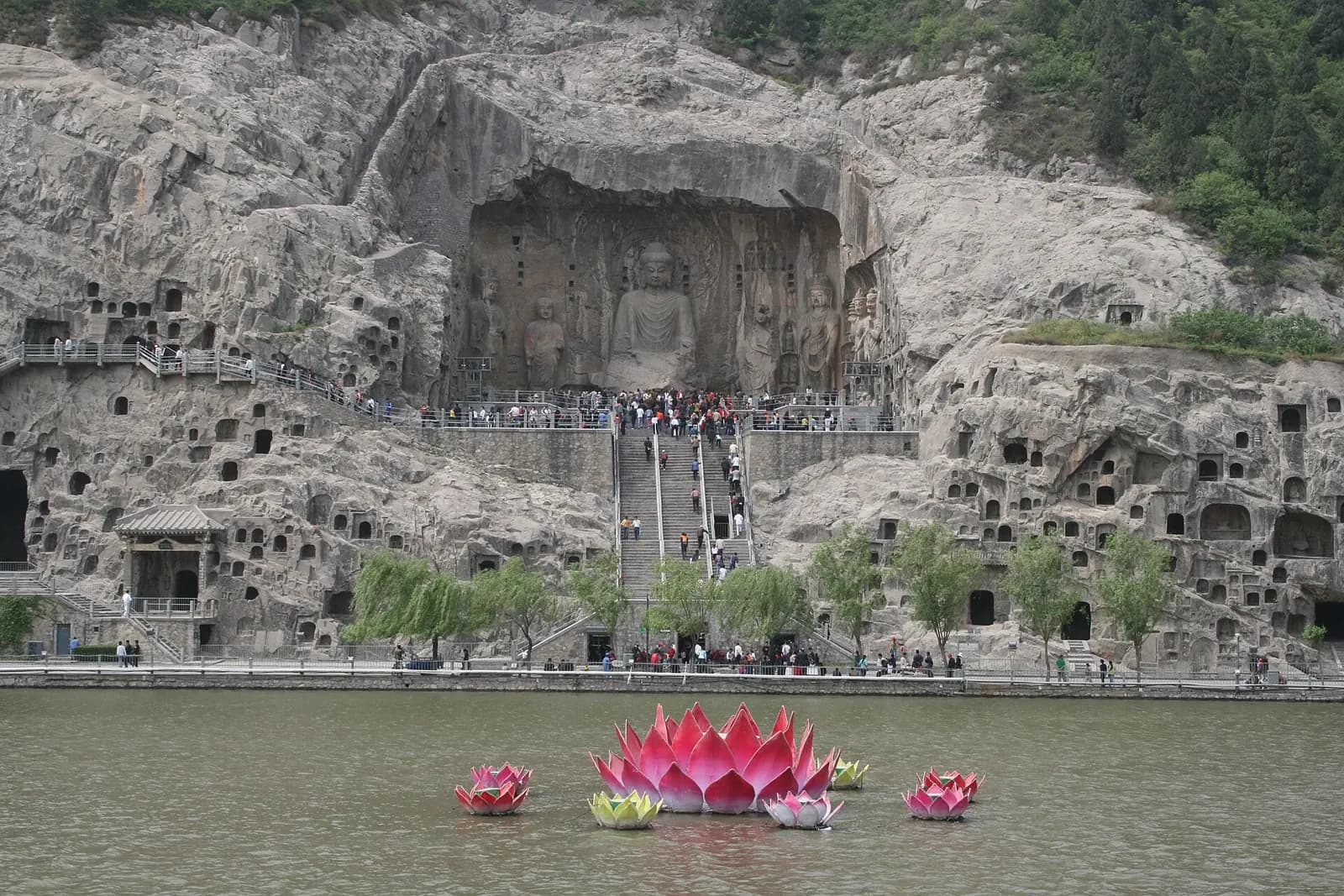
The great niche of Fengxian Temple
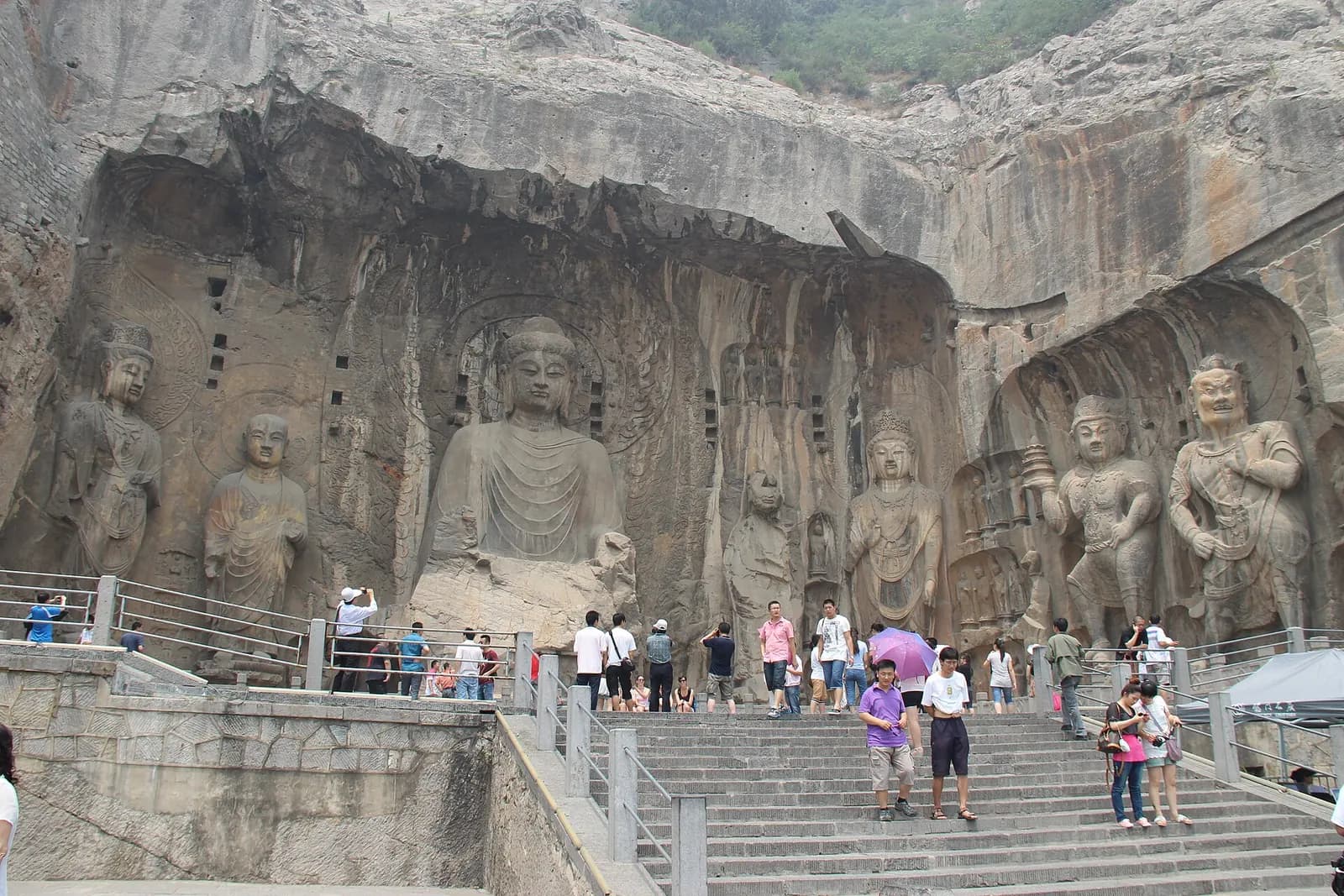
Vairocana Buddha and attendants, Fengxian Temple
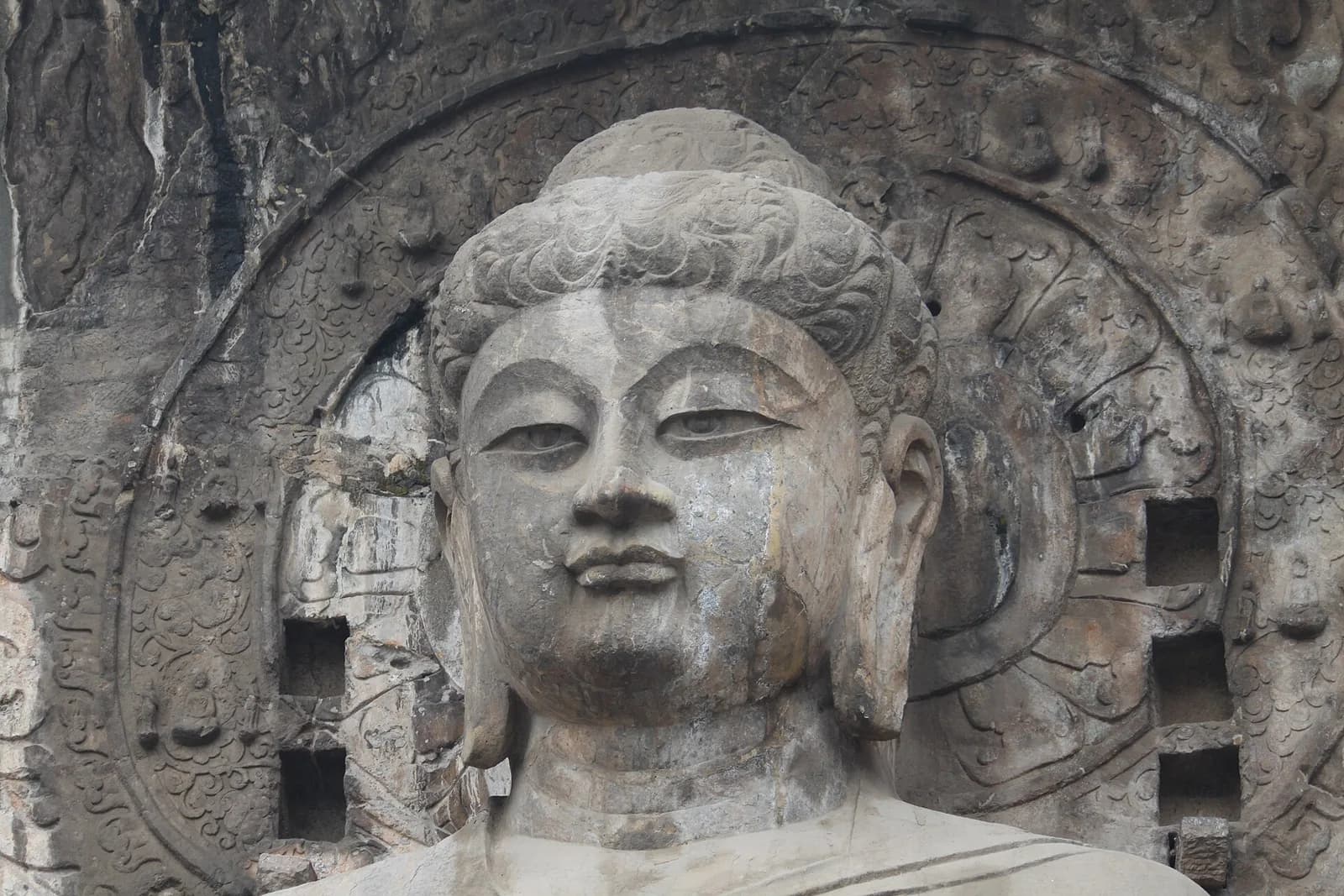
The Vairocana Buddha
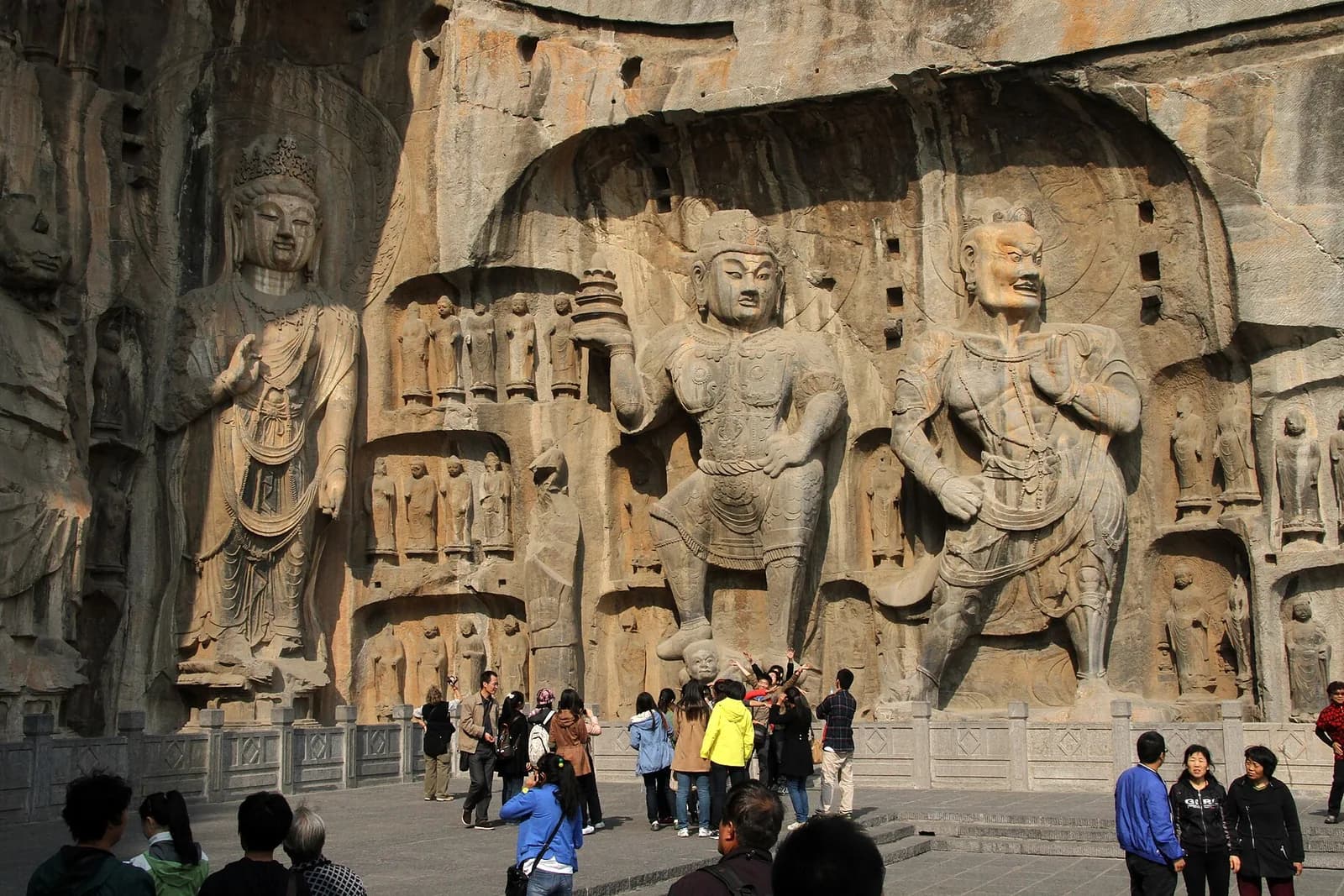
The Fengxian Temple figures
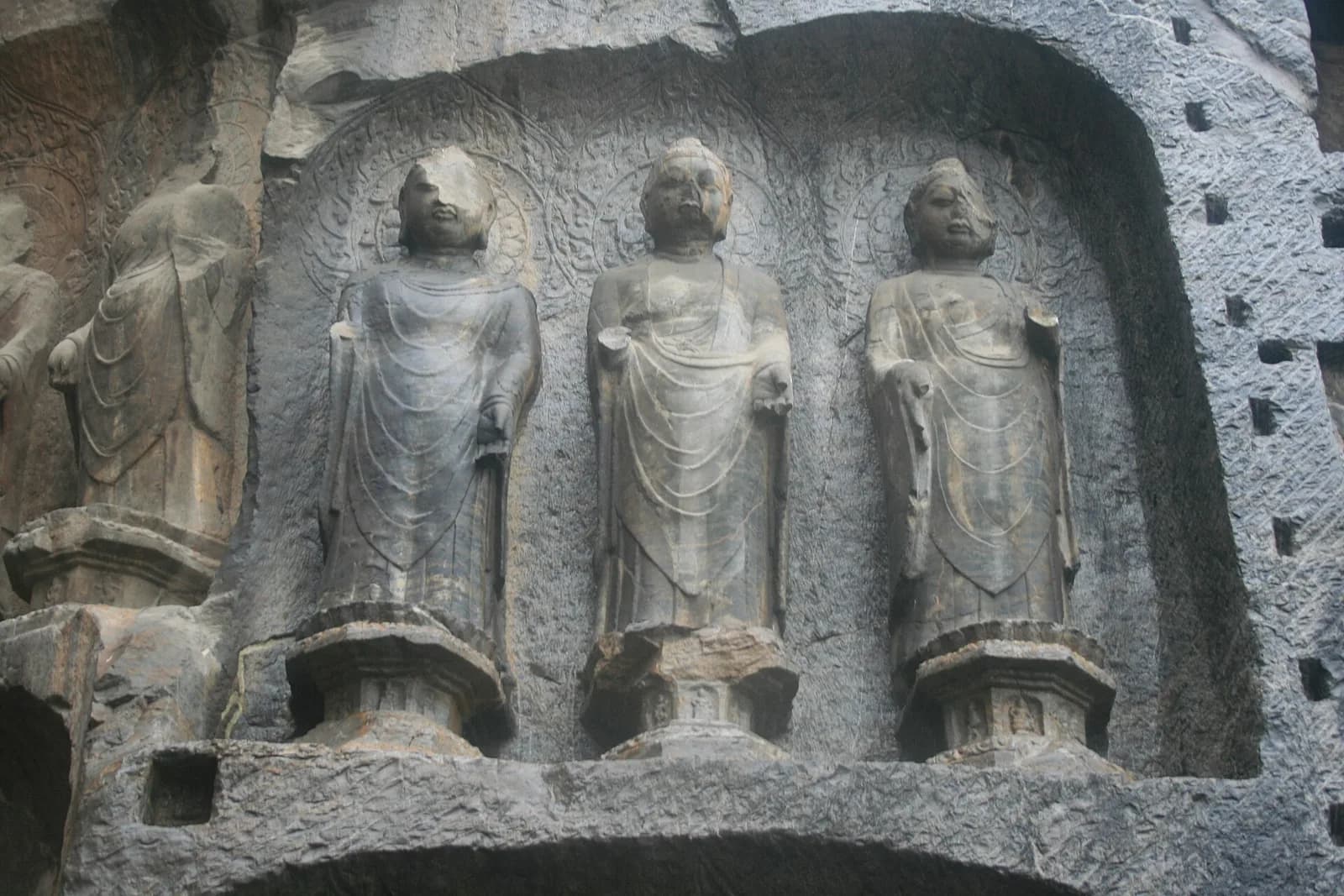
Attendant bodhisattvas, Fengxian Temple
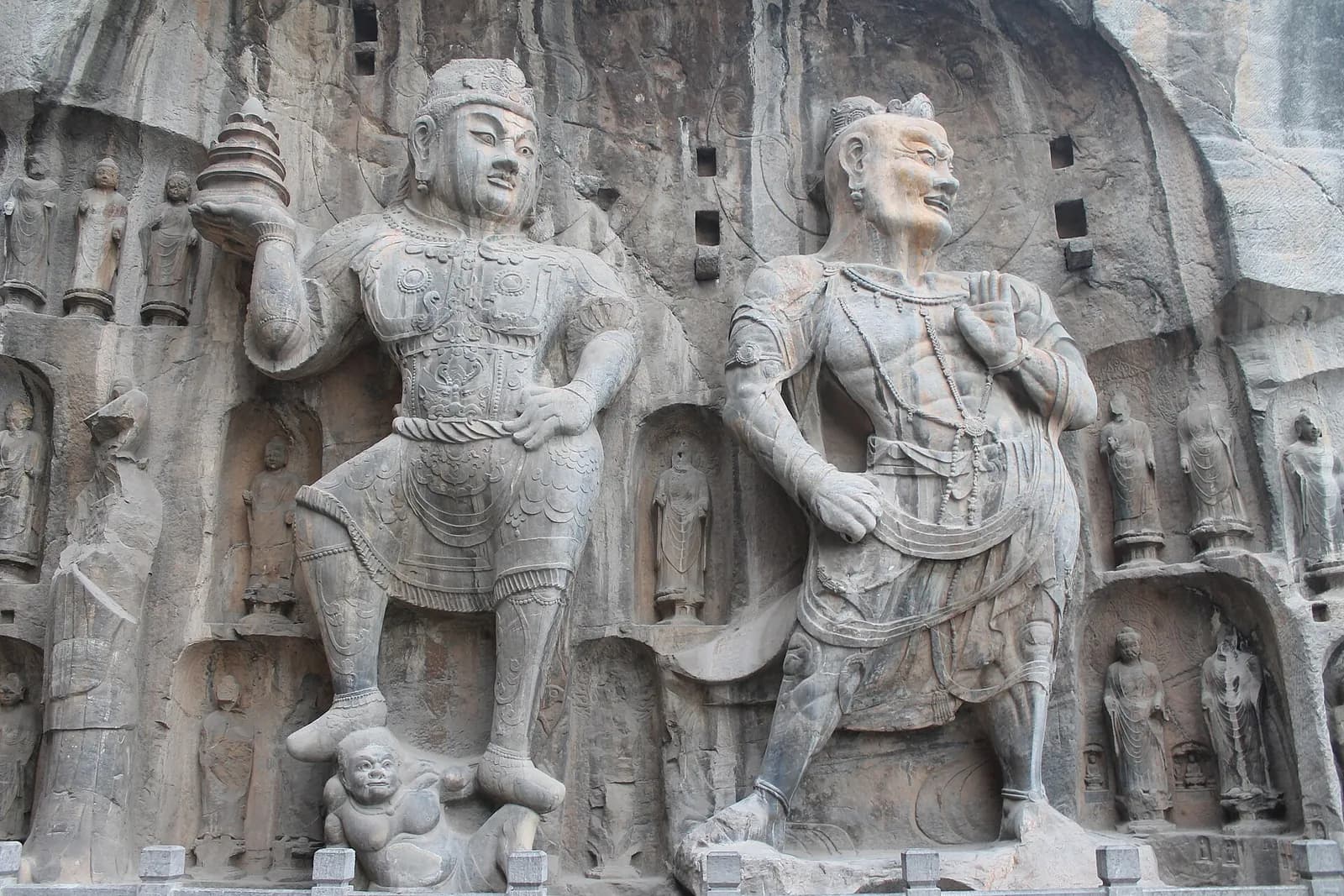
Standing bodhisattvas
Dominik Tefert · Public domain
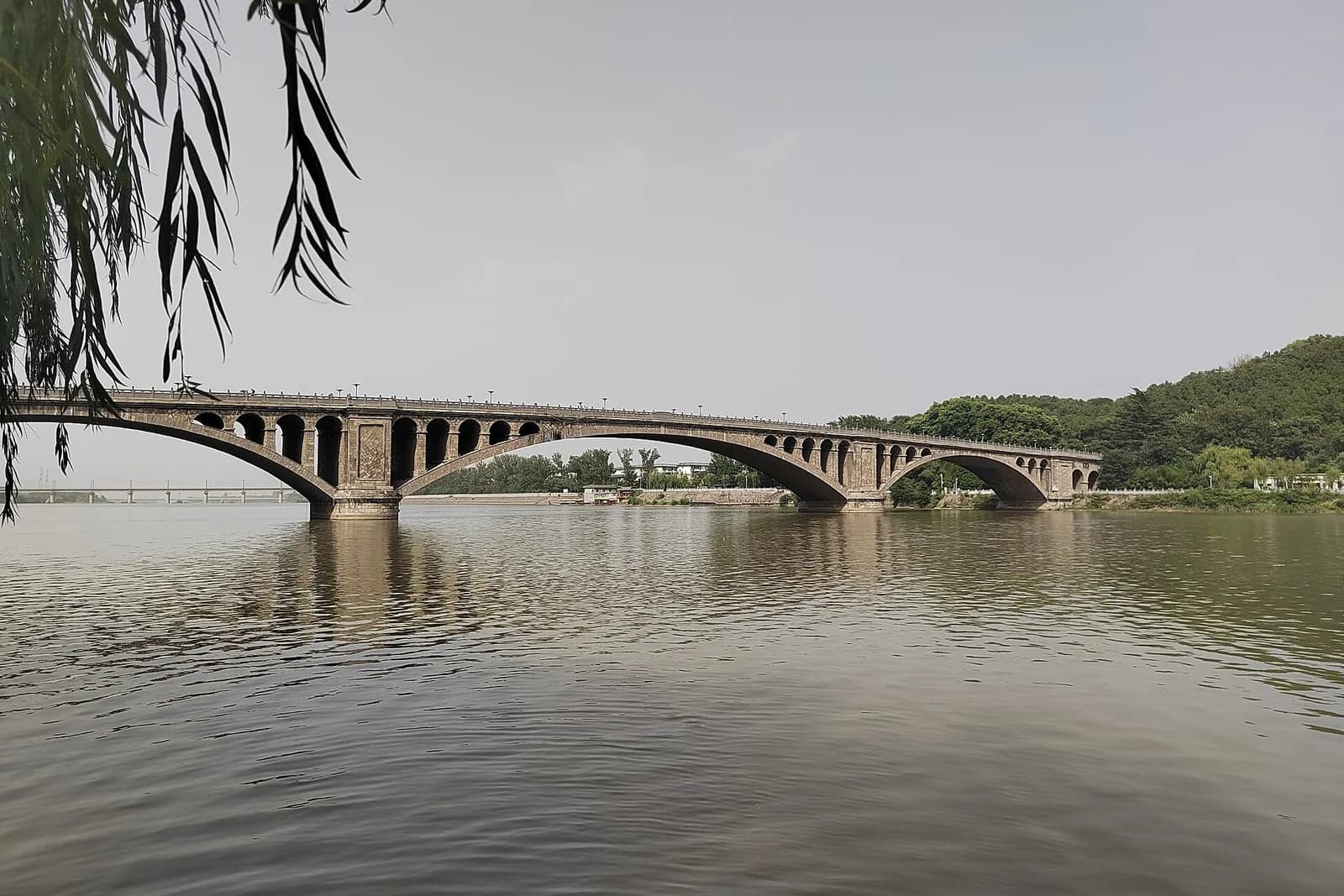
The Longmen bridge over the Yi river
แหล่งข้อมูล
เริ่มแกะสลักราว ค.ศ. 493 เมื่อราชวงศ์เว่ยเหนือย้ายเมืองหลวงมาลั่วหยาง และดำเนินต่อในสมัยเว่ยตะวันออก เว่ยตะวันตก ฉีเหนือ สุย ถัง และซ่ง รวมกว่าสี่ศตวรรษของการทำงานต่อเนื่อง ยังเหลือคูหาและถ้ำกว่า 2,300 แห่ง รูปปั้นราว 100,000 องค์ และจารึก 2,800 ชิ้น ขึ้นทะเบียนมรดกโลกยูเนสโกในปี 2000
จุดน่าสนใจ
- พระไวโรจนะที่วิหารเฟิงเซียน สูง 17.14 เมตร เป็นผลงานชิ้นเอกของการแกะสลักถ้ำแบบราชสำนักสมัยถัง และเป็นภาพสัญลักษณ์ของที่นี่
- ถ้ำปินหยางสามแห่ง เป็นถ้ำราชสำนักสมัยเว่ยเหนือ ภาพนูนขบวนเสด็จถูกนำไปไว้ในคอลเลกชันต่างประเทศ แต่ตัวถ้ำยังเป็นมาตรฐานของศิลปะเว่ยเหนือ
- ถ้ำวั่นฝอ (หมื่นพระพุทธเจ้า) มีรูปปั้นเล็ก 15,000 องค์แกะสลักแน่นบนผนังสองข้าง
- วัดเซียงซานและสวนไป๋บนฝั่งตะวันออก ที่ฝังศพกวีสมัยถัง ไป๋ จวีอี้ มักเที่ยวในวันเดียวกัน
ข้อควรรู้
พื้นที่แบ่งเป็นฝั่งตะวันตกและตะวันออก ฝั่งตะวันตกมีงานแกะสลักที่ดีที่สุด จึงควรไปก่อน ต้องเดินราวสี่ถึงห้ากิโลเมตร ควรใส่รองเท้าที่เหมาะสม ตั้งแต่เมษายนถึงตุลาคมเปิดให้ชมตอนค่ำ รูปปั้นที่เปิดไฟให้ความรู้สึกต่างจากตอนกลางวันอย่างสิ้นเชิง ควรไปอีกครั้งแยกต่างหาก ในฤดูท่องเที่ยวควรจองออนไลน์ล่วงหน้า