
Аньян
Иньсюй (руины Инь)
- От Чжэнчжоу
- Около 1,5 часов на скоростном поезде
- Время на осмотр
- От половины дня до целого дня
- Лучший сезон
- Круглый год; весна и осень наиболее комфортны
С официального сайта
Официальный сайт объекта о себе
Перенесено с официального сайта оператора с указанием даты чтения. Не зависит от нашего описания выше.
Yin Xu is the site of the late Shang capital. In 1300 BCE King Pan Geng moved the court to what is now the area around Xiaotun village northwest of Anyang; the city was known as Yin and served eight generations and twelve kings over 255 years. It holds China's first Shang capital attested both in documents and by oracle-bone and archaeological evidence, its earliest systematic script, its earliest chariot-and-horse pits, the tomb of Fu Hao — its earliest woman general — and the Simuwu ding, the largest bronze vessel yet excavated anywhere in the world. City, script and bronze are its three defining elements.
- What it is
- The site of the late Shang capital
- Capital
- Pan Geng moved the capital here in 1300 BCE; eight generations, twelve kings, 255 years
- Oracle bones
- China's earliest systematic script; the YH127 pit alone yielded over ten thousand pieces in 1936
- Simuwu ding
- 133 cm high, 110 cm across the mouth, 875 kg — the largest bronze vessel yet excavated
- Tomb of Fu Hao
- Excavated in 1976; 1,928 grave goods, including over 460 bronzes, over 750 jades and some 6,800 shell coins
- Royal cemetery
- 2.14 hectares; twelve royal tombs and more than 2,000 sacrificial pits and attendant burials
- Yachang ox zun
- 40 cm long, 22.5 cm high with its lid, 7.1 kg — the site's only ox-shaped bronze zun
Что посмотреть
Palace and ancestral temple site
A century of excavation has yielded quantities of oracle bones, bronzes, jades and hardstone objects.
Royal cemetery
The burial and sacrificial ground of the late Shang kings — the earliest complete royal cemetery known in China.
Oracle-bone pit
Pit YH127, where more than ten thousand pieces were found together, is called China's earliest oracle-bone archive.
Chariot-and-horse pits
The earliest physical evidence of animal-drawn vehicles found in China; six chariots with road traces are displayed, largely intact.
Tomb of Fu Hao
The only royal tomb at the site found unlooted, and the only one whose occupant and date can be fixed against the oracle bones.
Фотографии
These photographs are openly licensed for commercial use (from Wikimedia Commons: CC0, CC BY, CC BY-SA or public domain) and are not the attraction's own gallery. Each photo is credited below with its author and licence, linked to the original file.
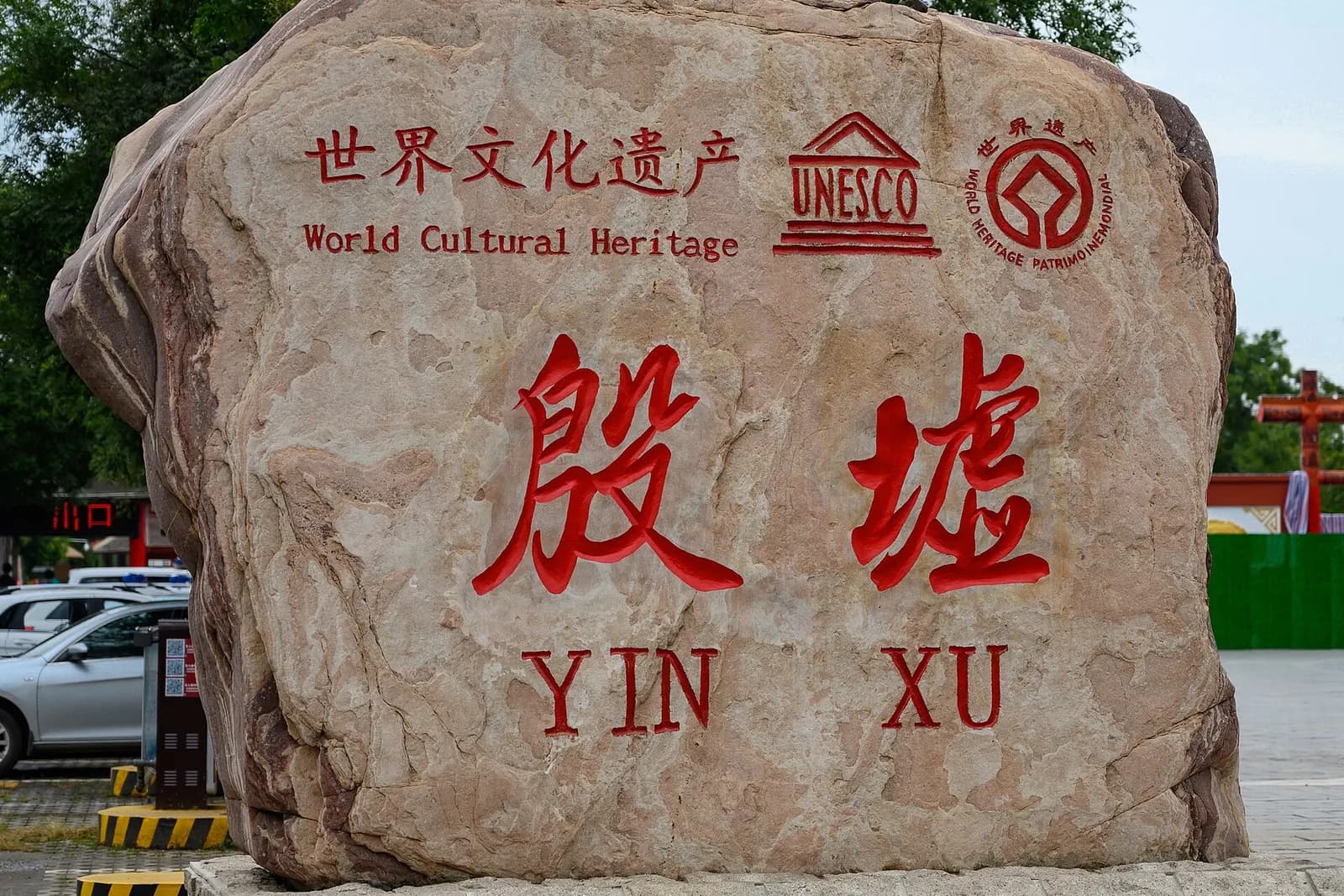
The Yinxu marker stone
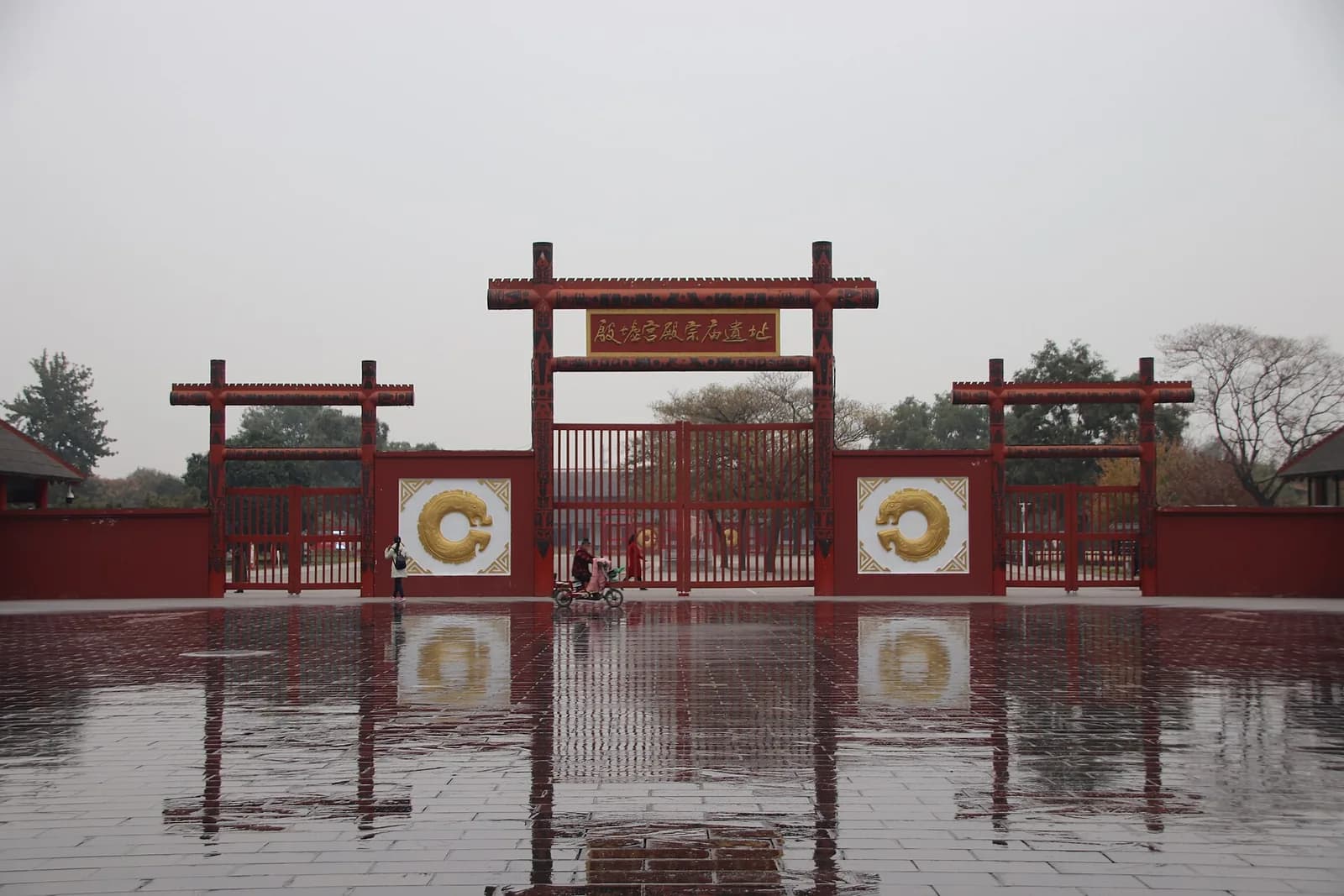
Entrance to the palace and temple site
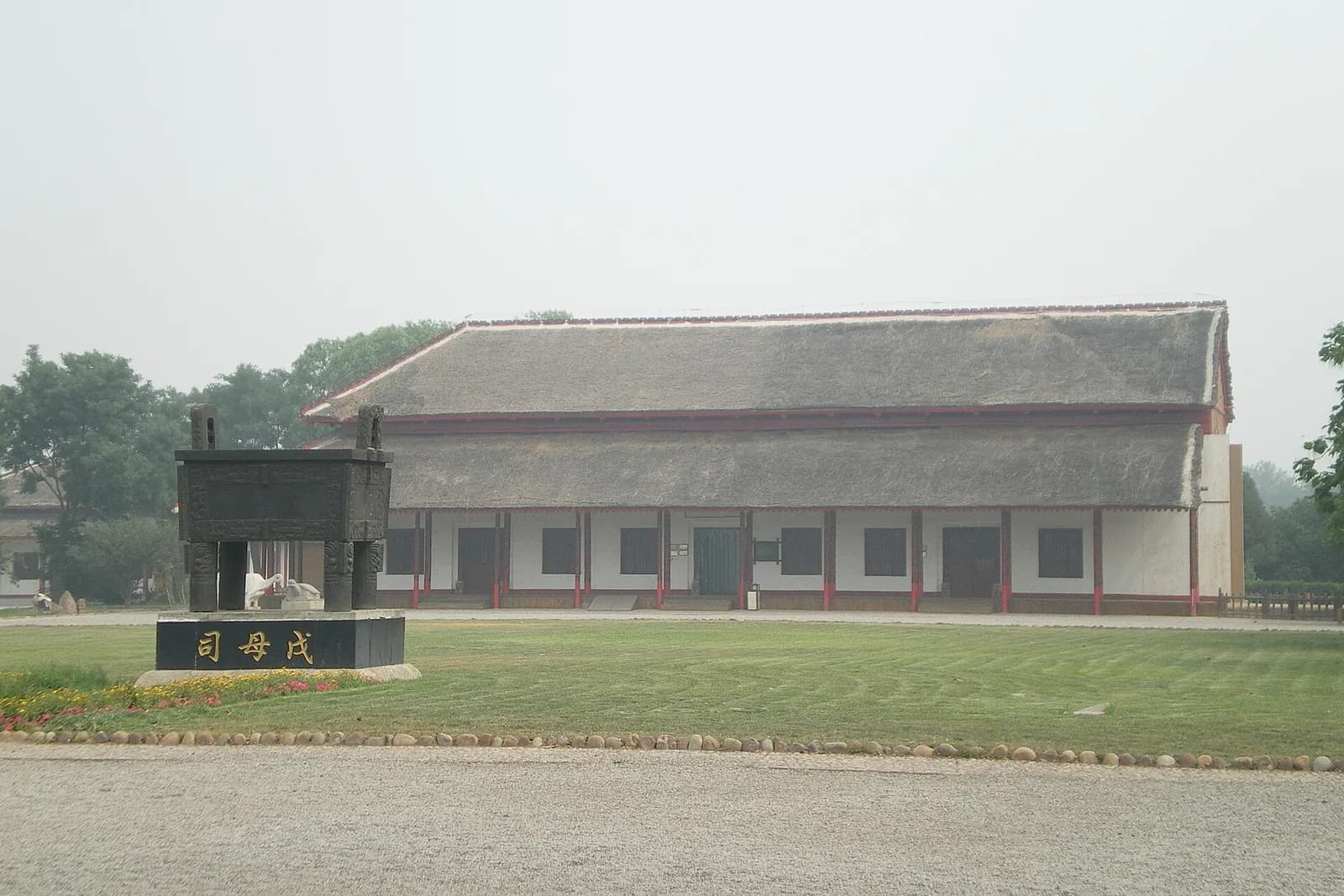
A reconstructed hall on the site
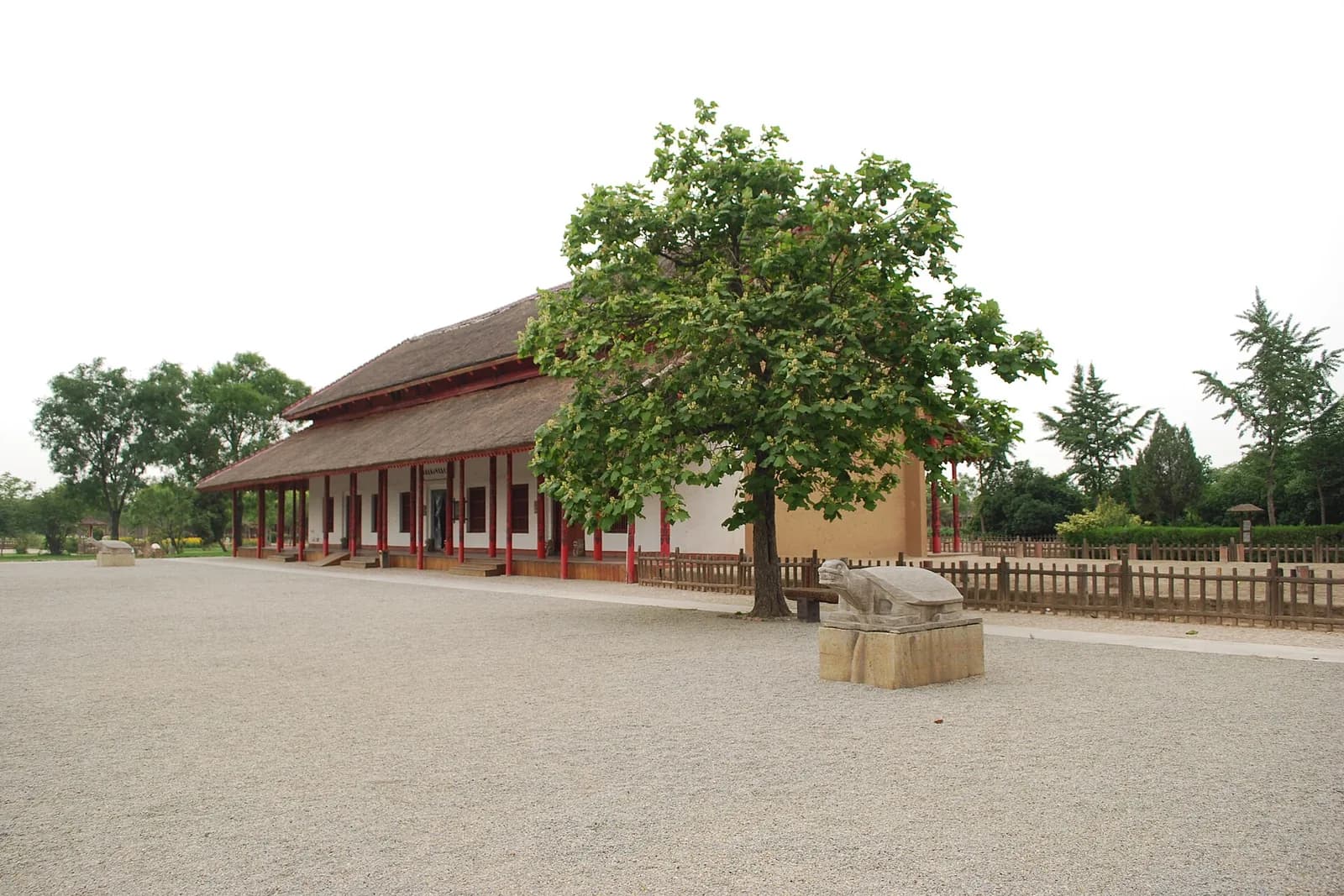
The reconstructed Yi-20 Shang hall
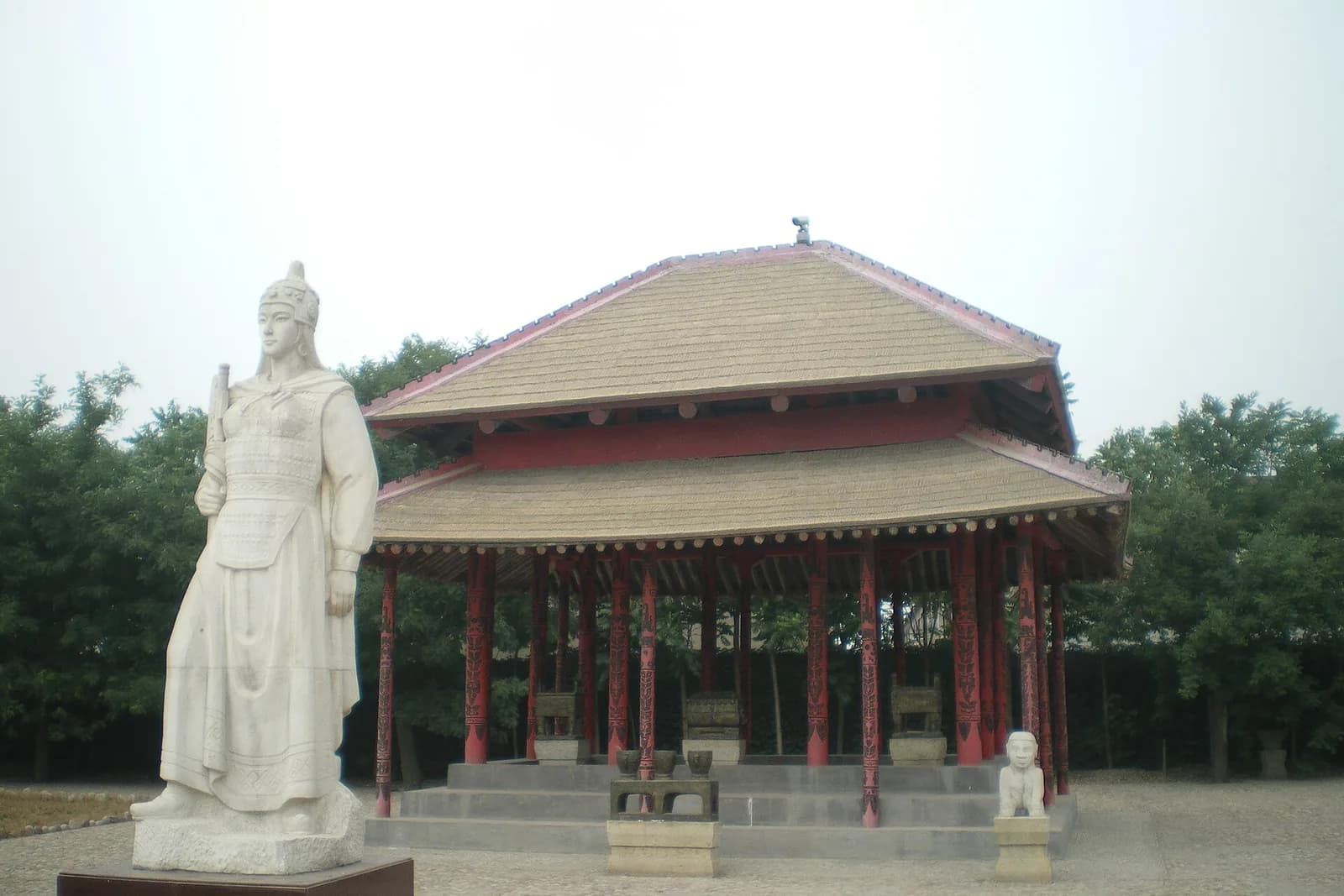
The statue of Fu Hao before a hall
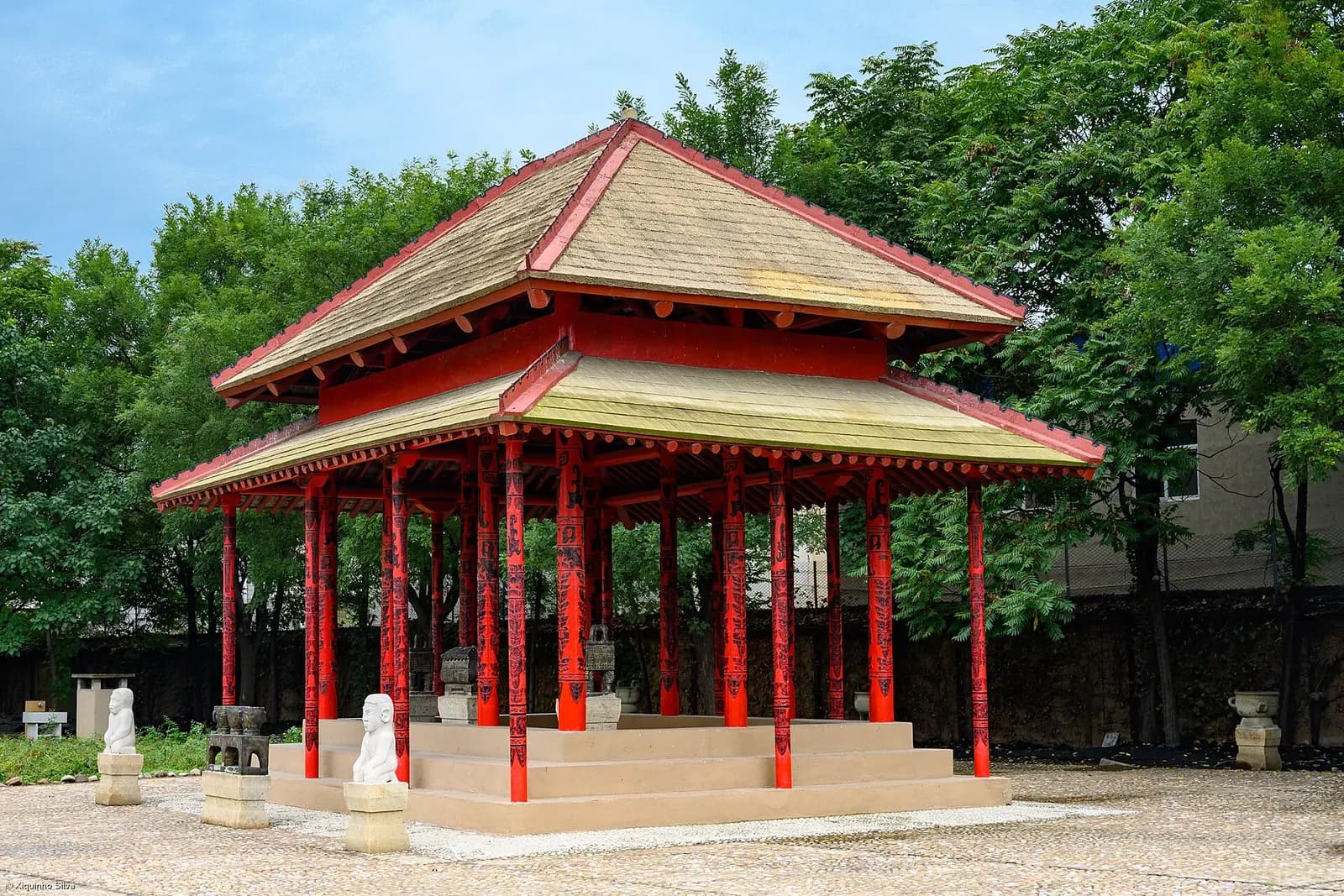
A reconstructed pavilion at the royal tombs
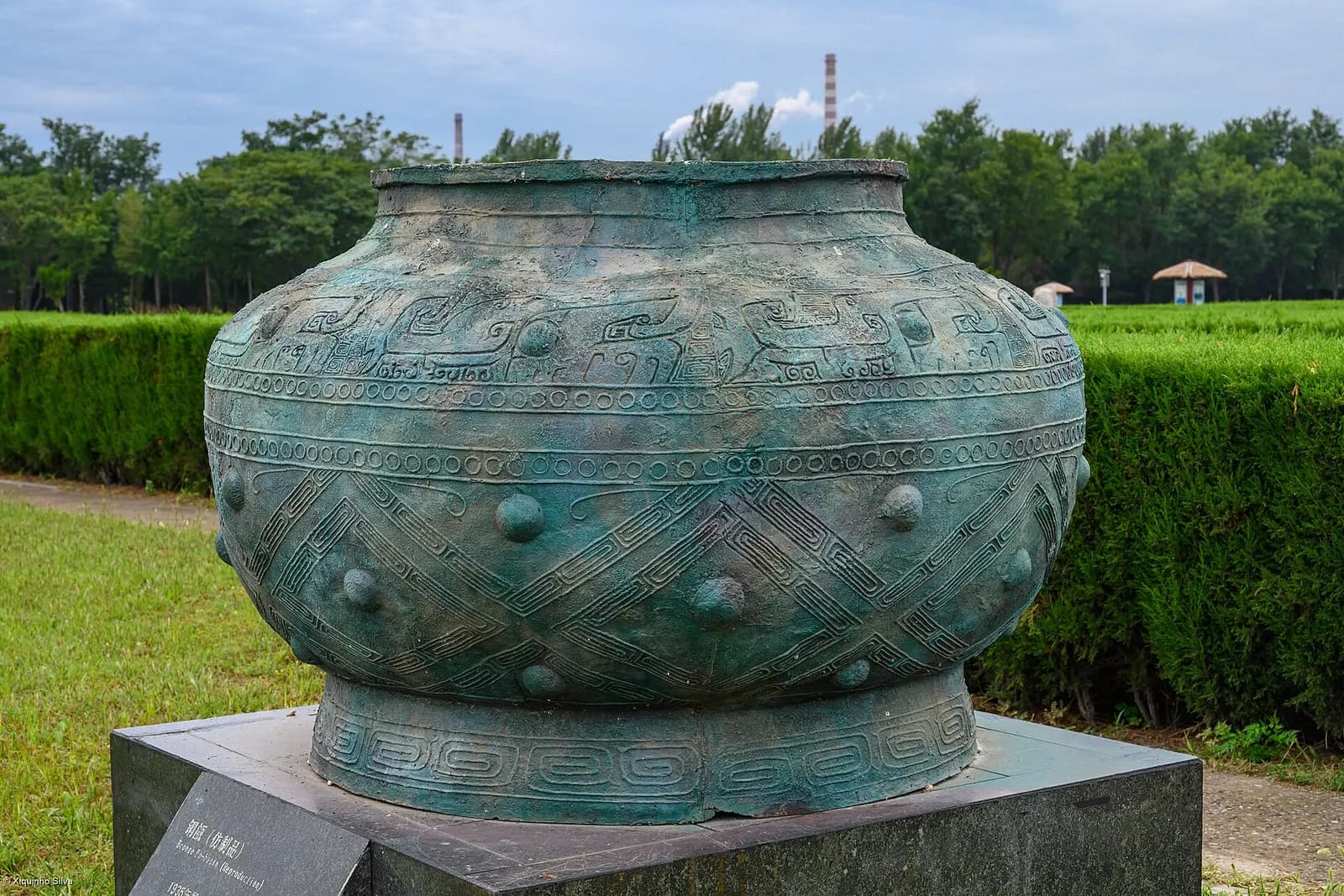
A bronze replica at the royal tombs
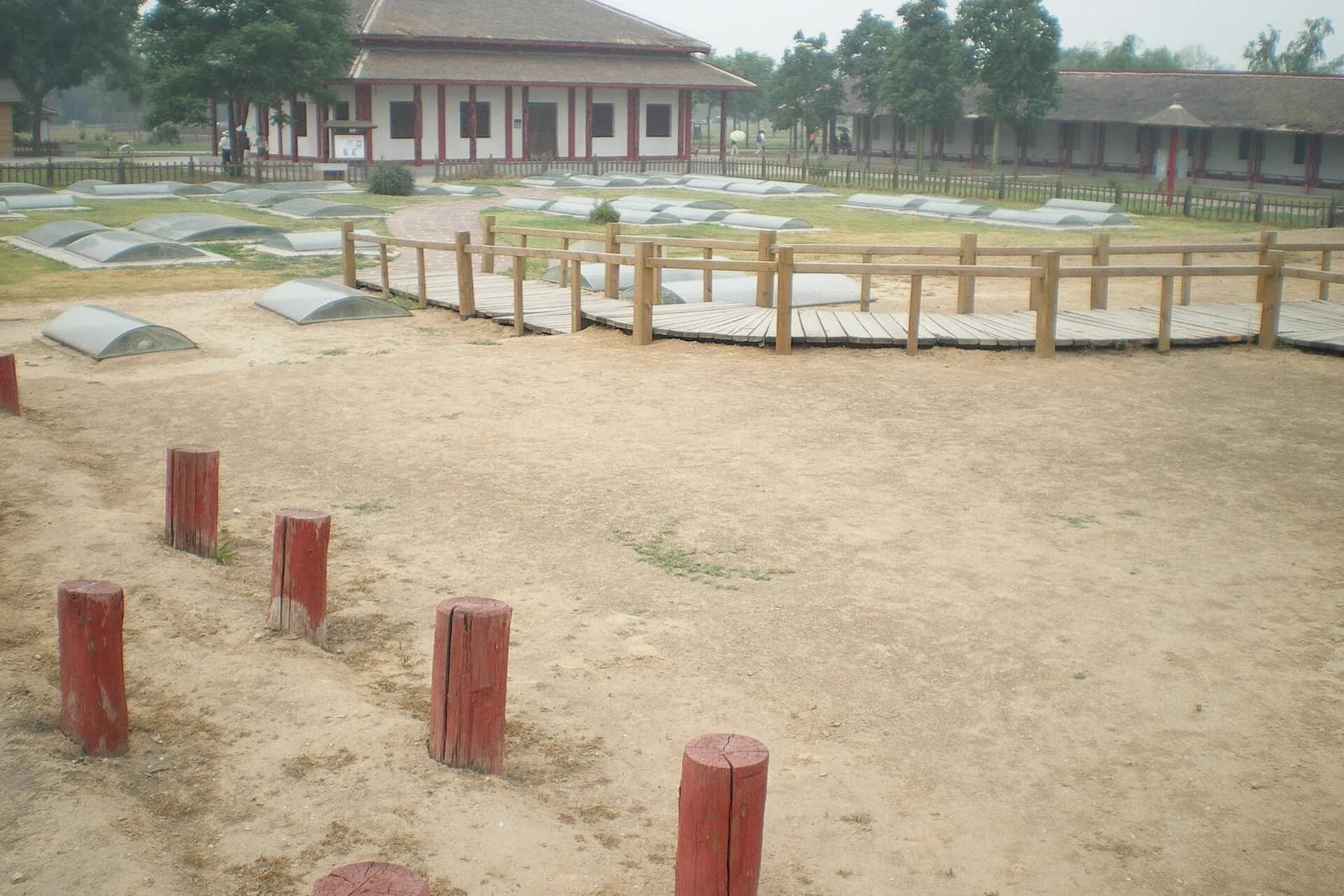
Palace foundations
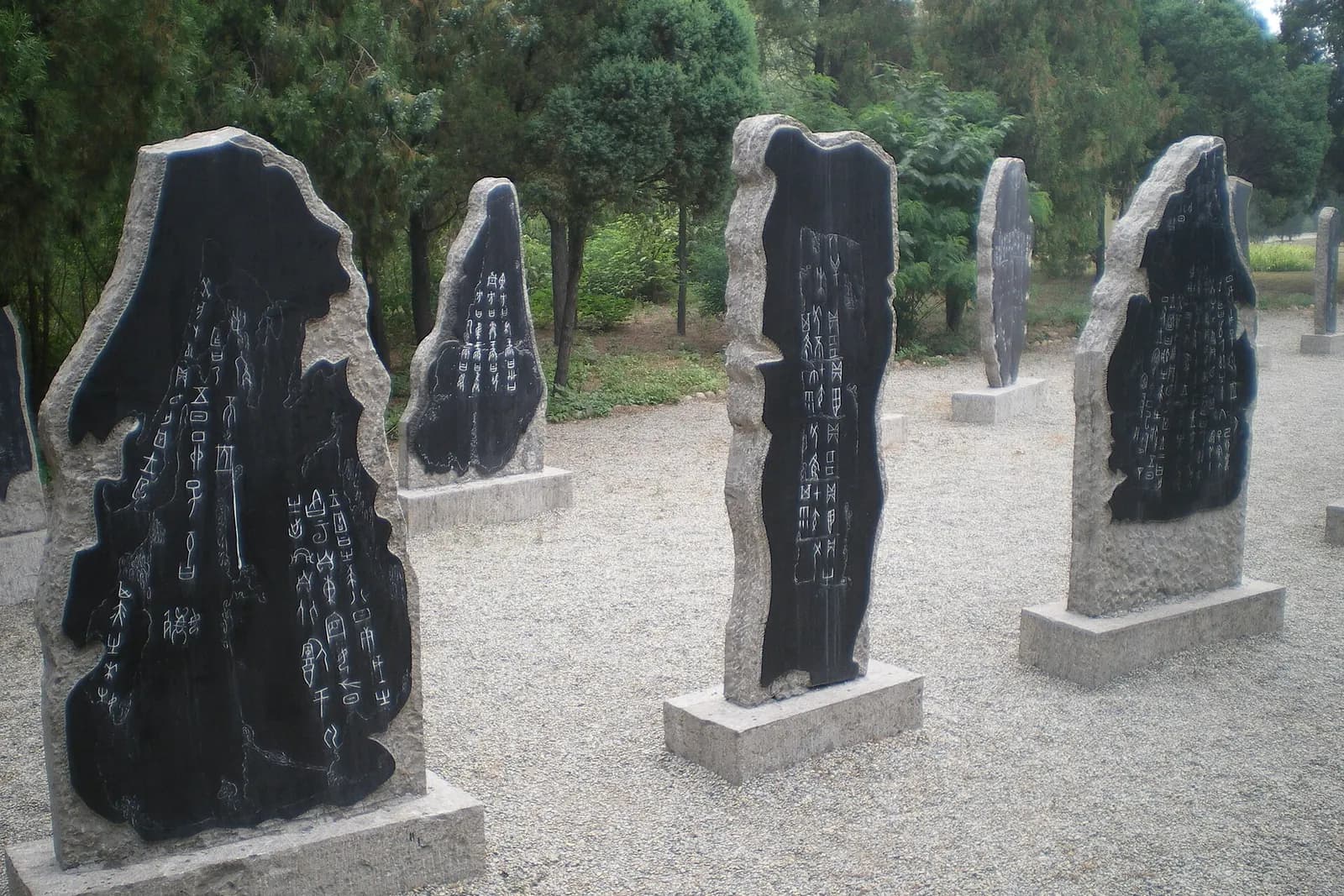
Inscribed steles
Столица поздней династии Шан. Примерно с 1300 г. до н. э., когда Пань Гэн перенёс двор в Инь, и до падения династии здесь правили восемь поколений и двенадцать царей — 254 года. На этом памятнике обнаружено письмо на гадательных костях, и здесь же родилась китайская современная археология. В 2006 году включён в Список всемирного наследия ЮНЕСКО.
Что смотреть
- Зона дворцов и храмов предков: десятки раскопанных платформ зданий из утрамбованной земли.
- Гробница Фу Хао, раскопанная в 1976 году, — единственная неразграбленная царская гробница Шан на памятнике; более 1 900 погребальных предметов.
- Яма с гадательными костями YH127, давшая более 17 000 фрагментов за одни раскопки.
- Новый музей Иньсюй, открытый в 2024 году: сначала музей, затем руины.
Практические замечания
Археологическая зона большая и состоит в основном из платформ из утрамбованной земли с наземными указателями. Посещение музея сначала делает памятник гораздо понятнее. Летом тени почти нет. Скоростные поезда между Аньяном и Чжэнчжоу частые, так что поездка возможна за один день.