
Лоян
Храм Белой Лошади
- От Чжэнчжоу
- Около 40 минут на скоростном поезде
- Время на осмотр
- Полдня
- Лучший сезон
- Круглый год
С официального сайта
Официальный сайт объекта о себе
Перенесено с официального сайта оператора с указанием даты чтения. Не зависит от нашего описания выше.
The White Horse Temple stands twelve kilometres east of Luoyang, backed by Mount Mang and facing the Luo river. Founded in 68 CE (the eleventh year of Yongping, Eastern Han), it was the first monastery built in China after Buddhism arrived, and it holds a particular place in Chinese Buddhist history as the tradition's 'source' and 'ancestral courtyard'.
- Location
- Twelve kilometres east of Luoyang, backed by Mount Mang and facing the Luo
- Founded
- 68 CE, Eastern Han
- Standing
- The first monastery built in China by official order after Buddhism arrived
- Heritage status
- Among the first batch of Major Historical and Cultural Sites Protected at the National Level, 1961
- Layout today
- Restored in 1556 (thirty-fifth year of Jiajing, Ming); a rectangular, south-facing compound of about 40,000 m², with the Tianwang, Great Buddha, Mahavira, Jieyin and Vairocana halls and the Qiyun pagoda
- Qiyun Pagoda
- A square, multi-eaved brick pagoda, 13 storeys and 35 m tall; the present structure was rebuilt in 1175 and is Luoyang's oldest surviving building
- Mahavira Hall figures
- The eighteen arhats are Yuan-dynasty dry-lacquer figures — a technique largely lost after the Song and rarely surviving
Что посмотреть
Qiyun Pagoda
East of the gate: a distinctive square brick pagoda of thirteen eaves and 35 metres, the oldest surviving building in Luoyang.
Qingliang Terrace and Vairocana Hall
A brick terrace known as the 'courtyard in the air' — 43 by 33 metres and six metres high — carrying the double-eaved Vairocana Hall in its own enclosure.
Mahavira Hall
Housing the Buddhas of the three times, with the eighteen Yuan dry-lacquer arhats along the sides.
The two monks' tombs
Two mounds among the cypresses inside the gate, marking the monks Kasyapa-matanga and Dharmaratna, who brought the scriptures to China.
The temple bell
A Ming cast-iron bell of 2,500 kg; 'the bell of the White Horse Temple' is one of the eight sights of Luoyang.
Фотографии
These photographs are openly licensed for commercial use (from Wikimedia Commons: CC0, CC BY, CC BY-SA or public domain) and are not the attraction's own gallery. Each photo is credited below with its author and licence, linked to the original file.
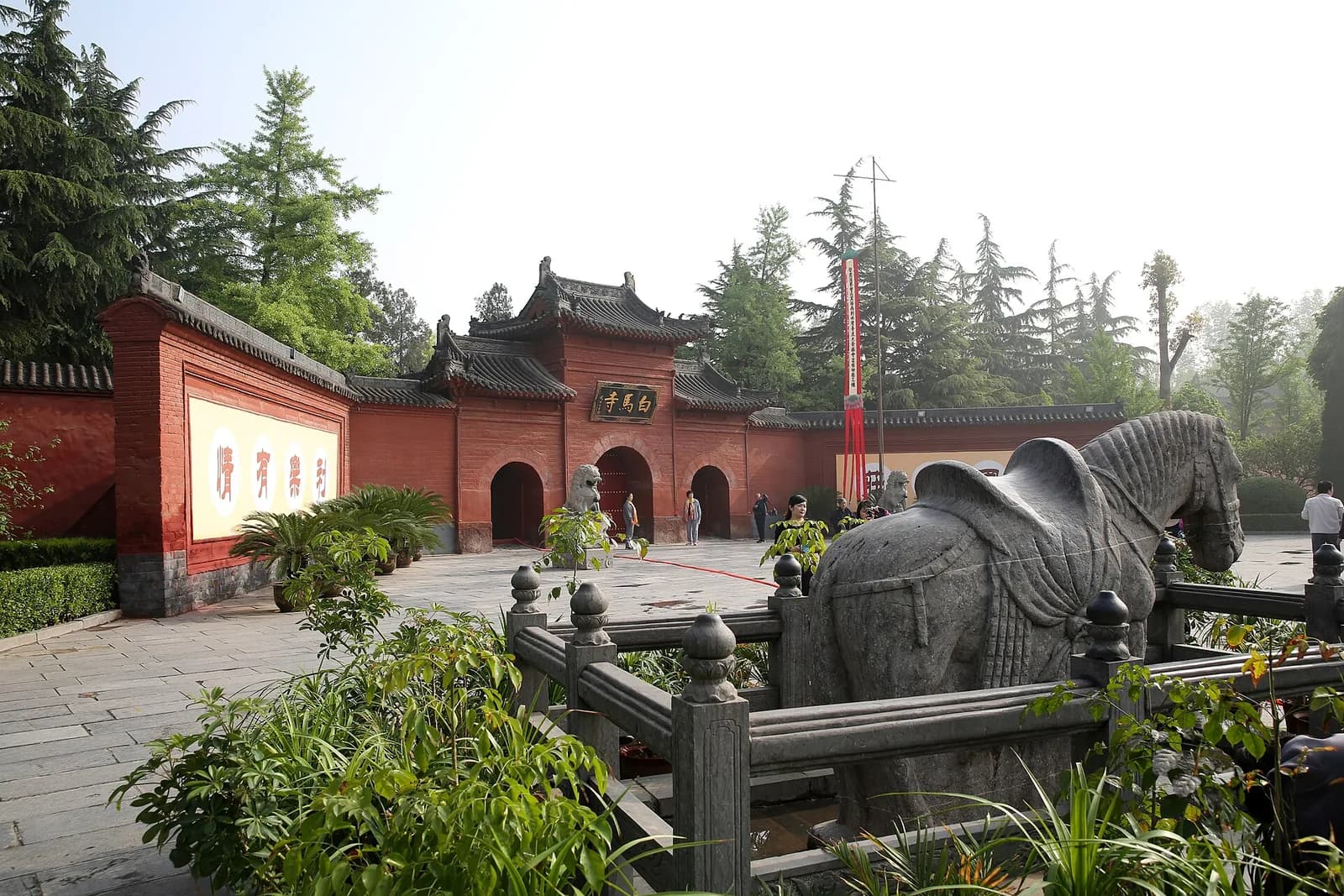
The main gate (shanmen)
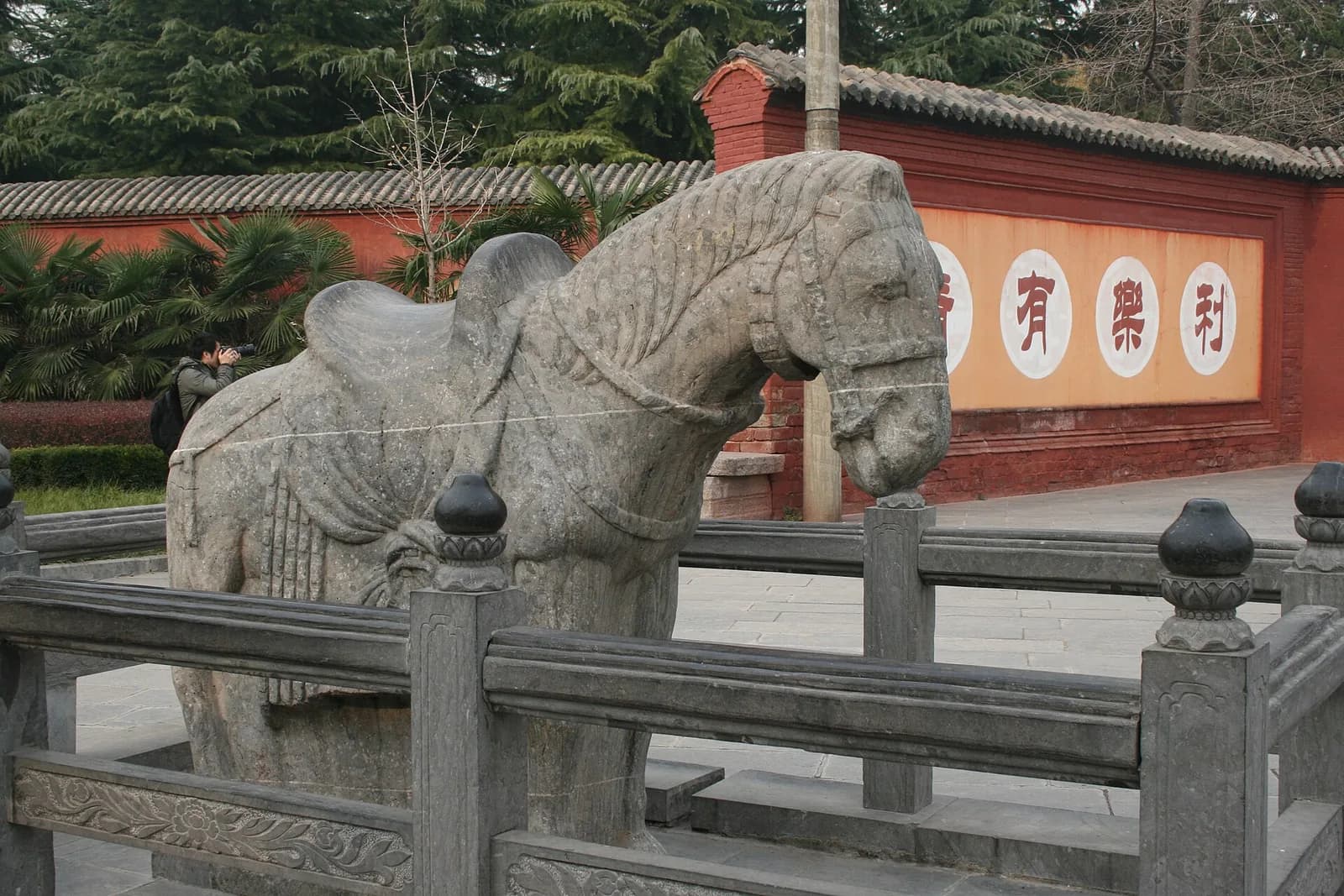
The stone horse before the gate
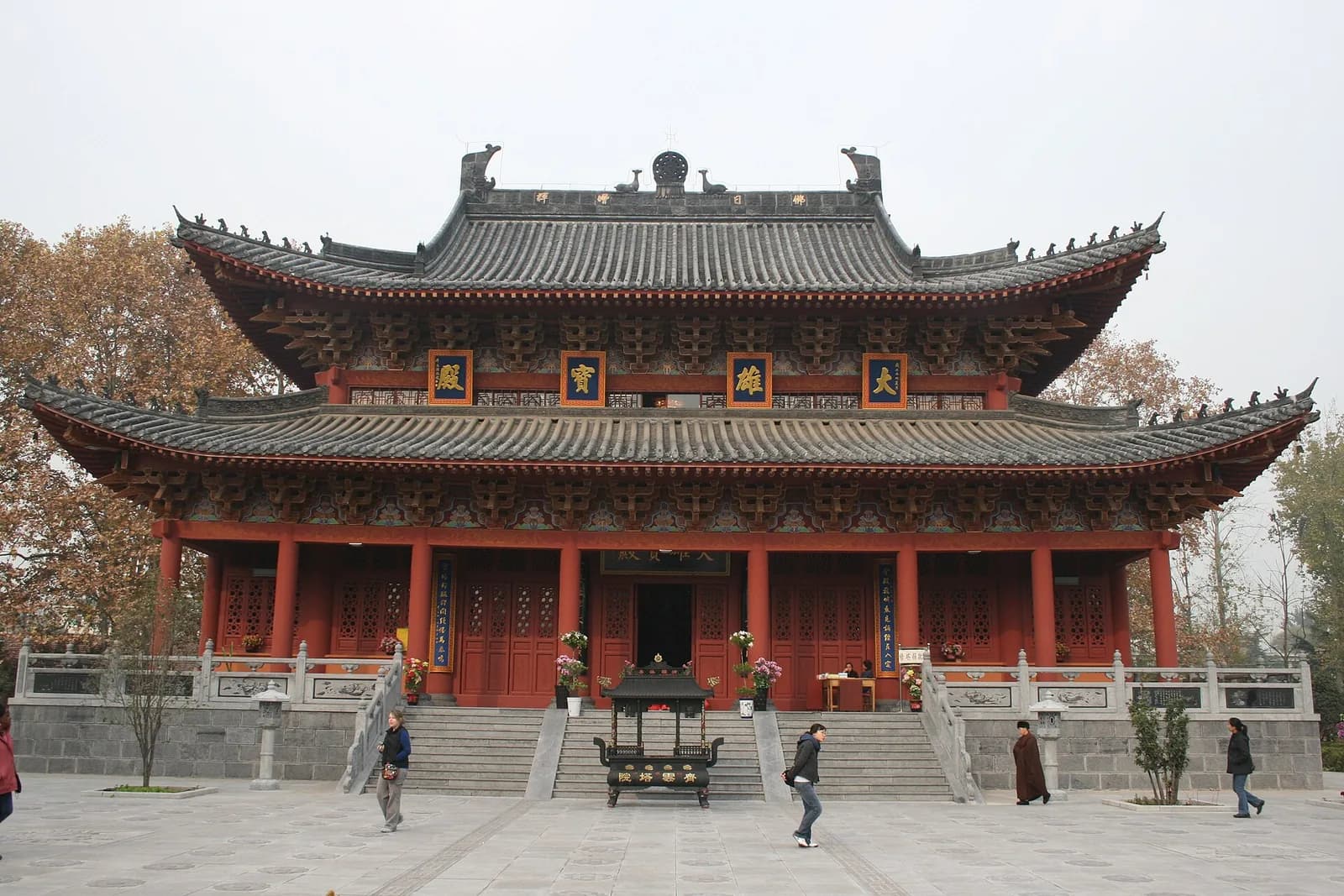
A main hall of the temple
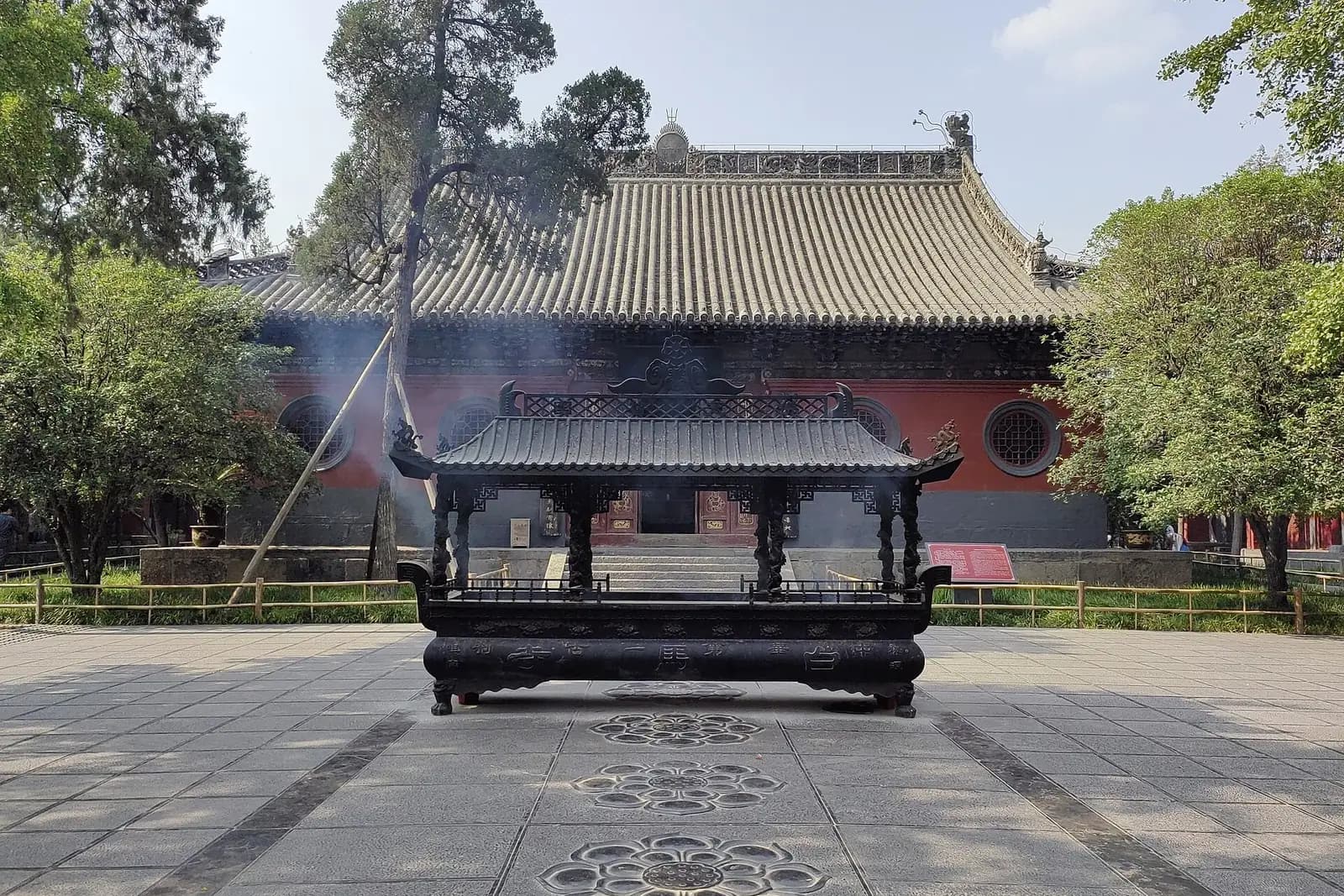
A courtyard with its incense burner
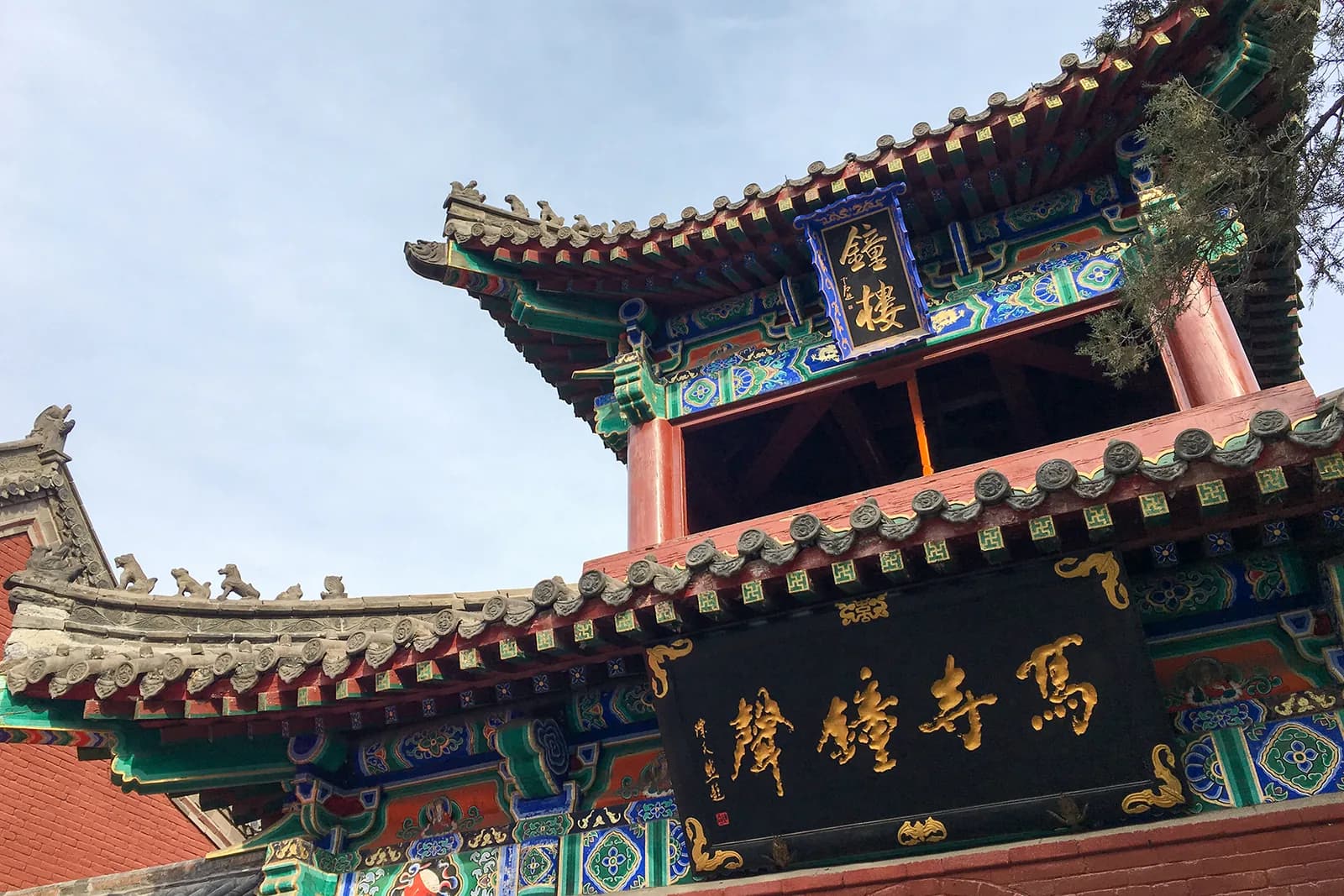
The bell tower
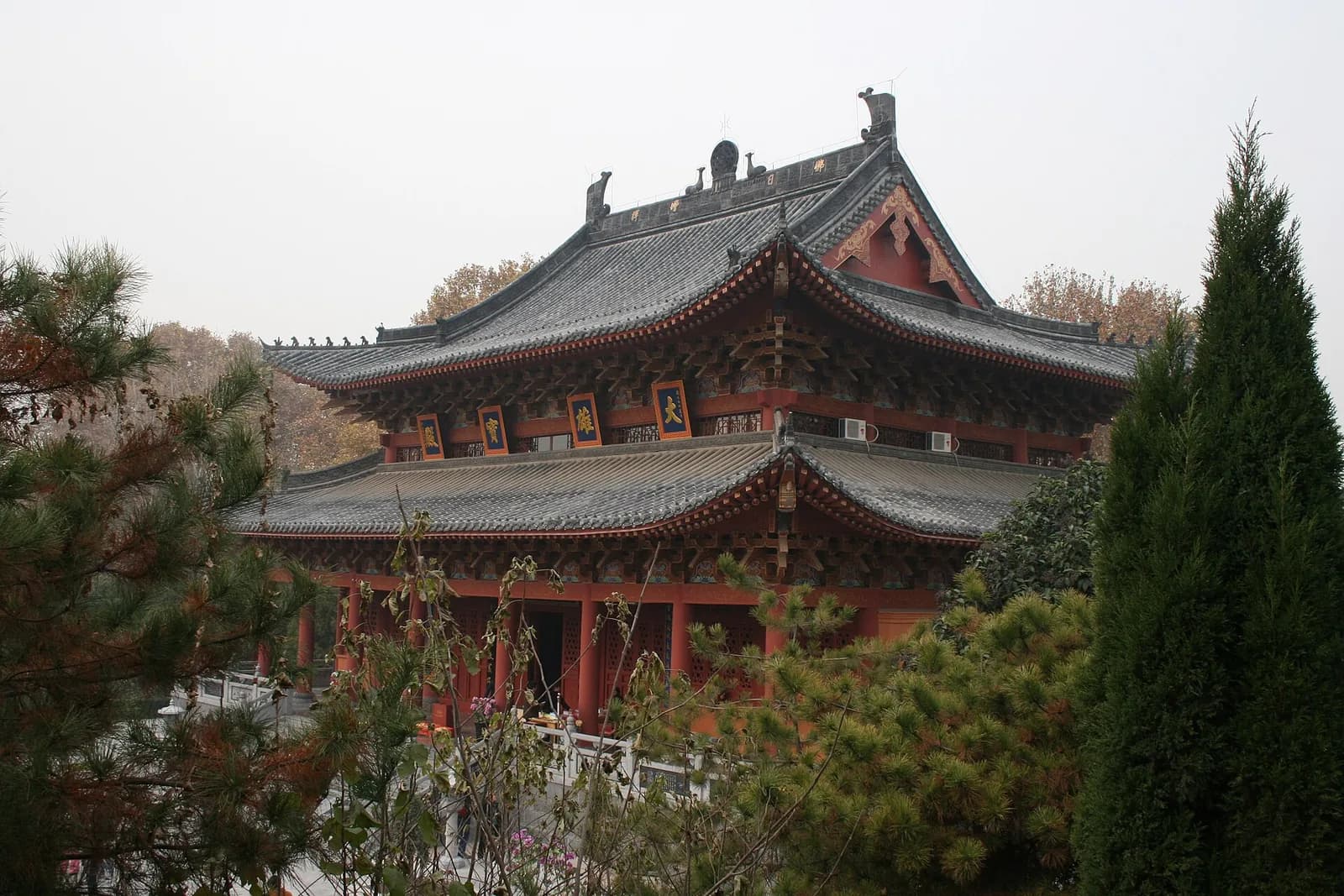
Temple halls among the trees
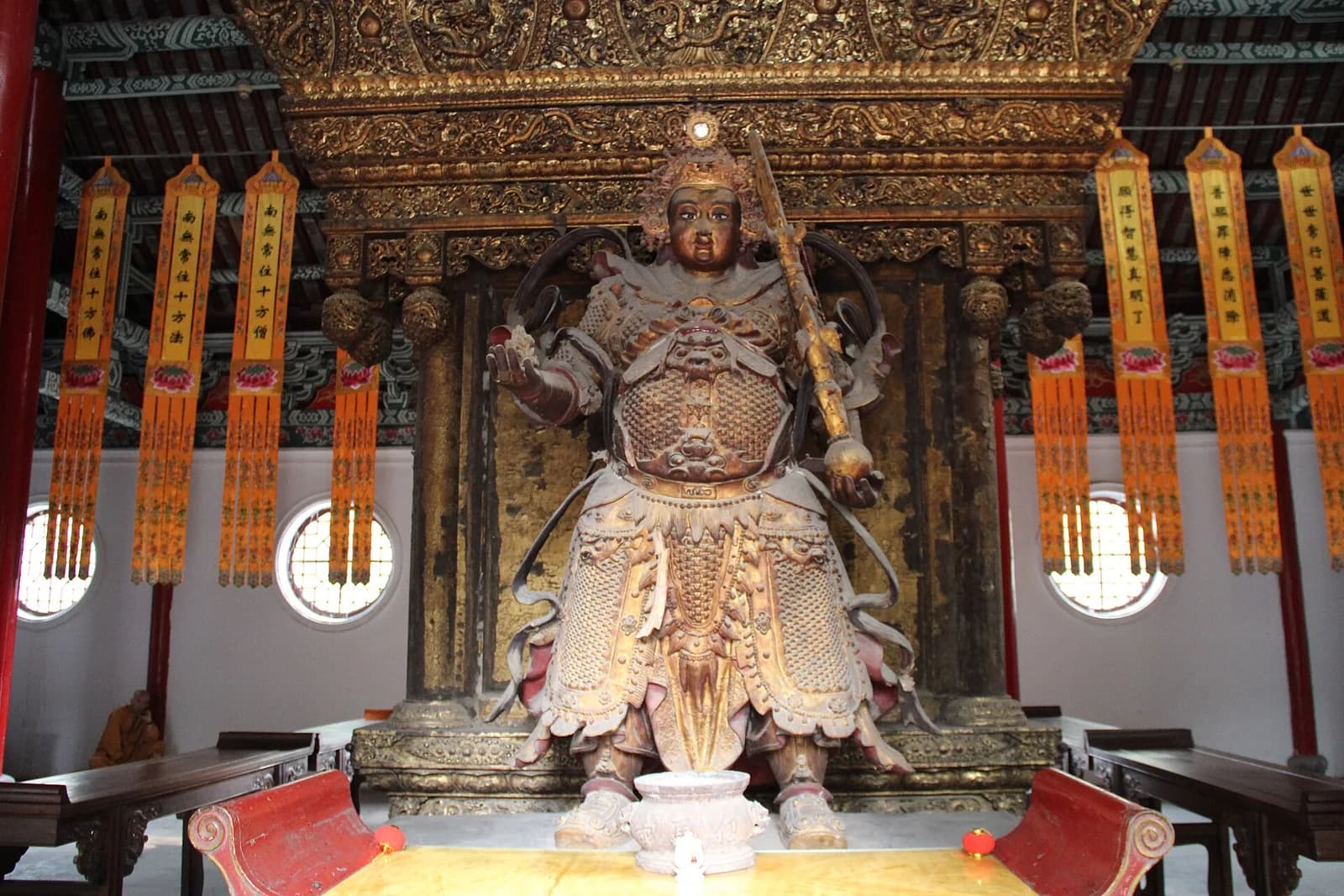
A guardian figure inside a hall
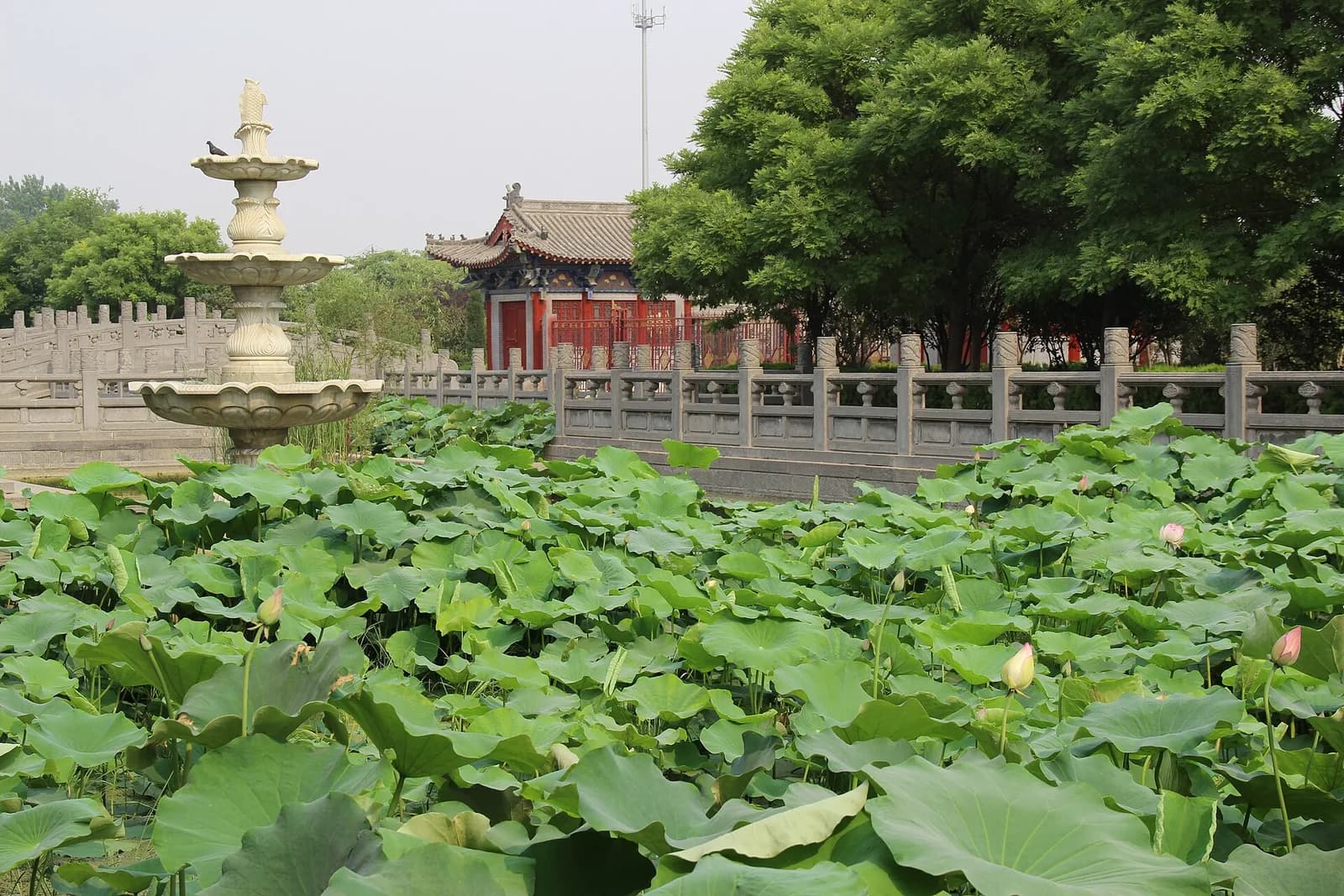
The lotus pond
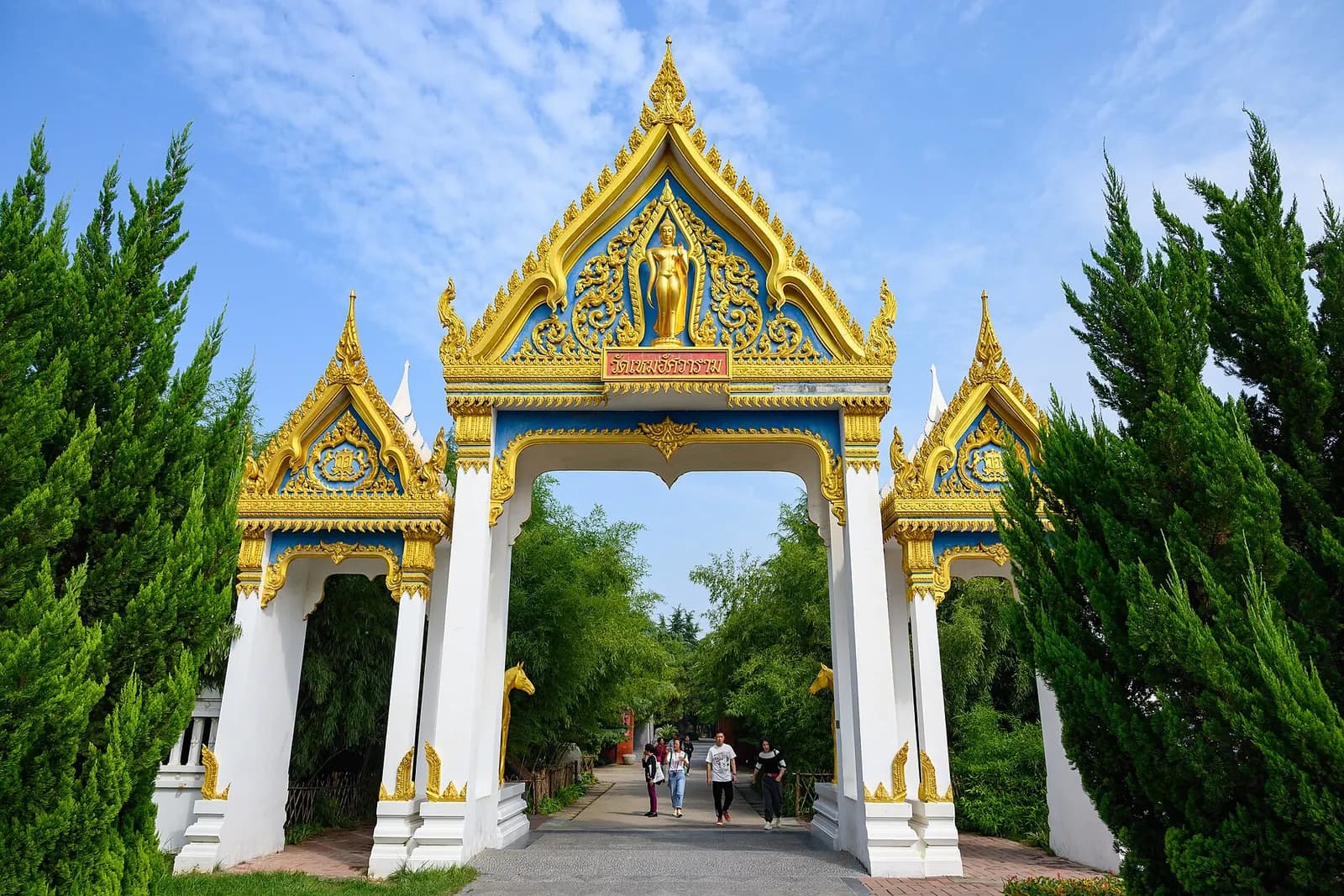
The Thai Buddhist hall
К востоку от Лояна находится первый буддийский храм, основанный при императорском покровительстве после проникновения буддизма в Китай; его почитают как древнейший монастырь страны. Центральная ось следует традиционной китайской планировке, а по сторонам стоят залы, подаренные правительствами Индии, Мьянмы и Таиланда — редкое соседство четырёх стран, которое делает это место самым наглядным ответом на вопрос, как буддизм пришёл в Китай.
Что смотреть
- Центральная ось: зал Небесных царей, зал Великого Будды, зал Махавиры, зал Приёма и павильон Вайрочаны последовательно, среди важных сохранившихся памятников — фигуры из сухого лака эпохи Юань.
- Международные залы, подаренные правительствами Индии, Мьянмы и Таиланда, — разница стилей не требует пояснений.
- Пагода Циюнь, тринадцатиярусная кирпичная пагода эпохи Цзинь к востоку от ворот; её обычно пропускают, а она заслуживает отдельной прогулки.
- Могила Ди Жэньцзе, сановника эпохи Тан, неподалёку.
Практические замечания
Храм и гроты Лунмэнь находятся в одном Лояне, но на противоположных концах города; совмещать их за один день — спешка. Дайте храму отдельные полдня. Это действующее религиозное место: длинные брюки, закрытые плечи, внутри залов фотографировать нельзя.