
Дэнфэн, Чжэнчжоу
Храм Шаолинь и гора Суншань
- От Чжэнчжоу
- Около 1,5 часа на машине
- Время на осмотр
- Целый день
- Лучший сезон
- Апрель–июнь, сентябрь–ноябрь
С официального сайта
Официальный сайт объекта о себе
Перенесено с официального сайта оператора с указанием даты чтения. Не зависит от нашего описания выше.
Shaolin Temple stands on the southern slope of Taishi Mountain northwest of Dengfeng, facing Shaoshi Mountain and backed by Wuru Peak; it takes its name from the dense forest on Shaoshi's shaded side. It was founded in 496 (the twentieth year of Taihe, Northern Wei) by the Indian monk Buddhabhadra, and in 527 the South Indian monk Bodhidharma arrived and began teaching Chan to a growing body of followers. The temple rose and fell repeatedly, prospered from the early Tang, peaked in the Ming and declined after the Qing. It comprises the Kernel Compound, the Pagoda Forest, Chuzu Temple, Erzu Temple, Bodhidharma Cave, the Sweet Dew Terrace and scattered tomb pagodas and carvings — the cradle of Chinese Chan Buddhism and of Shaolin martial arts.
- Location
- Northwest of Dengfeng, Henan; southern slope of Taishi Mountain, shaded side of Shaoshi Mountain
- Founded
- 496 CE (twentieth year of Taihe, Northern Wei)
- Chan Buddhism
- 527 CE: Bodhidharma arrived and taught Chan
- Main complex
- The Kernel Compound runs south to north: gate, Tianwang Hall, Mahavira Hall, Dharma Hall, abbot's quarters, Lixue Pavilion, Thousand Buddha Hall, with bell and drum towers, meditation halls and the Sixth Patriarch Hall to either side
- Holdings
- 245 steles from Northern Qi to the Republic; Ming-dynasty polychrome murals of the five hundred arhats; over a hundred plaques, couplets and metal objects from Jin to Qing
- Heritage status
- Seventh batch of Major Historical and Cultural Sites Protected at the National Level; World Heritage, as part of the Historic Monuments of Dengfeng
Что посмотреть
The Kernel Compound
The temple's main body and the place where its monks have always conducted services, on a seven-courtyard axis.
The Pagoda Forest
The tomb pagodas of successive generations of senior monks, west of the temple.
Chuzu Temple
Built in memory of Bodhidharma, the first Chan patriarch, northwest of the temple.
Bodhidharma Cave and Sweet Dew Terrace
Chan sites in the temple's surroundings.
The temple's holdings
The polychrome arhat murals and the steles dating back to the Northern Qi are the direct evidence of the temple's historical and artistic standing.
Фотографии
These photographs are openly licensed for commercial use (from Wikimedia Commons: CC0, CC BY, CC BY-SA or public domain) and are not the attraction's own gallery. Each photo is credited below with its author and licence, linked to the original file.
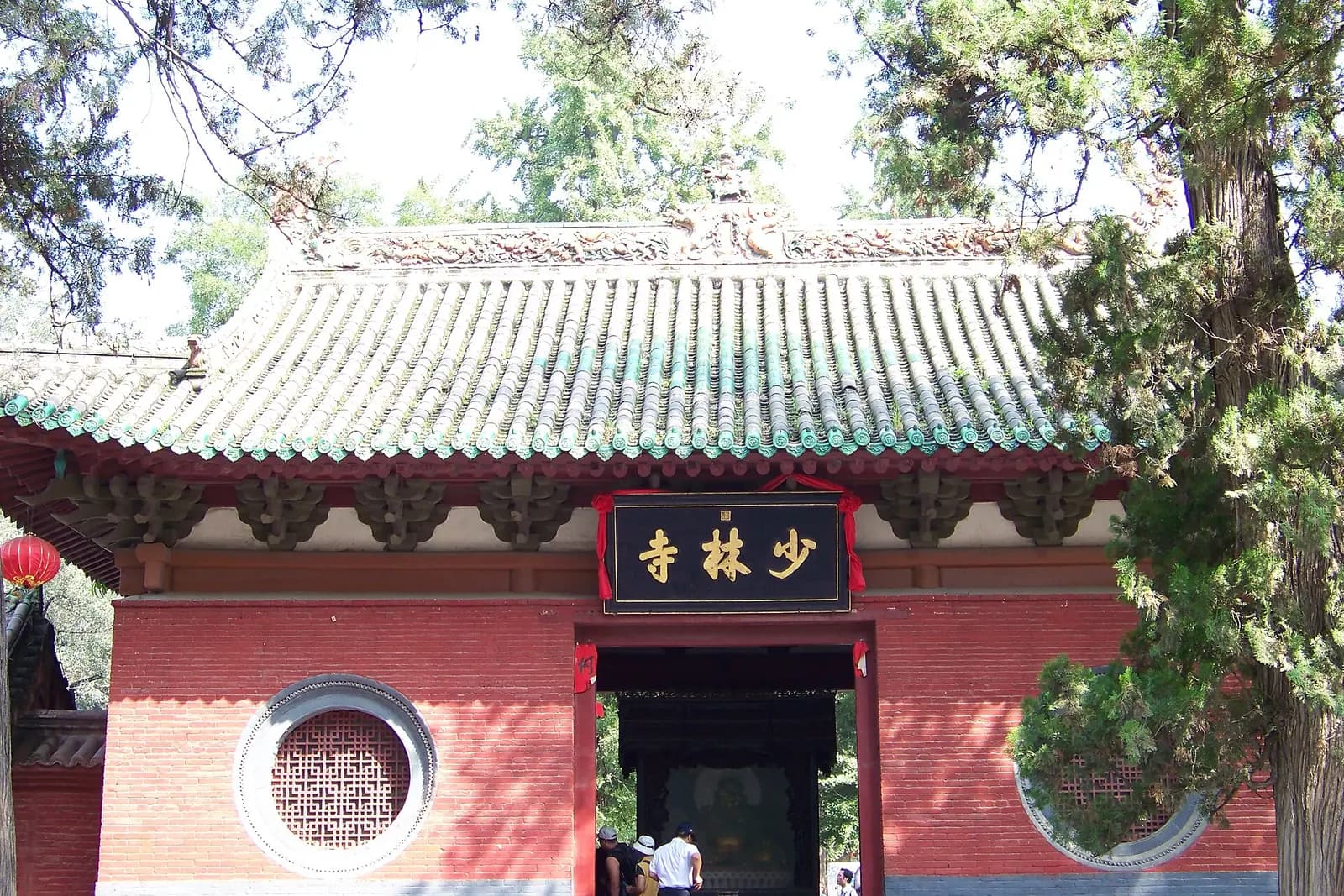
The main gate of Shaolin Temple
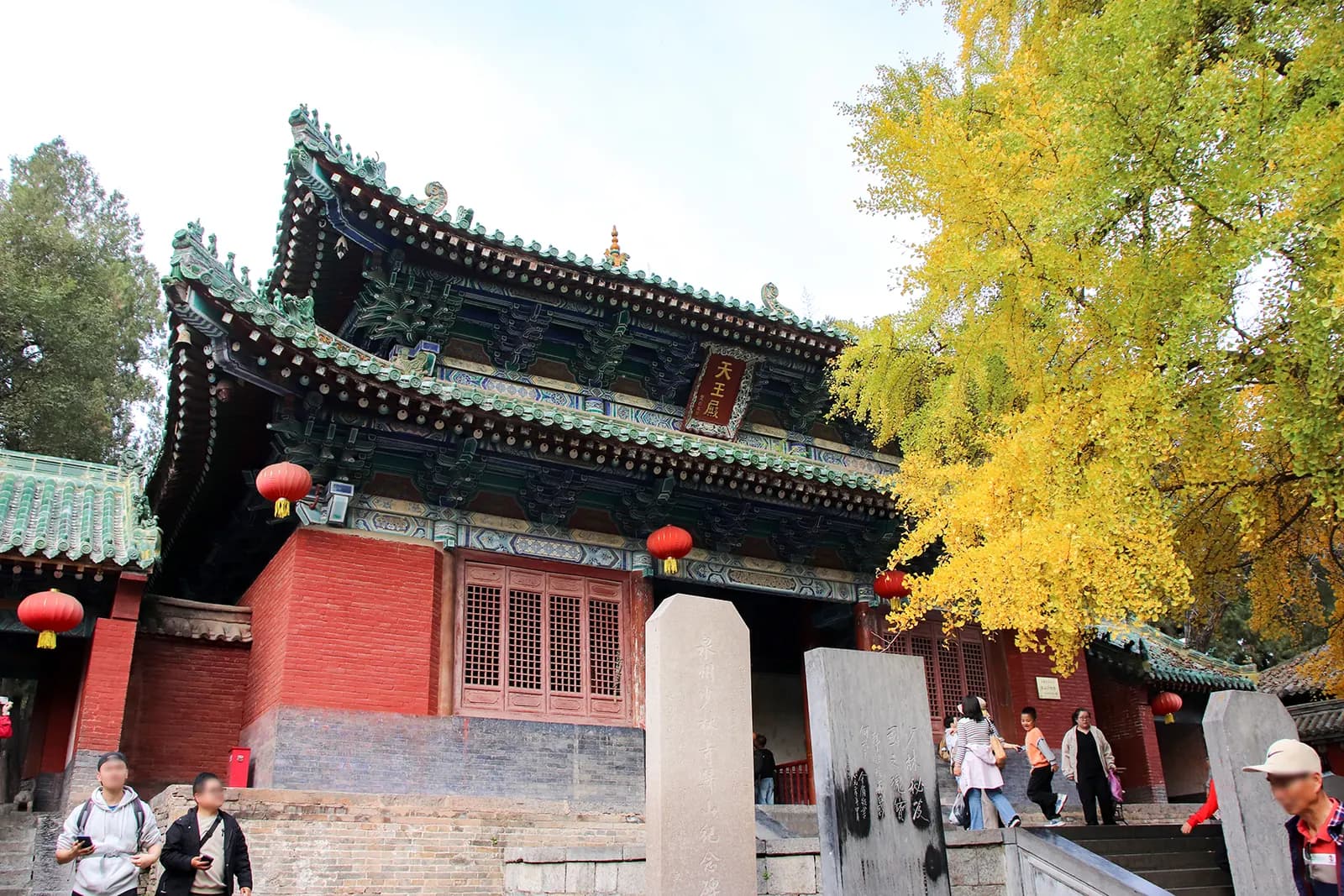
The Hall of Heavenly Kings
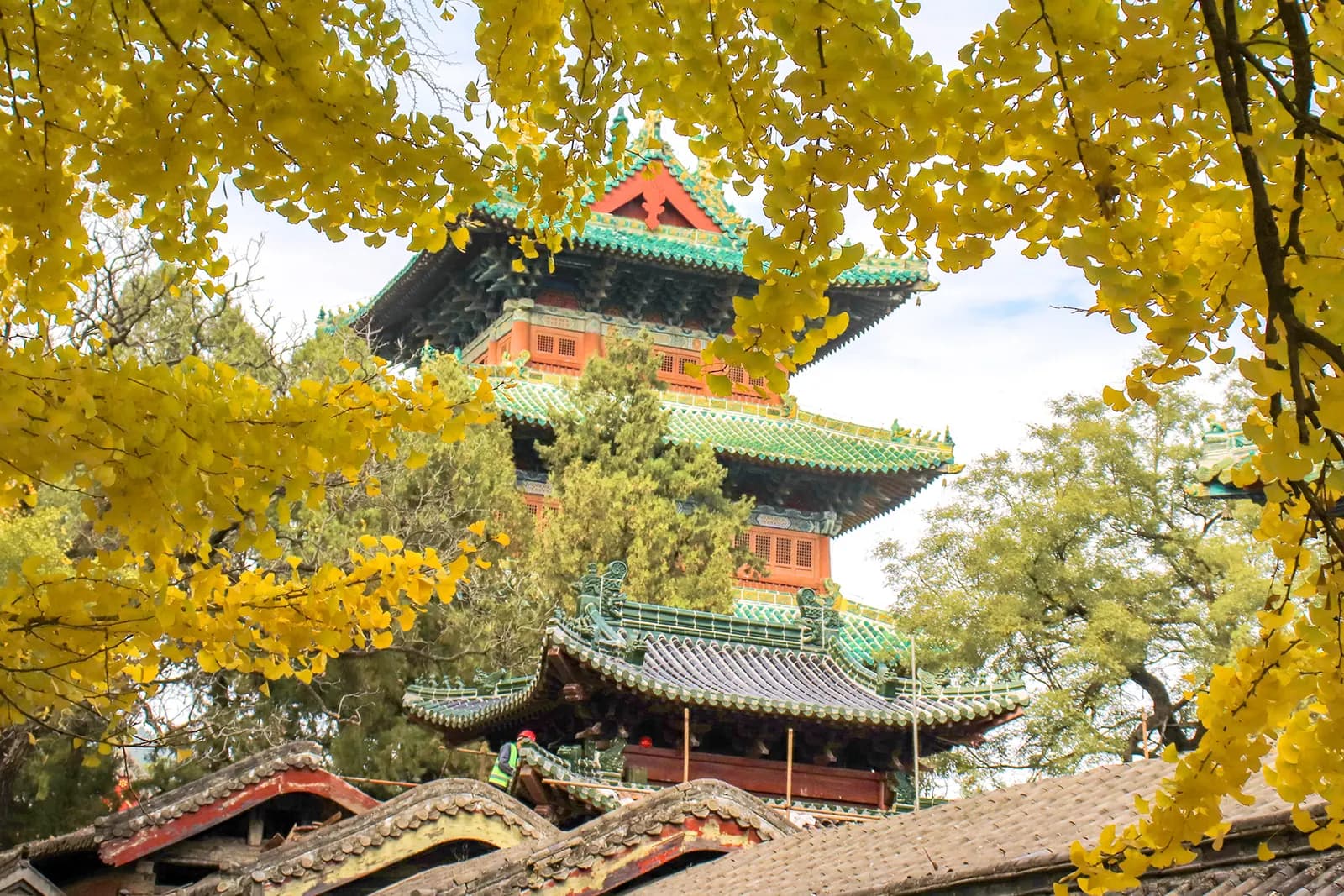
The bell tower behind a ginkgo
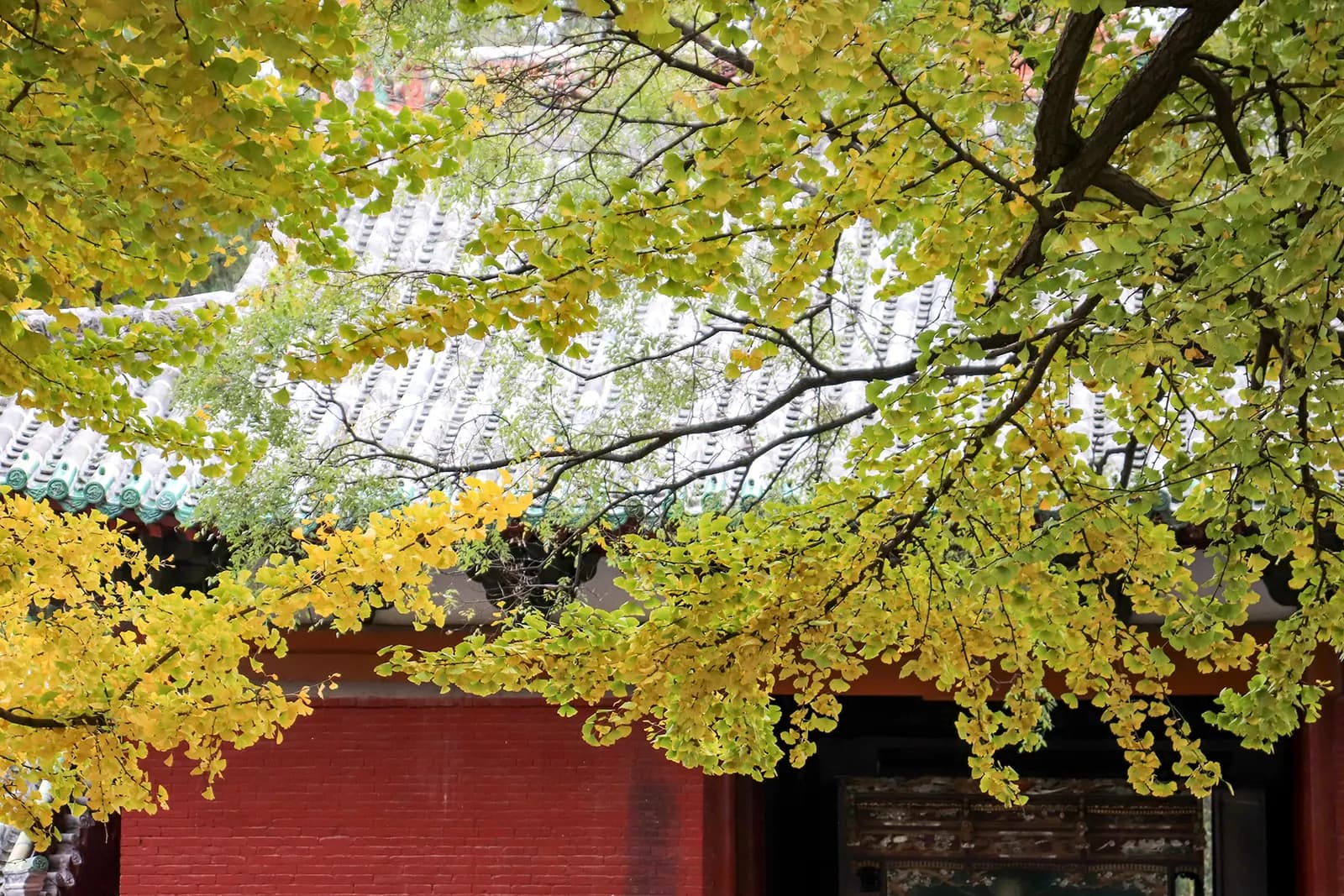
A courtyard of autumn ginkgo
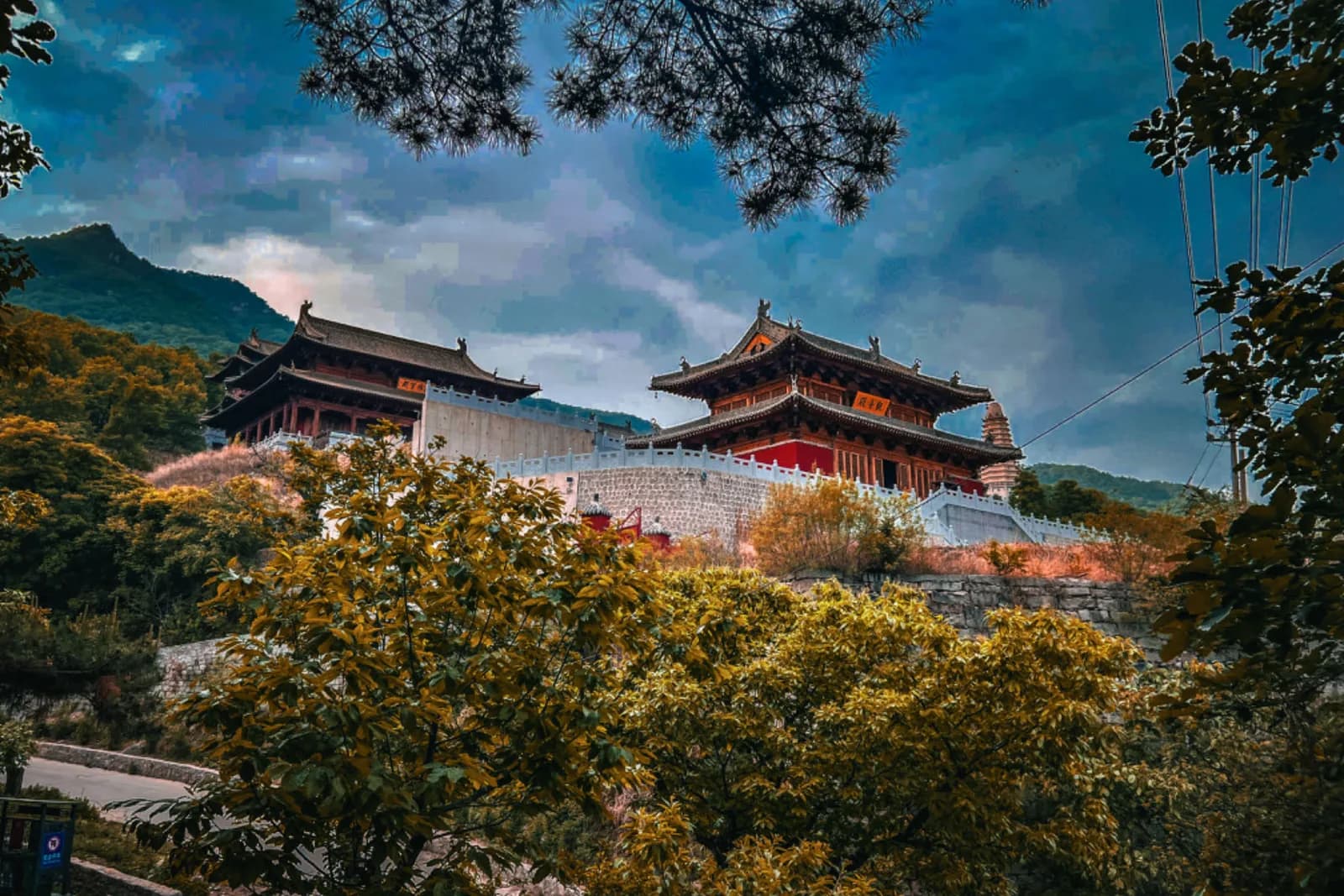
Temple halls framed by trees
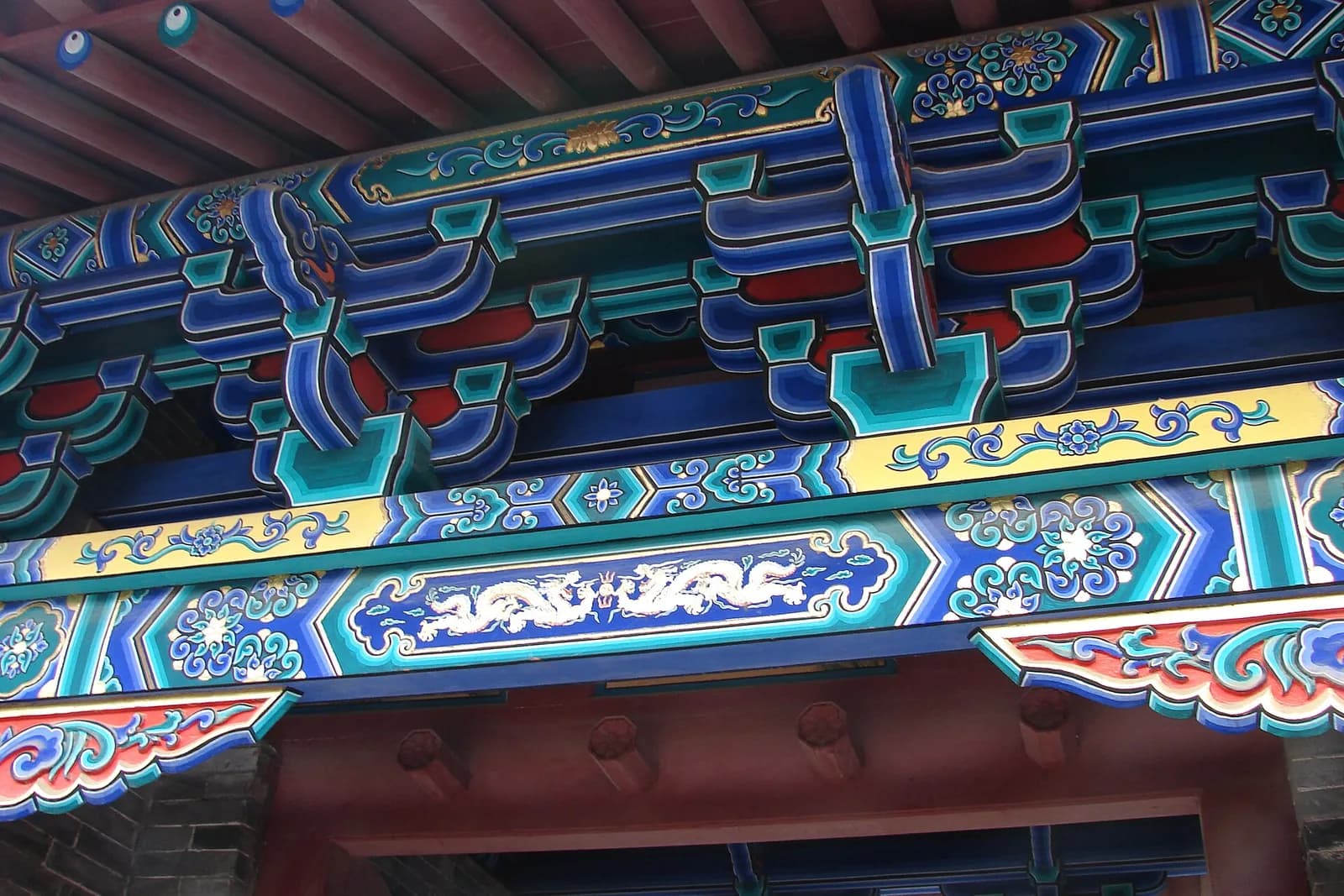
Painted eaves of a temple hall
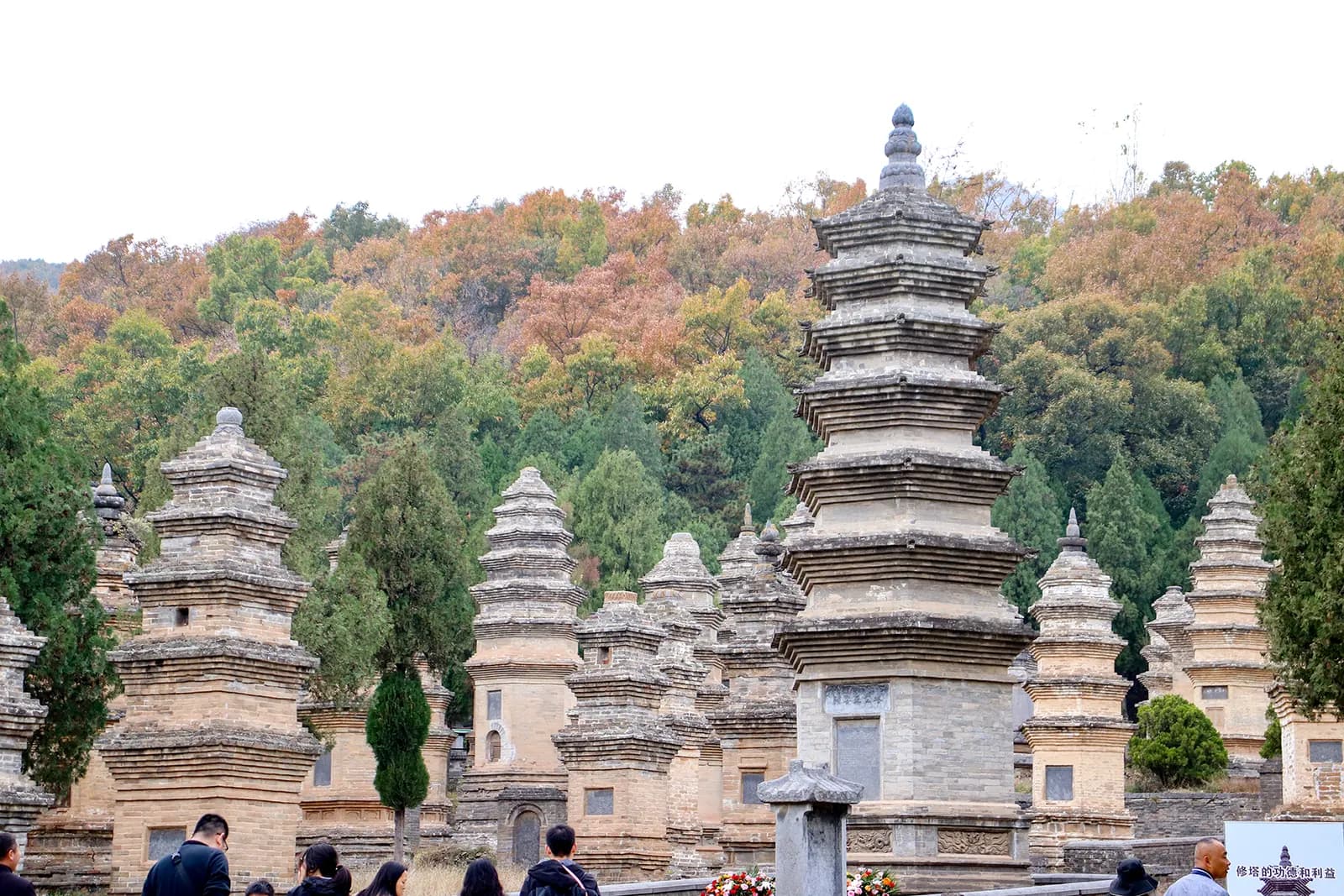
The Pagoda Forest
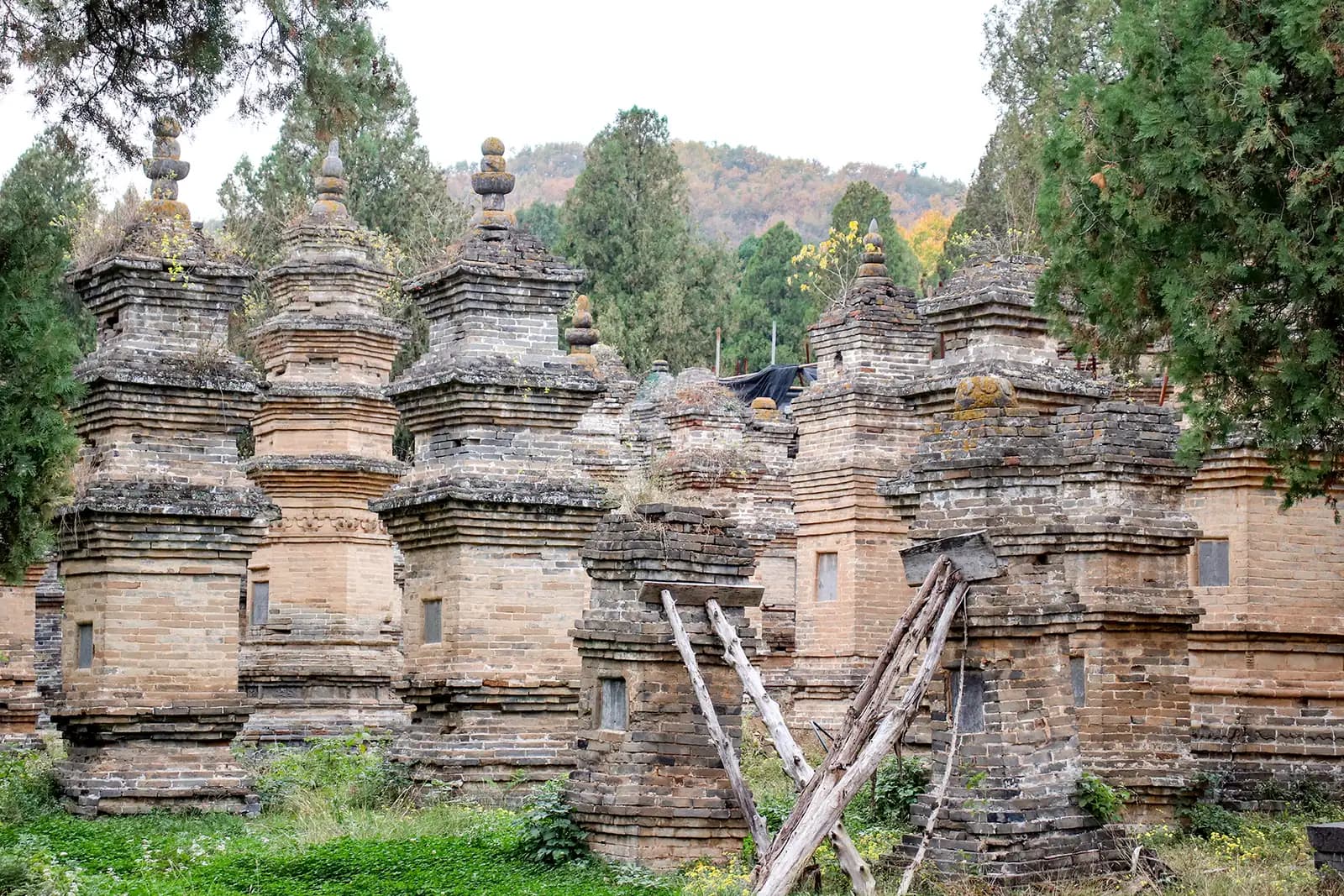
Brick pagodas in the Pagoda Forest
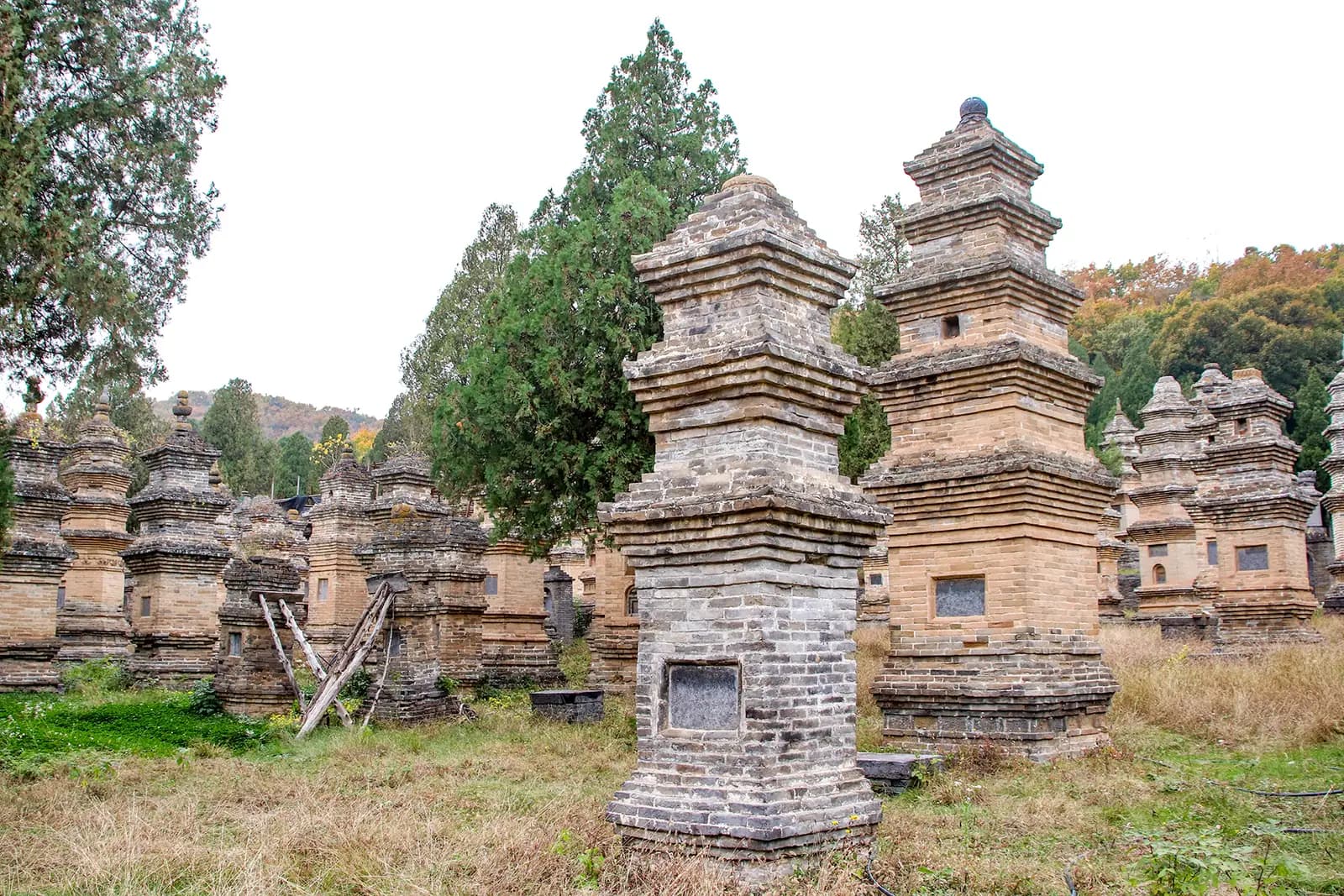
Old pagodas in the Pagoda Forest
Шаолинь основан в 495 году при династии Северная Вэй. Это родовой монастырь чань-буддизма и родина шаолиньского ушу. В 2010 году комплекс «Центр Неба и Земли» на горе Суншань был включён в список Всемирного наследия ЮНЕСКО.
Что смотреть
- Главный монастырь: ворота, Зал небесных царей, Зал Махавиры, библиотека и Зал тысячи Будд на одной оси.
- Лес пагод: более 240 кирпичных и каменных пагод эпох Тан — Цин, крупнейший подобный комплекс в Китае.
- Шаолиньское ушу: ежедневные показательные выступления; вводные занятия возможны по предварительной договорённости.
- Саньхуанчжай: тропа вдоль скал на западном склоне Суншань; лучше выделить на неё отдельный день.
Практические замечания
Это действующий монастырь: длинные брюки, закрытая одежда, без съёмки в залах. В выходные людно — приезжайте до 08:00. Осмотр монастыря и леса пагод занимает около трёх-четырёх часов пешком.