
安陽
殷墟
- 鄭州から
- 高速鉄道で約1.5時間
- 所要時間の目安
- 半日から一日
- ベストシーズン
- 通年、春秋が最も快適
公式サイトより
景区公式サイトによる自己紹介
運営者の公式サイトから閲覧日とともに転記しています。上記の当社独自の解説とは独立した内容です。
Yin Xu is the site of the late Shang capital. In 1300 BCE King Pan Geng moved the court to what is now the area around Xiaotun village northwest of Anyang; the city was known as Yin and served eight generations and twelve kings over 255 years. It holds China's first Shang capital attested both in documents and by oracle-bone and archaeological evidence, its earliest systematic script, its earliest chariot-and-horse pits, the tomb of Fu Hao — its earliest woman general — and the Simuwu ding, the largest bronze vessel yet excavated anywhere in the world. City, script and bronze are its three defining elements.
- What it is
- The site of the late Shang capital
- Capital
- Pan Geng moved the capital here in 1300 BCE; eight generations, twelve kings, 255 years
- Oracle bones
- China's earliest systematic script; the YH127 pit alone yielded over ten thousand pieces in 1936
- Simuwu ding
- 133 cm high, 110 cm across the mouth, 875 kg — the largest bronze vessel yet excavated
- Tomb of Fu Hao
- Excavated in 1976; 1,928 grave goods, including over 460 bronzes, over 750 jades and some 6,800 shell coins
- Royal cemetery
- 2.14 hectares; twelve royal tombs and more than 2,000 sacrificial pits and attendant burials
- Yachang ox zun
- 40 cm long, 22.5 cm high with its lid, 7.1 kg — the site's only ox-shaped bronze zun
主な見どころ
Palace and ancestral temple site
A century of excavation has yielded quantities of oracle bones, bronzes, jades and hardstone objects.
Royal cemetery
The burial and sacrificial ground of the late Shang kings — the earliest complete royal cemetery known in China.
Oracle-bone pit
Pit YH127, where more than ten thousand pieces were found together, is called China's earliest oracle-bone archive.
Chariot-and-horse pits
The earliest physical evidence of animal-drawn vehicles found in China; six chariots with road traces are displayed, largely intact.
Tomb of Fu Hao
The only royal tomb at the site found unlooted, and the only one whose occupant and date can be fixed against the oracle bones.
景区の写真
These photographs are openly licensed for commercial use (from Wikimedia Commons: CC0, CC BY, CC BY-SA or public domain) and are not the attraction's own gallery. Each photo is credited below with its author and licence, linked to the original file.
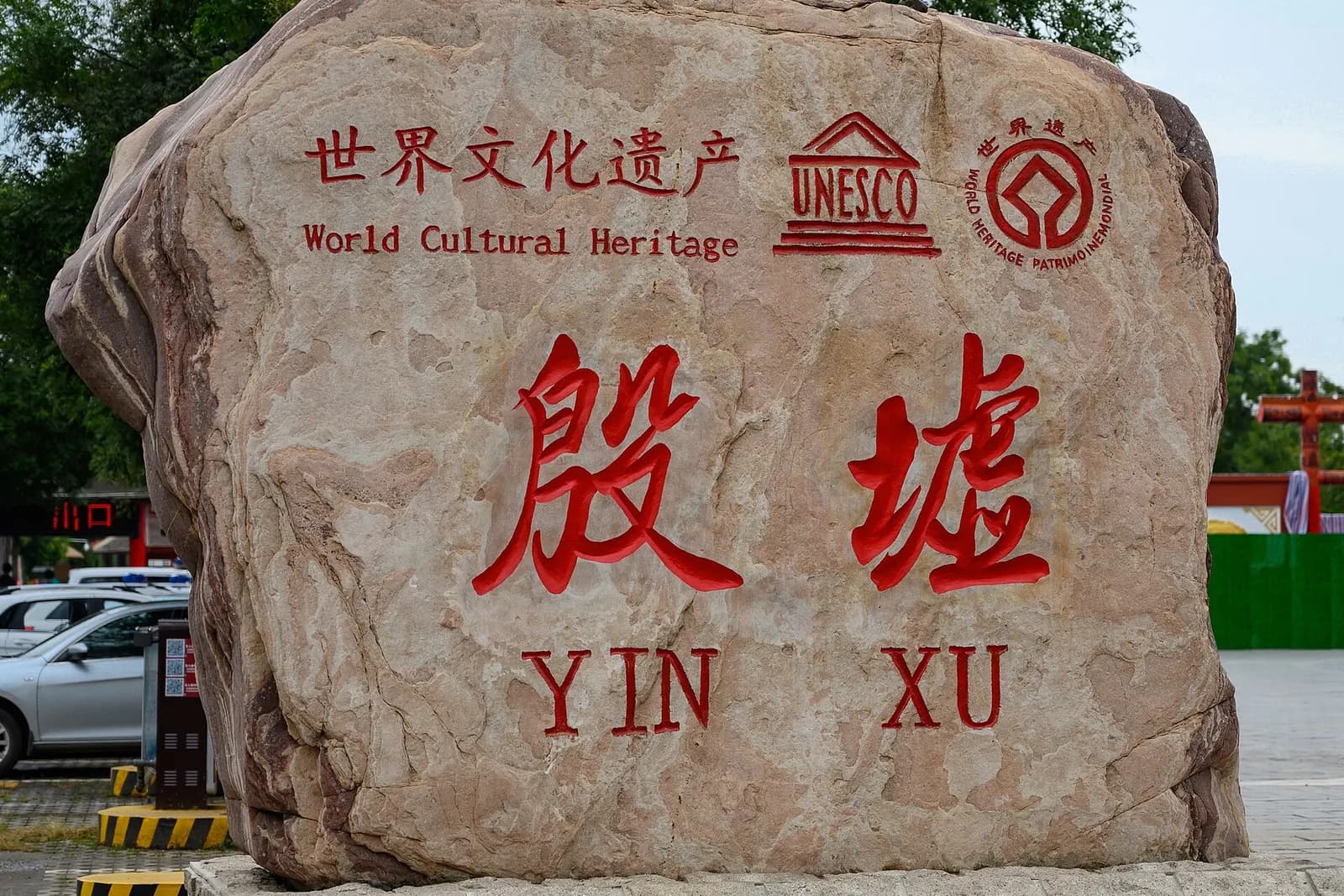
The Yinxu marker stone
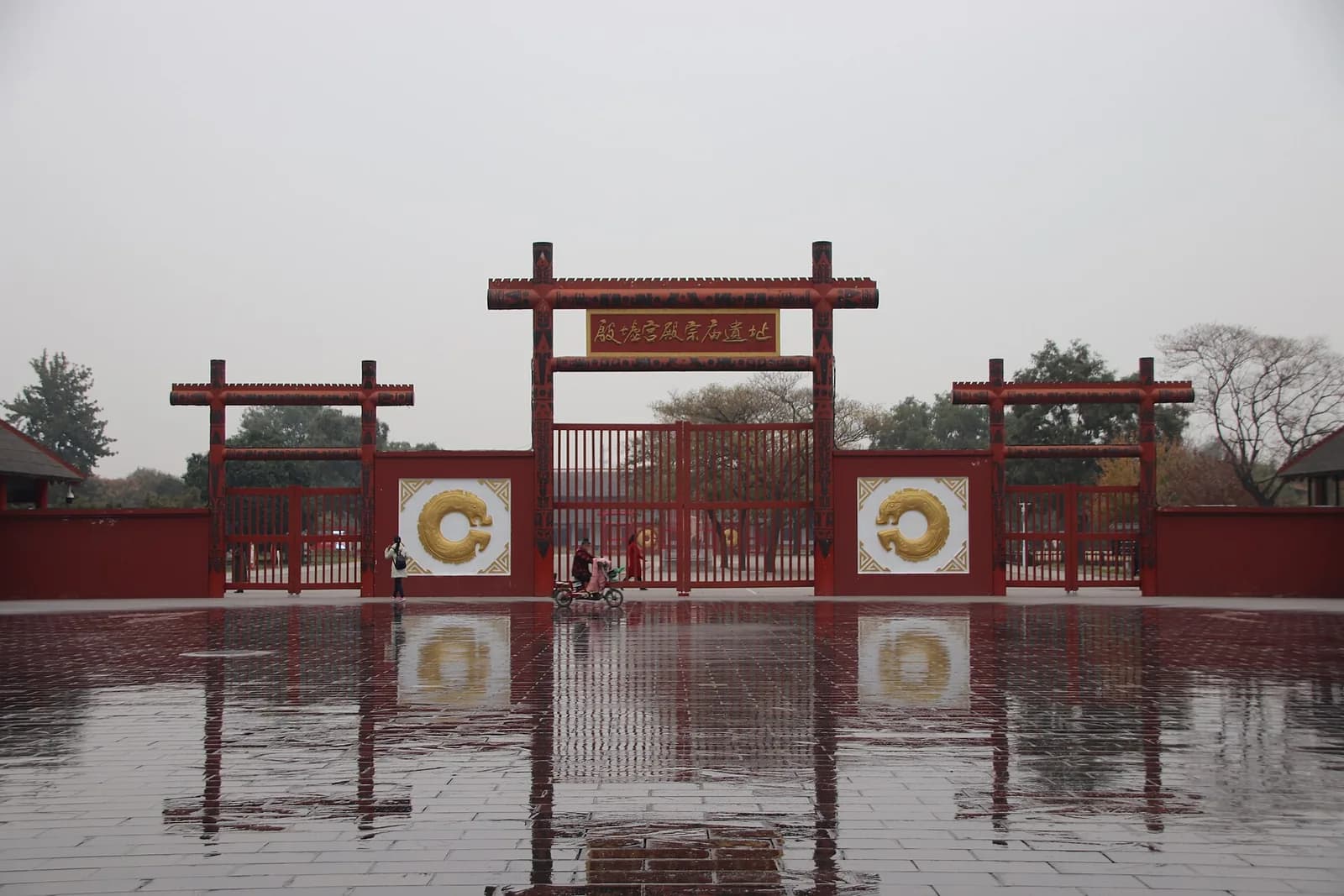
Entrance to the palace and temple site
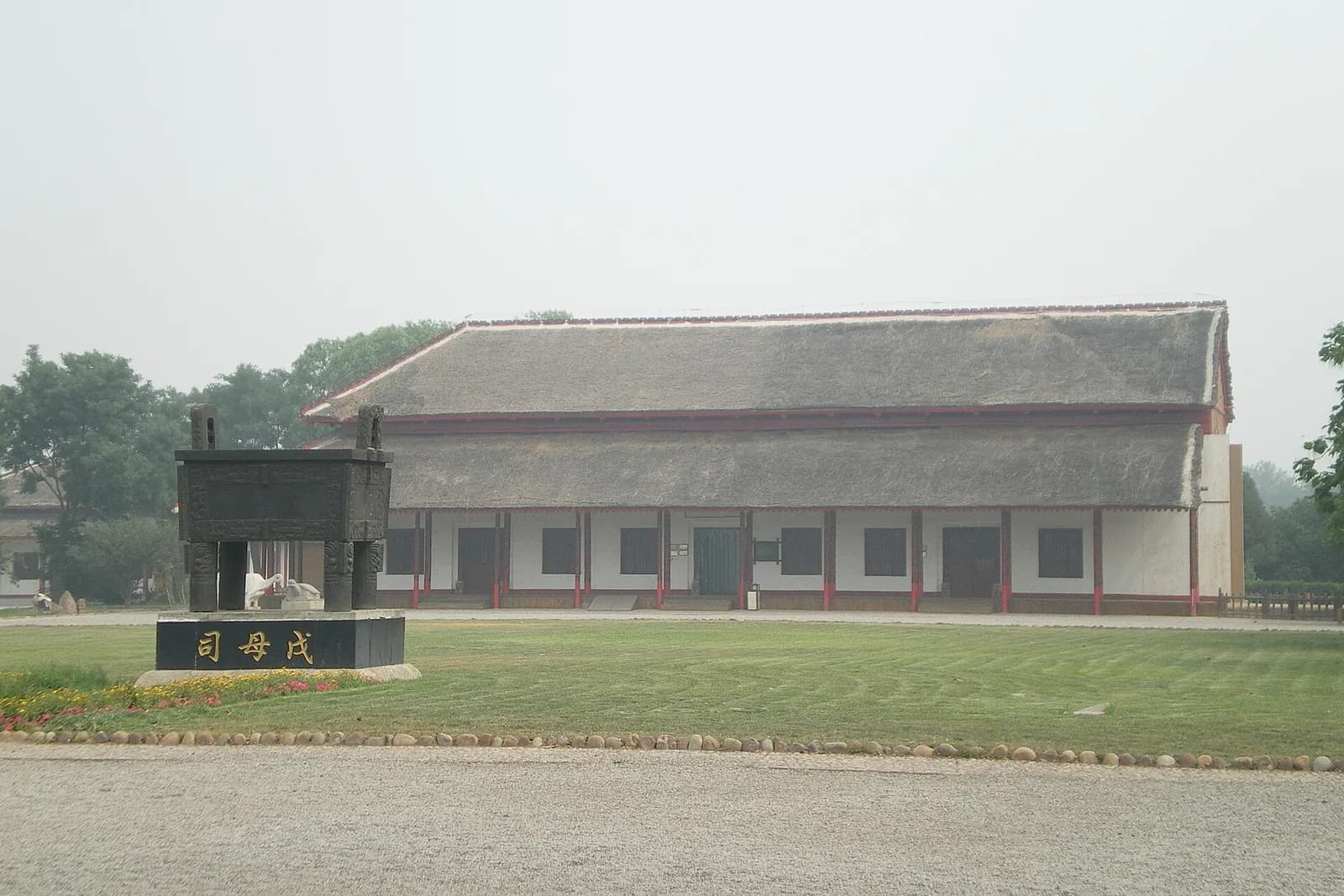
A reconstructed hall on the site
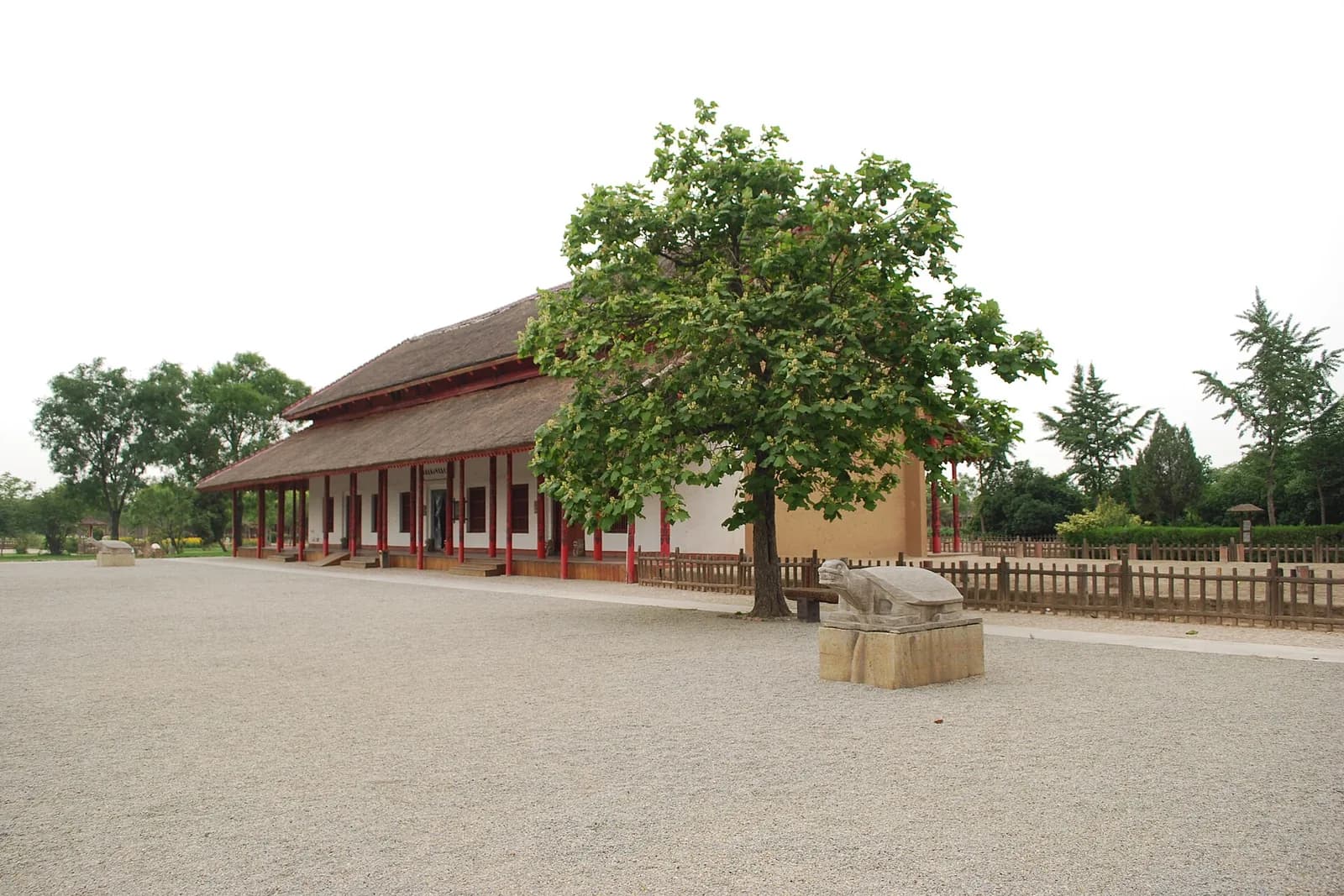
The reconstructed Yi-20 Shang hall
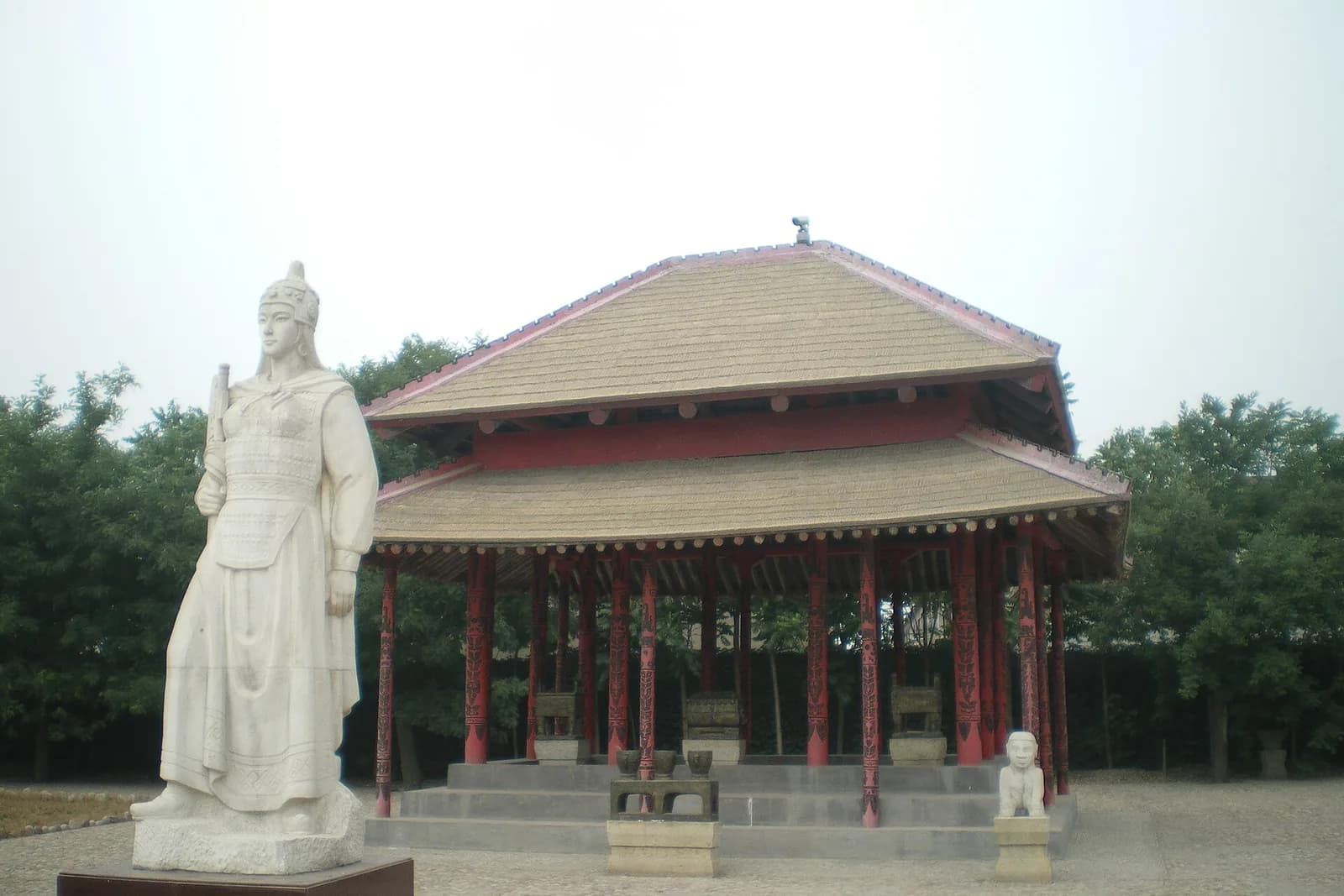
The statue of Fu Hao before a hall
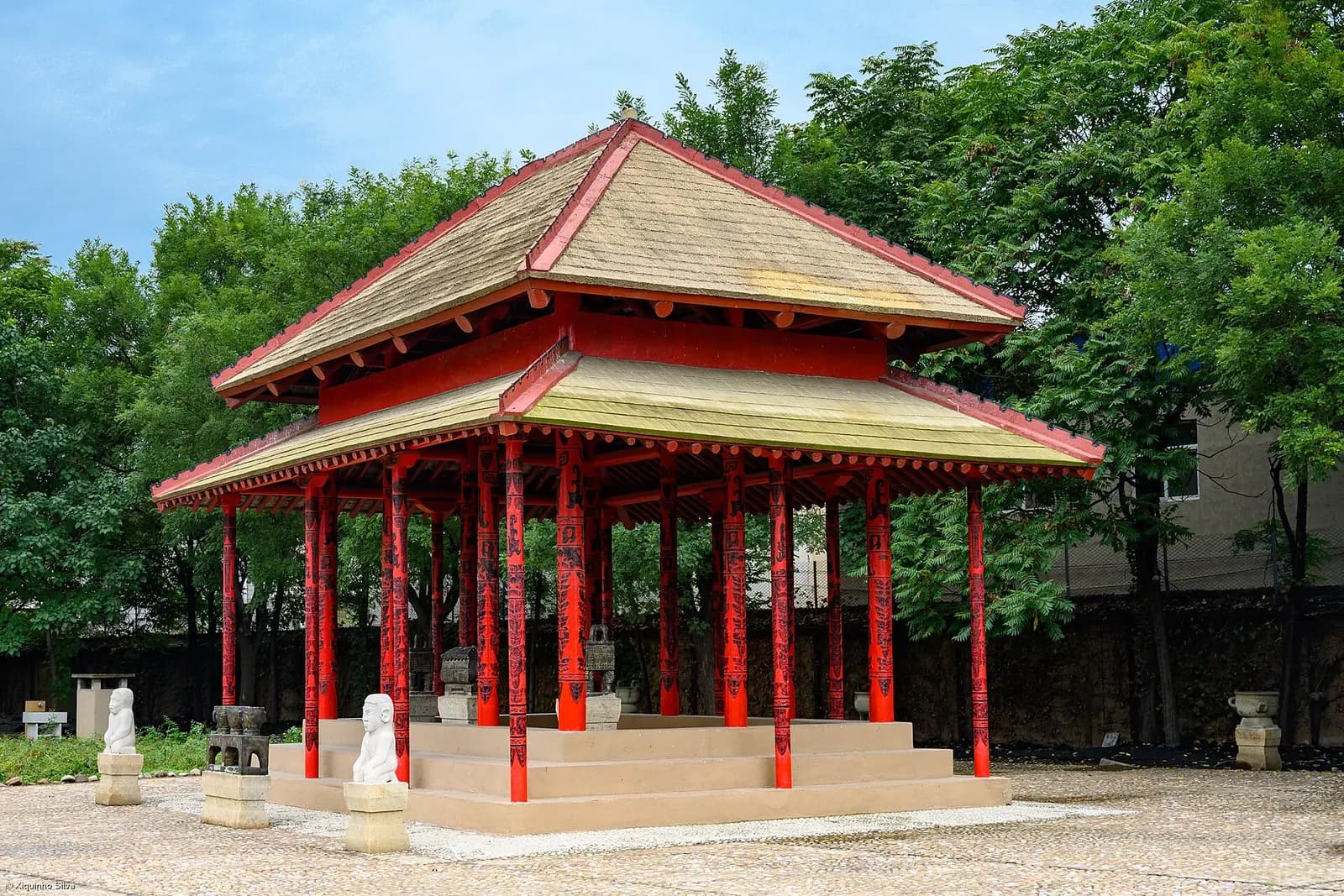
A reconstructed pavilion at the royal tombs
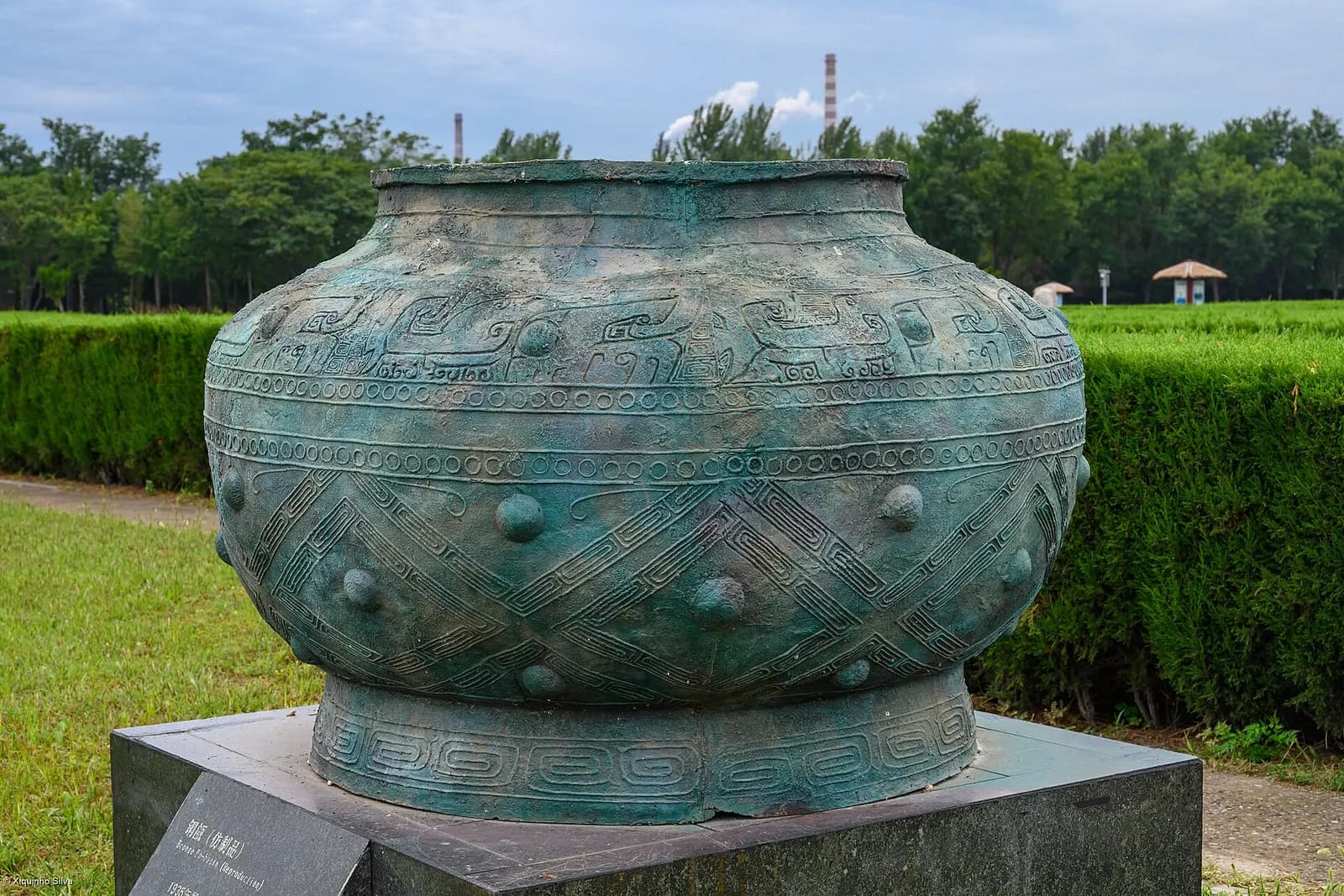
A bronze replica at the royal tombs
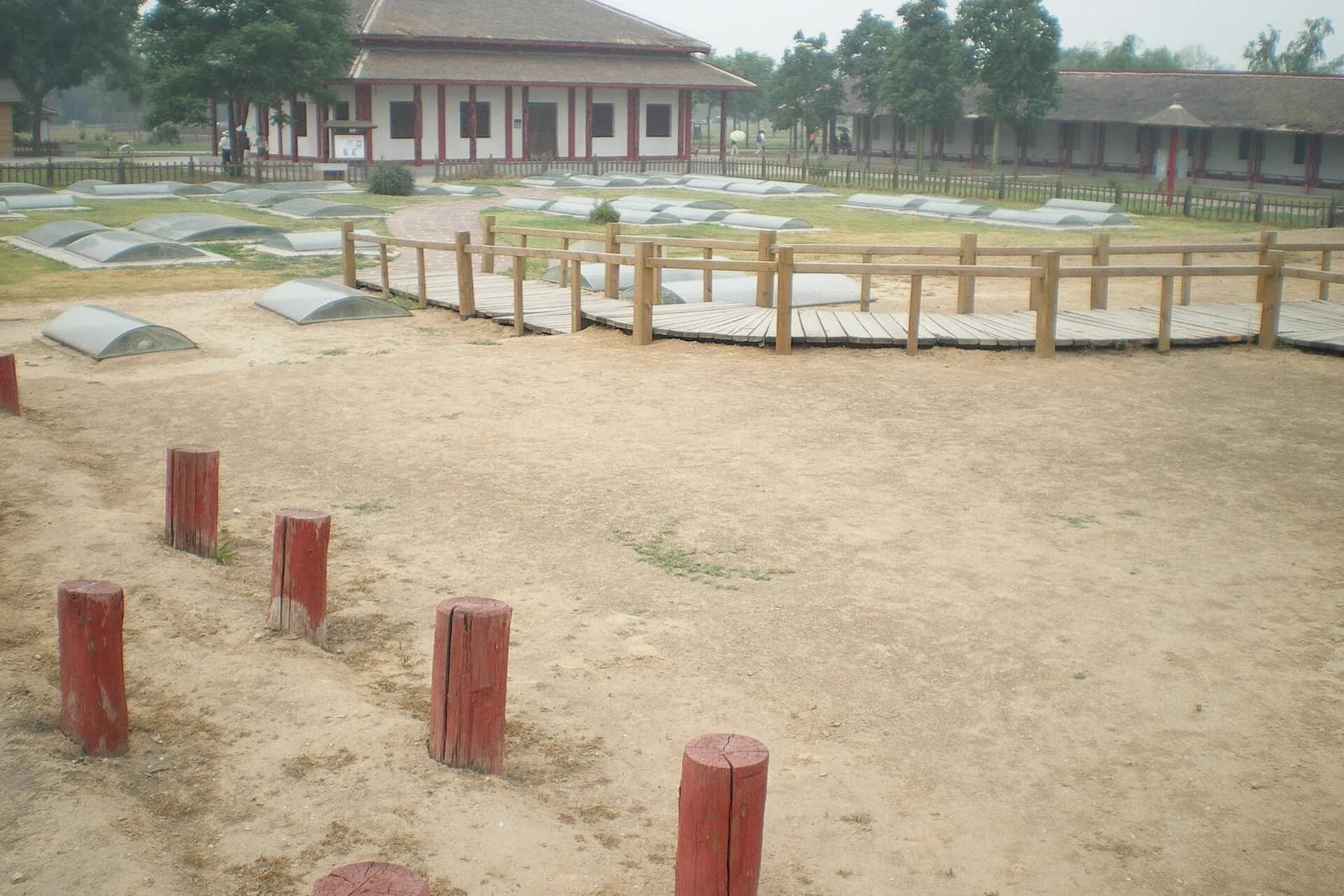
Palace foundations
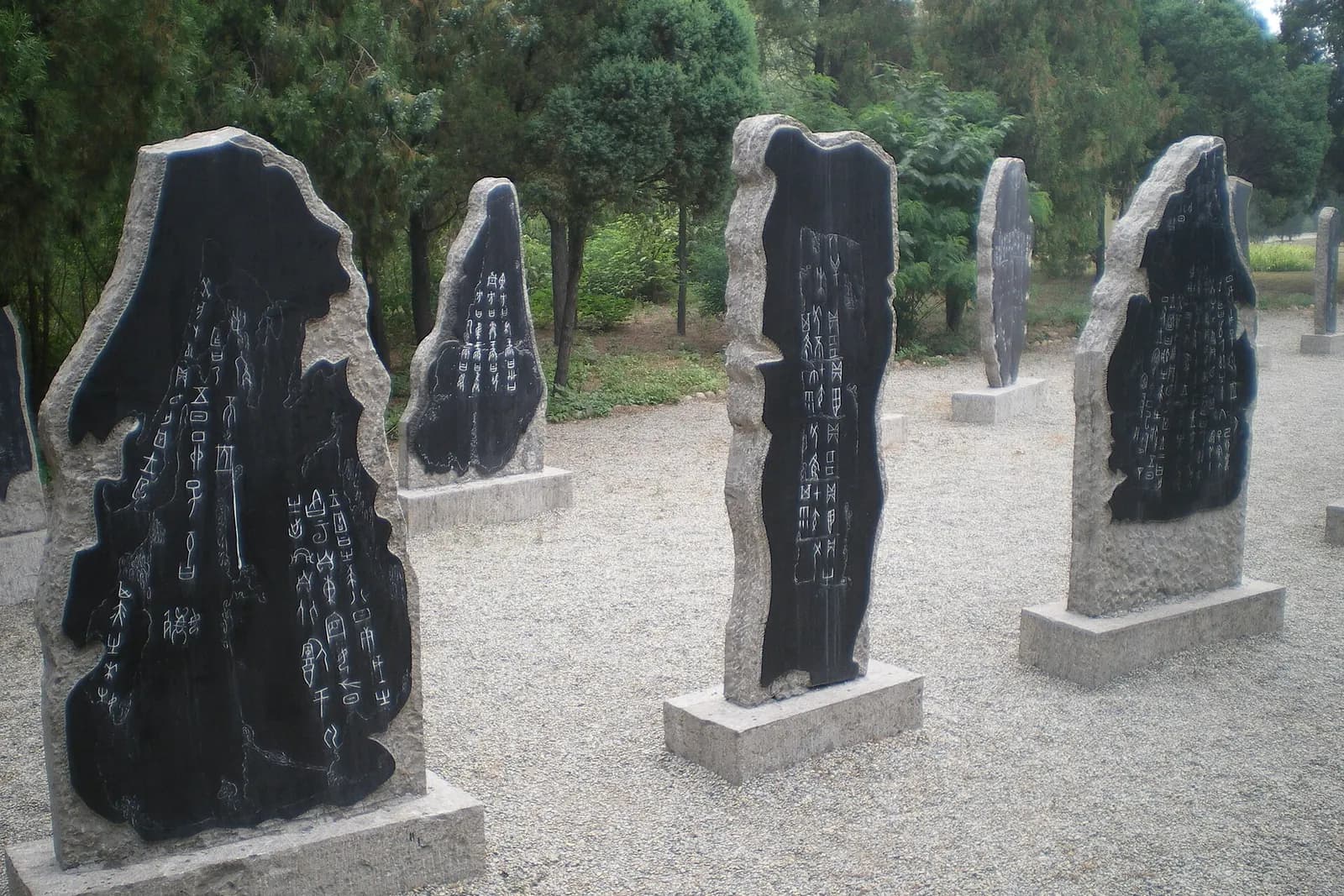
Inscribed steles
出典
商代晩期の都城遺跡です。紀元前1300年頃に盤庚が殷に遷都してから王朝の滅亡まで、八代十二王が254年にわたりここで統治しました。甲骨文が発見された地であり、中国近代考古学が生まれた地でもあります。2006年にユネスコ世界遺産に登録されました。
見どころ
- 宮殿宗廟区:商王が政務と祭祀を行った場所で、大型の版築建築基址が数十か所発掘されています。
- 婦好墓:1976年に発掘され、殷墟で唯一盗掘されていない商代王室墓です。副葬品は1,900点余りにのぼります。
- 甲骨窖穴YH127:一度の発掘で17,000片余りの甲骨が出土し、甲骨文発見史上最重要の単一発見となりました。
- 殷墟博物館の新館:2024年開館。まず博物館で背景を掴んでから遺跡へ向かうのがおすすめです。
実用メモ
遺跡区は広く、ほとんどが版築基址で地面の標識が中心です。先に博物館を見ると理解が格段に深まります。夏は日陰が少ないため日焼け対策を。安陽と鄭州の間は高速鉄道の便が多く、日帰り行程として組めます。