
洛陽
龍門石窟
- 鄭州から
- 高速鉄道で約40分
- 所要時間の目安
- 半日から一日
- ベストシーズン
- 4〜5月(牡丹の花期)、9〜10月
公式サイトより
景区公式サイトによる自己紹介
運営者の公式サイトから閲覧日とともに転記しています。上記の当社独自の解説とは独立した内容です。
The Longmen Grottoes stand five kilometres south of Luoyang, where Mount Xiang and Mount Longmen face each other with the Yi river running between them — a natural gateway that gave the site its old name, Yique. Carving began around the time the Northern Wei moved their capital to Luoyang and continued through the Northern Wei, Eastern and Western Wei, Northern Qi, Sui, Tang, Five Dynasties and Song. The span is what makes the site a record of Buddhism's absorption into China. Designated a Major Historical and Cultural Site Protected at the National Level in 1961 and inscribed on the UNESCO World Heritage List in 2000.
- Niches and caves
- 2,345
- Figures
- over 100,000
- Inscriptions
- over 2,800
- Vairocana Buddha height
- 17.14 m
- Smallest figure
- 2 cm, south wall of Lotus Cave
主な見どころ
Guyang Cave
In the southern section of the west bank, cut into a natural karst cavity: 11.2 m high, 7.27 m wide and 11.83 m deep. It is the earliest, most richly carved and most heavily inscribed of the large caves — over 1,500 niches and more than 800 inscriptions. Nineteen of the twenty celebrated Longmen inscriptions are here. The 6.1 m Shakyamuni shows the Northern Wei "refined bones and clear features" manner.
Middle Binyang Cave
Commissioned by Emperor Xuanwu of the Northern Wei for his parents, Emperor Xiaowen and Empress Wenzhao — one of the most representative imperial caves of the Northern Wei period. Cut between 500 and 523 CE, about 24 years of work recorded as 802,366 labour units. The ceiling carries a canopy, the floor a lotus pond.
Prescription Cave
Holds the earliest stone-carved medical prescriptions found in China, dated to the Tang. The contents were incorporated into the Japanese Ishinpō — physical evidence of Chinese medicine travelling outward.
Fengxian Temple
The Vairocana Buddha, 17.14 m tall — the site's defining image.
景区の写真
These photographs are openly licensed for commercial use (from Wikimedia Commons: CC0, CC BY, CC BY-SA or public domain) and are not the attraction's own gallery. Each photo is credited below with its author and licence, linked to the original file.
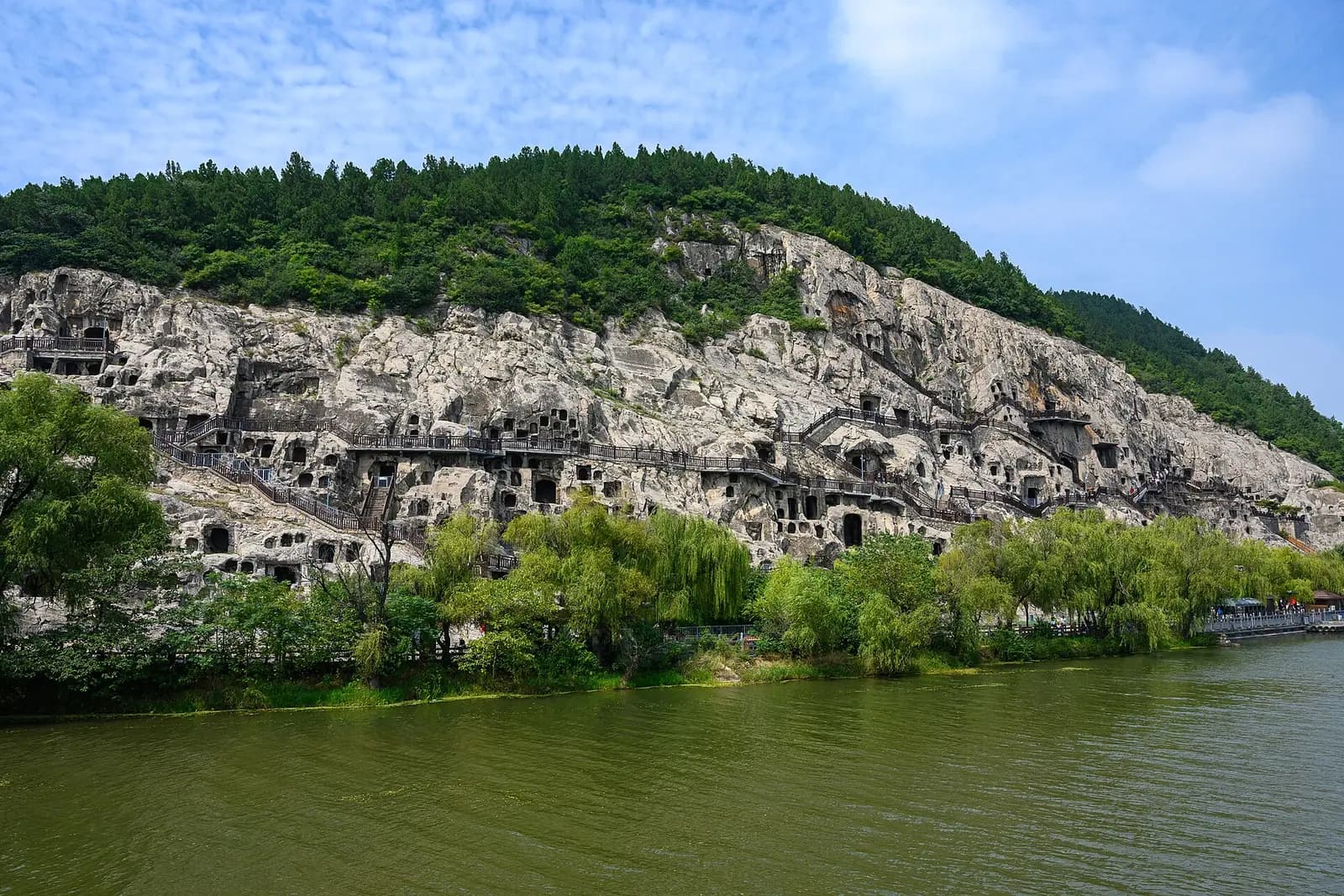
The Yi river and the west-bank cliffs
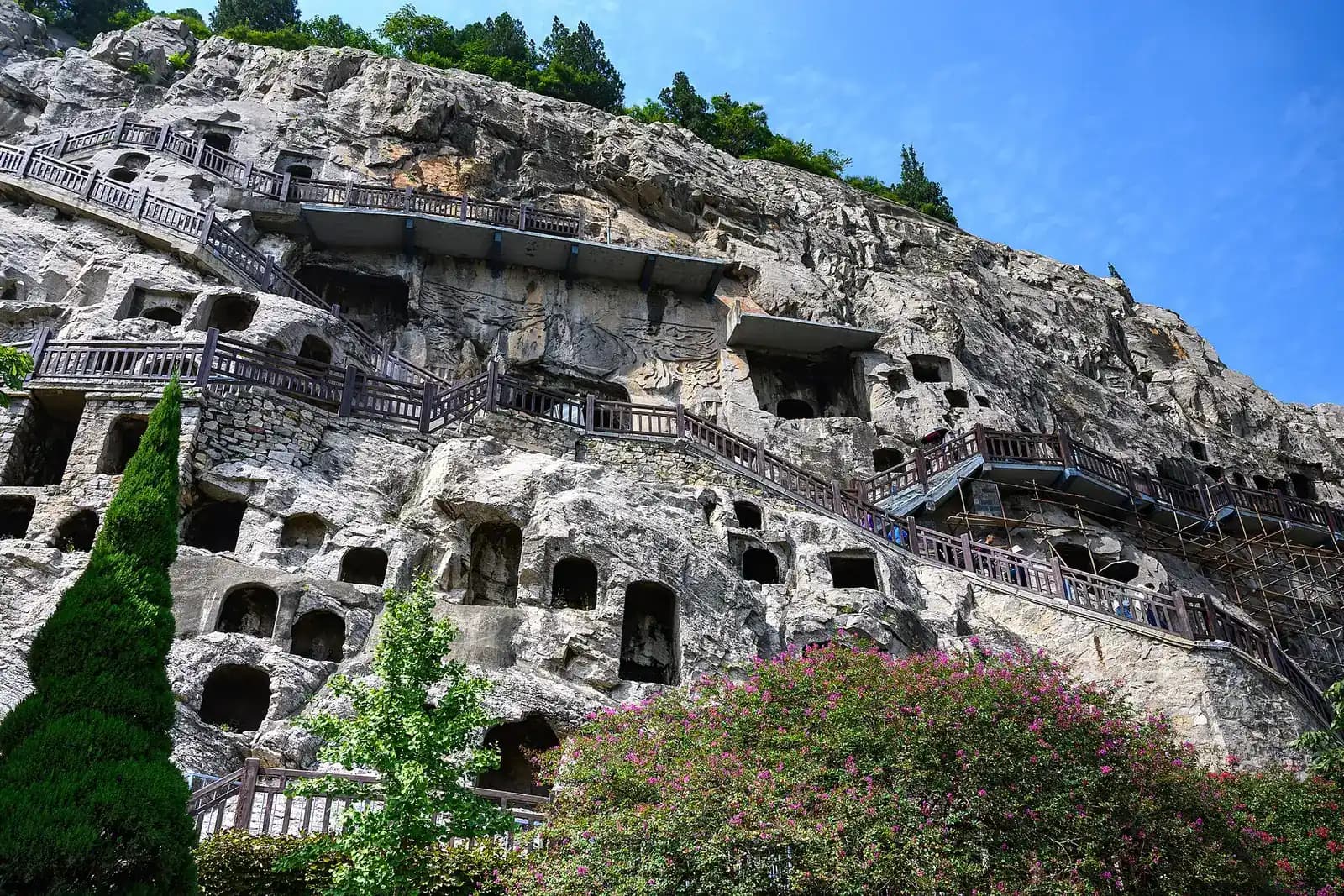
Niches crowding the cliff face
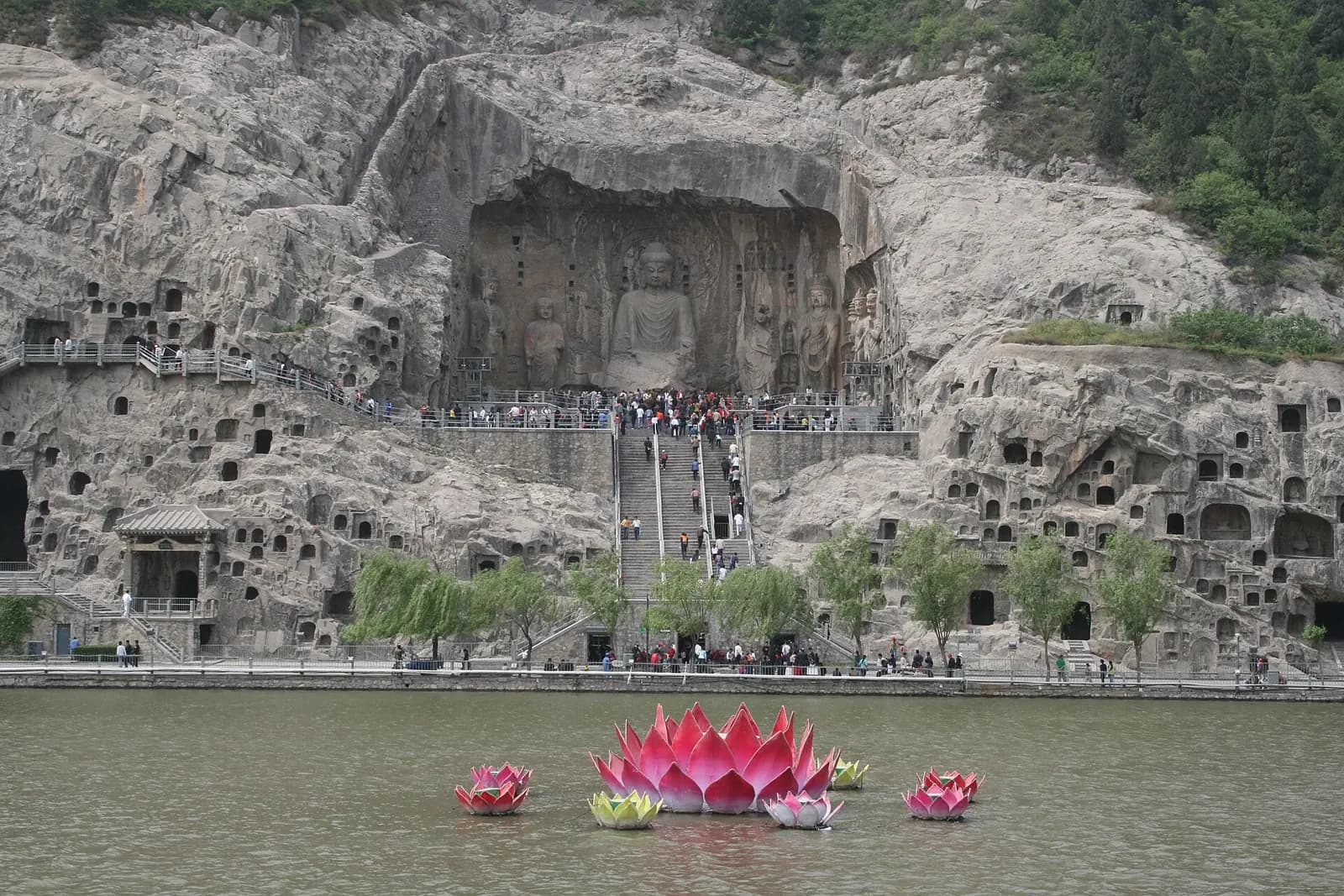
The great niche of Fengxian Temple
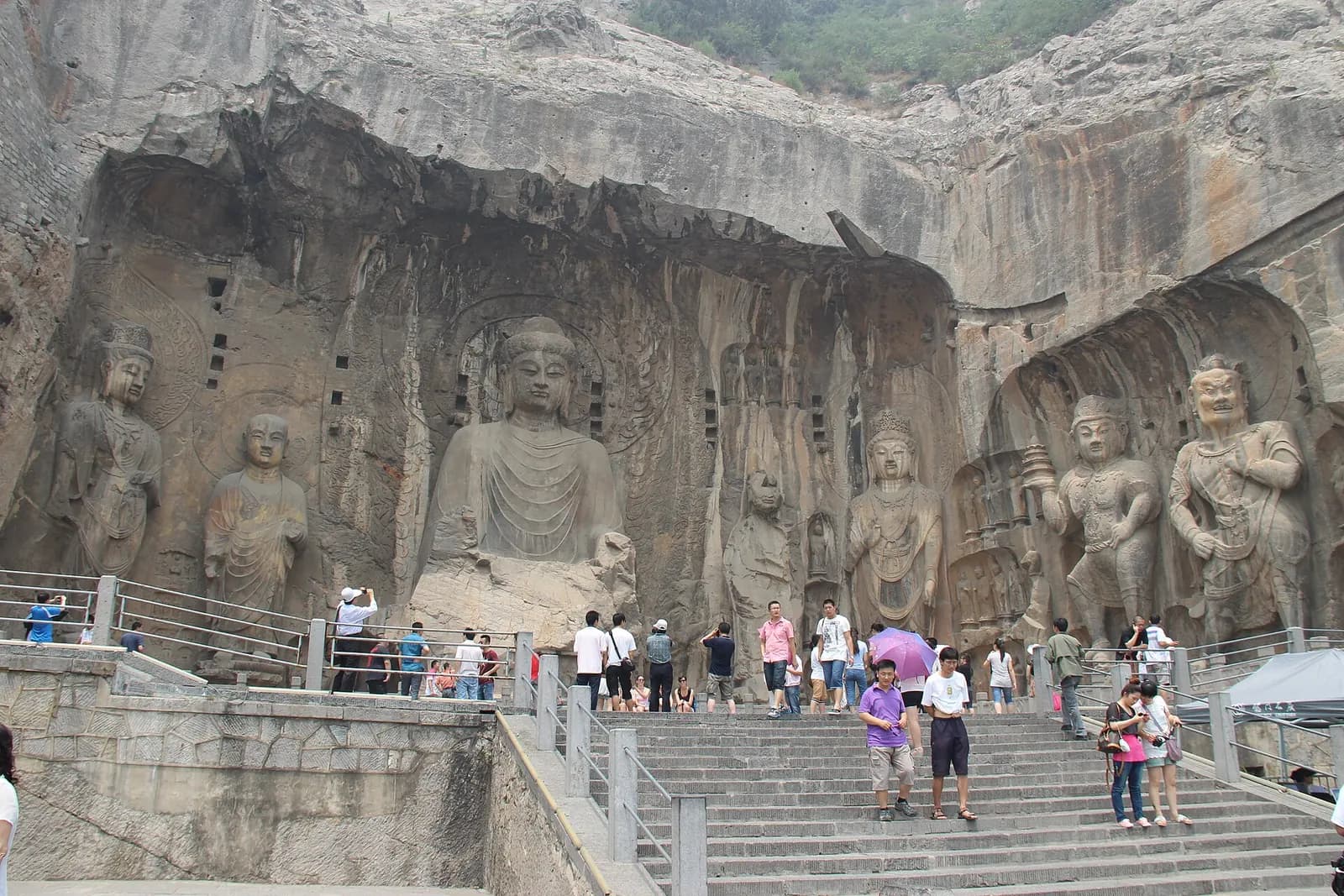
Vairocana Buddha and attendants, Fengxian Temple
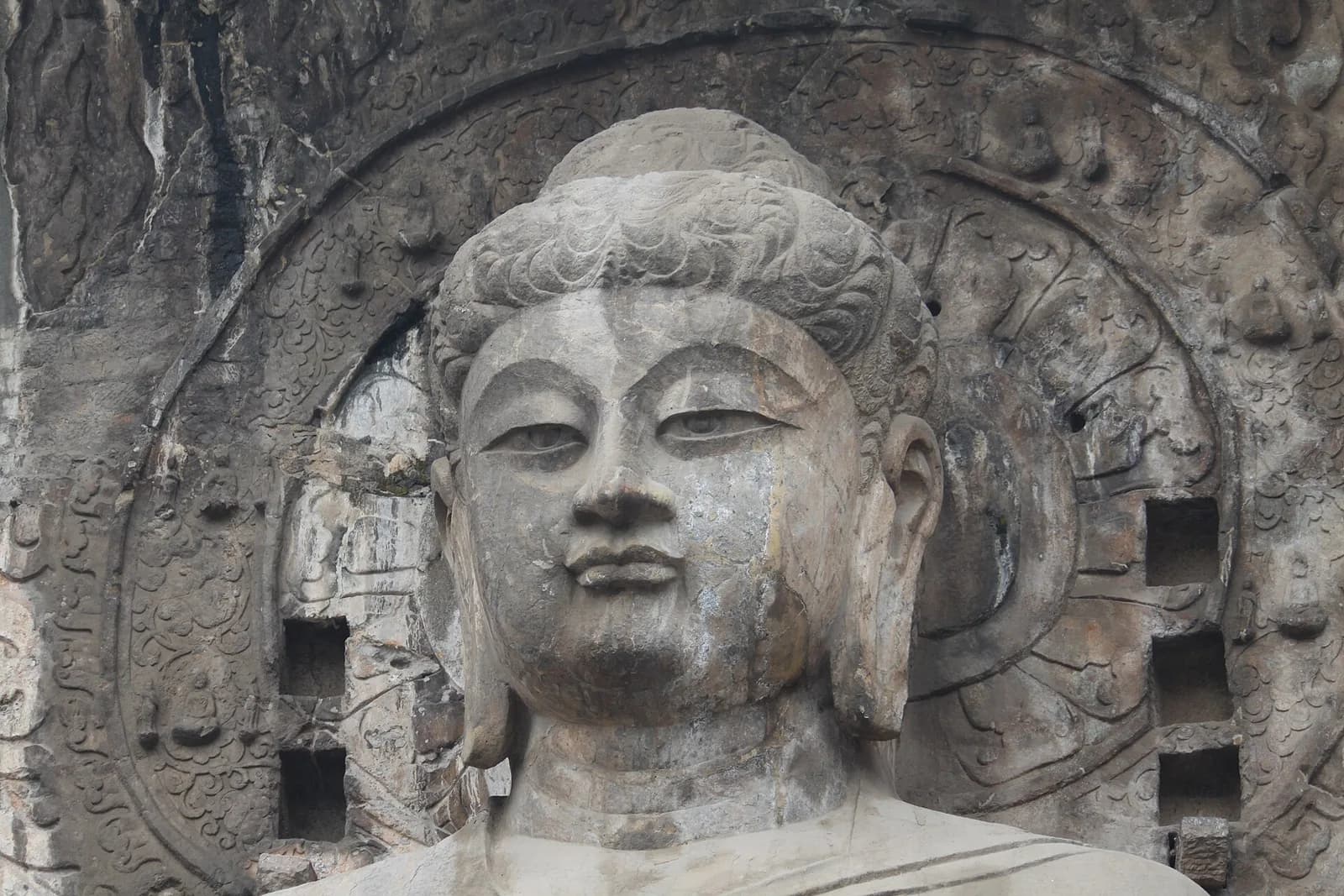
The Vairocana Buddha
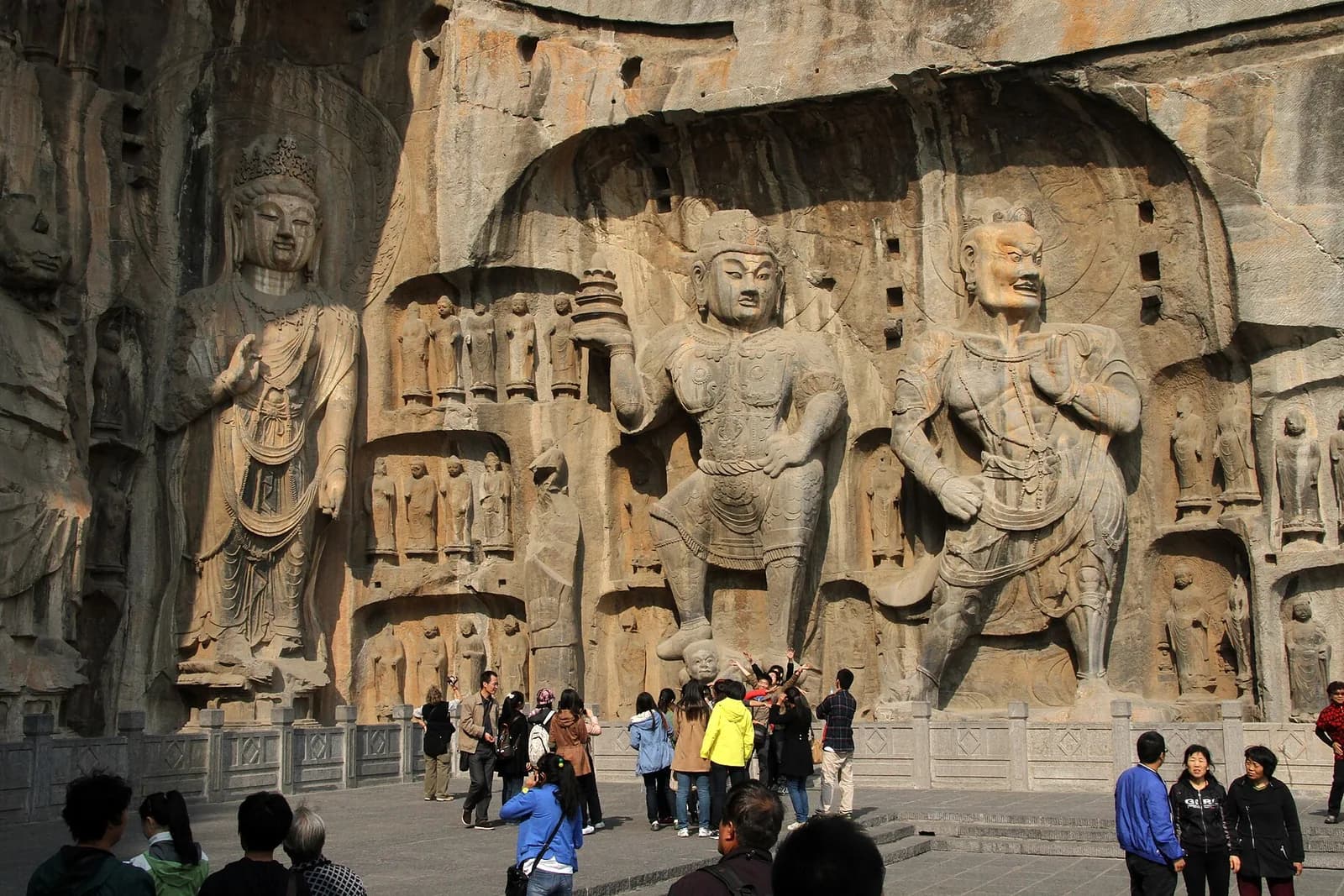
The Fengxian Temple figures
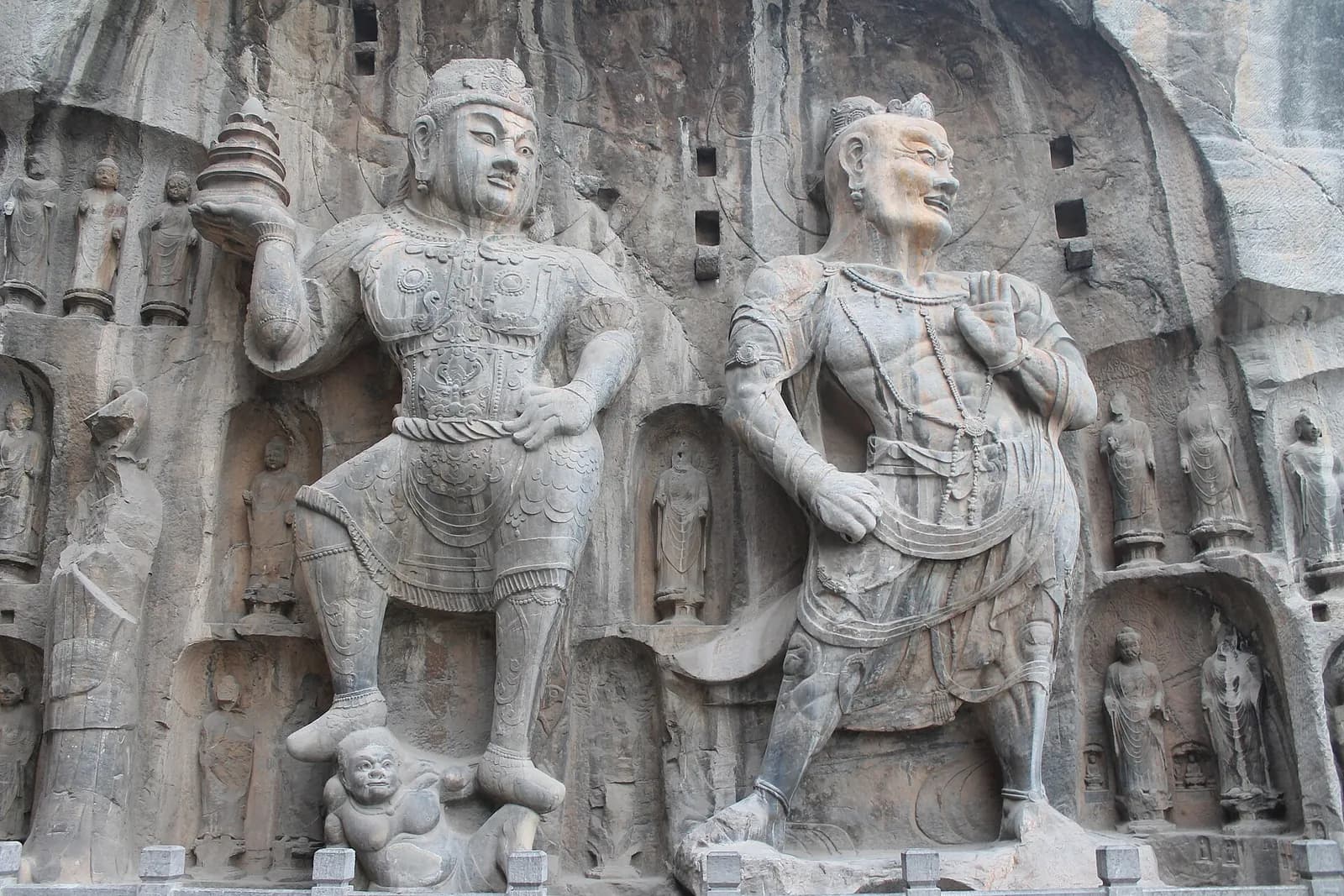
Attendant bodhisattvas, Fengxian Temple
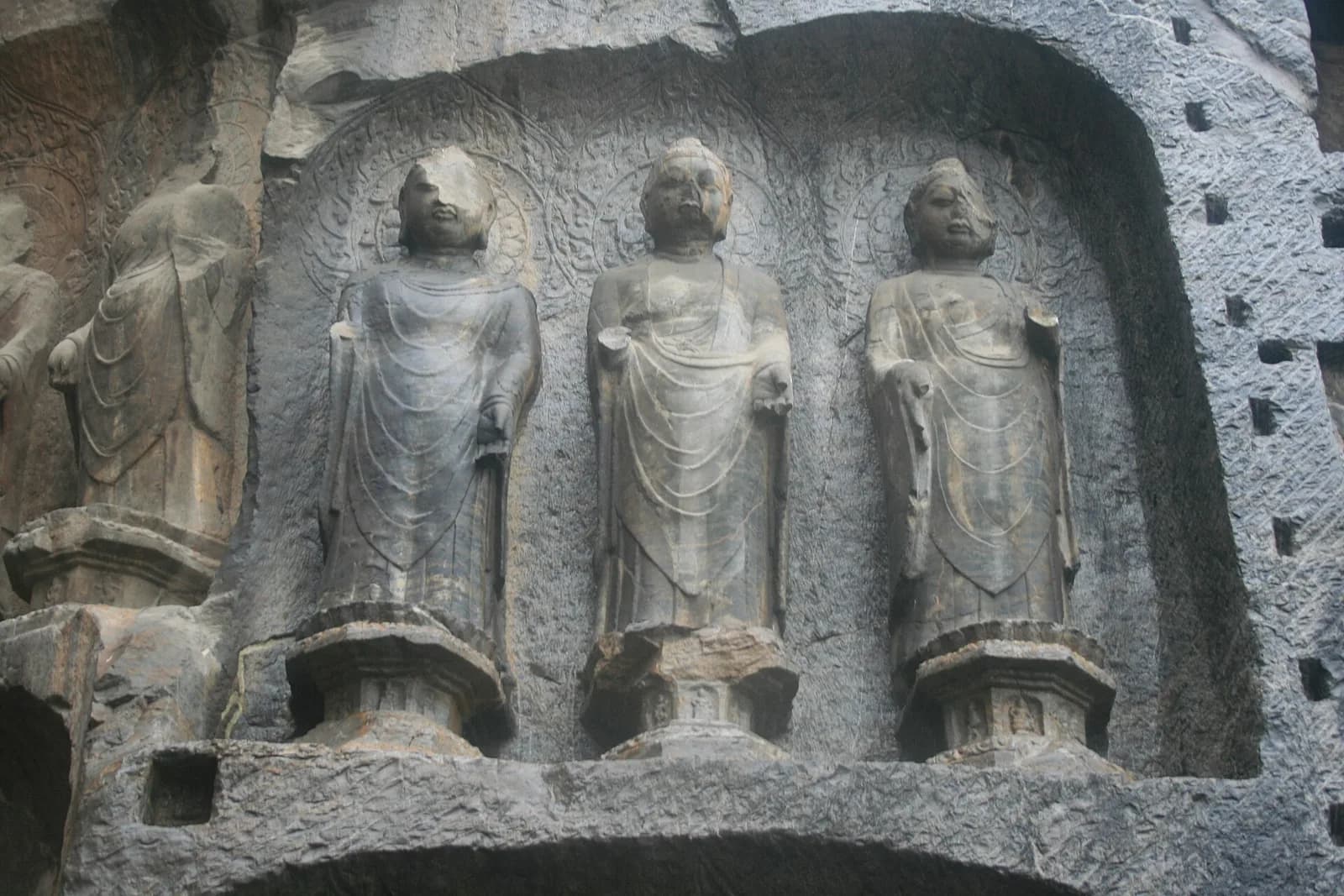
Standing bodhisattvas
Dominik Tefert · Public domain
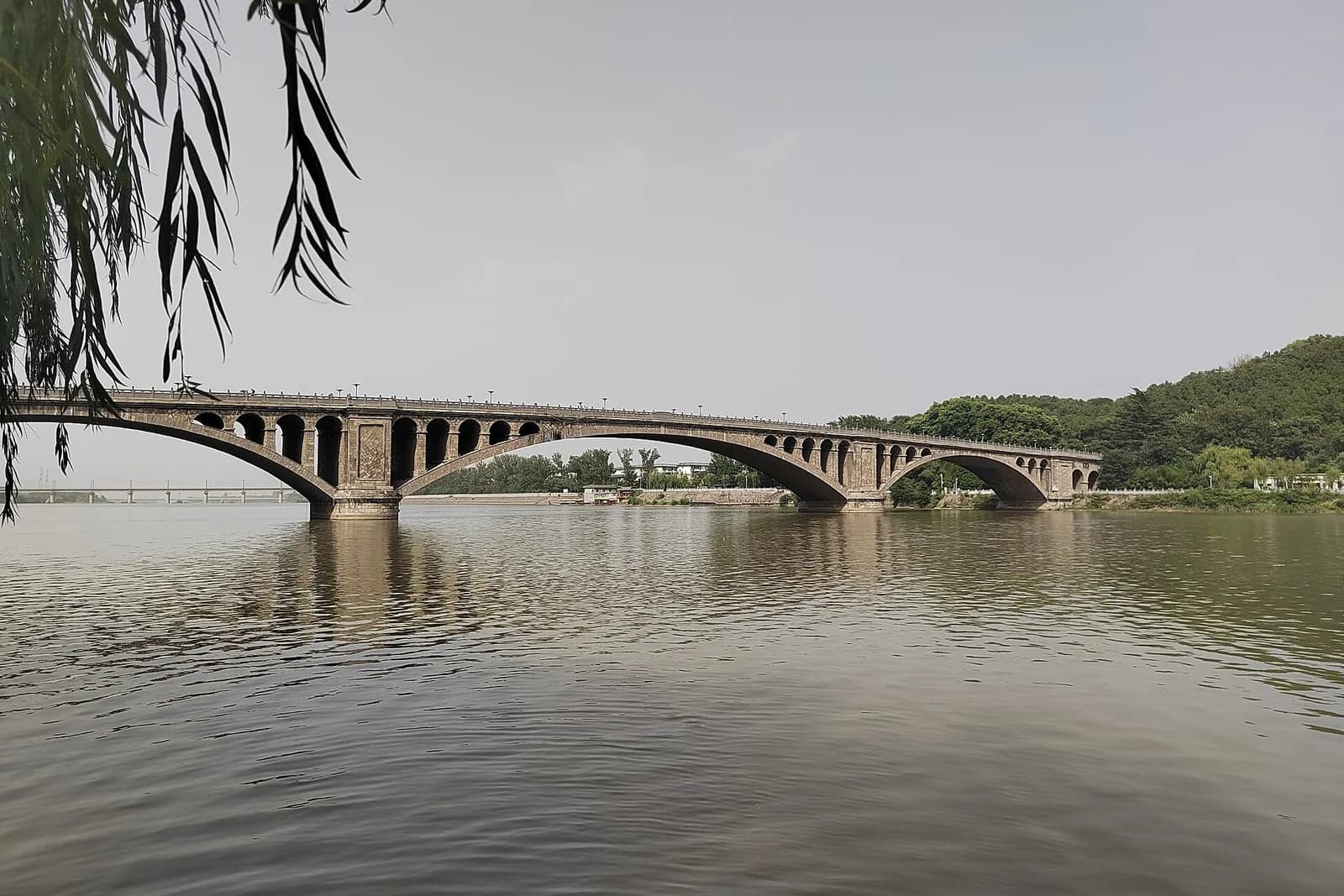
The Longmen bridge over the Yi river
出典
北魏が洛陽に遷都した紀元493年頃に開削が始まり、東魏・西魏・北斉・隋・唐・宋と四世紀以上にわたって続けられました。現存する窟龕は2,300余、造像は約10万体、碑刻題記は2,800余。2000年にユネスコ世界遺産に登録されました。
見どころ
- 奉先寺の盧舎那仏:高さ17.14メートル。唐代皇家石窟の代表作で、この地を象徴する像です。
- 賓陽三洞:北魏の皇家石窟です。「帝后礼仏図」の浮彫は海外の収蔵に流出しましたが、石窟自体は北魏美術の基準であり続けています。
- 万仏洞:両側壁に15,000体の小仏がびっしりと刻まれています。
- 東岸の香山寺と白園:唐代の詩人・白居易が眠る地で、通常は同じ日に訪れます。
実用メモ
景区は西山と東山に分かれ、西山が精华です。まず西、次に東の順がよいでしょう。徒歩は4〜5キロになるため、歩きやすい靴で。4〜10月は夜間開放があり、照明下の造像は昼とまったく印象が異なります。別途訪れる価値があります。繁忙期は事前のオンライン予約を必ず。