
หลวนชวน ลั่วหยาง
เขาหลาวจวิน
- จากเจิ้งโจว
- จากเจิ้งโจวประมาณ 3 ชั่วโมงโดยรถยนต์
- เวลาที่ควรเผื่อ
- หนึ่งถึงสองวัน
- ฤดูที่เหมาะ
- พฤษภาคม–ตุลาคม ฤดูหนาวดูน้ำแข็งเกาะยอดเขา
จากเว็บไซต์ทางการ
สถานที่แนะนำตัวเองผ่านเว็บไซต์ทางการ
ถอดความจากเว็บไซต์ทางการของผู้ดำเนินการ พร้อมวันที่เราเข้าดู และเป็นอิสระจากคำบรรยายของเราเองด้านบน
Laojun Mountain scenic area lies east of Luanchuan county town in Henan, covering 2,666 hectares. It is a Funiu Mountain UNESCO Global Geopark, a national 5A scenic area, a national nature reserve and a provincial cultural relic protection unit. Formerly called Jingshi Mountain, it takes its present name from Laozi, the founder of Daoism, who is said to have retired here to cultivate. It is the main peak of the 800-li Funiu range at 2,217 m, formed by continental orogeny 1.9 billion years ago — the operator's slogan is "green heart of China, world geological wonder". Temples have stood here since the Northern Wei, and in the nineteenth year of the Wanli reign the Ming court granted it a Daoist canon and the title "famous mountain under heaven". Eight scenic zones and 138 sites are open.
- Location
- East of Luanchuan, Luoyang
- Area
- 2,666 hectares
- Elevation
- 2,217 m — highest point of the Funiu range
- Designations
- Funiu UNESCO Global Geopark · national 5A · national nature reserve
- Developed
- Eight zones, 138 sites
- Enquiries
- 0379-66838888
จุดชมหลัก
Golden summit temple group
The temple group includes the Lingguan, Linchu and Jiuku halls, the Laojun temple and the Daode hall, built along the ridge; when cloud fills the valleys the buildings appear to float. The operator notes that the temples have been a centre of pilgrimage on the central plain since the Northern Wei.
Cloud sea and geology
The mountain took shape in continental orogeny 1.9 billion years ago, producing the dense peak scenery the site is known for. The cloud sea is most likely on clear mornings after rain, which means staying at the base and starting early.
Daoist heritage
The mountain is named for Laozi, said to have retired here to cultivate; in the nineteenth year of the Wanli reign the Ming court granted it a Daoist canon and the title "famous mountain under heaven".
ภาพสถานที่
These photographs are openly licensed for commercial use (from Wikimedia Commons: CC0, CC BY, CC BY-SA or public domain) and are not the attraction's own gallery. Each photo is credited below with its author and licence, linked to the original file. Photo-contest entries from the scenic area's site, whose file names carry a photographer's name and mobile number, remain unused without each author's permission.
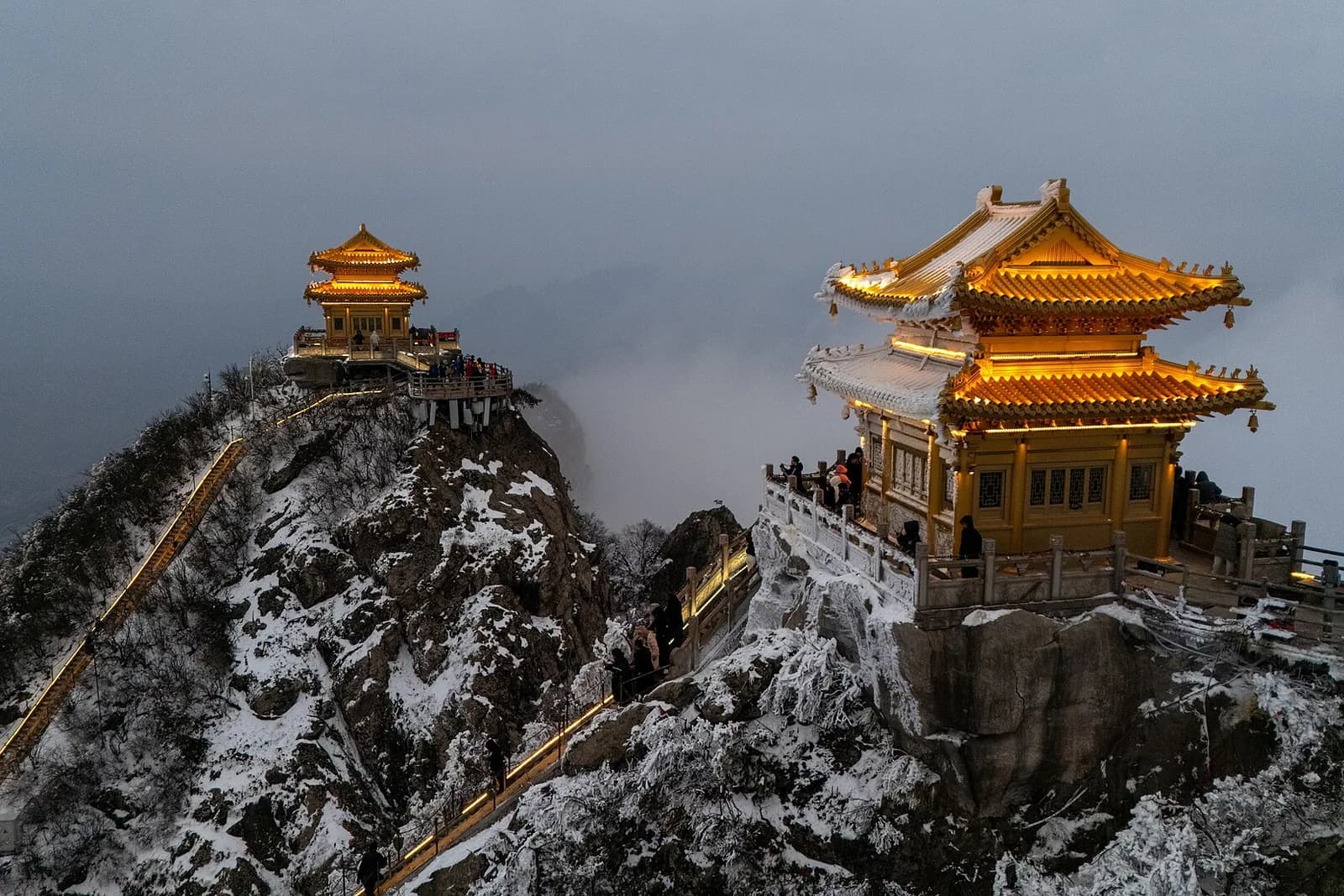
The golden summit after snow
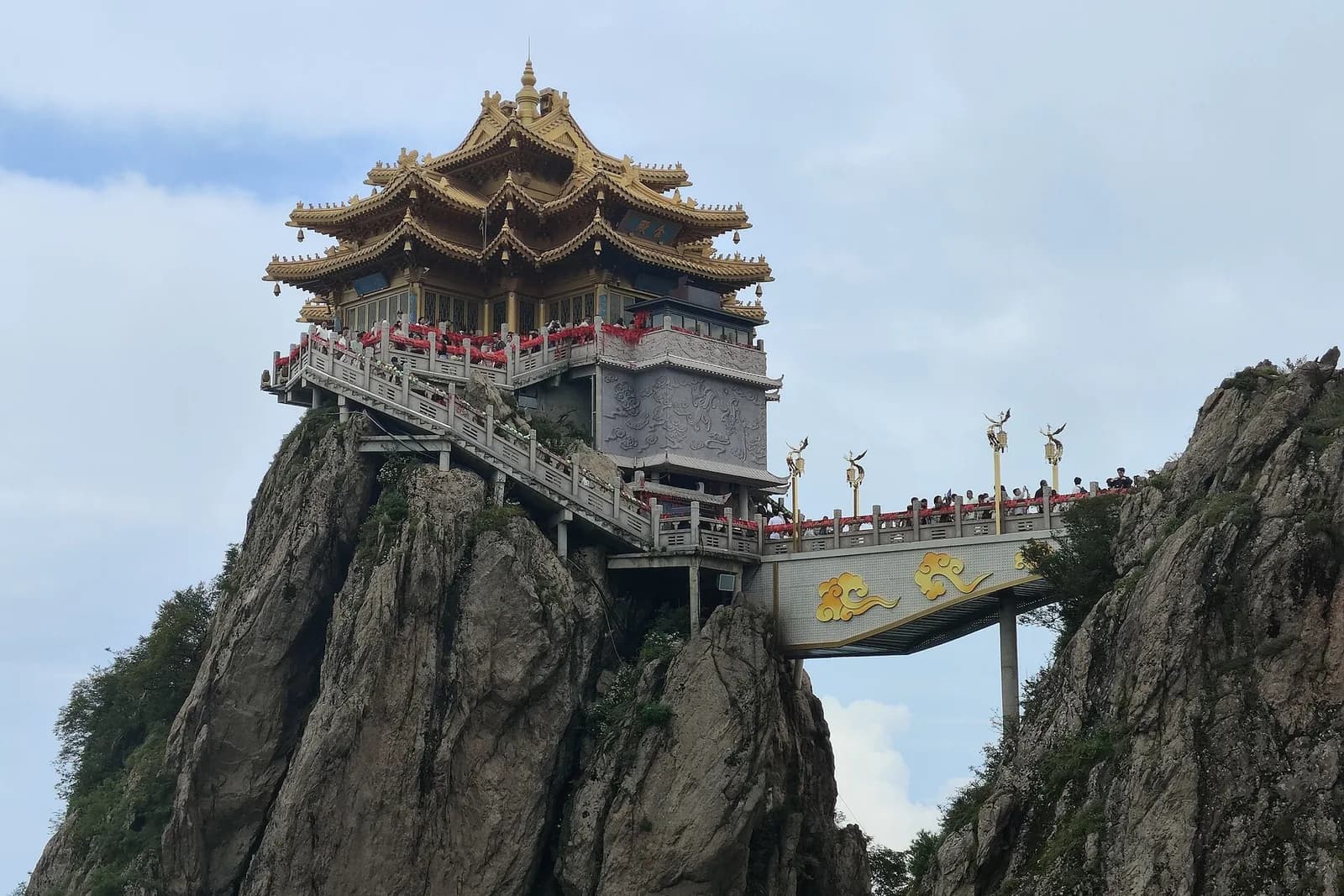
Golden summit temples and the Huixian Bridge
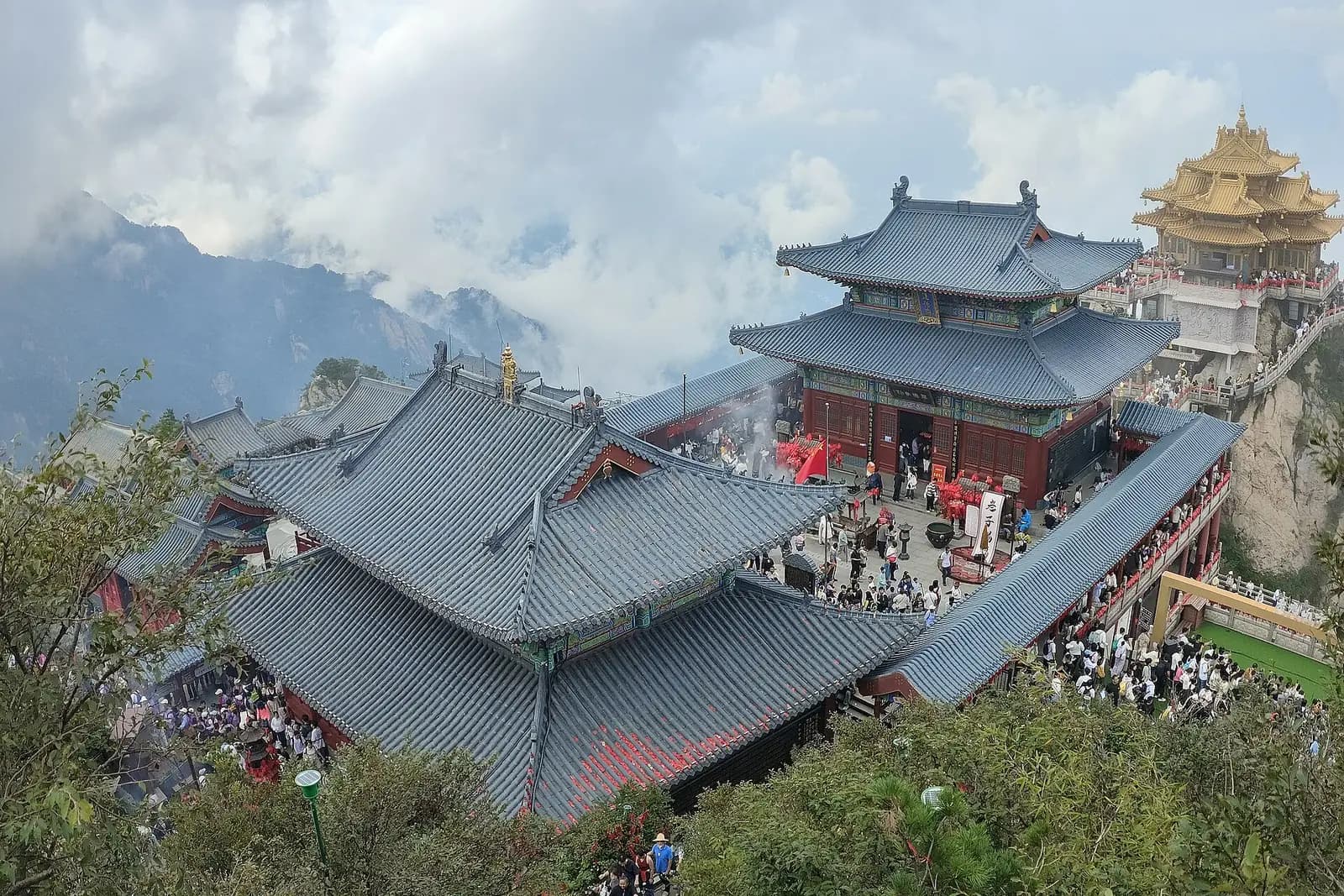
The golden summit Taoist temple complex
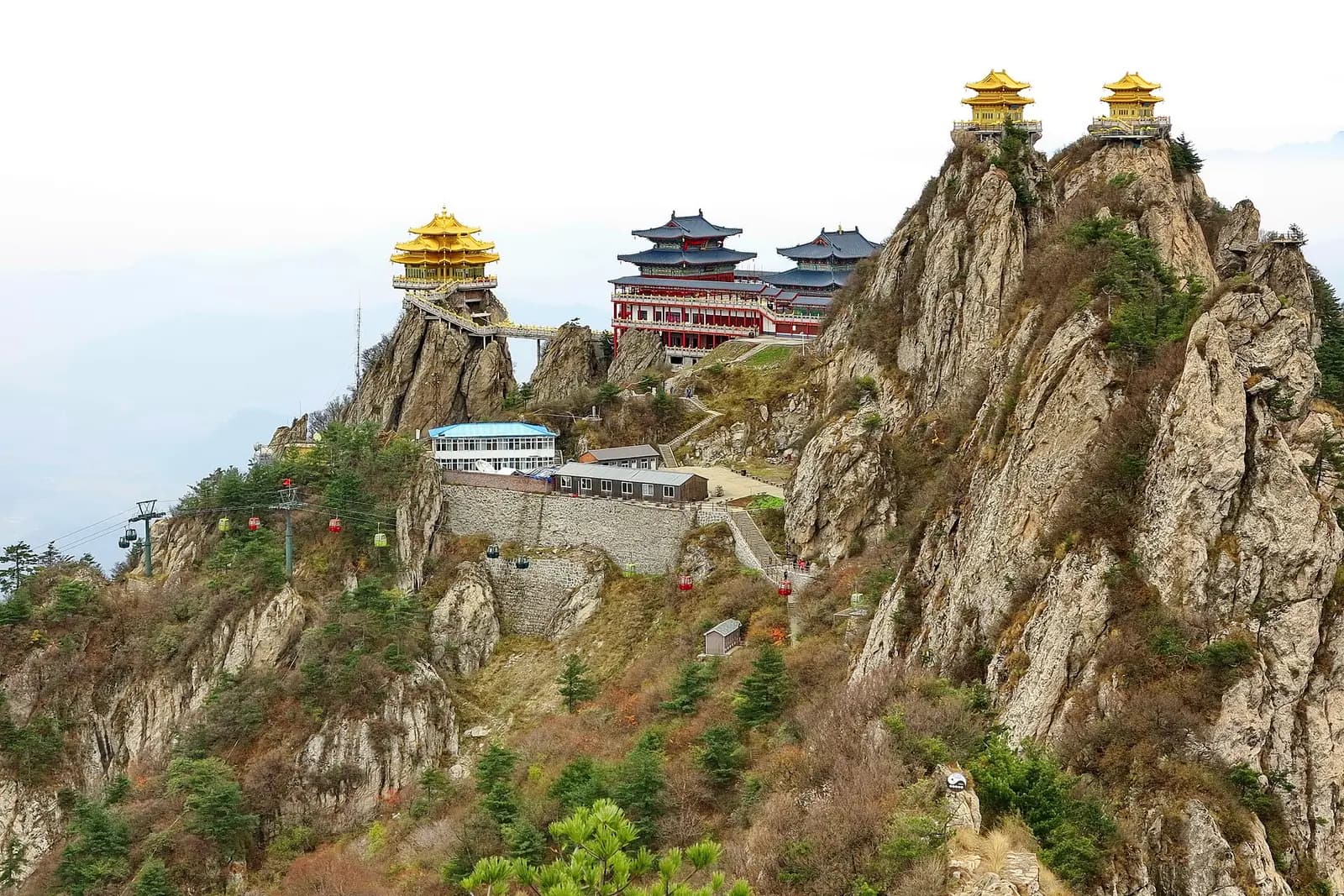
The Golden Hall of the Laojun Temple
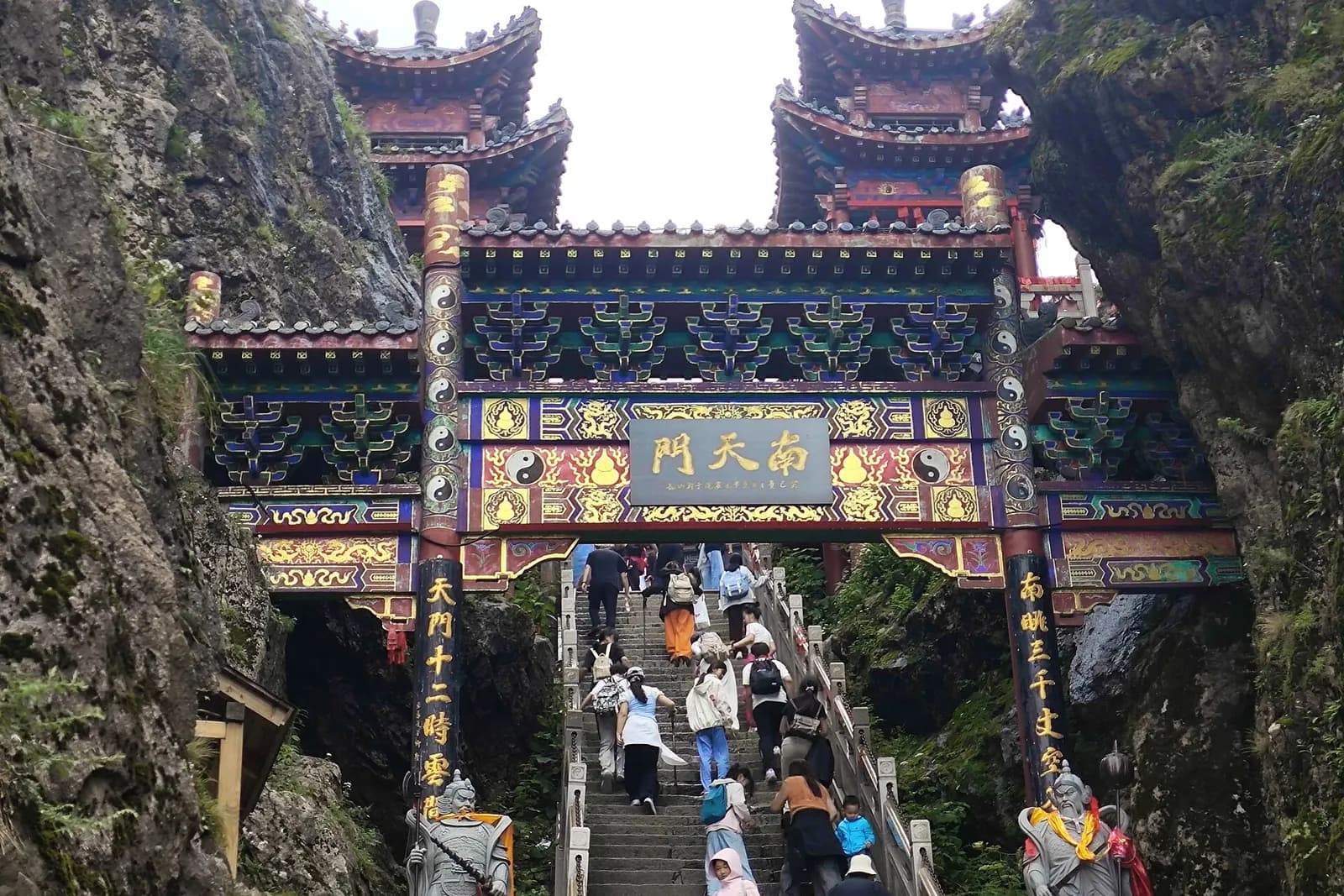
The South Heavenly Gate
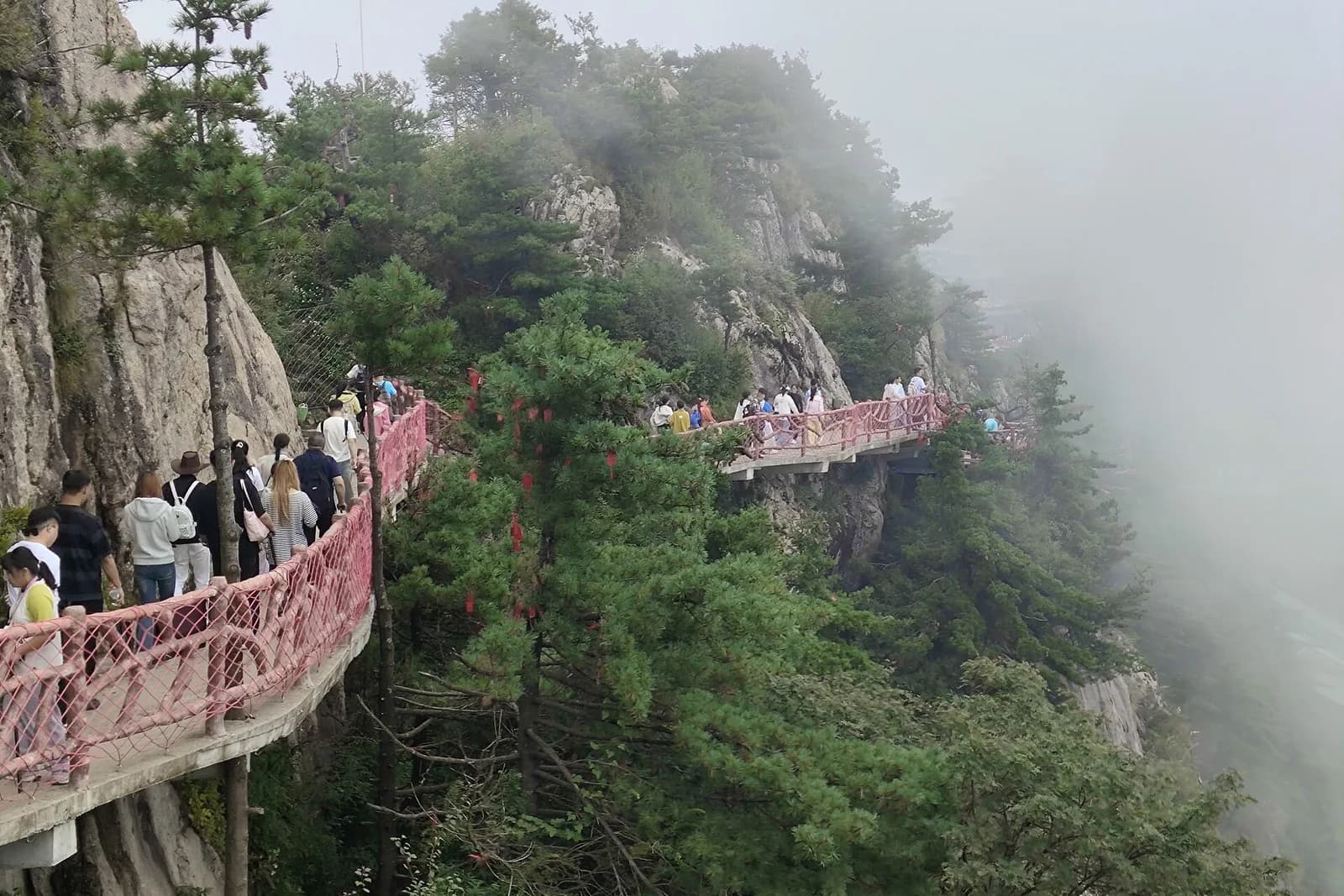
The cliff-side plank road
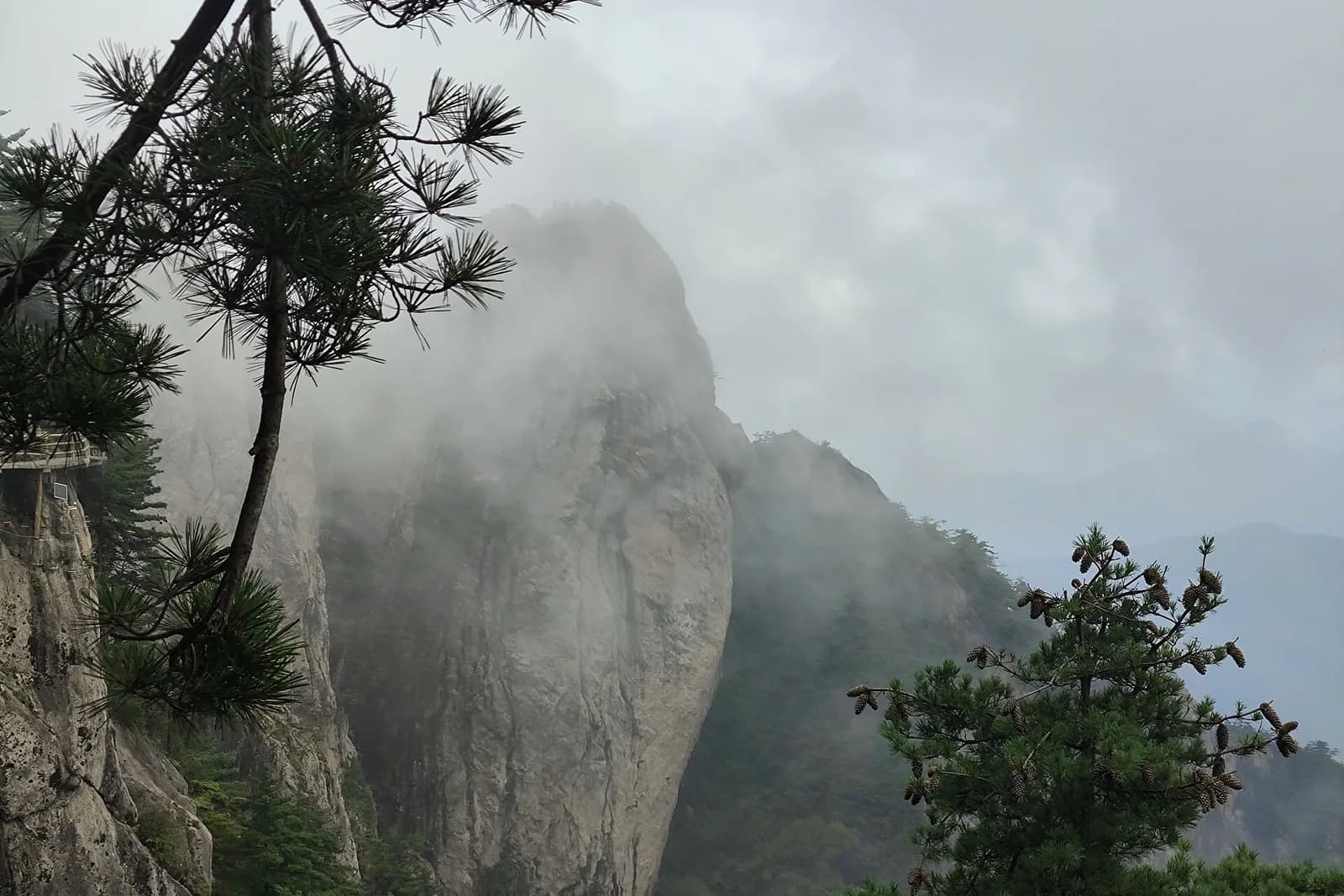
Peaks in the mist
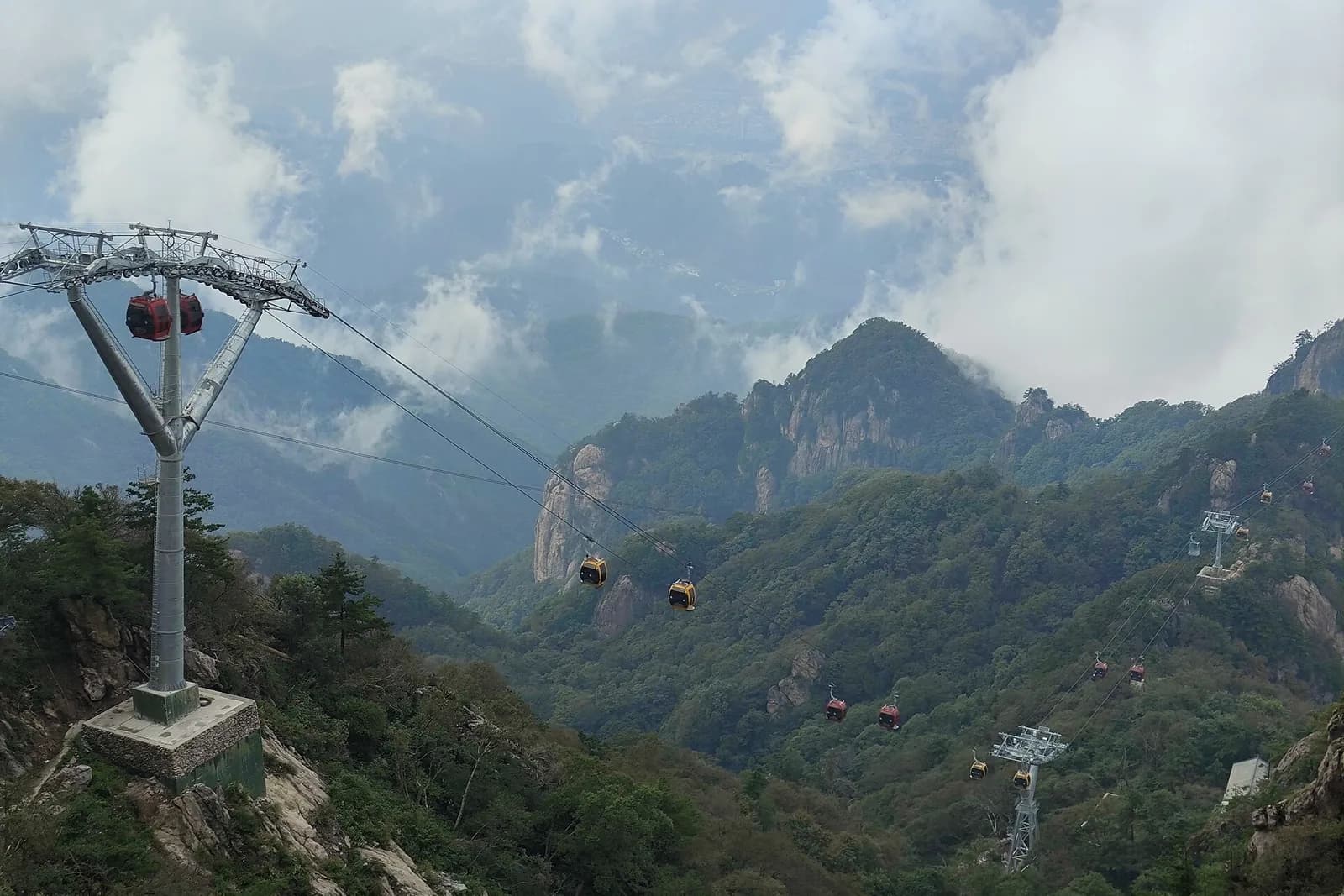
Cable car and the surrounding peaks
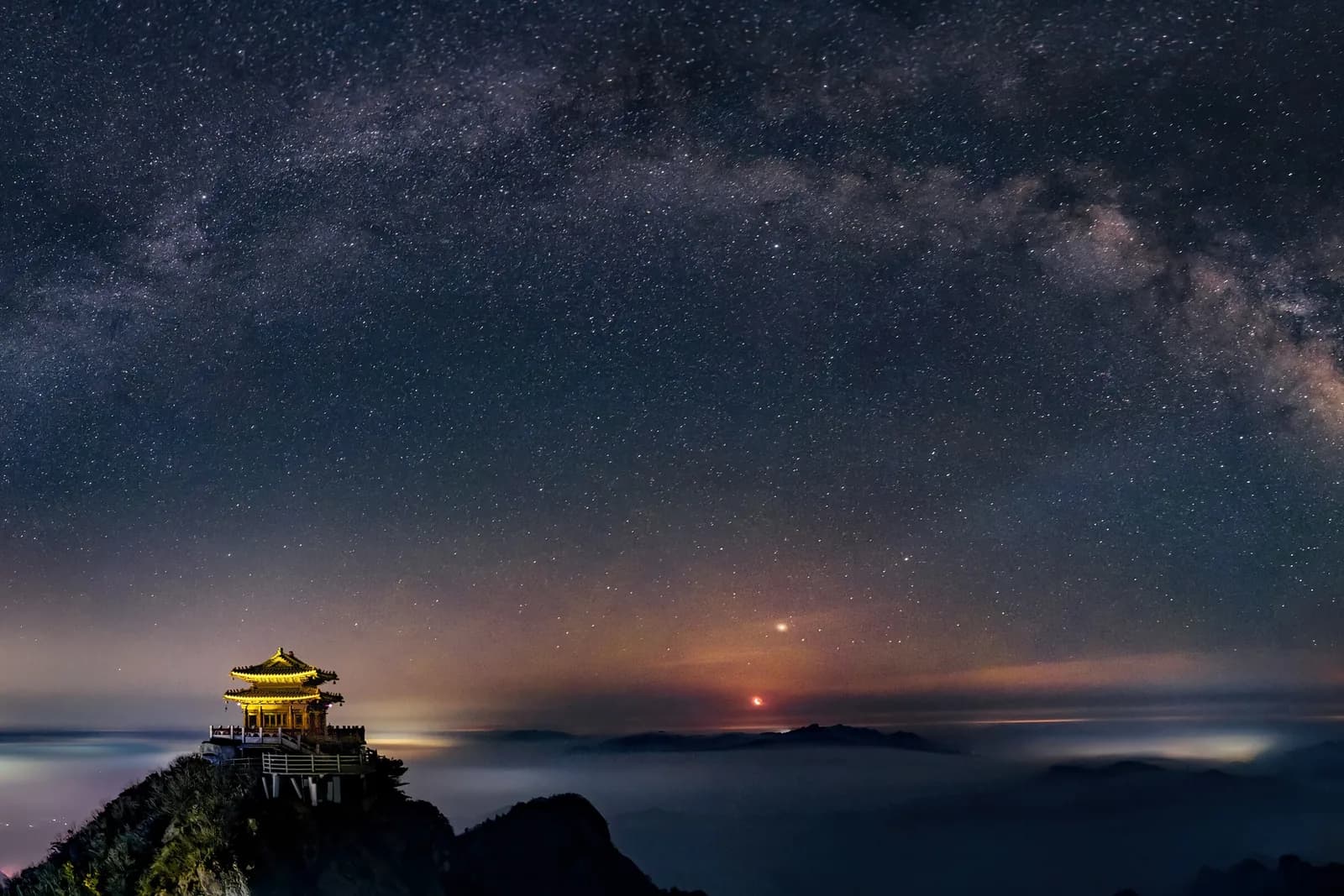
The Milky Way and the Moon above the Golden Hall
แหล่งข้อมูล
ตั้งอยู่บนสันเขาหลักของเทือกเขาฟูนิว ชื่อมาจากเหลาจื่อ ผู้ก่อตั้งลัทธิเต๋า ซึ่งเชื่อว่าได้ปลีกวิเวกมาบำเพ็ญที่นี่ วัดบนเขามีมาตั้งแต่สมัยเว่ยเหนือ กลุ่มวัดบนยอดทองที่อยู่เหนือแนวเมฆ กลายเป็นจุดชมวิวที่มีผู้มาเยือนมากที่สุดแห่งหนึ่งของจีนตอนกลาง
จุดน่าสนใจ
- กลุ่มวัดยอดทองที่สร้างเรียงตามสันเขา เมื่อเมฆเต็มหุบเขาจะดูเหมือนอาคารลอยอยู่
- สือหลี่ฮวาผิง: ทางเดินริมผาผ่านป่าหินแกรนิตที่หนาแน่น
- ทะเลเมฆและพระอาทิตย์ขึ้น: มีโอกาสสูงสุดในเช้าที่ฟ้าหลังฝน จึงต้องพักที่เชิงเขาและออกแต่เช้า
- หุบเขาจุยเมิ่ง: เส้นทางลำธารและน้ำตก เบากว่าการขึ้นยอดเขามาก
ข้อควรรู้
ยอดเขาหนาวกว่าที่เชิงเขามาก ควรพาเสื้อคลุมแม้ในฤดูร้อน กระเช้าแบ่งเป็นสองช่วง จากนั้นยังต้องเดินบันไดหินอีกราวหนึ่งชั่วโมง ควรประเมินตามจริงหากมีปัญหาหัวเข่า ฤดูหนาวทางเดินเป็นน้ำแข็งและต้องใช้สนับกันลื่น ทะเลเมฆคือสภาพอากาศ ไม่ใช่กำหนดการ อย่าวางแผนโดยคาดหวังว่าจะได้เห็น