
لويانغ
معبد الحصان الأبيض
- من تشنغتشو
- نحو ٤٠ دقيقة بالقطار السريع
- الوقت المطلوب
- نصف يوم
- أفضل موسم
- طوال العام
من الموقع الرسمي
الموقع السياحي يعرّف بنفسه عبر موقعه الرسمي
منقول من الموقع الرسمي للمشغّل مع تاريخ اطّلاعنا عليه، ومستقل عن الوصف أعلاه الذي كتبناه بأنفسنا.
The White Horse Temple stands twelve kilometres east of Luoyang, backed by Mount Mang and facing the Luo river. Founded in 68 CE (the eleventh year of Yongping, Eastern Han), it was the first monastery built in China after Buddhism arrived, and it holds a particular place in Chinese Buddhist history as the tradition's 'source' and 'ancestral courtyard'.
- Location
- Twelve kilometres east of Luoyang, backed by Mount Mang and facing the Luo
- Founded
- 68 CE, Eastern Han
- Standing
- The first monastery built in China by official order after Buddhism arrived
- Heritage status
- Among the first batch of Major Historical and Cultural Sites Protected at the National Level, 1961
- Layout today
- Restored in 1556 (thirty-fifth year of Jiajing, Ming); a rectangular, south-facing compound of about 40,000 m², with the Tianwang, Great Buddha, Mahavira, Jieyin and Vairocana halls and the Qiyun pagoda
- Qiyun Pagoda
- A square, multi-eaved brick pagoda, 13 storeys and 35 m tall; the present structure was rebuilt in 1175 and is Luoyang's oldest surviving building
- Mahavira Hall figures
- The eighteen arhats are Yuan-dynasty dry-lacquer figures — a technique largely lost after the Song and rarely surviving
أبرز المعالم
Qiyun Pagoda
East of the gate: a distinctive square brick pagoda of thirteen eaves and 35 metres, the oldest surviving building in Luoyang.
Qingliang Terrace and Vairocana Hall
A brick terrace known as the 'courtyard in the air' — 43 by 33 metres and six metres high — carrying the double-eaved Vairocana Hall in its own enclosure.
Mahavira Hall
Housing the Buddhas of the three times, with the eighteen Yuan dry-lacquer arhats along the sides.
The two monks' tombs
Two mounds among the cypresses inside the gate, marking the monks Kasyapa-matanga and Dharmaratna, who brought the scriptures to China.
The temple bell
A Ming cast-iron bell of 2,500 kg; 'the bell of the White Horse Temple' is one of the eight sights of Luoyang.
الصور
These photographs are openly licensed for commercial use (from Wikimedia Commons: CC0, CC BY, CC BY-SA or public domain) and are not the attraction's own gallery. Each photo is credited below with its author and licence, linked to the original file.
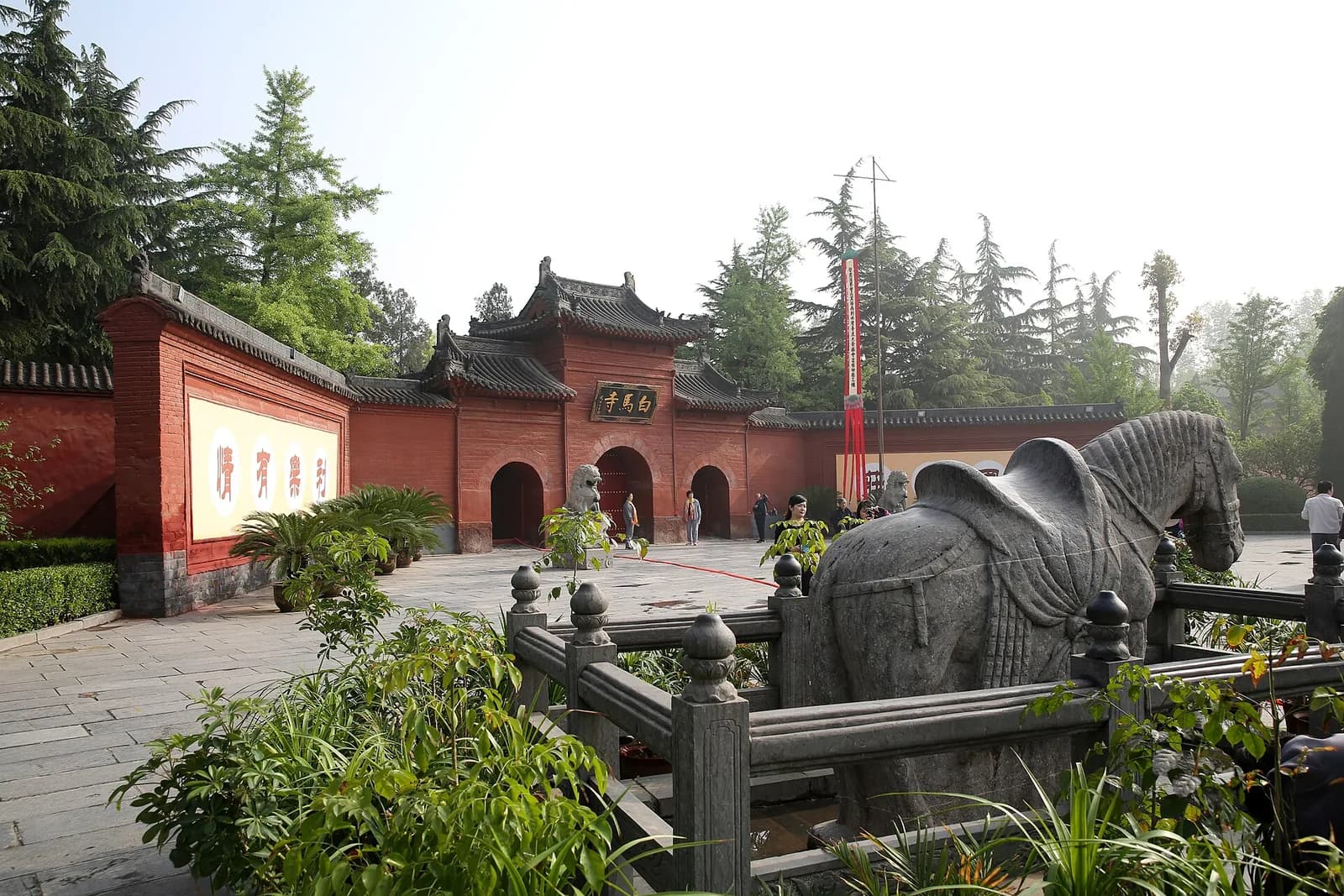
The main gate (shanmen)
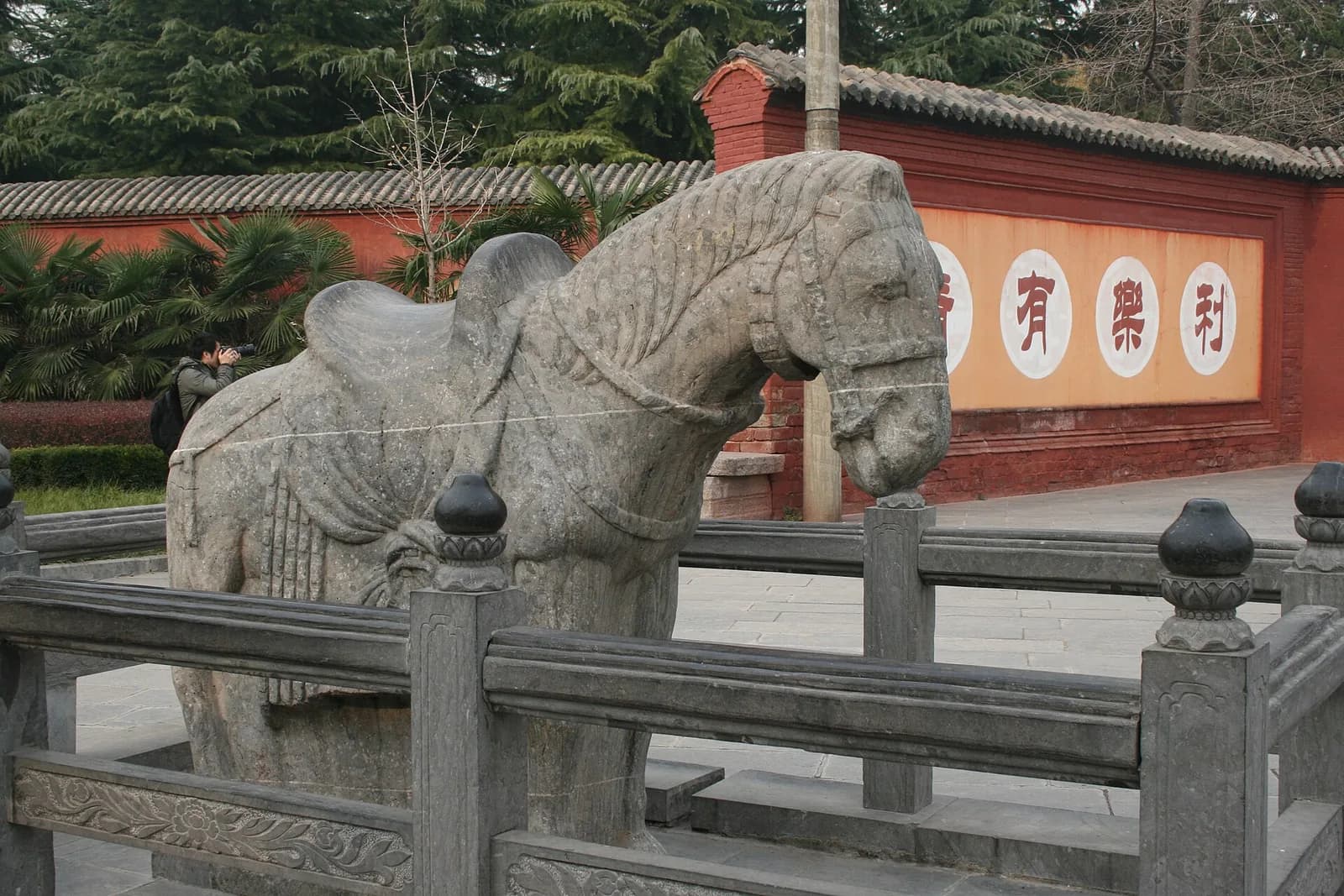
The stone horse before the gate
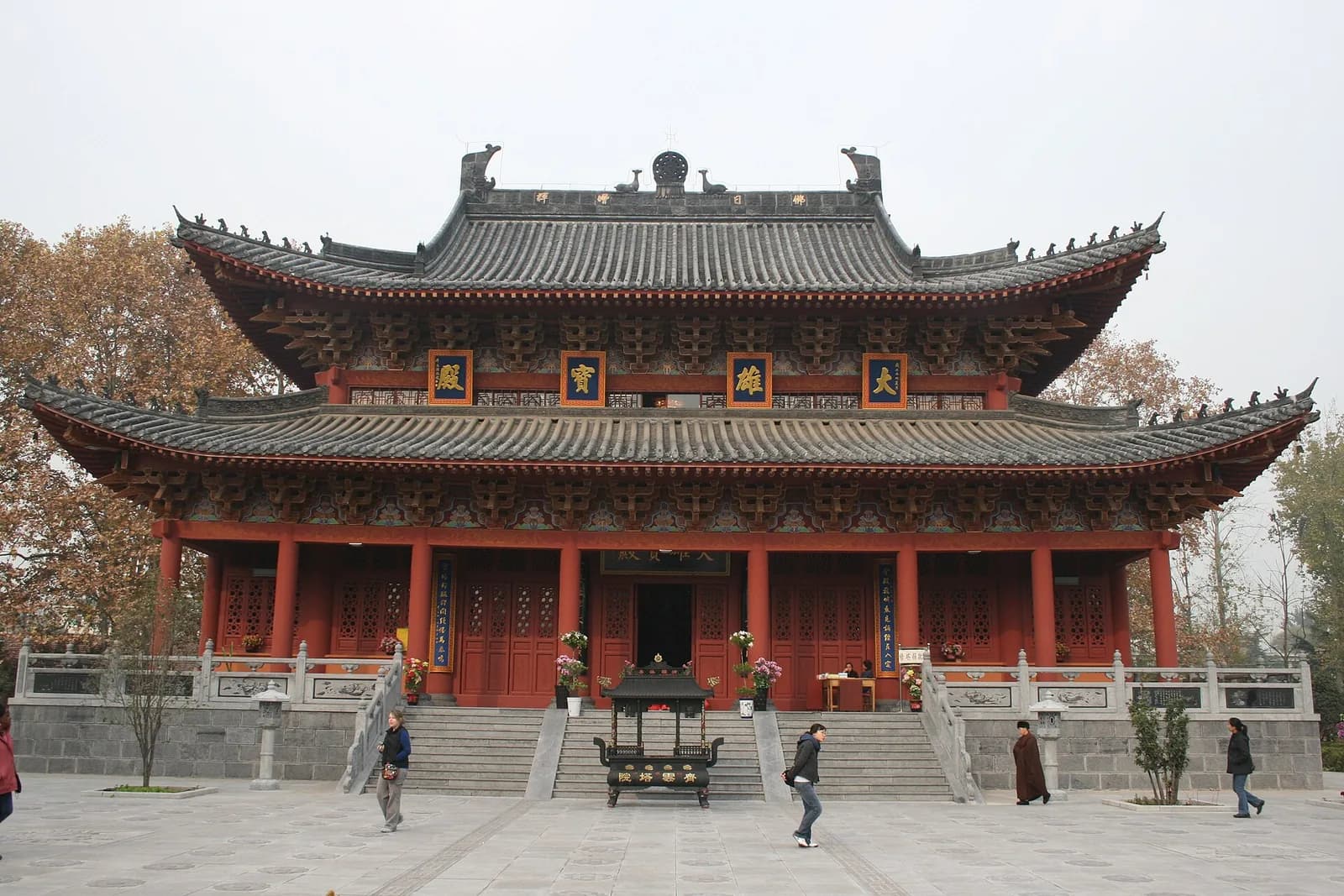
A main hall of the temple
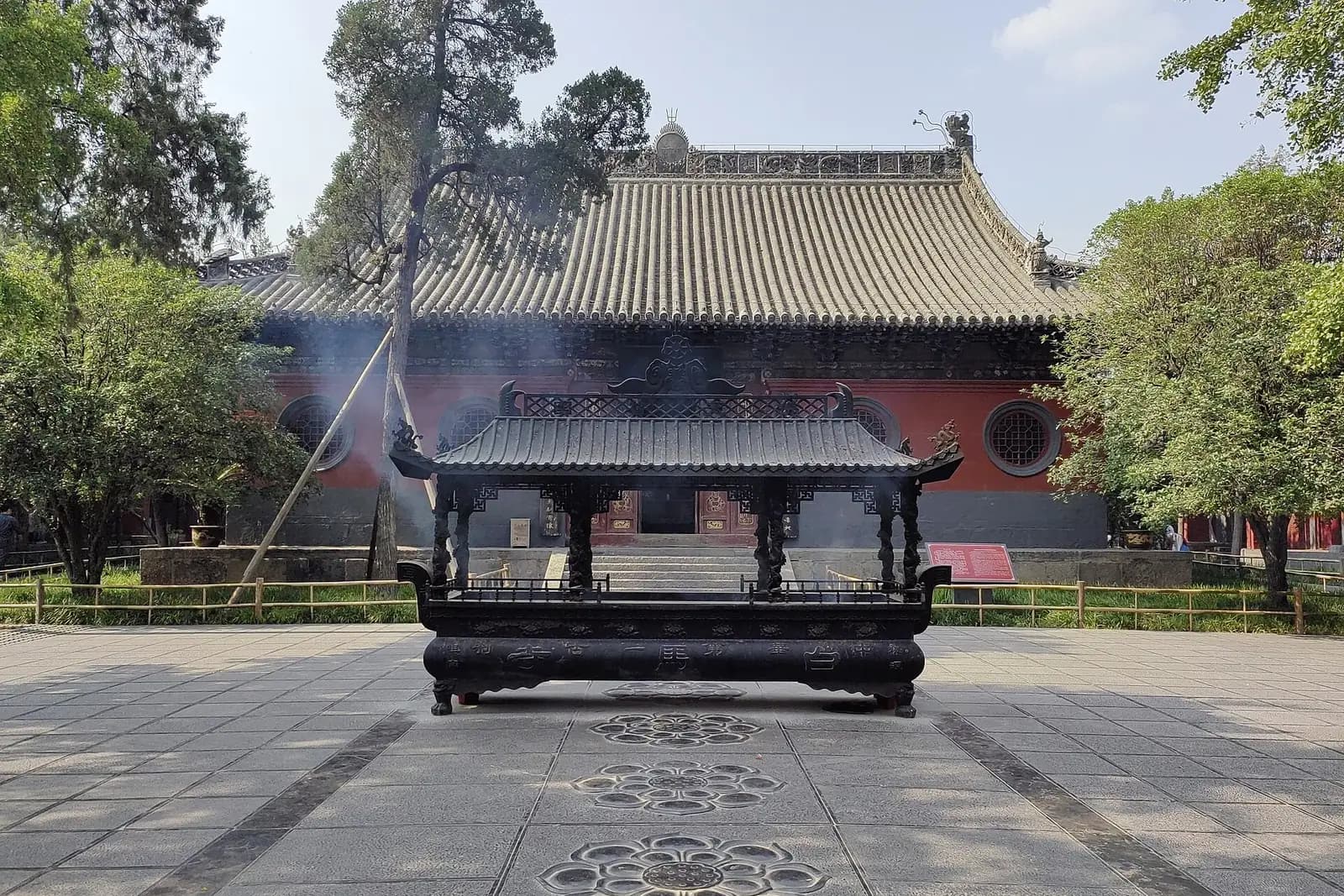
A courtyard with its incense burner
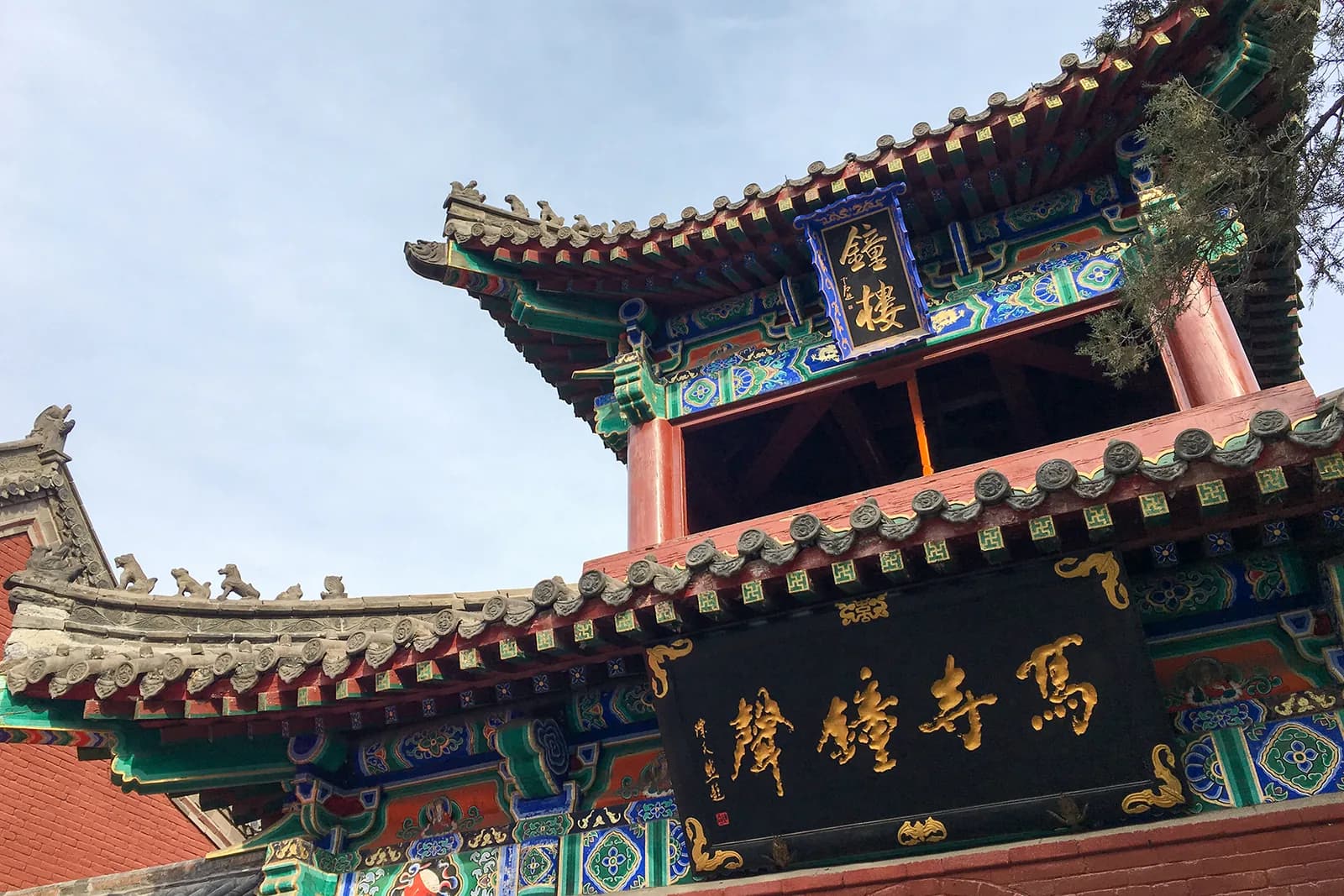
The bell tower
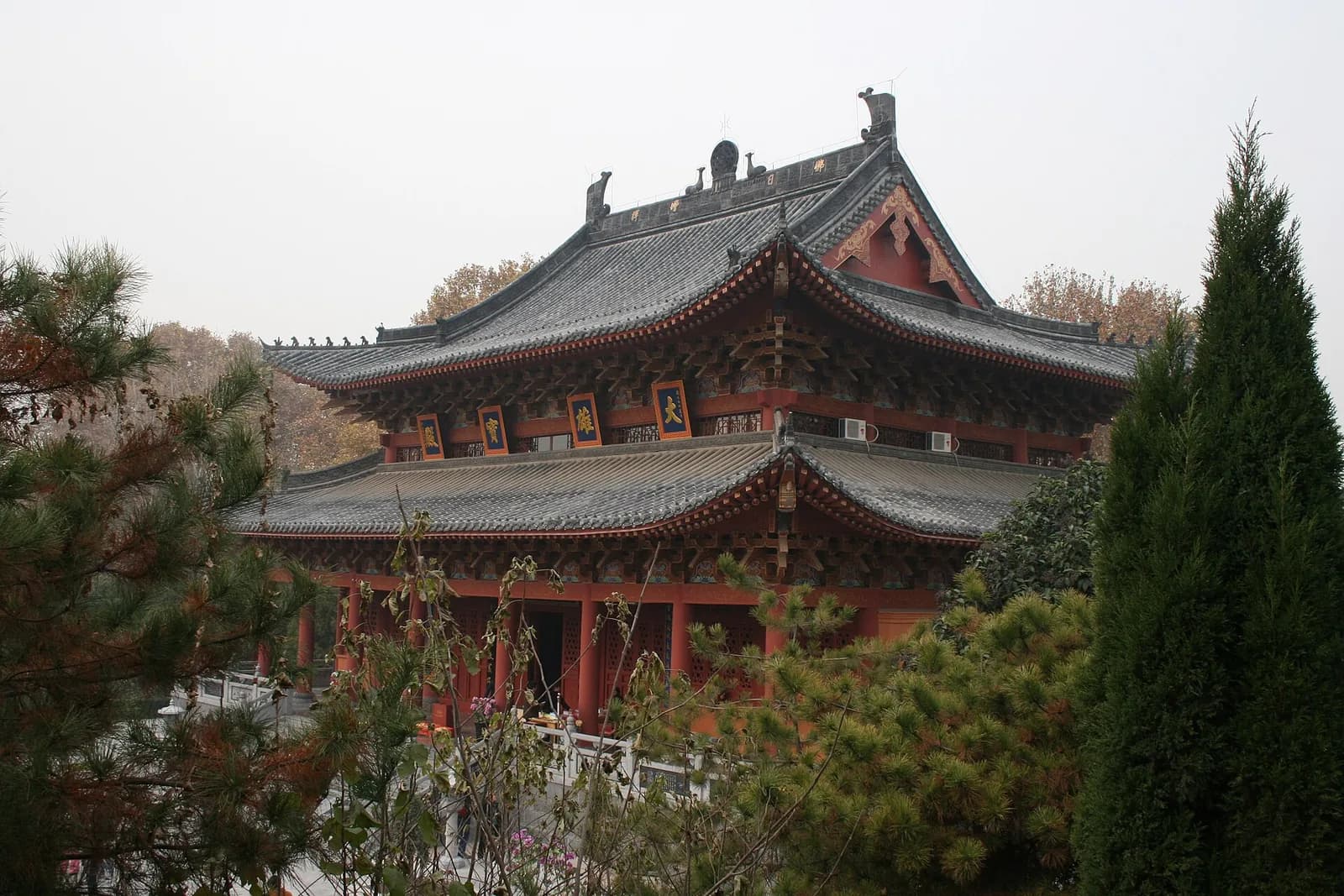
Temple halls among the trees
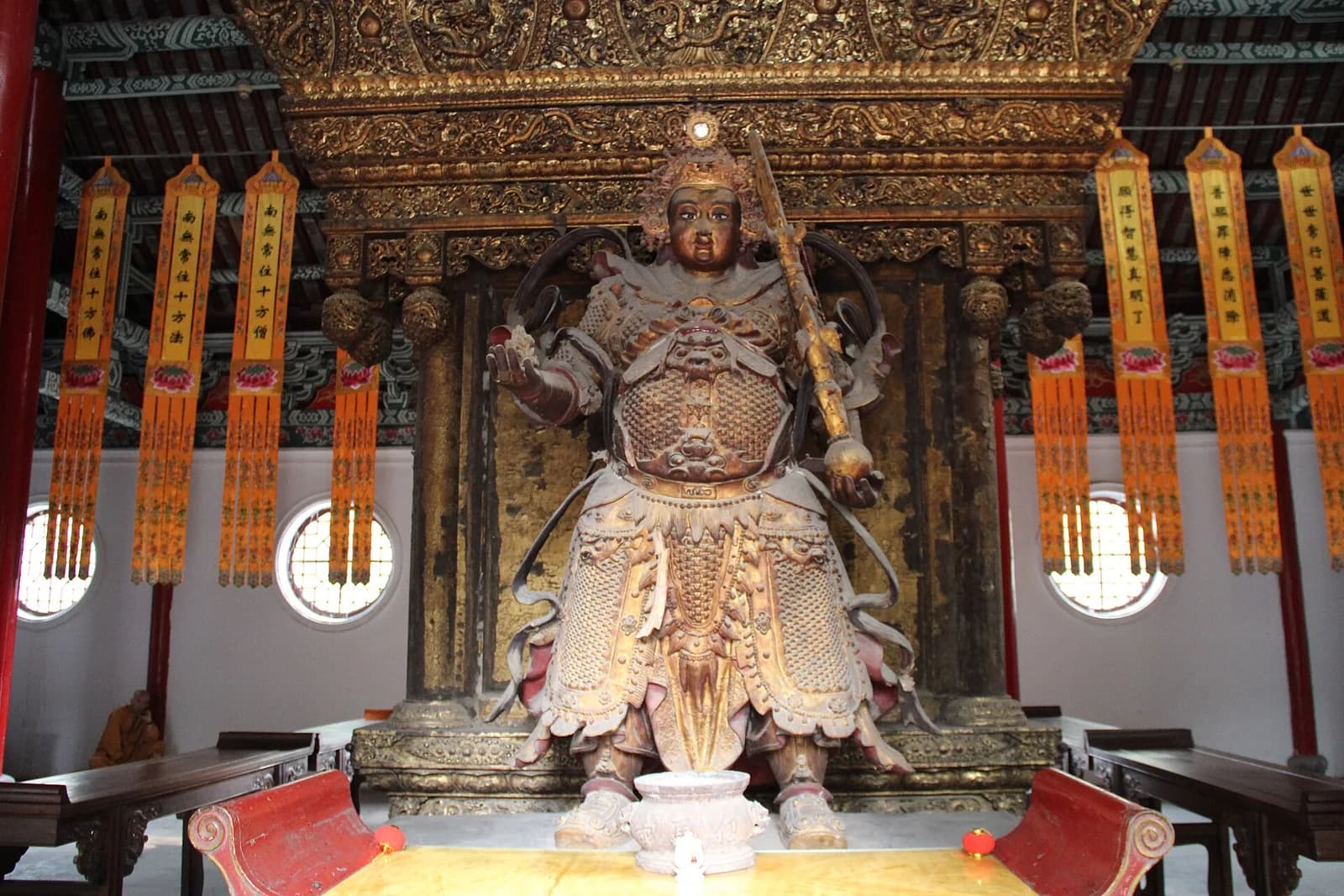
A guardian figure inside a hall
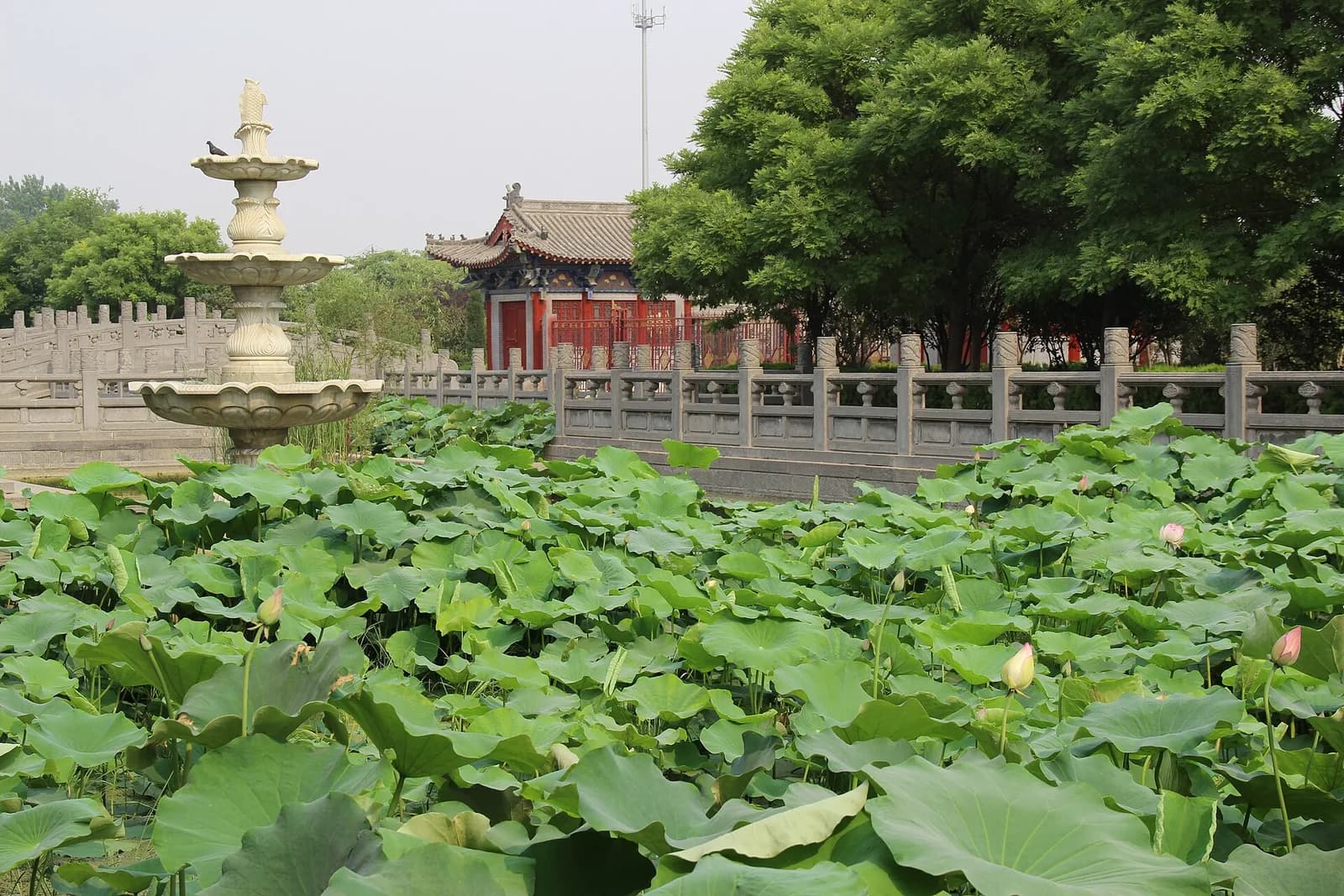
The lotus pond
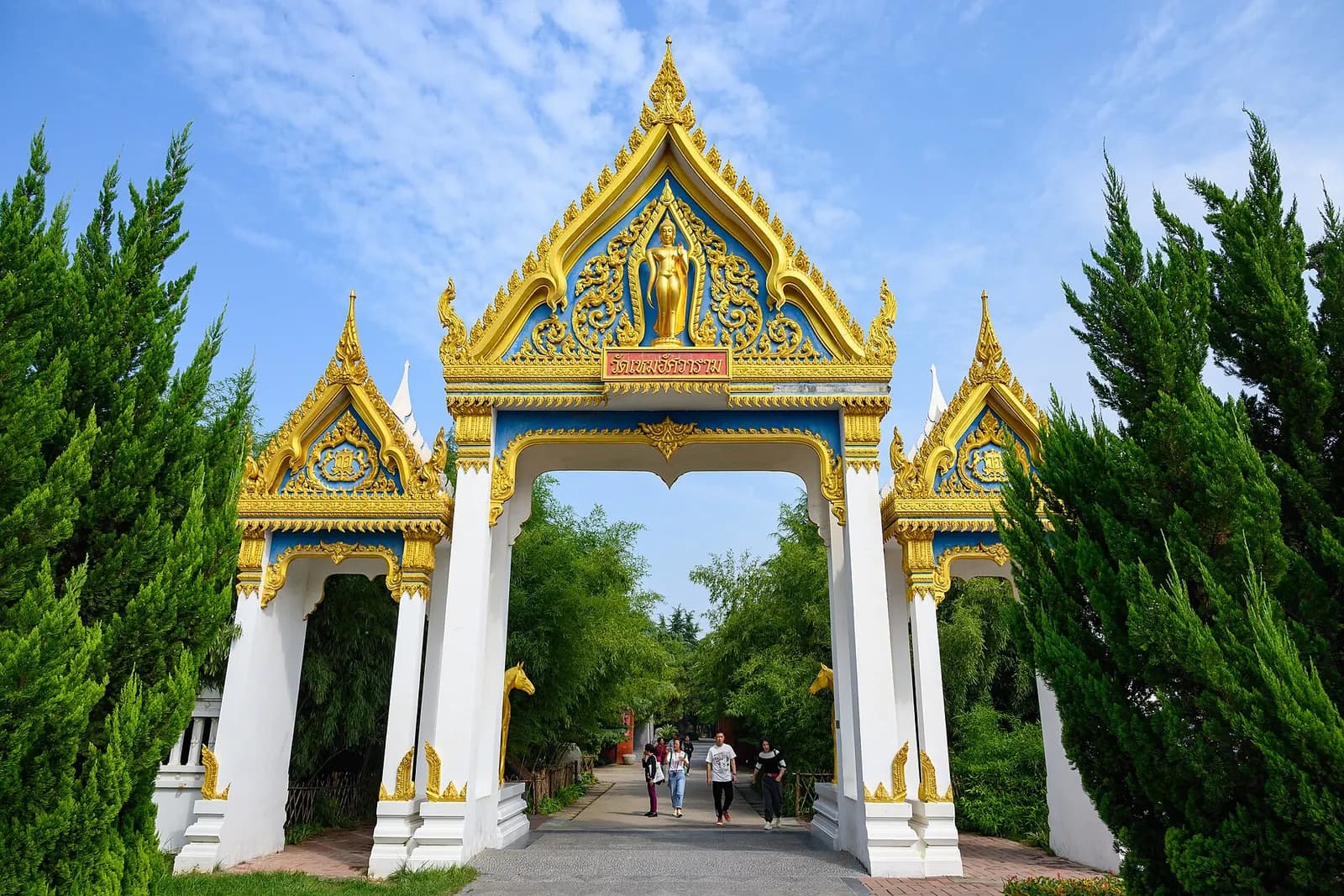
The Thai Buddhist hall
شرق لويانغ يقع أول معبد بوذي أُسِّس برعاية إمبراطورية بعد وصول البوذية إلى الصين، ويُكرَّم بوصفه أقدم دير في البلاد. يتبع المحور المركزي التخطيط الصيني التقليدي، بينما تقف على الجانبين قاعات أهدتها حكومات الهند وميانمار وتايلاند — تجاور نادر لأربع دول يجعل هذا المكان أوضح إجابة على سؤال كيف دخلت البوذية الصين.
ما تراه
- المحور المركزي: قاعة ملوك السماء، وقاعة بوذا الكبير، وقاعة ماهافيرا، وقاعة الاستقبال، وجناح فايروكانا بالترتيب، ومن أهم ما بقي تماثيل اللك الجاف من عهد يوان.
- القاعات الدولية التي أهدتها حكومات الهند وميانمار وتايلاند — والفروق الأسلوبية لا تحتاج شرحًا.
- باغودا تشييون، باغودا طوبية من ثلاثة عشر طابقًا من عهد جين شرق البوابة، يُتجاهلها عادةً وتستحق زيارة منفصلة.
- قبر دي رِنجي، رجل دولة من عهد تانغ، على مسافة قريبة.
ملاحظات عملية
المعبد ومغارات لونغمن كلاهما في لويانغ لكن على طرفين متقابلين من المدينة؛ والجمع بينهما في يوم واحد مرهق. امنح المعبد نصف يوم خاصًا به. هذا موقع ديني عامل: بنطال طويل وأكتاف مغطاة، ولا تصوير داخل القاعات.