
لويانغ
مغارات لونغمن
- من تشنغتشو
- نحو ٤٠ دقيقة بالقطار السريع
- الوقت المطلوب
- من نصف يوم إلى يوم كامل
- أفضل موسم
- أبريل–مايو (موسم الفاوانيا)، سبتمبر–أكتوبر
من الموقع الرسمي
الموقع السياحي يعرّف بنفسه عبر موقعه الرسمي
منقول من الموقع الرسمي للمشغّل مع تاريخ اطّلاعنا عليه، ومستقل عن الوصف أعلاه الذي كتبناه بأنفسنا.
The Longmen Grottoes stand five kilometres south of Luoyang, where Mount Xiang and Mount Longmen face each other with the Yi river running between them — a natural gateway that gave the site its old name, Yique. Carving began around the time the Northern Wei moved their capital to Luoyang and continued through the Northern Wei, Eastern and Western Wei, Northern Qi, Sui, Tang, Five Dynasties and Song. The span is what makes the site a record of Buddhism's absorption into China. Designated a Major Historical and Cultural Site Protected at the National Level in 1961 and inscribed on the UNESCO World Heritage List in 2000.
- Niches and caves
- 2,345
- Figures
- over 100,000
- Inscriptions
- over 2,800
- Vairocana Buddha height
- 17.14 m
- Smallest figure
- 2 cm, south wall of Lotus Cave
أبرز المعالم
Guyang Cave
In the southern section of the west bank, cut into a natural karst cavity: 11.2 m high, 7.27 m wide and 11.83 m deep. It is the earliest, most richly carved and most heavily inscribed of the large caves — over 1,500 niches and more than 800 inscriptions. Nineteen of the twenty celebrated Longmen inscriptions are here. The 6.1 m Shakyamuni shows the Northern Wei "refined bones and clear features" manner.
Middle Binyang Cave
Commissioned by Emperor Xuanwu of the Northern Wei for his parents, Emperor Xiaowen and Empress Wenzhao — one of the most representative imperial caves of the Northern Wei period. Cut between 500 and 523 CE, about 24 years of work recorded as 802,366 labour units. The ceiling carries a canopy, the floor a lotus pond.
Prescription Cave
Holds the earliest stone-carved medical prescriptions found in China, dated to the Tang. The contents were incorporated into the Japanese Ishinpō — physical evidence of Chinese medicine travelling outward.
Fengxian Temple
The Vairocana Buddha, 17.14 m tall — the site's defining image.
الصور
These photographs are openly licensed for commercial use (from Wikimedia Commons: CC0, CC BY, CC BY-SA or public domain) and are not the attraction's own gallery. Each photo is credited below with its author and licence, linked to the original file.
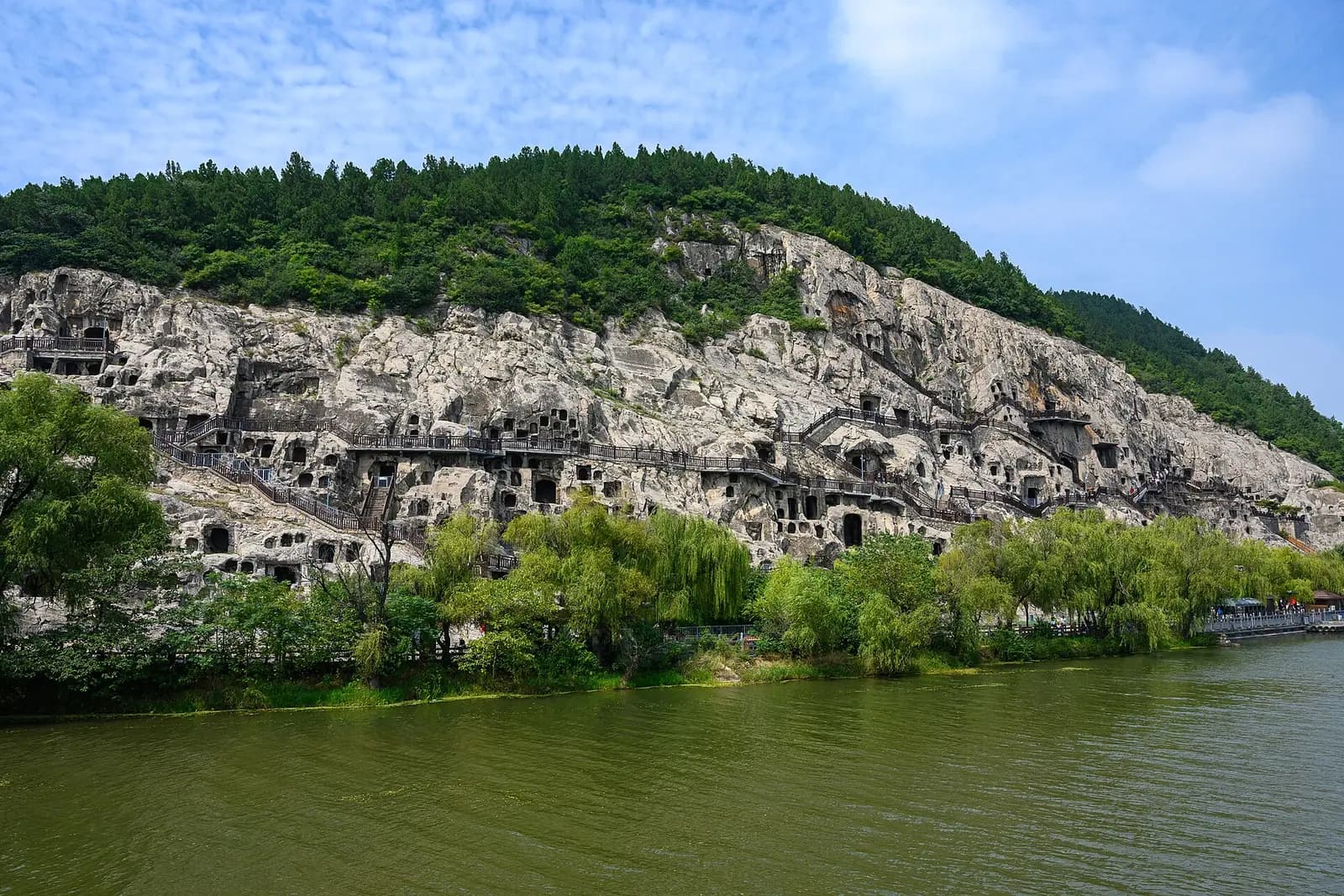
The Yi river and the west-bank cliffs
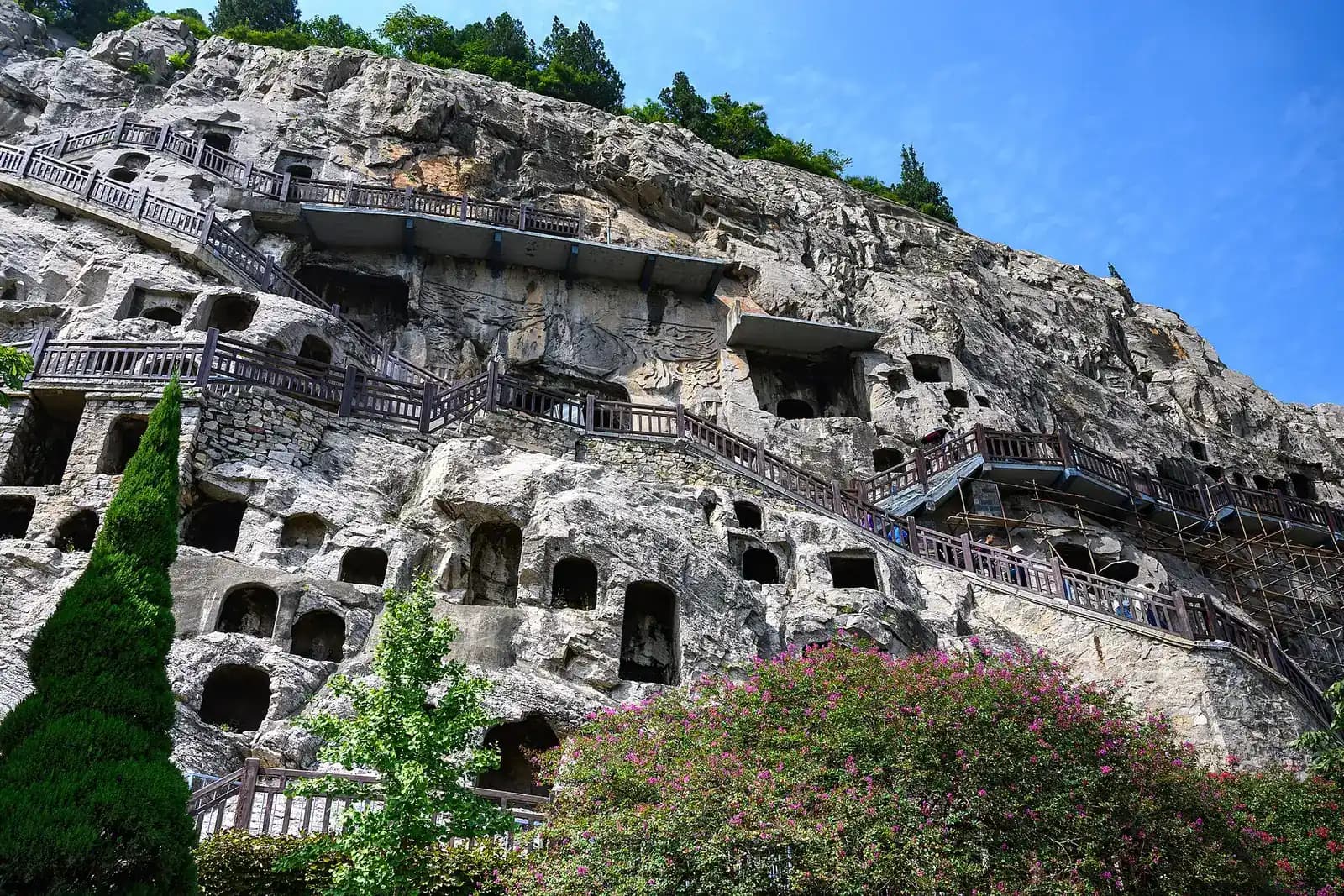
Niches crowding the cliff face
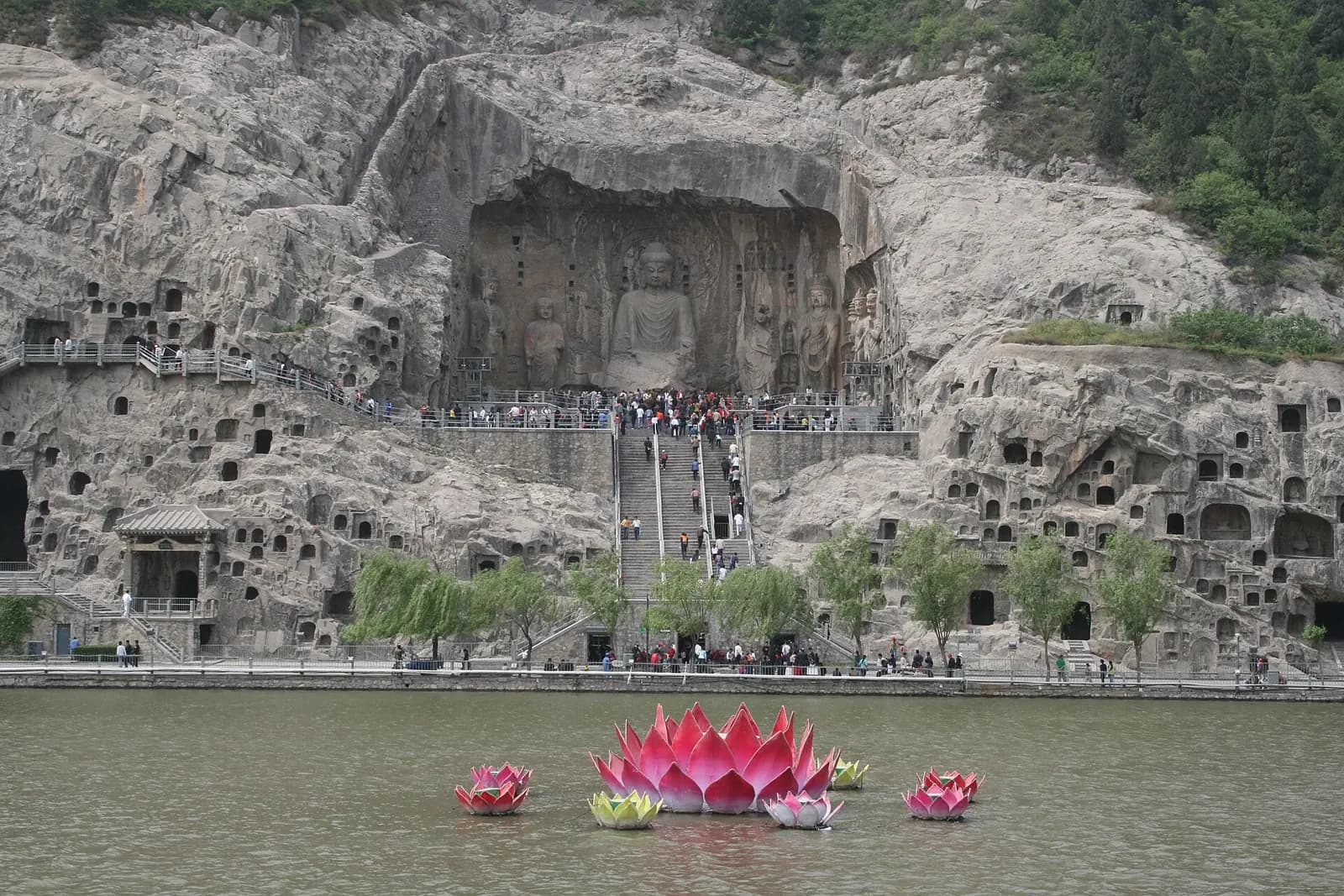
The great niche of Fengxian Temple
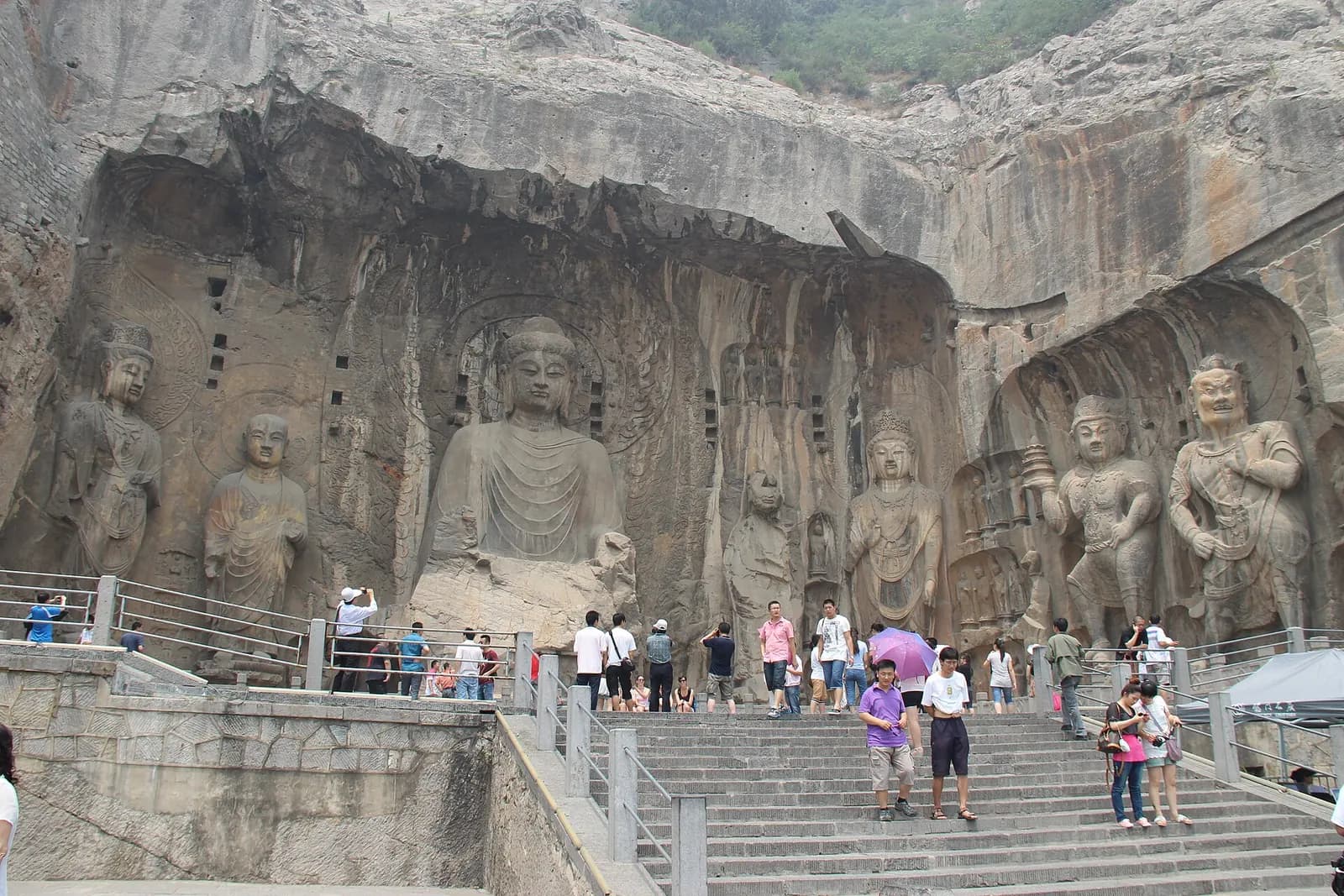
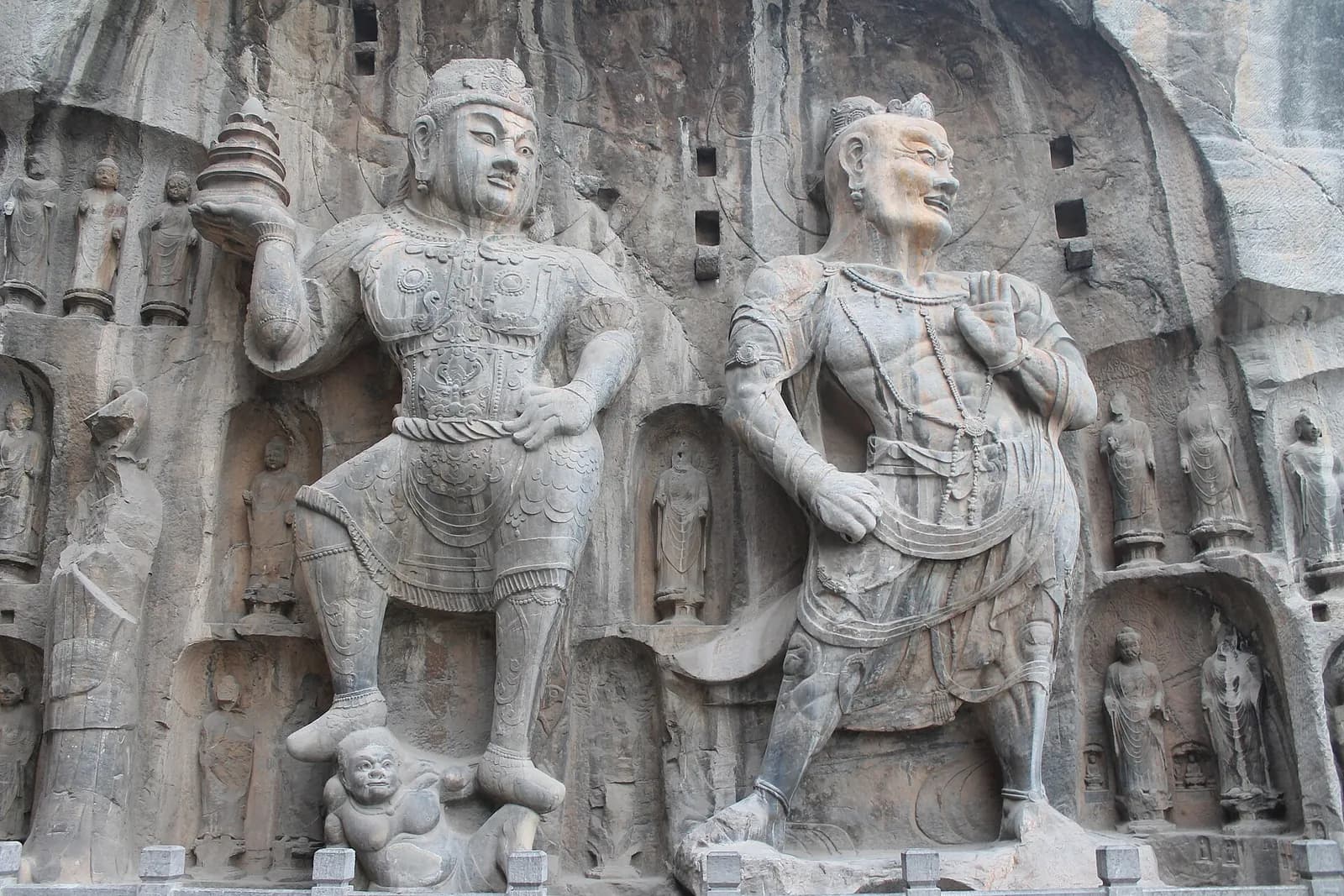
Vairocana Buddha and attendants, Fengxian Temple
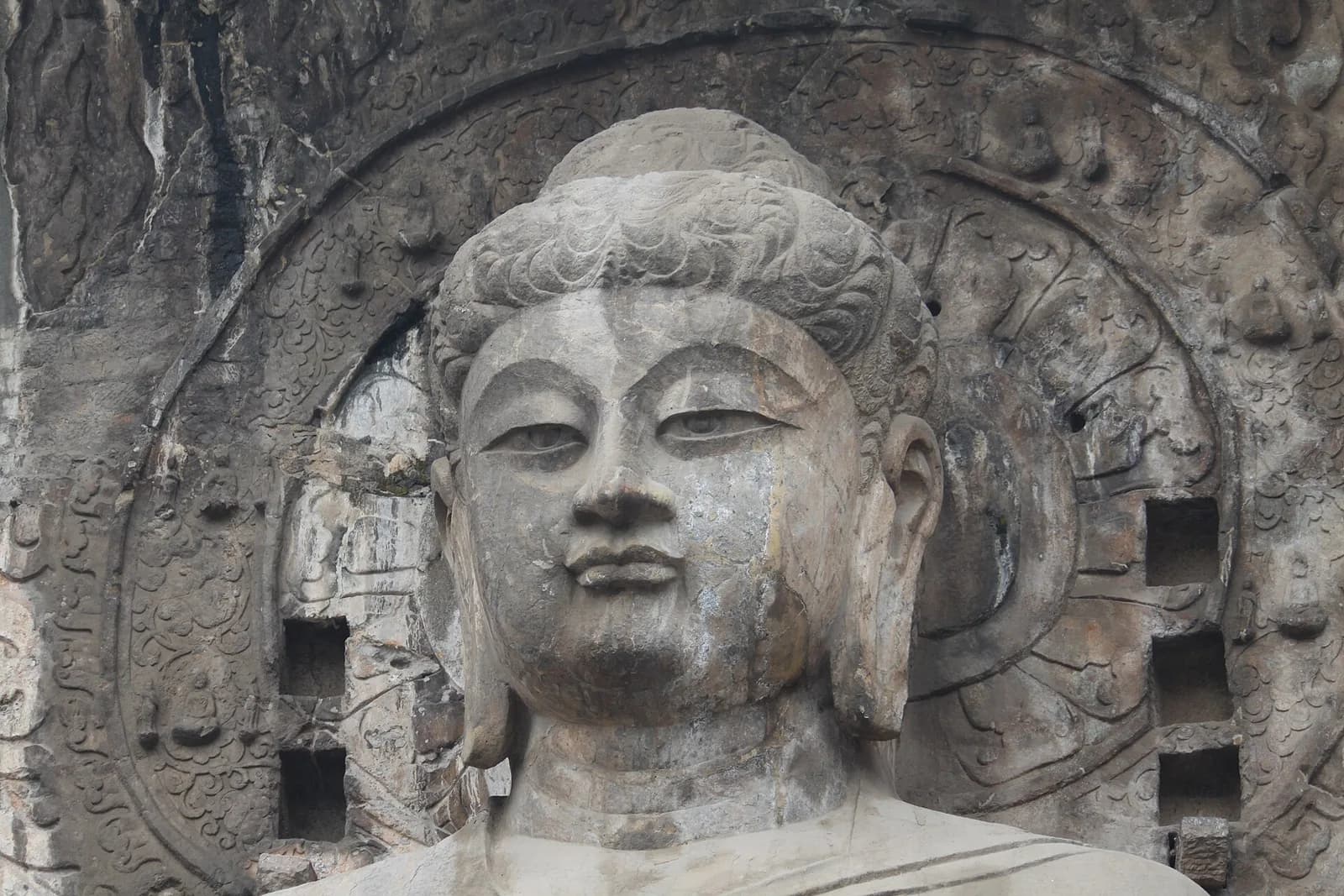
The Vairocana Buddha
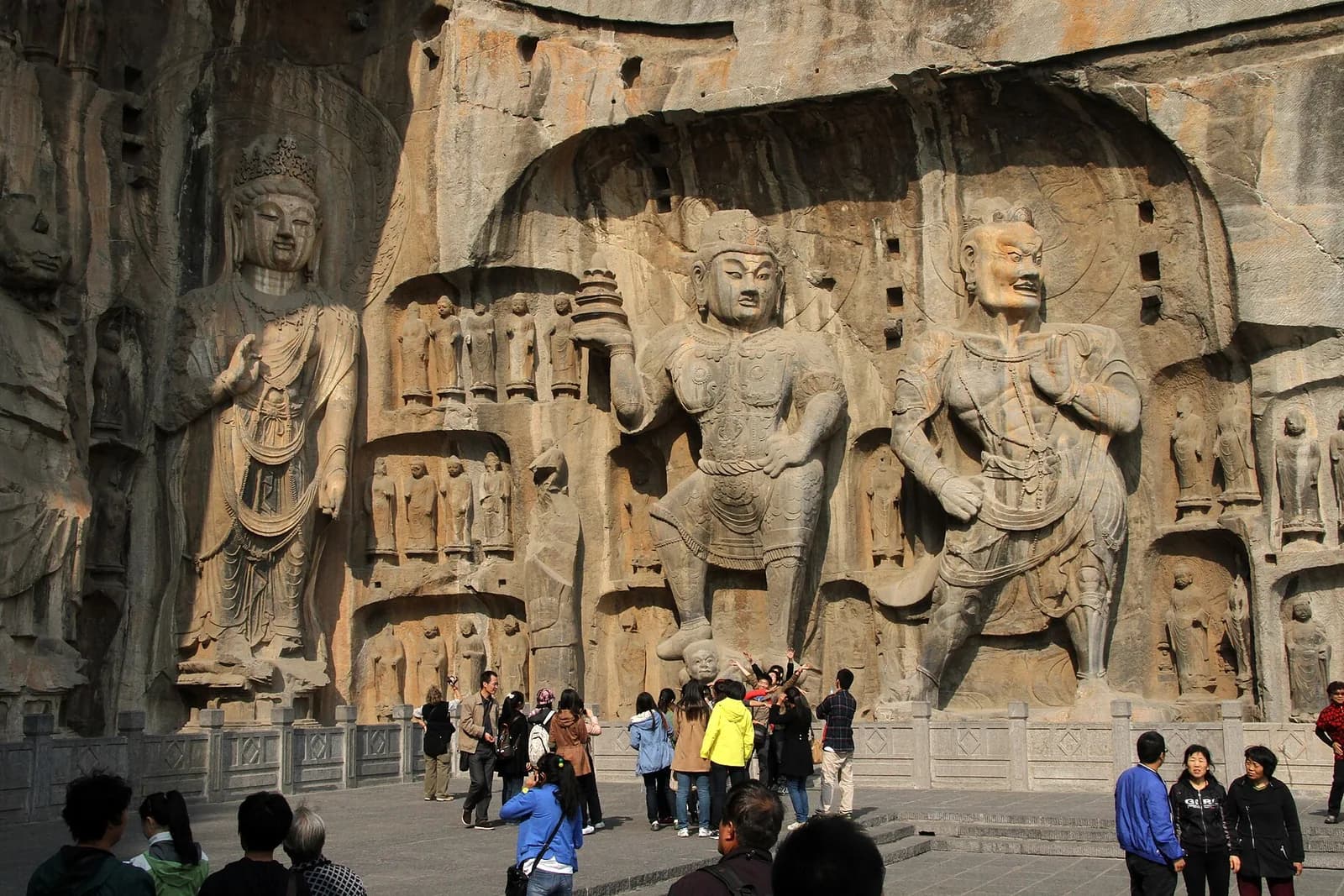
The Fengxian Temple figures
Attendant bodhisattvas, Fengxian Temple
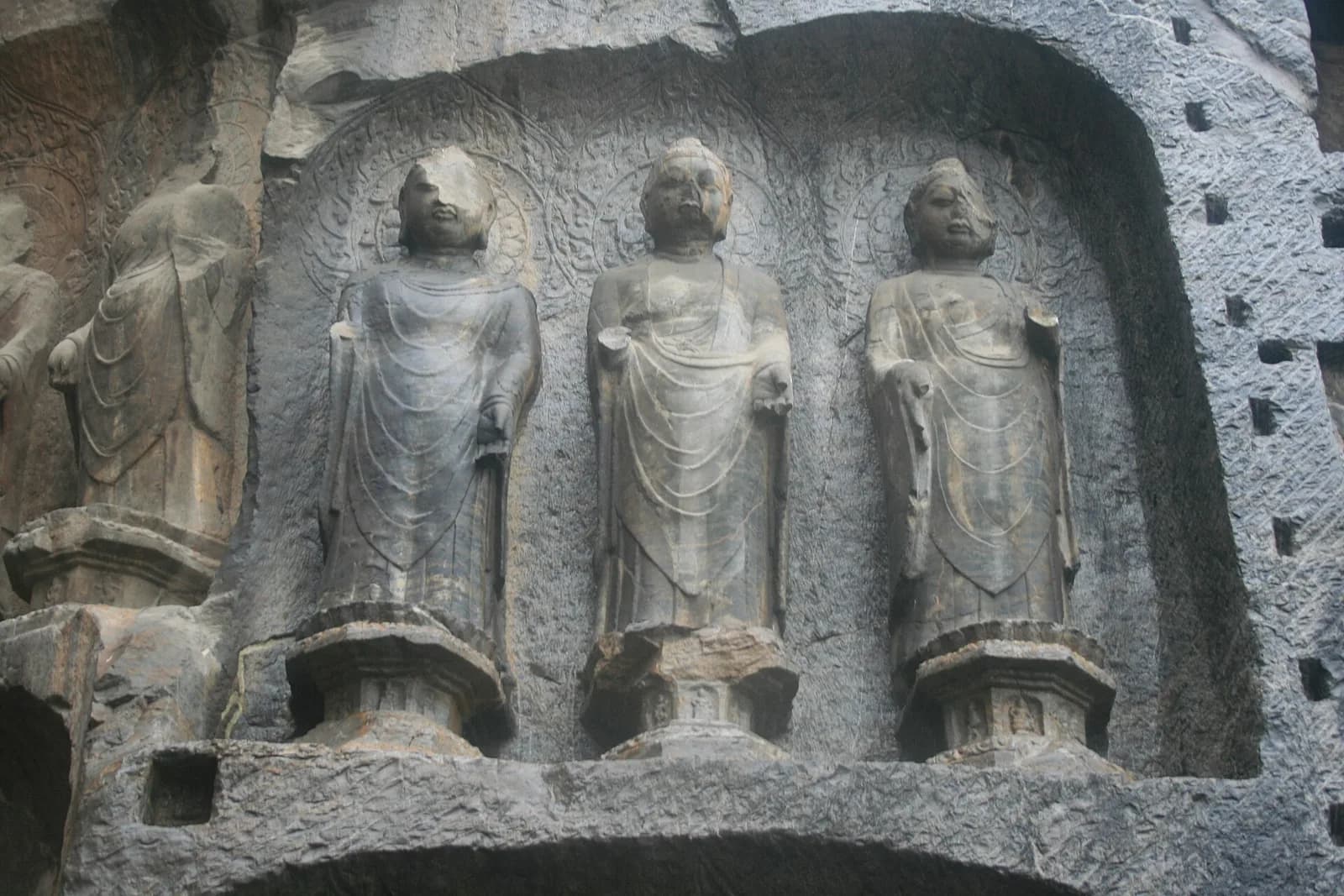
Standing bodhisattvas
Dominik Tefert · Public domain
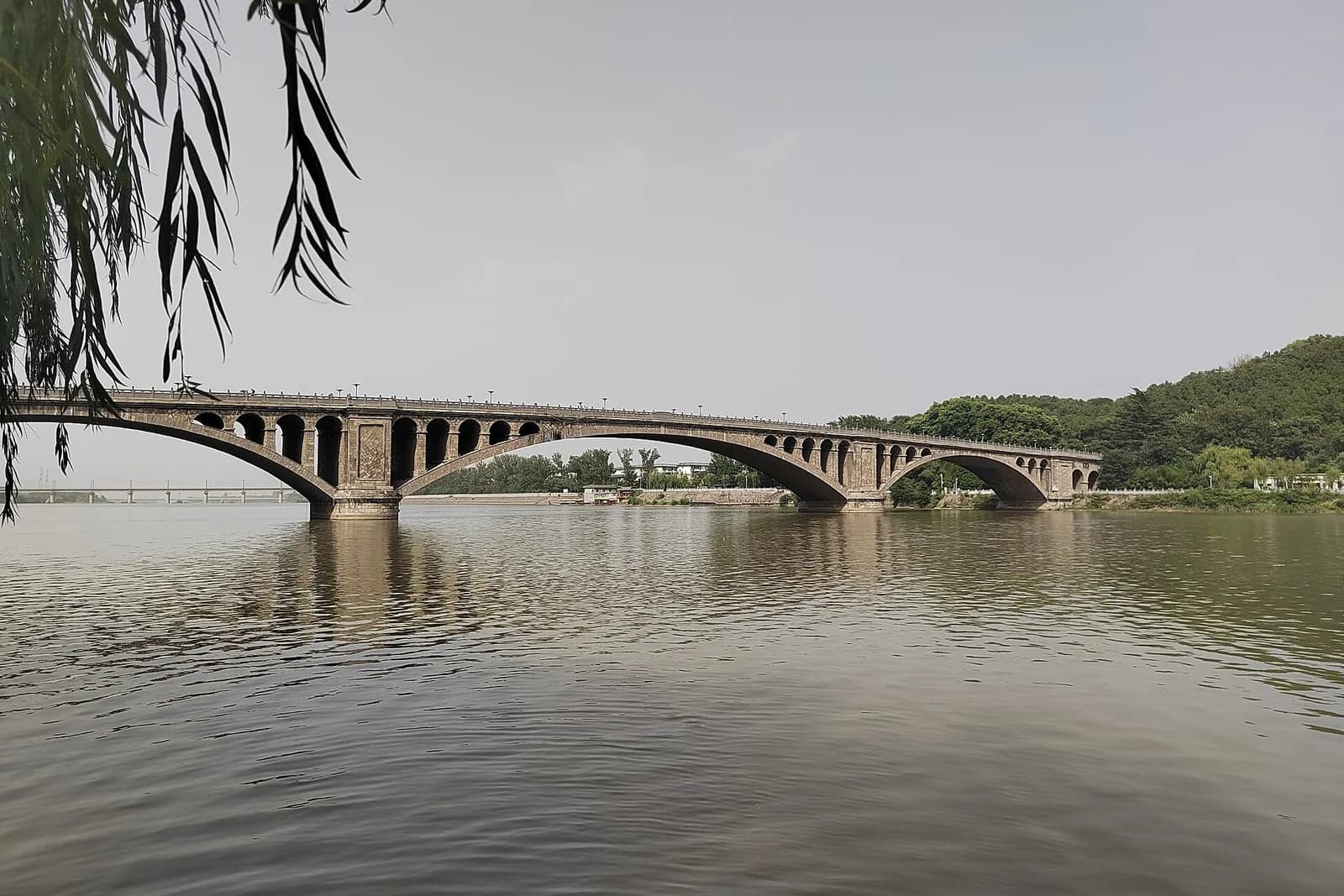
The Longmen bridge over the Yi river
المصدر
بدأ النحت نحو عام ٤٩٣ م حين نقلت وِي الشمالية عاصمتها إلى لويانغ، واستمر في عهد وِي الشرقية والغربية وتشي الشمالية وسوي وتانغ وسونغ — أكثر من أربعة قرون من العمل المتواصل. بقي أكثر من ٢٣٠٠ كوّة وكهف، ونحو ١٠٠ ألف تمثال، و٢٨٠٠ نقش. أُدرجت على قائمة التراث العالمي لليونسكو عام ٢٠٠٠.
ما تراه
- بوذا فايروكانا في معبد فنغشيان: ارتفاعه ١٧٫١٤ م، تحفة النحت الكهفي الإمبراطوري في عهد تانغ والصورة المميزة للموقع.
- كهوف بينيانغ الثلاثة: كهوف إمبراطورية من عهد وِي الشمالية. نُقلت نقوش المواكب الإمبراطورية إلى مجموعات في الخارج، لكن الكهوف تبقى معيارًا لفن وِي الشمالية.
- كهف وانفو (عشرة آلاف بوذا): ١٥٠٠٠ تمثال صغير منقوش بكثافة على الجدارين الجانبيين.
- معبد شيانغشان وحديقة باي على الضفة الشرقية، حيث دُفن شاعر تانغ باي جويي — ويُزاران عادةً في اليوم نفسه.
ملاحظات عملية
للموقع ضفتان شرقية وغربية؛ وأجمل النحت في الغربية فابدأ بها. توقّع أربعة إلى خمسة كيلومترات سيرًا، فارتدِ حذاءً مناسبًا. من أبريل إلى أكتوبر تفتح المغارات مساءً، والتماثيل المضاءة تبدو مختلفة تمامًا عن النهار؛ وتستحق زيارة منفصلة. احجز عبر الإنترنت مسبقًا في موسم الذروة.